
TL;DR:
- Coffee tasting involves systematically evaluating aroma, flavor, body, and aftertaste to understand quality.
- Building sensory skills through focused practice enhances appreciation and helps identify defects.
- Consistent, in-depth tasting of single coffees over time improves accuracy and reduces bias.
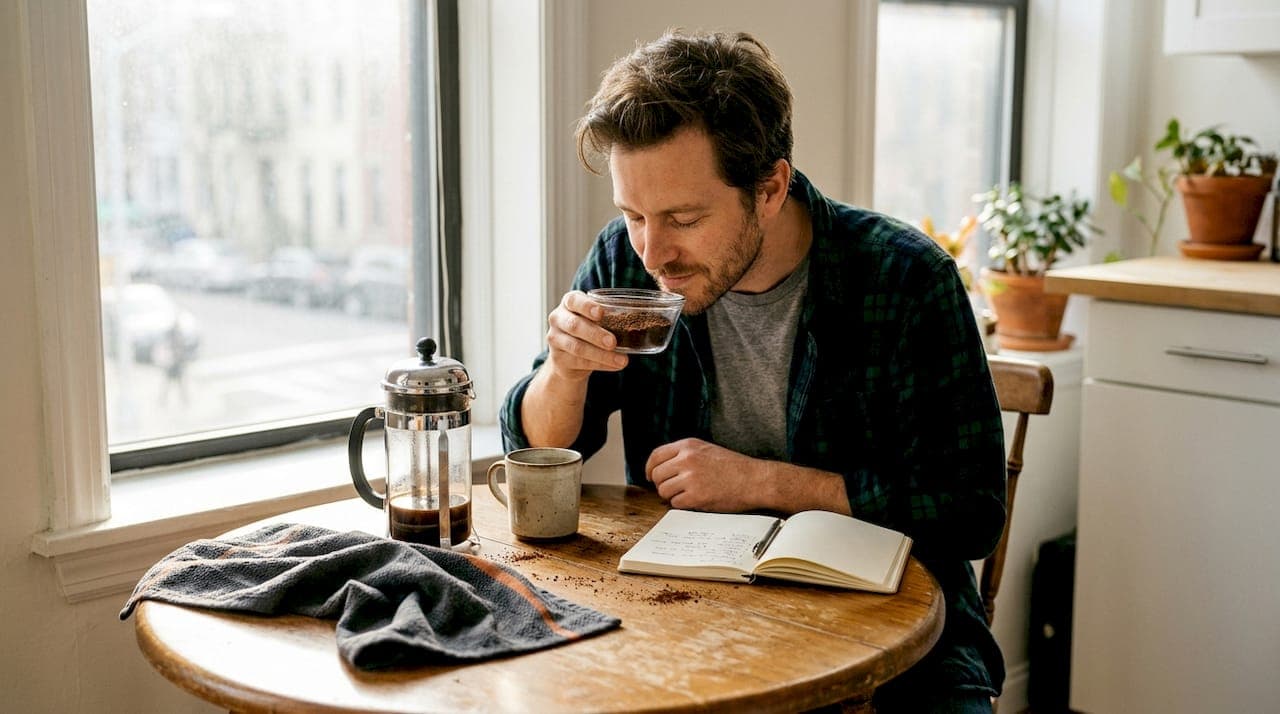
Most people drink coffee every single day without truly tasting it. There is a real difference between swallowing a cup on autopilot and actually evaluating what is in it. Coffee tasting is a skill, and once you start practicing it, you will notice flavors, aromas, and textures you never knew were there. This guide is written for Colorado Springs coffee lovers who want to go deeper. Whether you are just starting out or looking to sharpen skills you already have, you will find practical steps, sensory exercises, and honest advice here to help you taste with more intention and more joy.
Table of Contents
- What is coffee tasting and why does it matter?
- How the coffee tasting process works
- Developing your sensory skills: Aroma, flavor, and mouthfeel
- Spotting defects, managing bias, and tasting like a pro
- Beyond the basics: The biggest mistake new coffee tasters make
- Explore specialty coffees for your tasting journey
- Frequently asked questions
Key Takeaways
| Point | Details |
|---|---|
| Coffee tasting defined | Coffee tasting is a systematic evaluation that goes beyond regular drinking to focus on aroma, flavor, body, and aftertaste. |
| Process matters | Following a structured cupping method maximizes learning and consistency for enthusiasts. |
| Sensory skills grow | Regular practice with local beans and reference flavors sharpens your ability to distinguish quality and flaws. |
| Bias and defects | Spotting flaws and minimizing bias are key to tasting like a pro. |
| Application | You can start tasting at home now and use local resources to advance your sensory journey. |
What is coffee tasting and why does it matter?
Coffee tasting is the systematic evaluation of a coffee's aroma, flavor, body, and aftertaste. It is not the same as drinking coffee for pleasure, and it is not the same as casual sipping. The most formal version of coffee tasting is called cupping, a method used by professional roasters and buyers to assess coffee quality in a controlled setting. But you do not need to be a professional to benefit from the practice.
When you taste coffee with intention, you are training your palate to notice things that most people miss. You start to pick up on whether a coffee is bright and citrusy or deep and chocolatey. You notice if the body feels thin like tea or thick like cream. You pay attention to how the flavor lingers after you swallow, which is the aftertaste. These are not just abstract qualities. They tell you something real about where the coffee came from, how it was processed, and how it was roasted.
Here in Colorado Springs, more and more enthusiasts are embracing this practice. Specialty coffee culture has grown significantly, and people want to understand what makes one cup stand out from another. Learning to taste also helps you spot defects, which are off-flavors caused by poor processing or storage. According to SCA cupping standards, defects are scored as either a taint (minus 2 points) or a fault (minus 4 points), depending on severity. Recognizing these flaws builds your appreciation for what a truly clean, well-crafted cup looks like.
"Tasting coffee is not about being a snob. It is about paying attention. When you learn to identify what you like and why, every cup becomes more meaningful."
Here are the key attributes you will evaluate during any tasting session:
- Aroma: The smell of the dry grounds and the brewed coffee
- Acidity: The bright, lively quality that makes coffee feel crisp
- Sweetness: Natural sugars that balance bitterness
- Body: The weight and texture of the coffee in your mouth
- Aftertaste: The flavors that remain after you swallow
Starting with quality ingredients matters. Exploring whole bean coffee that is freshly roasted gives you the clearest flavors to work with, making your tasting sessions far more rewarding.
How the coffee tasting process works
The standard cupping process follows a specific protocol developed by the Specialty Coffee Association. It is designed to create a level playing field so that every coffee is evaluated under the same conditions. You do not need a professional lab to do this at home, but consistency is key.
Here is the equipment you will need to get started:
- A burr grinder for consistent particle size
- A kitchen scale accurate to 0.1 grams
- Cupping bowls or wide-mouthed cups
- A cupping spoon or deep soup spoon
- A timer
- A kettle with temperature control
Consistency in your ratios and water temperature makes a huge difference. Small changes in grind size or brew temperature can dramatically shift what you taste.
| Parameter | SCA Standard |
|---|---|
| Coffee to water ratio | 8.25g per 150ml |
| Water temperature | 200°F (93°C) |
| Steep time | 4 minutes |
| Grind size | Coarse, uniform |
Here is the step-by-step process for a home cupping session:
- Weigh and grind your coffee to a coarse, uniform size
- Smell the dry grounds and note your first impressions
- Pour hot water at 200°F evenly over the grounds
- Let the coffee steep for exactly 4 minutes
- Break the crust (the floating grounds) with your spoon and smell again
- Skim the grounds and foam from the surface
- Wait for the coffee to cool to around 160°F before tasting
- Slurp the coffee loudly from your spoon to aerate it across your palate
- Spit or swallow, then note the aftertaste
Pro Tip: Home coffee cupping is most effective when you use beans from local roasters. Fresh roasts give you the clearest, most vibrant flavors to evaluate, and you can often ask the roaster about the origin and processing details.
If you want to compare your cupping results against what a finished drink tastes like, trying different brewed coffee options side by side with your cupping samples is a great way to see how brewing method changes the cup.
Developing your sensory skills: Aroma, flavor, and mouthfeel
Knowing the process is one thing. Building the sensory vocabulary to describe what you taste is another. This is where most enthusiasts get stuck, and it is also where the practice gets genuinely exciting.
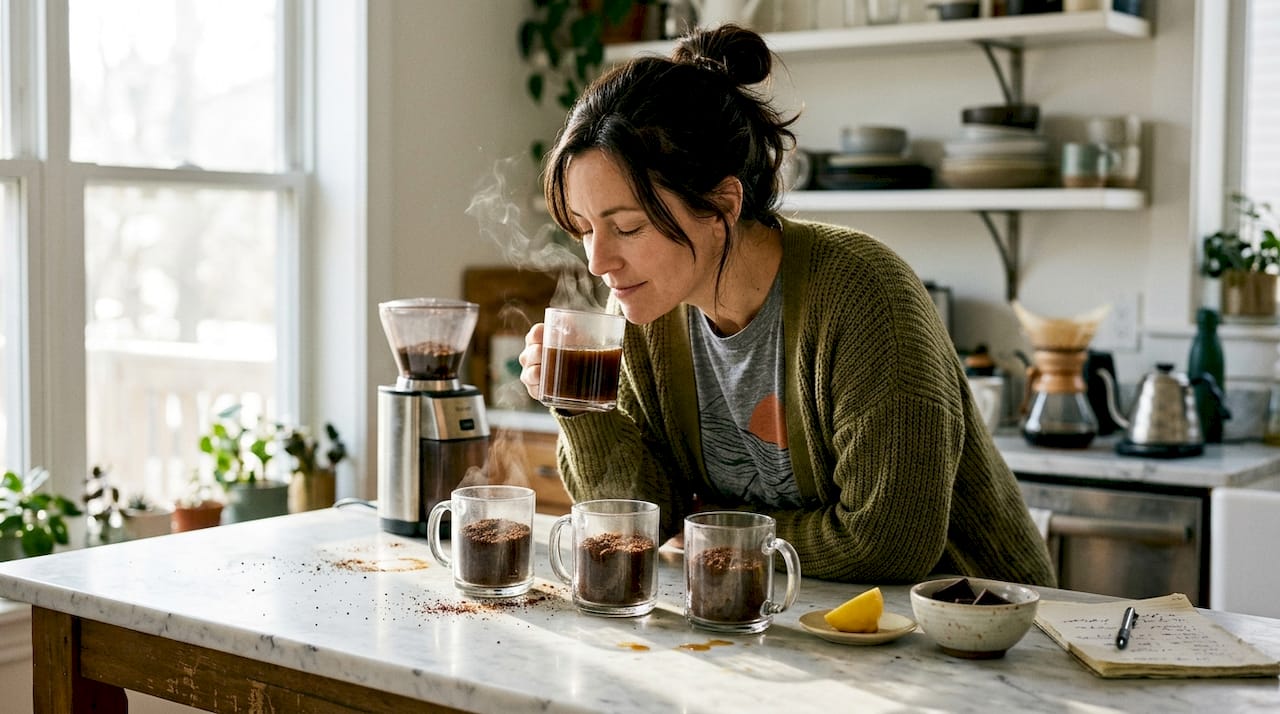
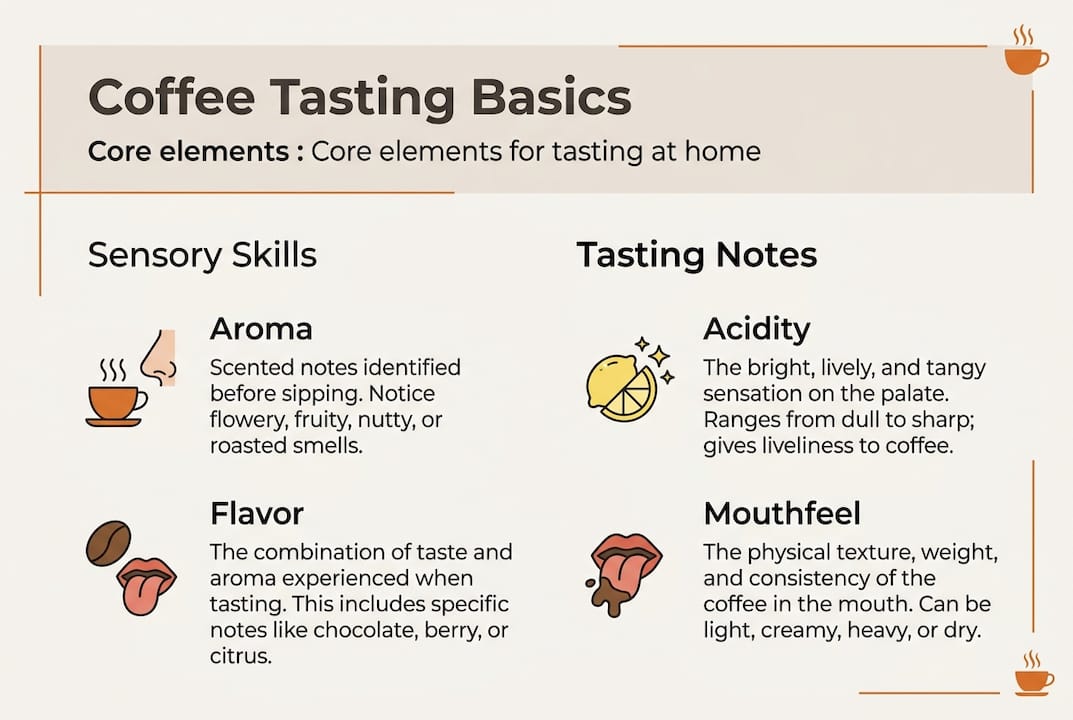
Start with aroma. Before you taste anything, smell the dry grounds. Then smell again after you add hot water. These two moments reveal a lot about the coffee's character. Aroma is closely linked to flavor because most of what we perceive as taste actually comes through our sense of smell.
Next, pay attention to acidity. This is not sourness or bitterness. Acidity in specialty coffee refers to a bright, lively quality, like the way a fresh lemon feels clean and sharp. Then notice sweetness, which balances the acidity and gives the coffee its depth. Body is the texture, how heavy or light the coffee feels as it moves across your tongue. Aftertaste tells you how long the flavors last and whether they are pleasant or not.
A trained palate can distinguish dozens of distinct flavor notes in a single cup. Building that skill takes time, but you can accelerate it with focused practice. Try tasting the same coffee at two different roast levels side by side. Then try two coffees from different origins. Eventually, practice blind comparisons where you do not know which is which.
Here are some common flavor reference points to look for:
- Citrus: Lemon, orange, or grapefruit notes, common in Ethiopian coffees
- Chocolate: Dark or milk chocolate, often found in Brazilian or Colombian beans
- Floral: Jasmine or rose-like aromas, a hallmark of lighter roasts
- Nutty: Almond or hazelnut tones, typical in medium roasts
- Fruity: Berry or stone fruit notes, often from natural-processed coffees
Pro Tip: Keep a lemon, a piece of dark chocolate, and a handful of almonds nearby during your tasting sessions. When you think you detect one of these notes in the coffee, smell or taste the real thing immediately after. This trains your brain to make the connection faster.
If you enjoy milk-based coffee drinks, try tasting the espresso shot on its own first before milk is added. You will notice how the milk softens acidity and amplifies sweetness, which is a great way to understand body and balance.
Spotting defects, managing bias, and tasting like a pro
Once you have a handle on what good coffee tastes like, you need to learn what bad coffee tastes like too. Defects are off-flavors that signal something went wrong in the growing, processing, or roasting stage.
Common defects include a fermented or vinegary taste (over-fermentation during processing), a musty or earthy smell (mold or poor storage), and a harsh, ashy bitterness (over-roasting). The SCA defect scoring system classifies these as taints (minor, minus 2 points) or faults (major, minus 4 points). Knowing this helps you understand why some coffees score higher than others.
| Defect flavor | Likely cause | Desirable counterpart |
|---|---|---|
| Fermented, vinegary | Over-fermentation | Bright, clean acidity |
| Musty, earthy | Mold or poor storage | Rich, natural earthiness |
| Harsh bitterness | Over-roasting | Balanced, pleasant bitterness |
| Flat, dull | Old or stale beans | Vibrant, complex flavor |
Here are steps to spot faults and keep your palate sharp:
- Always taste coffee at the right temperature, not scalding hot
- Spit between samples to avoid palate fatigue
- Cleanse your palate with plain water between each coffee
- Limit your session to four or five coffees maximum
- Take notes immediately so your impressions stay accurate
"Complex but misaligned coffees are the trickiest to evaluate. They have interesting qualities, but the flavors do not work together. Learning to recognize this takes experience and a willingness to sit with uncertainty."
Blind tasting is one of the most powerful tools you have. When you do not know what you are tasting, your expectations cannot color your perception. This is how professionals reduce tasting bias and arrive at honest, repeatable scores.
You can explore a range of Colorado Springs coffee beans to practice identifying these qualities across different origins and roast levels. And if you want to expand your palate even further, trying non-coffee tasting options can help you build sensory references that translate back into your coffee evaluations.
Beyond the basics: The biggest mistake new coffee tasters make
Here is something we see often. A new enthusiast gets excited, buys six different bags of coffee, and tries to taste them all in one afternoon. By the third cup, their palate is exhausted. By the sixth, they cannot tell the difference between anything. They walk away frustrated instead of inspired.
The real path to better tasting is not breadth. It is depth. Pick one coffee. Taste it three times in one week. Notice what changes as the bag ages. Notice what changes when you adjust the water temperature slightly. That kind of focused repetition builds real skill faster than any coffee marathon ever will.
Consistency also means making tasting a social ritual. Invite a couple of friends, set a weekly time, and taste together. Different palates catch different things, and talking through what you each notice sharpens everyone's skills. It also makes the whole process more fun.
Pro Tip: Start your tasting journey with local whole beans from a single origin. Once you know that coffee well, introduce a second origin for comparison. Build your reference library one coffee at a time.
Explore specialty coffees for your tasting journey
With this foundation in place, the next step is finding great coffees to practice with. That is where we come in.

At Third Space Coffee in Colorado Springs, we roast our beans in-house, which means you get the freshest possible starting point for your tasting sessions. Our whole bean coffee selection covers a range of origins and roast levels, giving you plenty of material to work with as you develop your palate. If you want to taste how our roasts translate into finished drinks, our specialty drinks menu is a great place to explore. Bring your friends, make it a weekly ritual, and use our space to practice, connect, and enjoy the craft of coffee tasting together.
Frequently asked questions
How is coffee tasting different from drinking coffee?
Coffee tasting follows a formal process to systematically evaluate aroma, flavor, body, and defects, while drinking focuses on enjoyment without structured analysis.
Can I practice coffee tasting at home?
Yes, you can follow SCA cupping protocols using local beans, a basic grinder, a scale, and a timer to run effective sessions at home.
What are common mistakes in coffee tasting?
Tasting too many coffees in one session and ignoring palate fatigue are the most common mistakes, both of which lead to inaccurate and unreliable evaluations.
How does blind tasting help with coffee evaluation?
Blind tasting removes personal expectations so your palate responds to what is actually in the cup, leading to more objective and bias-free scoring.