
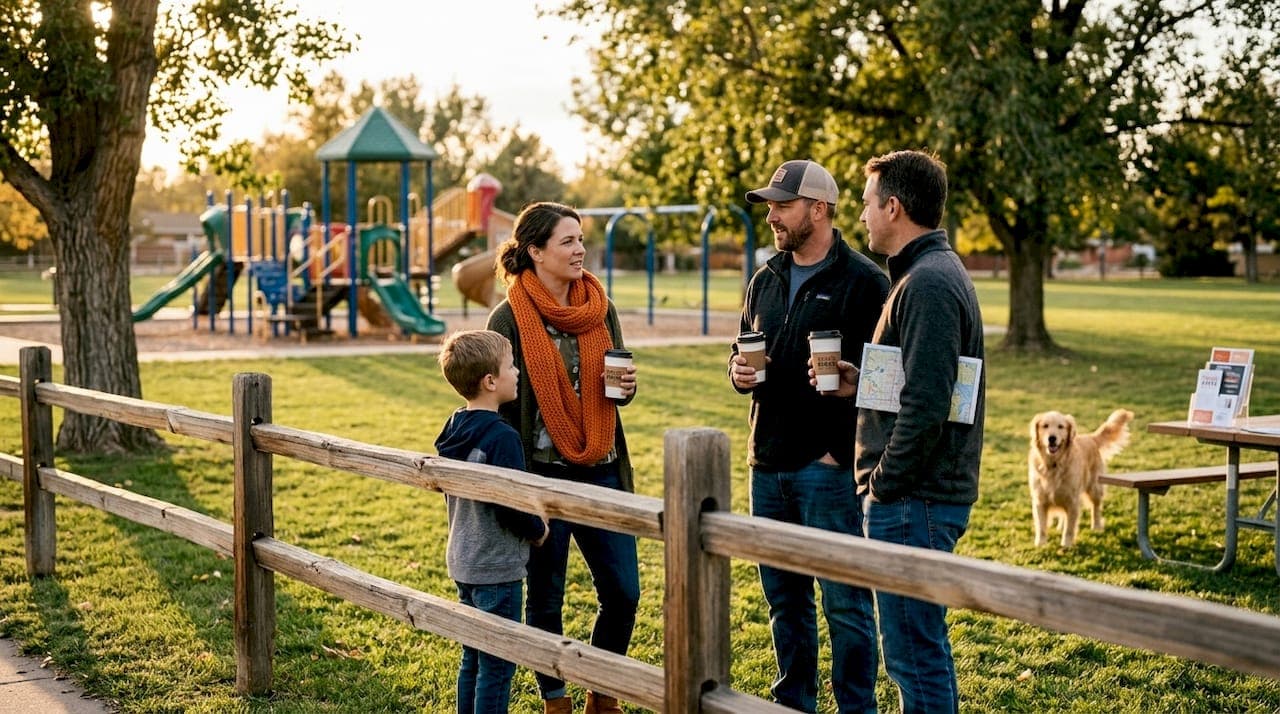
TL;DR:
- Engaging Colorado Springs residents begins with small, informal neighborhood gatherings that foster meaningful connections. Knowing just six neighbors by name significantly reduces social isolation, making neighborhood cohesion achievable through simple efforts. Utilizing local resources like community events, civic surveys, and spaces such as Thirdspacecoffee enhances sustained community participation.
Social isolation is a recognized public health concern in Colorado Springs, and figuring out how to engage Colorado Springs community members meaningfully is something more residents are asking about every year. The good news: you do not need a city grant or a megaphone to make a real difference. Some of the most powerful connections start with a driveway, a dozen donuts, and the willingness to knock on a neighbor's door. This guide covers the local resources, events, civic opportunities, and small-scale gatherings that actually work.
Table of Contents
- Key takeaways
- How to engage Colorado Springs community through local resources
- Neighborhood gatherings as your most powerful tool
- Connecting through larger events and volunteer work
- Getting involved in civic activities and planning
- My take on what real engagement actually requires
- Where Thirdspacecoffee fits into your community connection plan
- FAQ
Key takeaways
| Point | Details |
|---|---|
| Small gatherings drive big change | Knowing just six neighbors by name significantly reduces social isolation in your area. |
| Local events offer real entry points | Festivals like Territory Days and CityServe Day are practical ways to connect with Colorado Springs residents at scale. |
| Civic participation shapes your block | Attending city meetings and completing public surveys gives you direct influence over neighborhood decisions. |
| Cultural calendars simplify discovery | Tools like PeakRadar help you find activities for Colorado Springs residents without endless searching. |
| Third spaces anchor community life | Venues like coffee shops lower the barrier to casual, repeated social contact that builds lasting bonds. |
How to engage Colorado Springs community through local resources
Understanding what already exists in your city is the fastest way to stop feeling like an outsider and start feeling like a neighbor. Colorado Springs has a surprisingly deep network of cultural organizations, civic programs, and nonprofits that most residents never tap into.
The City itself runs programs worth knowing about. There are infrastructure pilots actively seeking resident input. For example, Colorado Springs is running a 12-month pilot on Colorado Avenue that converts four lanes into three and adds 30 new parking stalls, and they want public feedback via an open survey. That kind of project is not just about traffic. It is a direct invitation for you to shape your own neighborhood.
Beyond city hall, here are the local resource categories that matter most for community outreach in Colorado Springs:
- Cultural calendars: PeakRadar's event listings connect locals with arts, music, and neighborhood programming all year long.
- Nonprofit networks: Organizations ranging from arts collectives to faith communities run regular events open to new participants.
- City engagement surveys: These are published after pilot projects, zoning changes, and park renovations. They take five minutes and give you a documented voice.
- Destination stewardship groups: The Pikes Peak Destination Stewardship initiative lets locals weigh in on tourism policies that affect quality of life.
| Resource Type | Examples in Colorado Springs | How to Access |
|---|---|---|
| Cultural calendar | PeakRadar, Visit COS Locals Corner | Website, free to browse |
| Civic surveys | Colorado Avenue project, park updates | City website, posted links |
| Volunteer networks | CityServe Day, El Cinco de Mayo Inc. | Organization websites |
| Inclusive park programs | Trackchair guided hikes | KRDO/city park reservations |
Understanding how coffee shapes local culture in Colorado Springs is also worth reading if you want to see how informal third spaces connect all these threads.
Neighborhood gatherings as your most powerful tool
Here is the insight most people miss: you do not need a big event to build community. You need a reason for six people to stand in the same driveway for 20 minutes.
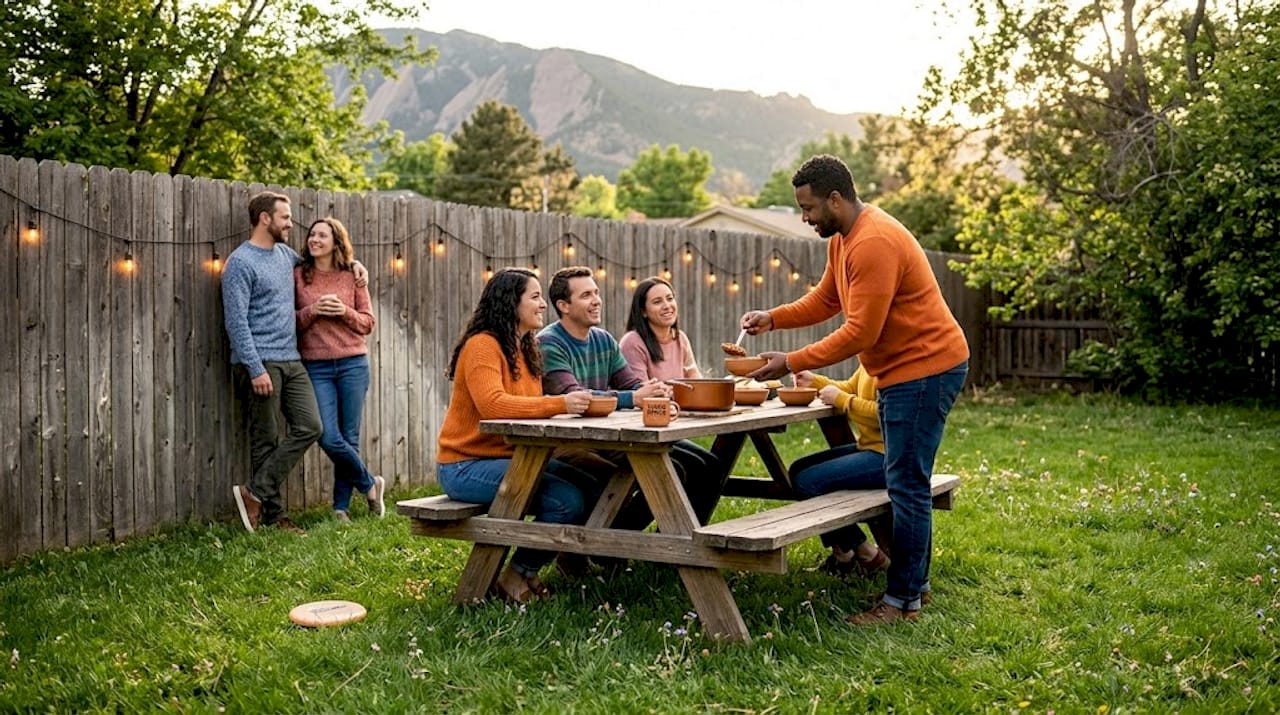
Research tied to Colorado Springs' own initiative confirms that knowing six neighbors' names significantly reduces social isolation. That number is surprisingly achievable. The city launched a "1,000 Neighborhood Gatherings" campaign built entirely on this idea. The goal was simple, self-organized neighborhood get-togethers that did not require permits, sponsors, or city staff.
The formats that actually work are lower-effort than you think:
- Driveway donut mornings (30 minutes, a box of pastries, and an open invitation posted in your mailbox cluster)
- Backyard walk-and-talks for two or three neighbors at a time
- Casual porch dinners where each person brings one dish
- Block-wide introductions during a weekend morning walk
The city even provides small gathering toolkits with printable invitations and planning guides to remove the friction of starting. You do not have to design anything. You just have to be willing to show up first.
Pro Tip: When you invite neighbors, do not just text the people you already know. Slide a paper invitation under the door of the household you have never spoken to. That is the connection point that actually changes the block.
The most important question driving Colorado Springs' neighborhood engagement right now is: "Who's missing?" Meaning, which neighbors never show up to anything? Identifying them and personally inviting them is what separates a social gathering from genuine community building.
Connecting through larger events and volunteer work
Once you have a few neighbors in your circle, larger events give you a way to expand that circle fast. Colorado Springs runs several high-profile events each year that double as community connection points.
Territory Days is one of the biggest. Held every Memorial Day weekend on the Westside, it attracts 20,000 to 30,000 visitors per day across a three-day stretch with roughly 250 vendors. This year marks its 50th anniversary. The scale can feel overwhelming, but a few logistics tips make participation much more rewarding:
- Park at the downtown garage for $1 per hour instead of hunting street spots.
- Take the free shuttle service rather than walking long distances in crowds.
- Arrive in the morning when vendors are fresh and lines are shorter.
- Visit the same vendor booths across two days. That repetition is how casual conversations become actual connections.
For volunteer-driven engagement, CityServe Day is the most impactful single-day opportunity in Colorado Springs. Thousands of volunteers participate each spring, and the event works because it aligns businesses, nonprofits, and faith communities around practical neighborhood projects rather than just social networking.
Long-term volunteer organizations carry even more weight. El Cinco de Mayo Inc. has awarded approximately $339,000 in scholarships to roughly 470 local students over 34 years. When you join an organization like that, you are not just attending events. You are contributing to something with a 34-year track record in the community.
For residents with mobility considerations, the Trackchair Program offers free, reservation-based guided hikes in local parks, running Wednesday through Sunday with two daily time slots. It is a strong example of how community outreach in Colorado Springs is actively working to include everyone.
Getting involved in civic activities and planning
Showing up to a festival is fun. Showing up to a city planning meeting is where you actually shape the neighborhood for the next ten years. Civic participation is one of the most underused ways to connect with Colorado Springs residents who care about the same streets, schools, and parks you do.
Here is how to find and use these civic opportunities:
- City surveys: Watch the city's official website and local news for open feedback periods on infrastructure and park projects.
- School district meetings: Colorado Springs school districts run regular community engagement sessions, especially around bond measures and curriculum changes.
- Neighborhood advisory boards: Many city districts have formal boards that meet monthly and accept community members as participants.
- Public comment periods: Zoning changes, business permits, and development projects all go through public comment phases that are open to any resident.
The philosophy behind effective civic engagement matters here. Good community engagement has two modes. Proactive outreach means you go find people who are not already at the table, which is exactly what the "Who's missing?" initiative does. Reactive listening means you create channels where residents feel heard even when every request cannot be fulfilled immediately.
| Engagement Mode | What It Looks Like | Your Role as a Resident |
|---|---|---|
| Proactive | City-run surveys, neighborhood invitations | Complete surveys, share with neighbors |
| Reactive | Public hearings, comment periods | Attend, speak, submit written feedback |
| Resident-led | Self-organized gatherings, block associations | Initiate, invite, follow up |
Pro Tip: If you submit feedback on a city survey, screenshot your submission and post it to a neighborhood group chat. It shows others that participation is easy and takes less than ten minutes, which often motivates the next person to do the same.
Building a real relationship with local government sounds intimidating, but it mostly comes down to showing your face at the same meetings two or three times in a row. Staff members remember consistent participants and that visibility matters when decisions get made.
My take on what real engagement actually requires
I have spent a lot of time watching how community engagement plays out in cities like Colorado Springs, and the pattern I keep seeing is this: the people already showing up to events are not the problem. The challenge is always reaching the neighbors who are not there yet.
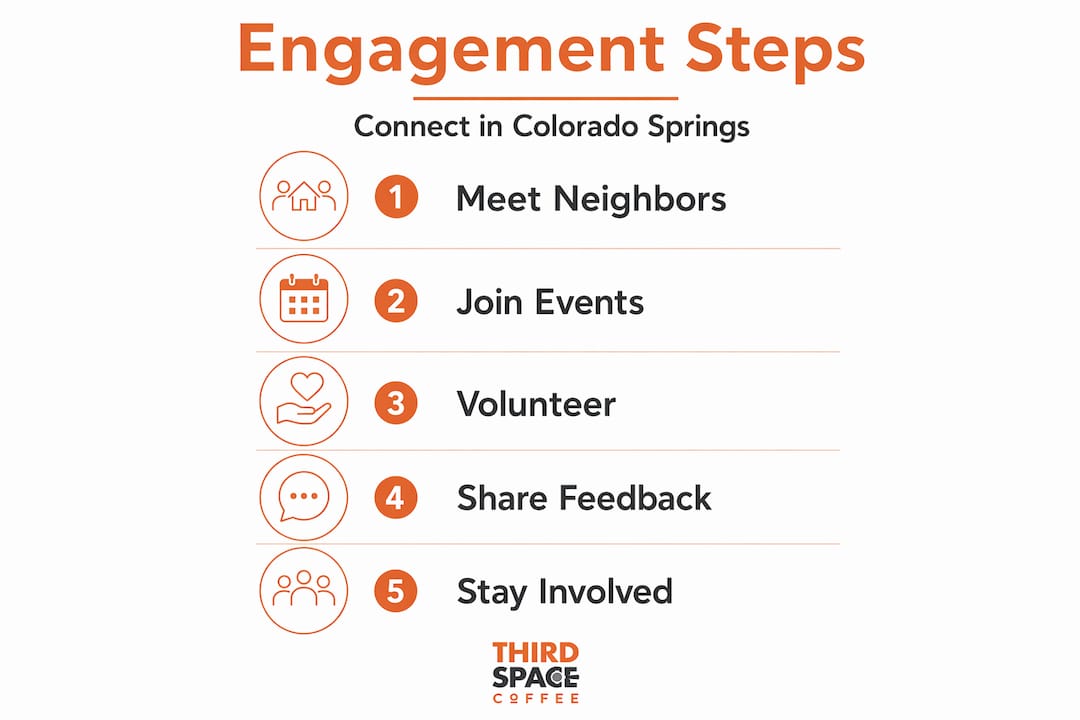
Every gathering I have seen that actually shifted a block's dynamic started with someone asking, "Who haven't I talked to yet?" Not "Who do I want to invite?" Those are very different questions. The first one is about service. The second one is about comfort.
What I find genuinely remarkable about Colorado Springs is that the infrastructure for engagement already exists. The toolkits are there. The events are there. What community coffee spaces mean for sustained connection is also something worth understanding. Consistent social spaces where people run into each other repeatedly are what turn acquaintances into actual neighbors.
The lesson I keep coming back to is that engagement is not a one-time act. It is a practice. Showing up once to a neighborhood gathering is nice. Showing up three times is when people start counting on you. That shift from participant to anchor is where the real community gets built. Small efforts compounded over months produce neighborhoods that actually know each other.
— Tanya
Where Thirdspacecoffee fits into your community connection plan

If you are looking for a physical place in Colorado Springs where community engagement happens naturally, Thirdspacecoffee is worth knowing about. Located right here in the city, it is more than a coffee shop. It is a venue, a meeting point, and a gathering space that takes the logistical pressure off anyone trying to organize local events.
The specialty drinks menu is a real draw for coffee lovers, and the in-house roasted whole bean coffees are available for pickup or online order. But the bigger opportunity for community-minded residents is the event space itself. You can book it for neighborhood meetings, local group gatherings, or civic planning sessions. For anyone organizing resident-led events, having a ready-made space with great coffee removes one of the biggest friction points. Explore everything Thirdspacecoffee offers at thirdspacecoffee.com.
FAQ
How do I start engaging in Colorado Springs with no connections?
Start with one neighbor, not a whole block. A simple paper invitation for a 30-minute driveway meetup is enough. The city's "1,000 Neighborhood Gatherings" toolkit offers free printable resources to help you begin.
What are the best Colorado Springs volunteer opportunities for new residents?
CityServe Day each spring is the most accessible single-day volunteer event, bringing together thousands of participants citywide. El Cinco de Mayo Inc. and similar long-running nonprofits also welcome new volunteers year-round.
How do I find community events in Colorado Springs?
Use the PeakRadar cultural calendar and the Visit COS Locals Corner to browse events by date and neighborhood. Both are free and updated regularly.
Can I engage with Colorado Springs city planning as an ordinary resident?
Yes. The city posts open feedback surveys for active projects, and public comment periods are open to any resident. The Colorado Avenue pilot project is a current example of an accessible civic feedback opportunity.
What makes neighborhood gatherings more effective than large public events?
Small gatherings generate direct, personal connections that large events rarely produce. Research cited in the city's own engagement programs shows that knowing just six neighbors by name measurably reduces social isolation, something a festival alone cannot replicate.