

TL;DR:
- Choosing a meeting space requires careful consideration of location, capacity, and technology needs.
- Effective booking involves clear communication, itemized quotes, and early confirmation to avoid hidden fees.
Meeting space booking is the process of identifying, reserving, and securing the right venue for gatherings, workshops, or community events, matched to your specific group size, format, and technology needs. For event planners in Colorado Springs, this process carries real stakes. The wrong room kills momentum before the first agenda item. This meeting space booking guide covers every step, from evaluating venues and submitting quotes to avoiding the hidden fees and scheduling conflicts that derail even well-planned events.
What factors should you consider when choosing a meeting space?
The right venue starts with location. Planners in Colorado Springs should prioritize spaces near major transit corridors or central neighborhoods so attendees can arrive without stress. Parking availability matters just as much as proximity, especially for community workshops where guests may not know the area.
Capacity is the second factor, and it trips up more planners than any other. Room ratings vary by layout: a room listed for 10 people in theater seating may only fit 6 comfortably in a boardroom arrangement. Always confirm the seating style that matches your event format before you commit.
Technology requirements have become non-negotiable. Hybrid AV equipment including webcams, microphones, and speakers is now considered a baseline requirement, not an optional add-on. If a venue cannot confirm these items are included, budget for rentals or look elsewhere.
Beyond tech, check for:
- Breakout spaces for small-group discussions or one-on-one sessions
- Reliable Wi-Fi with a dedicated bandwidth allocation, not shared public access
- Catering options or kitchen access, especially for half-day or full-day events
- Accessible restrooms and ADA-compliant entry points
- Natural light or adjustable lighting for workshops that run several hours
Pro Tip: Ask the venue coordinator to walk you through the room in its exact intended layout before you sign anything. Photos on a website almost always show the most flattering configuration.
Pricing transparency is the final filter. Request an itemized quote that separates room rental from AV, cleaning, and catering charges. Hidden fees can increase total costs by 20% or more. That number adds up fast on a tight community event budget.
How do you book a meeting space step by step?
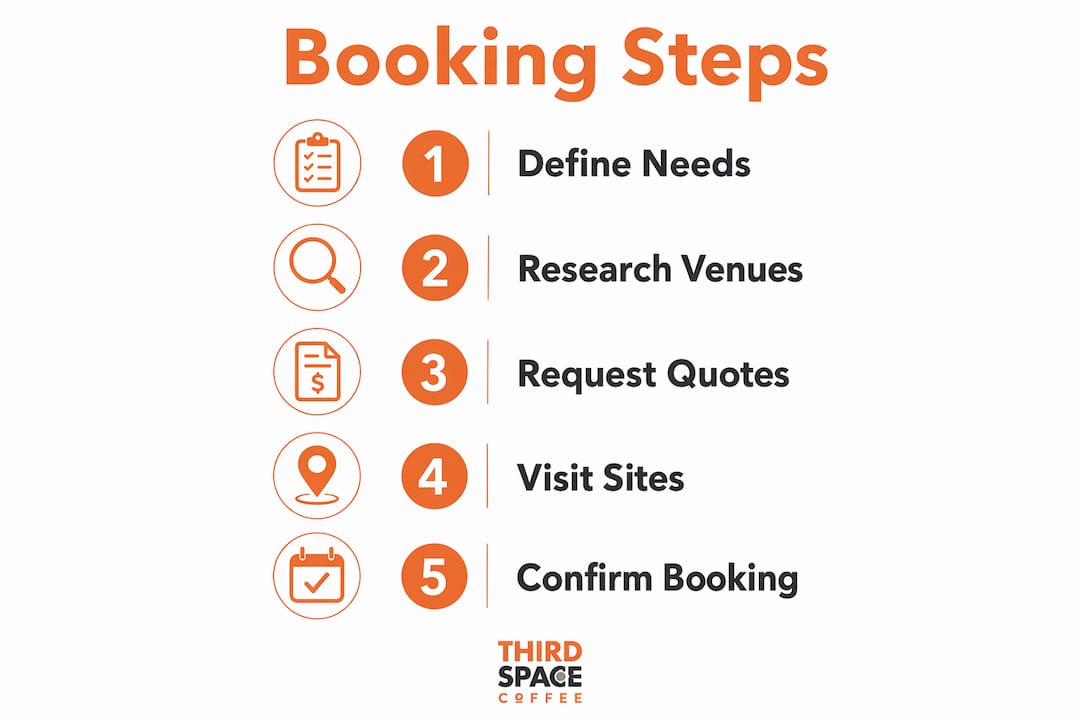
A clear reservation workflow prevents the most common conference space booking mistakes. Follow these steps in order.
-
Define your event parameters. Write down your headcount, preferred seating layout, start and end times, and any technology requirements. Include buffer time. Adding 15 minutes before and after your meeting allows for setup, technical troubleshooting, and a clean transition for the next group.
-
Search with filters, not just keywords. Use platforms that let you filter by capacity, location, amenities, and date. For Colorado Springs events, check local hospitality venues and community spaces alongside hotel conference rooms. A multi-use venue checklist helps you compare options systematically.
-
Request itemized quotes from at least two venues. Ask directly: "Does this price include AV, cleaning, and setup?" Get the answer in writing. Verbal confirmations disappear when billing disputes arise.
-
Review the contract before signing. Confirm the cancellation policy, overtime fees, and what happens if attendance changes. Many venues charge for the full room regardless of actual headcount.
-
Confirm your booking through the venue's official channel. Email confirmation with a reference number is the minimum. For larger events, request a signed agreement.
-
Set a calendar reminder for your check-in window. Booking 2–3 days in advance is the standard lead time for peak periods. Same-day reservations are often available for small groups, but peak times fill fast in active markets.
-
Communicate changes early. If your headcount shifts or your schedule changes, notify the venue as soon as possible. Last-minute adjustments are easier to accommodate when the venue has time to respond.
Pro Tip: For recurring meetings, ask the venue about maximum advance booking limits. Recurring reservations typically cap at three months and include auto-cancellation rules after multiple no-shows, which protects both parties.
What are common challenges in meeting space bookings?
Ghost meetings are the most expensive problem in venue management. A ghost meeting happens when a room is reserved but the group never shows up or cancels too late for the space to be reassigned. QR code or app-based check-in within a 10–15 minute grace period automatically releases the room if no one arrives. This single policy recovers significant capacity at busy venues.
Overcapacity errors come second. Planners often book based on headcount alone without accounting for the seating layout. Booking based only on headcount without verifying layout is the most common mistake that leads to ineffective meetings. A room that seats 20 in rows may only seat 12 around a conference table.
Budget surprises are the third major challenge. Common hidden charges include:
- AV rental fees not included in the base room rate
- Cleaning surcharges for events involving food or large groups
- Overtime billing when events run past the reserved window
- Parking validation costs passed to the organizer
Itemized cost breakdowns and early confirmation of AV, catering, and amenities prevent last-minute budget overruns. Ask for the full cost breakdown before you pay any deposit.
Conflicting bookings are less common when venues use live scheduling systems. Unified scheduling platforms reflect real-time availability across all booking channels, eliminating the double-booking risk that calendar-only systems create. If a venue still manages reservations by spreadsheet or phone, treat that as a red flag.
For urgent or last-minute bookings in Colorado Springs, contact the venue directly by phone rather than waiting on an online form. Many spaces hold back-pocket availability that does not appear on public booking pages.
How does technology improve the meeting space booking experience?
Digital workspace management tools have changed how planners search, reserve, and manage venues. Over 61% of corporate offices now use these platforms to standardize room booking across locations. That adoption rate reflects a real efficiency gain, not a trend.
The features that matter most for Colorado Springs event planners are:
| Feature | Why it matters |
|---|---|
| Real-time availability | Prevents double bookings and shows accurate open slots |
| Check-in enforcement | Releases unused rooms automatically after a grace period |
| Calendar integration | Syncs with Microsoft Outlook and Google Workspace |
| Buffer time settings | Adds automatic gaps between reservations for setup |
| Approval workflows | Lets organizers confirm bookings without back-and-forth emails |
Calendar integration deserves special attention. When your booking platform syncs with tools like Google Workspace or Microsoft Outlook, every attendee sees the confirmed room details in their calendar invite. That eliminates the "which room are we in?" confusion that wastes the first five minutes of every meeting.
Hybrid meeting support is now a default expectation, not a premium feature. An event-ready venue should provide webcam, microphone, and speaker setup as part of the standard room package. If remote participants cannot hear or see clearly, the meeting fails for half the room.
Pro Tip: For team offsites and multi-session events, platforms like TINA centralize logistics across multiple venue options, which saves significant coordination time for planners managing complex schedules.
Booking analytics add another layer of value. When you track which rooms get used, at what times, and by which group sizes, you build a data set that makes future bookings faster and more accurate. Even informal notes after each event serve this purpose.
Key Takeaways
The most effective meeting space booking process combines clear event parameters, itemized pricing, real-time scheduling tools, and direct communication with the venue before and after confirmation.
| Point | Details |
|---|---|
| Verify layout, not just capacity | A room rated for 10 in theater style may only fit 6 in boardroom format. |
| Request itemized quotes | Hidden fees for AV, cleaning, and overtime can add 20% or more to your total cost. |
| Book 2–3 days ahead for peak times | Same-day bookings work for small groups, but popular slots fill quickly. |
| Use check-in enforcement | QR code or app check-in within 10–15 minutes prevents ghost meetings and frees unused rooms. |
| Add buffer time to every reservation | A 15-minute buffer before and after each meeting prevents setup conflicts and tech delays. |
What I've learned from booking meeting spaces in Colorado Springs
The advice that gets skipped most often is also the most valuable: build a relationship with your venue before you need it urgently. Planners who treat venue coordinators as partners, not just service providers, consistently get better availability, faster responses, and more flexibility on last-minute changes.
Colorado Springs has a genuinely diverse mix of meeting venues, from hotel conference rooms to community-focused hospitality spaces. The planners who struggle are usually the ones who default to the biggest or most familiar option without checking whether the space actually fits their event format. A 30-person workshop needs a very different room than a 30-person presentation.
I've also seen hybrid meeting expectations shift dramatically. Two years ago, a venue with a TV screen and a speakerphone was considered "hybrid ready." That standard no longer holds. Attendees joining remotely now expect to see the room clearly, hear every speaker without strain, and participate without lag. If a venue cannot demonstrate its AV setup before your event, walk through it yourself on a test call.
On budget: the planners who stay on budget are the ones who ask uncomfortable questions upfront. "What is not included in this price?" is the single most important question in any venue negotiation. The answer reveals more about a venue's transparency than any marketing material.
Finally, lead time matters more than most planners realize. Booking 2–3 days ahead works for routine small-group meetings. For workshops, community events, or anything requiring catering and AV setup, two weeks is a safer minimum in a market like Colorado Springs where quality spaces book up faster than the online calendars reflect.
— Tanya
Thirdspacecoffee: a venue built for your next Colorado Springs event
Thirdspacecoffee in Colorado Springs offers a versatile space for meetings, workshops, and community gatherings, with the kind of warm, focused atmosphere that hotel conference rooms rarely deliver.

The venue accommodates varied group sizes and event formats, from intimate planning sessions to larger community workshops. Specialty coffee and beverages are available on-site, including specialty drinks that make a real difference when you want attendees energized and engaged rather than hunting for a coffee shop between sessions. Booking is straightforward through the Thirdspacecoffee website, where you can also review hours, location details, and contact the team directly to confirm availability for your event date.
FAQ
How far in advance should I book a meeting space?
Book 2–3 days ahead for peak times or larger gatherings. Same-day reservations are often available for small groups, but high-demand slots fill quickly.
What is a ghost meeting and how do I prevent it?
A ghost meeting occurs when a reserved room goes unused because the group cancels late or does not show up. Venues that enforce QR code or app check-in within a 10–15 minute window automatically release the room, preventing wasted space.
What should an itemized meeting space quote include?
A complete quote should list the base room rate, AV equipment fees, cleaning charges, catering costs, and any overtime billing. Hidden fees can increase your total cost by 20% or more if you do not confirm inclusions upfront.
What seating layouts should I know before booking?
Theater, boardroom, classroom, and workshop layouts each require different square footage per person. A room rated for 10 in theater seating may only accommodate 6 in a boardroom arrangement, so always confirm the layout matches your event format.
Does Thirdspacecoffee offer meeting space in Colorado Springs?
Thirdspacecoffee provides bookable event and meeting space in Colorado Springs, suitable for gatherings, workshops, and community events, with specialty coffee and beverages available on-site.