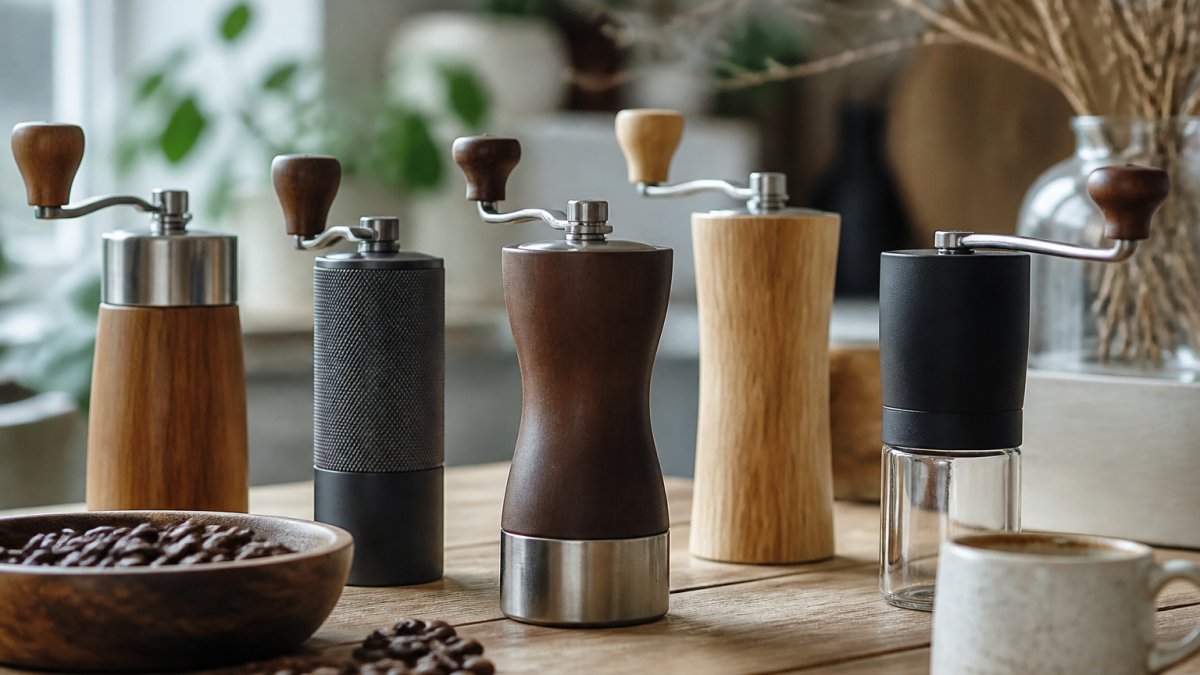
 listicle
Best Manual Coffee Grinders for Home Brewing
Table of Contents
- Best Manual Coffee Grinders: Quick Comparison
- How We Evaluated Manual Coffee Grinders
- Manual Coffee Grinder for Beginners: 1Zpresso J
- Best Budget Manual Coffee Grinder Under $100: Timemore Chestnut C2
- Manual Coffee Grinder for French Press: Comandante C40
- Manual Coffee Grinder for Espresso: 1Zpresso J-Ultra
- What to Look for in a Manual Coffee Grinder
- Conclusion
- Frequently Asked Questions
Last Updated: October 4, 2026
Best Manual Coffee Grinders: Quick Comparison
Finding the right manual coffee grinder transforms your morning routine. A quality hand grinder delivers fresher coffee than pre-ground options while giving you precise control over grind size for any brewing method. Whether you're grinding for pour-over, French press, or espresso, the grinder you choose directly impacts extraction and flavor.
We've evaluated leading manual coffee grinders based on grind uniformity, adjustment range, durability, and real-world usability.
Quick Picks:
- Best Overall: 1Zpresso J, balanced performance and ease of use for most home brewers
- Best for Beginners: 1Zpresso J, straightforward operation with excellent grind consistency
- Best Budget Option: Timemore Chestnut C2, solid performance without the premium price
- Best for French Press: Comandante C40, precision burrs deliver uniform coarse grounds
- Best for Espresso: 1Zpresso J-Ultra, broad grind range handles fine espresso grounds
| Model | Best For | Key Strength | Adjustment Type |
|---|---|---|---|
| 1Zpresso J | All-around home brewing | Consistent performance | Click-based settings |
| Timemore Chestnut C2 | Budget-conscious brewers | Value for money | Stepless dial |
| Comandante C40 | Precision-focused users | Grind uniformity | Fine adjustment |
| 1Zpresso J-Ultra | Espresso enthusiasts | Broad grind range | Click-based settings |
How We Evaluated Manual Coffee Grinders
Manual coffee grinders live or die by grind consistency, uniform particle size across the full range prevents uneven extraction and wasted beans. Our evaluation framework examined five core areas.
Burr Material and Geometry Assessment We examined burr type, material, and tooth design, then ground 30-gram samples and assessed particle uniformity. Burrs producing consistent grounds without excessive fines ranked higher.
Adjustment Range and Tactile Feedback Testing We tested each grinder's full range at minimum, middle, and maximum settings, then brewed samples to confirm claimed capabilities. We assessed click granularity, dial responsiveness, and position reliability.
Grinding Effort and Time Measurement We ground 30-gram doses at medium, coarse, and fine settings, timing each and assessing handle ergonomics through 5-minute continuous grinding. Grinders with consistent speed and minimal strain scored higher.
Durability and Repairability Verification We researched replacement part availability and cost, examined construction materials in high-stress areas, and reviewed warranty terms and long-term durability reports. Grinders with available parts and all-metal construction ranked higher.
Total Cost of Ownership Calculation We calculated yearly ownership cost based on purchase price, replacement burr cost, and estimated service life. A grinder costing $80 with $40 burrs lasting 3 years costs about $40 per year; a $150 grinder with $60 burrs lasting 7 years costs about $30 per year.
Manual Coffee Grinder for Beginners: 1Zpresso J
The 1Zpresso J handles the full range of brew methods with click-based adjustment that removes guesswork. The burr design produces uniform particles across coarse and medium settings, making it forgiving for pour-over and drip coffee. Grinding a 30-gram dose takes under two minutes without excessive strain.
The J's capacity balances full brewing cycles with easy storage, making it ideal for testing daily manual grinding without serious investment.
The J isn't optimized for espresso-fine grinds and trails premium models at coarser settings. For French press or cold brew exclusively, a specialized option may serve better.
Best Budget Manual Coffee Grinder Under $100: Timemore Chestnut C2
The Timemore Chestnut C2 delivers grind consistency above its price point with a stepless dial for infinite adjustment. The burr geometry produces acceptable uniformity for pour-over and drip methods. Handle ergonomics are solid and grinding effort stays reasonable.
The C2 uses aluminum construction that holds up to daily use for several years, though all-steel designs last longer.
Capacity is modest and grinding requires slightly more effort than premium models, noticeable for multiple daily cups.
Manual Coffee Grinder for French Press: Comandante C40
The Comandante C40 excels at producing consistent coarse grounds for immersion brewing. Its precision burr design avoids the uneven tearing that plagues other grinders, with fine adjustment for exact coarse sizing.
The C40 feels built to last with solid construction and a satisfying handle. Grinding 30 grams takes a few minutes.
The C40's sweet spot is coarse to medium-coarse. For single-method brewers, this specialization is a strength; for versatility, it's a constraint.
Manual Coffee Grinder for Espresso: 1Zpresso J-Ultra
The 1Zpresso J-Ultra reaches true espresso fineness with a broad grind range. Its burr design maintains consistency across the full spectrum, with click-based settings offering granular control at the fine end.
Grinding espresso-fine grounds requires more effort; expect 3-5 minutes per dose, which is acceptable for manual grinding.
The J-Ultra costs more than the standard J but pays off for espresso routines. Espresso grinding reveals burr inconsistencies more visibly than coarser methods; the J-Ultra minimizes this, though manual espresso grinding remains more demanding than electric alternatives.
What to Look for in a Manual Coffee Grinder
Choosing a manual coffee grinder means understanding the features that actually affect your coffee. Marketing claims about "precision" or "premium burrs" mean little without understanding what they deliver in your cup. Beyond the product recommendations above, here's how to evaluate any manual grinder and dial it in for your brewing method.
Burr Material and Grind Consistency
Burr material determines how long your grinder stays sharp and how uniform the grounds become. Stainless steel burrs resist corrosion and maintain their edge longer than softer metals. The geometry matters equally: conical burrs work differently than flat burrs, and neither is universally superior.
Grind consistency is where burr quality reveals itself. A well-designed burr produces particles of similar size across the full range. Inconsistent grinds contain both dust and whole beans, which leads to uneven extraction. Some grounds over-extract while others under-extract, muddying the final flavor.
Test this by grinding a sample and looking at the result. Uniform grounds should look like sand of consistent grain size. Inconsistent grinds show obvious variation, fine dust mixed with noticeably larger particles. The more uniform, the better your extraction will be across different brew methods.
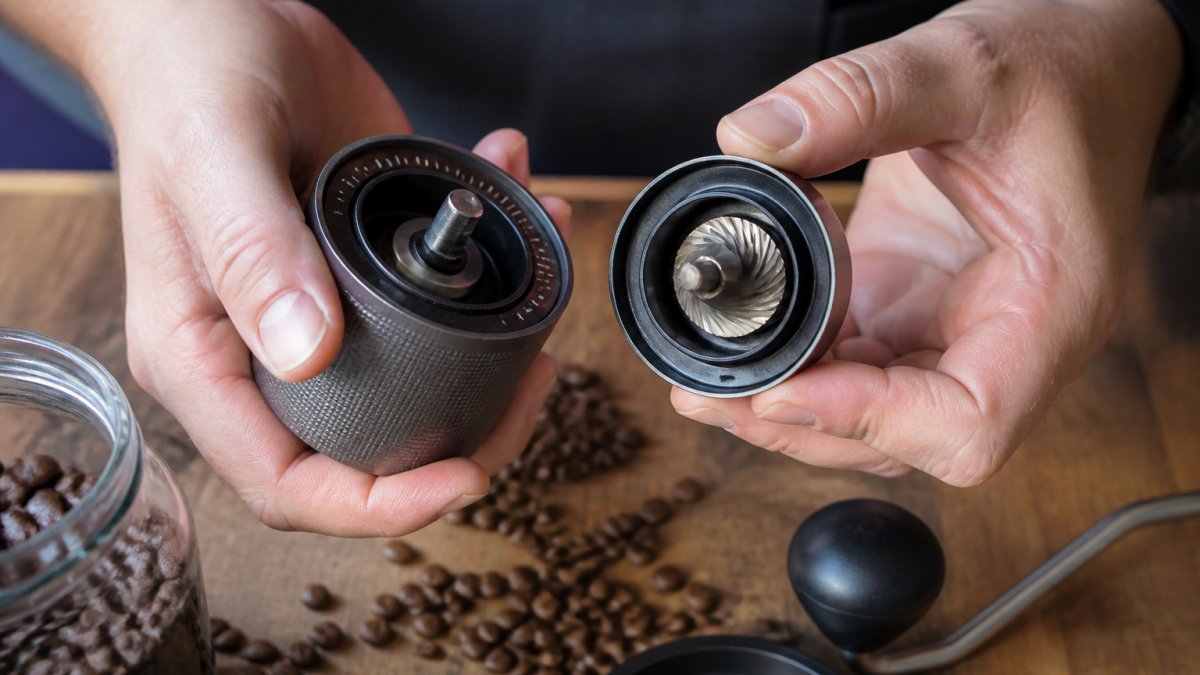
Adjustment Range and Brew Method Compatibility
Different brewing methods require different grind sizes. French press needs coarse grounds that settle without passing through the mesh. Pour-over demands medium grounds that balance extraction time. Espresso requires fine, uniform powder. A grinder with a broad adjustment range handles all three.
Click-based adjustment systems lock into specific settings, which helps you reproduce the same grind size consistently. Stepless dials offer infinite adjustment but require you to remember where you set them. Both approaches work; the choice depends on whether you value consistency or flexibility more.
Check the adjustment range before buying. A grinder that maxes out at medium-coarse won't handle espresso. One that only goes to medium-fine won't give you the coarse grounds French press demands. The best manual coffee grinders for home brewing offer enough range to cover your actual brewing methods. Matching your burr set to the specific requirements of your beans ensures that every cup of coffee for home brewing reaches its full potential.
Practical Dial-In Guidance by Brewing Method
Once you own a manual grinder, you need to know where to start adjusting for different brewing methods. These starting points assume a medium-roasted specialty coffee and standard brewing parameters. Adjust from these baselines based on your taste preferences and water quality.
Pour-Over (Chemex, V60, Melitta) Start at a medium grind setting, roughly equivalent to sea salt or fine sand. If your brewer uses a thick paper filter, you can go slightly coarser without over-extracting. If you taste sourness (under-extraction), move one or two clicks finer; if you taste bitterness (over-extraction), move coarser.
French Press Start at a coarse setting, grounds should resemble breadcrumbs or coarse sea salt. French press is forgiving because immersion brewing is less sensitive to particle size than drip methods, but uniformity still matters.
Espresso Start at the finest setting your grinder offers and work backward. Espresso is the most sensitive to grind size because water passes through the grounds under pressure in 25-30 seconds. Too coarse and water rushes through (sour, thin shot); too fine and water can't penetrate (bitter, slow flow).
Cold Brew Start at a coarse setting similar to French press, you want large, uniform grounds that won't cloud the final brew. Cold brew steeps for 12-24 hours, so grind size is less critical than with hot brewing, but uniformity still improves clarity.
Turkish Coffee Start at the finest setting your grinder offers, Turkish coffee requires powder-fine grounds that approach flour consistency. This is the most demanding grind for manual grinders and will take the longest. If your grinder struggles to reach true Turkish fineness, it's not optimized for this method.
Durability, Repairability, and Long-Term Value
A manual grinder is a mechanical tool. It can break, and when it does, you want to fix it rather than replace it. Check whether replacement parts are available, burrs, handles, and adjustment mechanisms all wear over time. Brands that sell replacement parts signal confidence in durability and support long-term ownership.
Construction quality predicts longevity. Aluminum bodies are lighter but softer than stainless steel. All-steel construction lasts longer but weighs more. Plastic components fail faster than metal, so examine what materials the grinder uses in high-stress areas like the handle attachment and adjustment mechanism.
Daily use reveals durability quickly. A grinder that feels solid in your hand and grinds smoothly after 100 uses will likely serve you for years. One that develops wobbles or grinding resistance within weeks suggests cheaper construction that won't age well.
Total cost of ownership matters more than purchase price. A grinder that costs twice as much but lasts twice as long costs the same per year. One that needs replacement in two years because the burrs dulled or the handle cracked becomes expensive.
Conclusion
The best manual coffee grinder for your home isn't necessarily the most expensive one, it's the model that matches your brewing method and daily routine. If you grind for French press, precision burrs matter more than espresso-fine capability. If you experiment across methods, a versatile grinder with a broad adjustment range serves you better than a specialized model.
At Third Space Coffee, we believe fresh-ground coffee deserves the right tools. Our in-house roasted beans reach their full potential when ground fresh with a quality hand grinder. Visit Third Space Coffee to explore our freshly roasted beans and discover how a quality grinder transforms your morning brew.
Frequently Asked Questions
What should I look for in a manual coffee grinder?
Prioritize burr type (conical burrs deliver more uniform particle size), grind adjustment range (wider ranges suit multiple brew methods), and build quality. Check if the grinder's adjustment system matches your preferred brewing method, espresso requires fine-grind capability, while French press needs coarse-grind settings. Assess the handle design for grinding effort and comfort, especially if you grind daily. Verify that replacement parts are available for long-term durability.
Can a manual coffee grinder grind beans for espresso?
Yes, but not all manual grinders handle espresso equally. Espresso requires very fine, consistent grounds, so you need a grinder with a broad adjustment range that goes fine enough and produces uniform particle size. Models like the 1Zpresso J-Ultra are specifically designed for espresso with their extended grind range. Budget or compact grinders may struggle to reach the fineness needed for espresso extraction, so verify the grinder's minimum grind setting before purchasing.
How long does it take to grind coffee by hand?
Grinding time depends on bean quantity, grind fineness, and the grinder's design. Coarser grinds (French press, drip) typically take 1-2 minutes for a standard dose. Fine grinds (espresso) can take 3-5 minutes because finer particles require more grinding effort. Hand-crank grinders with efficient burr geometry and comfortable handles reduce fatigue. If grinding speed matters for your routine, prioritize models known for smooth, fast grinding action rather than compact budget options.
Do manual coffee grinders work well compared to electric grinders?
High-quality manual grinders produce grind consistency comparable to electric burr grinders when they feature conical burrs and precise adjustment. The main trade-off is grinding effort and time, manual grinders require physical work, while electric grinders finish in seconds. For home brewers who value fresh beans and don't grind large quantities daily, manual grinders offer excellent grind quality, lower cost, and portability. They're ideal for pour-over, French press, and even espresso if you choose a model with the right adjustment range.