
TL;DR:
- A thoughtfully curated coffee menu enhances guest experience and reflects local culture.
- Keep the menu focused with 8-12 core drinks plus a few seasonal specialties.
- Use creative names and descriptions to make signature drinks memorable and engaging.
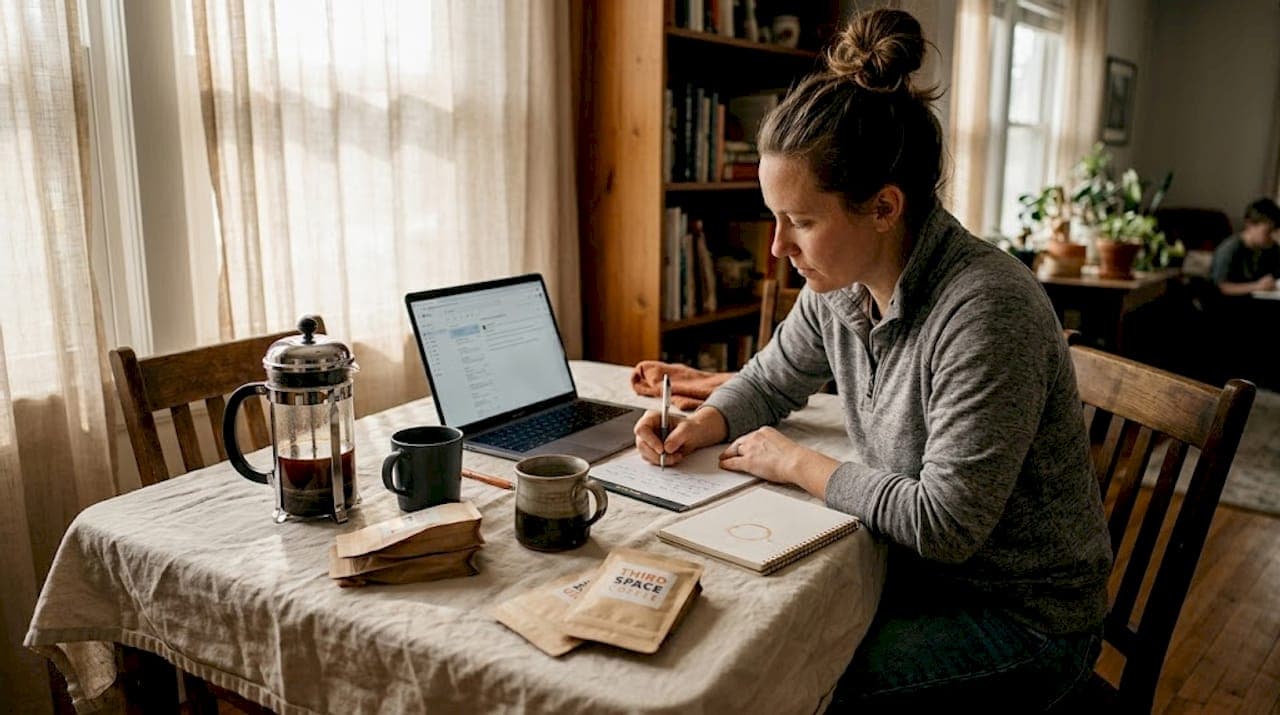
Picture this: you're at a Colorado Springs gathering, and instead of the usual drip coffee and powdered creamer, the host rolls out a handwritten menu featuring a "Pikes Peak Cold Brew," a lavender oat latte, and a rotating seasonal special. Guests are snapping photos, asking questions, and lingering longer than expected. That's the power of a thoughtfully curated coffee menu. Whether you're planning a corporate event, a backyard party, or simply want to elevate your home coffee routine, this guide walks you through every step, from concept to final pour.
Table of Contents
- Defining your coffee menu concept
- Assembling tools, ingredients, and requirements
- Step-by-step: Designing your standout coffee menu
- Testing, refining, and presenting your menu
- Why unique coffee menus matter more than you think
- Bring your coffee menu vision to life with Third Space Coffee
- Frequently asked questions
Key Takeaways
| Point | Details |
|---|---|
| Start with a clear concept | Know your audience and choose simplicity or variety to match your event style. |
| Include inclusivity options | Always feature decaf, alt milks, and dietary-friendly snacks on your coffee menu. |
| Leverage local inspiration | Use local roasts and Colorado flavors for a unique and memorable menu. |
| Optimize for presentation | Choose menu formats—physical for premium, digital for events—that best fit your setting. |
| Iterate your menu | Test, gather feedback, and refine offerings regularly for the best guest experience. |
Defining your coffee menu concept
Every great coffee menu starts with a clear vision. Before you pick a single drink, ask yourself: who are you serving, and what experience do you want them to walk away with? The answer shapes everything from your drink count to your ingredient list.
There's a real tension between simplicity and variety. According to menu engineering principles, a small cafe typically thrives with 12 to 18 drinks, while event menus should prioritize crowd-pleasers and one or two signature drinks that make guests feel like they're getting something special. Too many choices cause decision fatigue. Too few feel underwhelming. The sweet spot for a gathering is intentional variety without chaos.
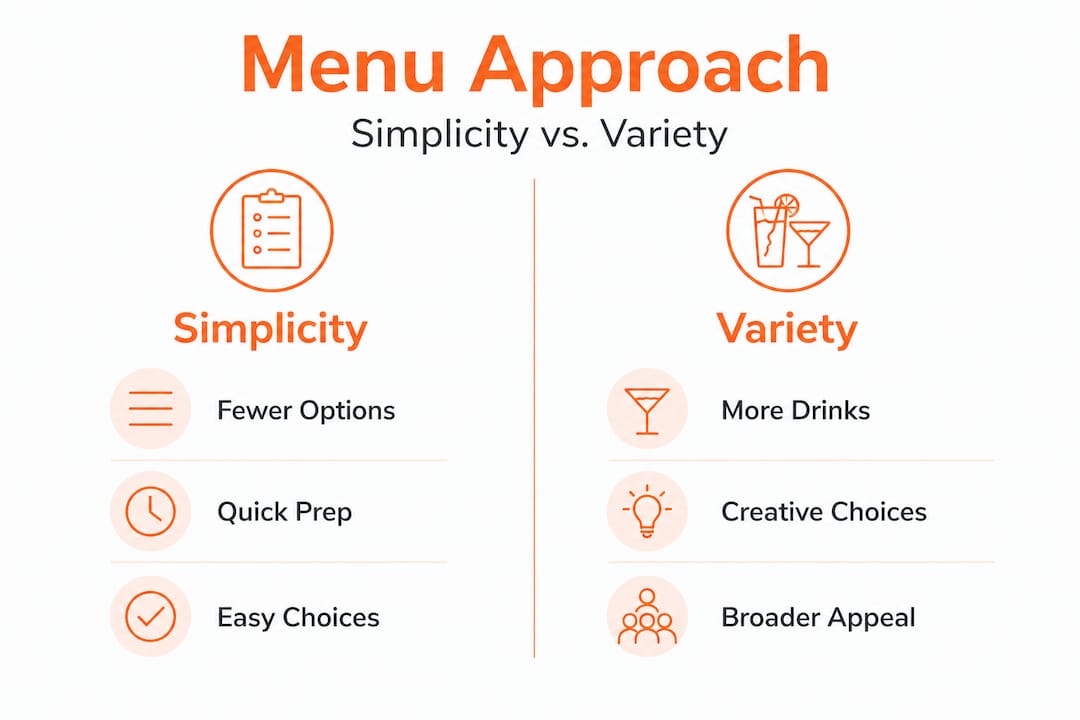
Think about your audience carefully. Are you hosting coffee enthusiasts who want single-origin pour-overs and tasting notes? Or are you planning a family reunion where kids need something fun and adults want a reliable latte? Families benefit from a "not coffee" section featuring hot chocolate, chai, and fruit-forward options. Enthusiasts, on the other hand, appreciate a rotating specialty or a locally sourced bean with a story behind it.
Colorado Springs has a distinct coffee culture worth tapping into. There's genuine pride in local craft here, and guests notice when you support local roasters rather than defaulting to a national chain bag. Featuring a locally roasted bean as your house coffee is a small detail that carries a lot of weight.
Seasonal and rotational items also add a layer of excitement that keeps people coming back. A pumpkin spice cortado in fall, a peppermint mocha in December, or a hibiscus cold brew in summer all give your menu a sense of place and time.
Key factors to define before building your menu:
- Guest demographics (age, coffee knowledge, dietary needs)
- Setting (indoor event, outdoor gathering, home setup)
- Season and local flavor inspiration
- Budget for specialty ingredients and equipment
- Whether you want a static or rotating menu
Pro Tip: Start with 8 to 12 core options for any gathering, then add 2 to 3 rotating specialties. This keeps prep manageable while giving guests something to discover.
Assembling tools, ingredients, and requirements
Now that your concept is set, gather everything you'll need before you start building your menu. A coffee menu is only as good as the ingredients and tools behind it. Skipping this step leads to last-minute scrambles and disappointed guests.
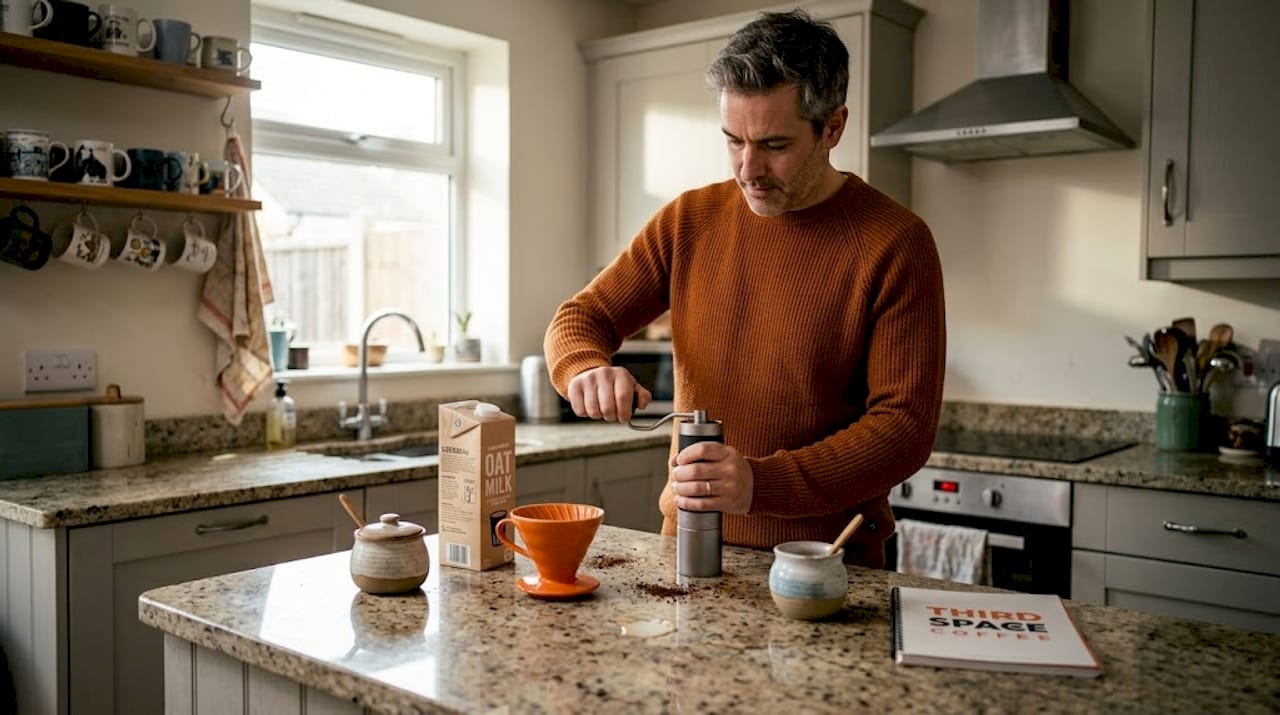
Modern coffee menus, especially for events, need to account for dietary preferences and accessibility. Offering decaf, quality alt milks, and food options for dietary needs, along with QR menus for events, is now considered a baseline standard, not a bonus. Oat milk, almond milk, and coconut milk should each carry a small upcharge (typically $0.50 to $1.00) to reflect their cost, and guests generally accept this when the quality is visible.
Here's a practical breakdown of what you'll need:
| Category | What to include |
|---|---|
| Coffee beans | House blend, single-origin, decaf option |
| Milks and alt milks | Whole milk, oat, almond, coconut |
| Equipment | Espresso machine or moka pot, grinder, cold brew vessel |
| Sweeteners | Simple syrup, vanilla, lavender, caramel, honey |
| Menu tools | Printed cards, chalkboard, QR code linked to digital menu |
| Dietary options | Vegan snacks, gluten-free treats, nut-free alternatives |
| Signage | Ingredient callouts, allergy notes, drink descriptions |
For events specifically, QR codes linked to a mobile-friendly digital menu are a game changer. Guests can browse at their own pace, and you can update the menu in real time if something runs out. For intimate home gatherings, a handwritten chalkboard or printed card stock menu adds a personal, warm touch.
Limit your seasonal specialties to two or three items. More than that stretches your prep time and increases the chance of running out of a key ingredient mid-event. If you're not sure which seasonal item to feature, look at what's trending locally. A latte with alt milks is almost universally popular and easy to scale.
Don't overlook the "not coffee" side of things. Herbal teas, sparkling water with flavored syrups, and house-made lemonades round out a menu beautifully and make sure every guest feels included. Explore not coffee menu ideas for inspiration on what works well alongside espresso-based drinks.
Quick checklist before your event:
- Beans sourced and ground fresh the morning of
- Alt milks stocked with clear labeling
- Equipment tested and cleaned
- Menus printed or QR codes generated and tested on multiple phones
- Backup sweeteners and garnishes ready
Step-by-step: Designing your standout coffee menu
Once you have all the ingredients and tools, you're ready to lay out your coffee menu in an engaging, guest-friendly format. The design process is where creativity meets practicality.
Step 1: Select your staples. Every menu needs a reliable core. Espresso, drip coffee, and a cold brew or iced option cover the basics. These are your "plowhorses," drinks that most guests will default to and that you can make quickly under pressure.
Step 2: Add one or two signature drinks. This is where your menu gets a personality. A signature drink tied to a Colorado Springs landmark or a local flavor (think piñon syrup, green chile chocolate, or a Rocky Mountain honey latte) gives guests something to talk about. Check out specialty coffee drinks for ideas on what makes a drink feel truly special.
Step 3: Layer in seasonal options. Pick one hot and one cold seasonal item. Keep the ingredient list short so prep stays simple. A seasonal drink with three or fewer added ingredients is almost always easier to execute at scale.
Step 4: Arrange for logical flow. Organize your menu by temperature (hot, then iced, then blended) or by category (espresso drinks, brewed coffee, not coffee). Guests scan menus quickly, so clear groupings reduce confusion and speed up ordering.
Step 5: Write appealing descriptions. Skip the generic labels. Instead of "vanilla latte," try "house oat latte with Colorado wildflower honey and a hint of vanilla." Flavor-forward descriptions increase perceived value and help guests make faster decisions. For inspiration on how local Colorado Springs spots do it, local cafe menus like Morning Glory Espresso show how signature local flavors and clear price points create a compelling lineup.
Now, consider how you'll present the menu physically. Physical menus invite longer stays in cafe settings, while digital QR menus are best for events where speed and flexibility matter most.
| Format | Pros | Cons |
|---|---|---|
| Physical printed menu | Warm, personal, no tech required | Can't update in real time, printing cost |
| Chalkboard | Flexible, charming aesthetic | Hard to read from a distance |
| QR code/digital | Easy to update, mobile-friendly | Requires phone signal, less personal |
| Combination | Best of both worlds | More setup time |
Understanding the coffee roasting process also helps you write more confident, accurate descriptions. Knowing the difference between a light roast's bright acidity and a dark roast's chocolatey depth lets you match drinks to guests' preferences more precisely.
Pro Tip: Avoid over-customizing your menu based on one person's feedback. Test any significant changes over at least 8 weeks before deciding whether they stick. Knee-jerk menu changes based on a single event can undermine what was already working.
Testing, refining, and presenting your menu
With your menu designed, it's time to evaluate and optimize for your next event or coffee gathering. Even the best-planned menus need real-world testing to shine.
Step 1: Run a soft test. Before the actual event, serve your menu to a small group of friends or family. Note which drinks go fastest, which ones generate questions, and which ones sit untouched.
Step 2: Gather specific feedback. Ask guests targeted questions rather than a vague "did you like it?" Try: "Was there anything you wished was on the menu?" or "Did any drink feel too complicated to order?" Specific feedback gives you actionable data.
Step 3: Trim the underperformers. Focus on your stars and plowhorses and trim low-performing items. A drink that nobody orders and takes three minutes to make is dead weight. Cut it without guilt.
Step 4: Spotlight your best items. Use visual hierarchy on your menu. Put your signature drink at the top or in a highlighted box. Bold the name. Add a short, evocative description. Guests gravitate toward whatever looks most prominent.
"The 80/20 rule applies to coffee menus just as much as anything else. Eighty percent of your guests will order twenty percent of your drinks. Trim ruthlessly and focus on what works."
Ideas for presenting your menu at an event:
- A framed printed menu at the coffee station with ingredient callouts
- A small chalkboard sign highlighting the "drink of the day"
- A QR code tent card on each table linking to the full digital menu
- A signature drink sign with a short story about its local inspiration
- A handwritten "barista's pick" card clipped to the menu board
Featuring local roasters prominently on your menu, whether through a small logo or a one-line origin story, adds credibility and a sense of community that guests genuinely appreciate. It's a detail that separates a thoughtful host from someone who just set up a Keurig.
Why unique coffee menus matter more than you think
Here's something most event planning guides won't tell you: your coffee menu is not just a list of drinks. It's a conversation starter, a cultural signal, and one of the most underrated hospitality tools available to you.
Think about the last event you attended where the coffee was genuinely memorable. Chances are, it wasn't just the taste. It was the fact that someone cared enough to make a choice. A locally roasted bean with a name you recognized. A signature drink that felt tied to the occasion. That intentionality communicates something to guests that no generic spread can replicate.
We've seen this firsthand in Colorado Springs. When an event menu features celebrating local craft coffee through a named local roaster or a Colorado-inspired flavor profile, guests ask about it. They take photos. They want to know where to find it again. That's not just hospitality. That's marketing, community building, and brand storytelling all happening over a single cup.
The counterintuitive truth is that less is often more powerful. A menu with five beautifully executed drinks beats a menu with fifteen mediocre ones every single time. When you make intentional choices, guests trust that every item on the menu is worth ordering. That trust is worth more than variety for its own sake.
Event-specific menus also heighten feelings of hospitality in a way that generic options simply cannot. A drink named after your neighborhood, your company, or the occasion itself tells guests they're somewhere that was designed for them. That's the kind of detail people remember long after the event ends.
Bring your coffee menu vision to life with Third Space Coffee
Ready to create your own show-stopping coffee lineup? Local expertise makes all the difference, and that's exactly what we offer at Third Space Coffee in Colorado Springs.

Whether you're sourcing freshly roasted whole bean coffee for a home gathering or looking for inspiration for an event menu, we have the ingredients, the knowledge, and the community connection to help you pull it off. Our specialty drinks are crafted in-house and make excellent starting points for building your own signature lineup. Need a crowd-pleasing base? Our premium lattes are endlessly customizable with alt milks and seasonal syrups. Stop by in person or order online for quick front-of-store pickup, and let's build something worth talking about together.
Frequently asked questions
How many drinks should I feature on a coffee menu for a small gathering?
Aim for 8 to 12 core drinks plus 2 to 3 seasonal or signature items, which keeps the menu manageable without feeling sparse. Menu engineering research confirms that focused menus with clear crowd-pleasers outperform sprawling lists for both satisfaction and ease of service.
What are essential inclusivity options for today's coffee menus?
Offer quality decaf, at least one alt milk option, and a few vegan or gluten-free snacks or drinks. Modern menu standards treat these as baseline expectations rather than extras, especially for events with diverse guest lists.
What's the best way to name a signature coffee drink?
Use creative names tied to local landmarks, seasonal themes, or the event's vibe to make the menu feel personal and memorable. Custom signatures using local flavors are one of the most effective ways to make a menu feel unique rather than generic.
Is it better to use a physical or digital coffee menu for events?
Digital QR menus are best for events where speed and flexibility matter, while physical menus work better for intimate sit-down gatherings where a personal touch is the priority. Research on menu formats shows that physical menus encourage guests to linger, while digital formats reduce bottlenecks at busy service stations.
How often should I rotate or update menu items?
Plan to test menu changes over at least 8 weeks before making permanent decisions, and rotate just 2 to 3 seasonal options at a time to keep prep stress low. Menu planning guides consistently recommend limiting seasonal rotations to avoid ingredient overload and inconsistent execution.