 how-to
Make Espresso Without an Expensive Machine
Table of Contents
- What Qualifies as True Espresso
- Moka Pot Espresso Recipe
- Best Coffee for Moka Pot
- AeroPress Espresso Recipe
- French Press and Portable Methods
- Using Instant Espresso Powder
- Troubleshooting Weak, Bitter, or Uneven Coffee
- Cost and Value Comparison by Method
- Frequently Asked Questions
Last Updated: October 8, 2026
What Qualifies as True Espresso
True espresso is a concentrated coffee made by forcing hot water through finely ground coffee under pressure. The result is a small, intense shot with a distinctive layer of crema on top.
Here's what separates real espresso from other strong coffee drinks, and why you might want to make espresso without machine. Espresso requires pressure, typically 9 bars or more. This pressure extracts oils and solids that create that rich, bold flavor and the signature crema. A French press or regular drip coffee, no matter how strong, isn't espresso because it lacks that pressure element.
Many home brewers ask whether methods like Moka pots or AeroPress produce true espresso. The honest answer: they create espresso-style coffee. It's concentrated, intense, and delicious. But without the pressure of a real espresso machine, you won't get authentic espresso. That said, these methods deliver excellent results for milk drinks like cappuccinos and lattes.
At Third Space Coffee, we believe the best approach is matching your method to what you actually want to drink. If you need true espresso with crema, you'll need an espresso machine. If you want bold, concentrated coffee for lattes or just drinking black, alternative methods work beautifully and cost far less.
Moka Pot Espresso Recipe
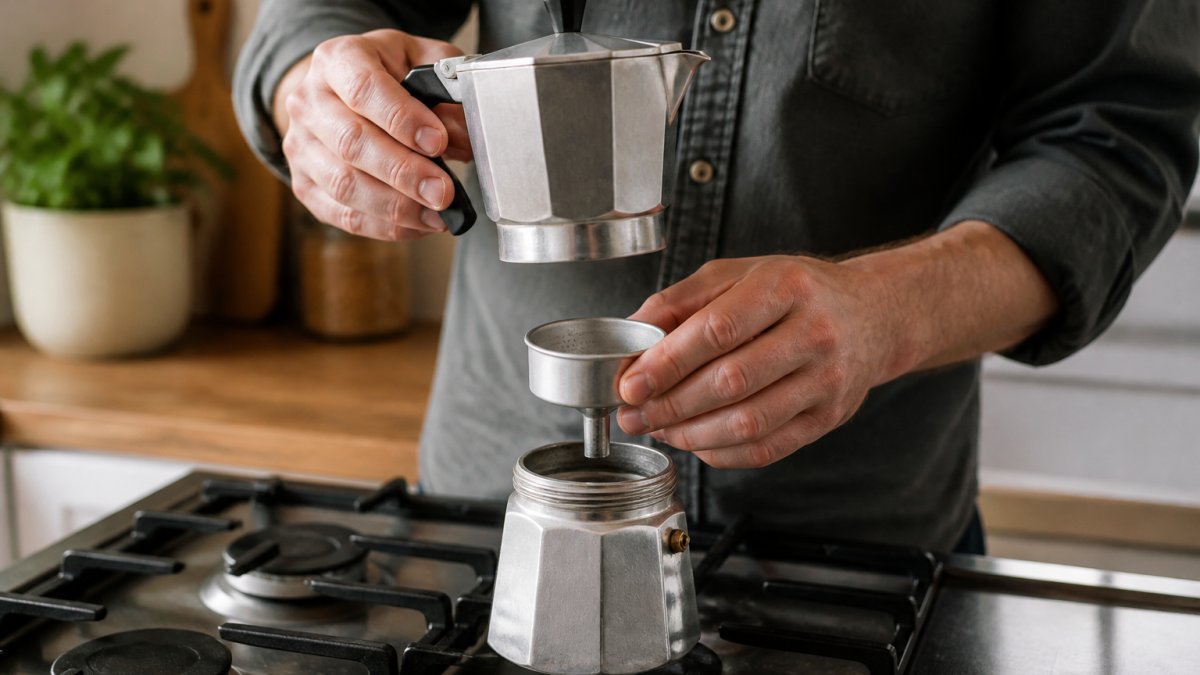
A Moka pot brews strong, concentrated coffee using steam pressure on a stovetop. It's one of the most affordable ways to make espresso-style coffee at home.
What you'll need:
- Moka pot (3-cup, 6-cup, or 9-cup size)
- Freshly ground coffee (fine grind)
- Filtered water
- Stovetop or heat source
- Small cup or demitasse cup
Step-by-step instructions:
-
Fill the bottom chamber with water. Use cold, filtered water just below the safety valve. This matters for even extraction and safety.
-
Add finely ground coffee to the filter basket. Fill it level with the top. Don't tamp or press the grounds. A light, even layer works best. The grind should be finer than drip coffee but not as fine as espresso powder.
-
Screw the top chamber onto the base. Make sure it's tight but not over-tightened. A loose connection can leak steam and ruin your brew.
-
Place on medium heat. Use medium heat, not high. High heat causes uneven extraction and bitter flavors. The water should heat slowly.
-
Listen for the gurgling sound. After 5-8 minutes, you'll hear a distinctive gurgling. This means the brewed coffee is rising into the top chamber. This is your signal to remove it from heat.
-
Remove from heat immediately. Don't wait for all the water to push through. Remove the pot when you hear consistent gurgling. This prevents over-extraction and burnt flavors.
-
Pour into your cup. The result is a small, concentrated shot of strong coffee.
Common mistakes to avoid:
- Using too-coarse grounds (extraction will be weak)
- Tamping the coffee (this blocks water flow)
- Using boiling water (it extracts too fast and tastes bitter)
- Leaving it on heat too long (burnt, bitter flavor results)
A Moka pot makes 1-3 cups of strong coffee depending on size. The whole process takes about 10 minutes. For milk drinks, a 3-cup Moka pot gives you enough concentrated coffee for two cappuccinos.
Best Coffee for Moka Pot
The coffee you choose makes a huge difference in Moka pot brewing. Medium to dark roasts work best because they have bold flavors that shine through the brewing method.
Why roast level matters: Light roasts have delicate, nuanced flavors. The Moka pot's heat can overwhelm these subtle notes. Medium roasts hit the sweet spot. They're bold enough to taste rich and concentrated, but not so dark that they taste burnt or ashy.
Grind size is critical. The grind must be finer than drip coffee but not powder-fine. Think of it as between table salt and sand. If your grind is too coarse, the water passes through too quickly and tastes weak.
Freshness matters. Use coffee beans roasted within 2-4 weeks. Stale coffee loses its oils and aromatics. The result tastes flat and thin. Third Space Coffee roasts beans fresh in-house.
Single-origin vs. blends: Both work. Single-origin coffees highlight specific flavor notes. Blends are formulated to taste consistent and balanced. For Moka pots, balanced blends often work better because the brewing method can amplify certain flavors.
Grind your beans fresh. Pre-ground coffee loses flavor within days. A burr grinder (not a blade grinder) gives you consistent particle size. This consistency is what makes extraction even and balanced.
AeroPress Espresso Recipe
An AeroPress is a portable brewer that creates pressure by pushing a plunger down through a chamber. It makes concentrated, smooth coffee that works beautifully for espresso-style drinks.
What you'll need:
- AeroPress (standard or Go model)
- Paper or metal filter
- Freshly ground coffee (medium-fine grind)
- Hot water (195-205°F)
- Kettle
- Stirrer or spoon
Step-by-step instructions:
-
Insert the filter into the basket. If using paper, rinse it first to remove paper dust and preheat the chamber.
-
Place the AeroPress on your cup. The chamber should sit directly on top. This makes pouring easier and keeps everything contained.
-
Add medium-fine ground coffee. Use about 15-17 grams for a concentrated shot. The grind should be finer than drip coffee but slightly coarser than Moka pot grounds.
-
Pour hot water slowly. Add about 50 grams of water first. Let it bloom for 30 seconds. This allows the coffee to release gases and improves extraction.
-
Stir gently. Use 10-15 slow stirs. This ensures even contact between water and grounds.
-
Add remaining water. Pour to fill the chamber. The total water should be around 200 grams for a concentrated shot.
-
Place the plunger on top. Don't push yet. Let it sit for 30 seconds.
-
Push down steadily. Press the plunger down over 20-30 seconds. It should take effort but not be painful. If it's too easy, your grind is too coarse. If it's too hard, your grind is too fine.
-
Stop when you hear a hiss. This sound means you've pushed out most of the liquid. Stop pressing.
The AeroPress produces about 2-3 ounces of concentrated coffee. It's smooth, clean, and works perfectly for lattes or drinking straight.
French Press and Portable Methods
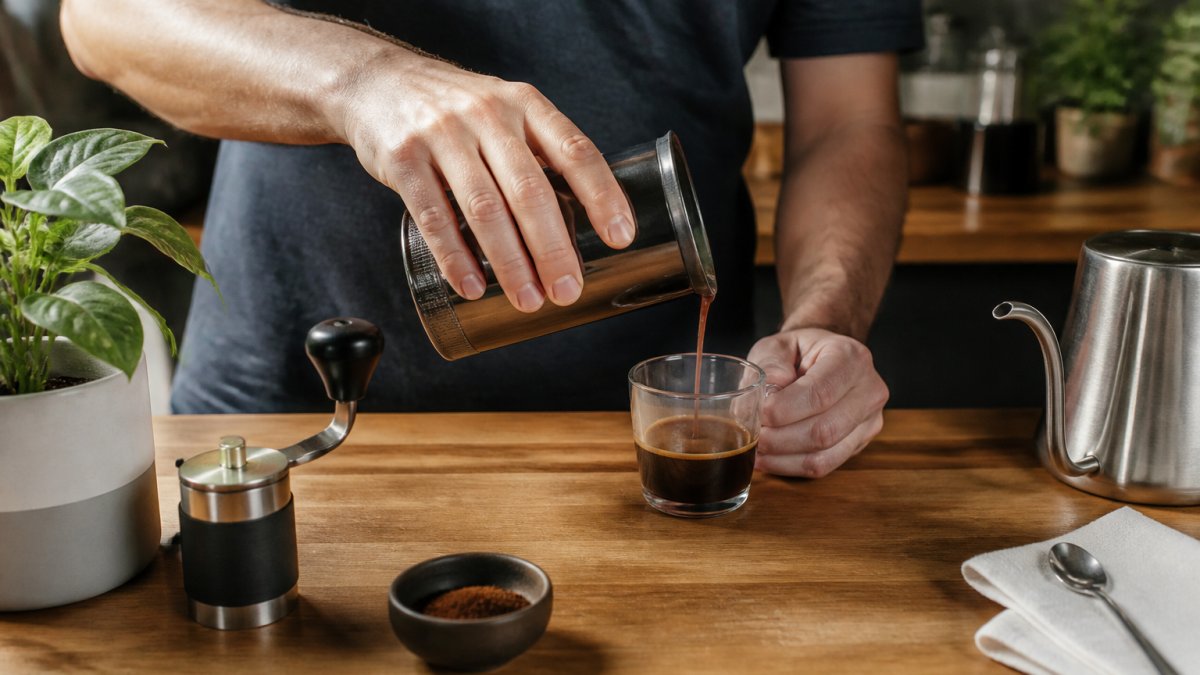
A French press makes strong coffee through immersion brewing. It's simple, affordable, and produces bold flavor. It's not true espresso, but it's excellent for concentrated coffee.
French press brewing:
-
Heat water to 195-205°F. Use filtered water for best taste.
-
Add coarse grounds to the pot. Use about 1 part coffee to 4 parts water by weight. For a 34-ounce French press, use about 30 grams of coffee.
-
Pour hot water over grounds. Wet all the coffee evenly.
-
Place the lid on top. Don't press the plunger yet.
-
Steep for 4 minutes. This immersion time extracts the coffee fully.
-
Press the plunger down slowly. Take 20-30 seconds. This separates grounds from liquid.
-
Pour immediately. Coffee left sitting in the pot over-extracts and tastes bitter.
A French press produces about 8-32 ounces depending on size. The result is rich and full-bodied, perfect for milk drinks or black coffee.
Portable espresso makers:
Portable devices like the Nanopresso or Wacaco Minipresso use manual pressure. You fill a chamber with hot water and grounds, then pump a handle to create pressure. The result is surprisingly close to espresso. These work well for travel or camping. They cost between $30-60 and require no electricity or batteries.
Using Instant Espresso Powder
Instant espresso powder is concentrated, dried espresso. It dissolves in hot water or milk. It's not the same as fresh espresso, but it's fast and convenient.
How to use it:
Mix 1-2 teaspoons of instant espresso powder with 2-3 ounces of hot water. Stir until dissolved. For a latte, mix it into steamed milk. For a cappuccino, use less water and more milk.
The flavor is strong and bold, but it lacks the complexity of freshly brewed espresso. The powder has been processed and stored, so some aromatic compounds are lost. That said, for quick coffee drinks or baking, it works well.
Where it shines: Instant espresso powder is perfect for busy mornings or when you need coffee fast. It's shelf-stable for months. A small jar costs a few dollars and makes dozens of drinks. Third Space Coffee customers often use powder at home and visit us for fresh-brewed coffee.
Taste expectations: Expect bold, coffee-forward flavor without the crema or complexity of fresh espresso. It's functional and satisfying, not premium.
Troubleshooting Weak, Bitter, or Uneven Coffee
Most home brewing problems come down to three things: grind size, water temperature, and contact time.
Weak coffee:
Weak coffee means under-extraction. The water didn't pull enough flavor from the grounds. Solutions:
- Use finer grounds. Finer particles have more surface area.
- Use hotter water (195-205°F). Hotter water extracts faster.
- Increase contact time. Let the grounds steep longer.
- Use more coffee. Add extra grounds to your dose.
Bitter coffee:
Bitter taste means over-extraction. The water pulled too much from the grounds, including unwanted compounds. Solutions:
- Use coarser grounds. This slows extraction.
- Lower water temperature slightly (190-200°F).
- Shorten contact time. Don't let coffee steep as long.
- Use fresher beans. Stale coffee tastes more bitter.
Uneven extraction:
Some coffee tastes weak, some tastes bitter. This happens when water doesn't contact all grounds evenly. Solutions:
- Stir the grounds. Mix them thoroughly with water.
- Use a burr grinder. Blade grinders create uneven particle sizes.
- Distribute grounds evenly in your brewer.
- Grind fresh. Pre-ground coffee settles unevenly.
Temperature matters more than you think. Water that's too hot burns the coffee. Water that's too cool under-extracts. A simple kitchen thermometer helps. Aim for 195-205°F.
Cost and Value Comparison by Method
Different brewing methods cost different amounts upfront and per cup. Here's how they compare:
| Method | Initial Cost | Cost Per Cup | Best For |
|---|---|---|---|
| Moka Pot | $15-40 | $0.25-0.50 | Stovetop brewing, milk drinks |
| AeroPress | $30-50 | $0.30-0.60 | Travel, smooth coffee, flexibility |
| French Press | $10-30 | $0.25-0.50 | Large batches, full-bodied coffee |
| Portable Espresso Maker | $30-80 | $0.40-0.75 | Travel, camping, convenience |
| Instant Espresso Powder | $5-15 | $0.10-0.25 | Speed, shelf stability, baking |
| Espresso Machine | $200-500+ | $0.50-1.00+ | True espresso, milk drinks daily |
Value analysis:
A Moka pot produces concentrated, bold coffee that works for lattes and straight shots. It requires no electricity and lasts for years with basic care.
An AeroPress produces excellent coffee. It's durable and portable. If you travel or want flexibility, the extra cost pays off.
A French press makes larger batches. The downside is you can't make single concentrated shots easily.
Instant espresso powder is fastest and cheapest per cup. But it lacks the flavor complexity and ritual of brewing fresh. Use it for convenience, not for the best taste.
An espresso machine delivers true espresso with crema. But you'll spend $200-500+ upfront. For most home brewers making occasional espresso drinks, less expensive methods work better.
You can make espresso without machine using affordable home brewing methods. A Moka pot, AeroPress, or French press produces concentrated, bold coffee that works beautifully for lattes, cappuccinos, and straight shots. Third Space Coffee recommends starting with whichever method fits your lifestyle. If you brew on a stovetop, choose a Moka pot. If you travel, choose an AeroPress. If you want simplicity and low cost, choose a French press. Pair any method with our fresh, in-house roasted beans. Visit us to explore our roasted selections and discover which brewing method works best for your daily routine.
Frequently Asked Questions
Can you actually make espresso without an espresso machine?
Yes, you can make espresso-style coffee using affordable alternatives like Moka pots, AeroPress, and French press. These methods produce concentrated, bold coffee that mimics espresso's flavor profile, though without the high pressure of true espresso machines. A Moka pot is the most popular choice because it uses steam pressure to force hot water through grounds, creating a rich, concentrated brew similar to espresso.
What is the best coffee for Moka pot brewing?
Use freshly roasted, medium-fine grind coffee beans for Moka pot brewing. Look for beans roasted within the past 2-3 weeks for maximum flavor and aroma. Medium roasts work well and highlight the coffee's natural characteristics. Avoid pre-ground coffee when possible; grind just before brewing. Third Space Coffee's in-house roasted beans are fresh.
Is instant espresso powder the same as espresso?
Instant espresso powder is not the same as freshly brewed espresso, but it's a convenient alternative. It's made from brewed espresso that has been freeze-dried into powder form. While it lacks the crema and fresh aroma of true espresso, it dissolves quickly in hot water and delivers concentrated coffee flavor. Use about 1 teaspoon per 2 ounces of hot water for espresso-style drinks like lattes or cappuccinos.
How much does it cost to make espresso at home without a machine?
Affordable brewing methods are available for equipment. Coffee beans yield about 30-40 cups. Your per-cup cost for homemade espresso-style coffee can be significantly less than cafe prices.