 listicle
Are Public Spaces Good for Professional Workshops?
Last Updated: October 26, 2026
Quick Summary
Hosting professional workshops in public spaces boosts visibility, because the setting itself does the recruiting and passersby may see the event. You trade privacy and quiet for atmosphere and built-in foot traffic, so plan around ambient noise and assign one person to greet arrivals.
- Seat the group away from the door and the pickup counter to reduce distractions.
- Break every 45 to 60 minutes so participant energy stays high.
- Confirm the posted occupancy load set by fire code and keep attendance at or below it.
- Ask whether setup and cleanup count toward billed venue hours.
- Get permit and safety answers in writing and keep them with your event file.
Table of Contents
- Why Public Spaces Change the Workshop Experience
- How to Host a Great Workshop in a Public Setting
- Workshop Venue Ideas That Fit Public Spaces
- Choosing an Offsite Training Venue in a Public Space
- Permits, Insurance, and Safety Rules to Check
- Budgeting and Venue Cost Comparison
- Measuring Workshop Outcomes and Participant Feedback
- Book Your Next Workshop at Third Space Coffee
- Frequently Asked Questions
Why Public Spaces Change the Workshop Experience
Hosting a professional workshop in a public space works because the setting itself does the recruiting. A private conference room hides your event behind a door; a coffee shop puts it in front of people who never planned to attend.
The benefits of hosting professional workshops in public spaces include visibility.
The Visibility Advantage Over Private Rooms
A private room gives you quiet and control. A public space gives you an audience.
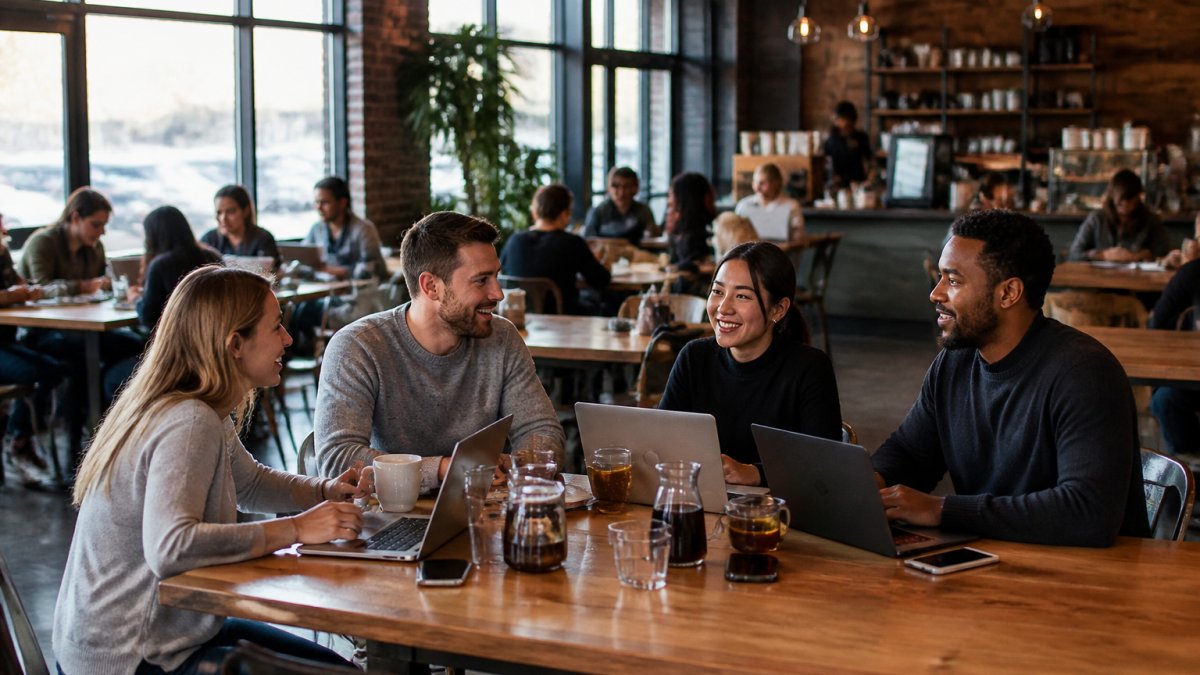
When a workshop happens where people already gather, passersby may see the event.
The trade-off is real: you share the room with the public, so you plan around ambient noise and foot traffic.
How to Host a Great Workshop in a Public Setting
Learning how to host a great workshop in a public venue involves planning for the setting.
Start with a clear run of show. Arrive early to plan your setup. Assign one person to greet arrivals. Keep your first activity low-stakes and interactive.
For a deeper walkthrough of the logistics, our guide on how to host a small workshop in a coffee shop covers setup, timing, and crowd management step by step.
Set Up the Room for Focus
Then reduce distractions deliberately:
- Seat the group away from the door and the pickup counter
- Keep phone notifications off and ask the group to do the same
- Break every 45 to 60 minutes so energy stays high
- Use small-group pairings to keep quieter participants engaged
Workshop Venue Ideas That Fit Public Spaces
The best workshop venue ideas match the format to the setting, and in a public space, the setting also shapes who walks in, how much noise you absorb, and how weather or foot traffic affects the room. Use the list below as a starting point, then weigh each option against the public-space trade-offs that follow.
Six Public-Space Options and What Each Does Well
- Coffee shop meeting rooms with after-hours access. Approachable, affordable, and built-in ambient energy. Best for small groups, discussion-heavy sessions, and anything where a relaxed atmosphere helps. Expect ambient noise and limited privacy during open hours.
Public-Space Trade-Offs to Weigh
Each option trades privacy for atmosphere. Coffee shops and libraries tend to feel approachable and affordable, while co-working spaces and hotel lobbies offer stronger audiovisual setups and transit convenience.
Choosing an Offsite Training Venue in a Public Space
Picking an offsite training venue means balancing access, cost, and fit. The right space gets people in the door easily and keeps them comfortable once they arrive.
Start with location and transit. A venue that is hard to reach will hurt attendance no matter how good the programming is. Then confirm the basics: seating capacity, outlets, Wi-Fi reliability, restrooms, and whether food and drink are allowed or provided. For teams comparing options, this roundup of affordable meeting rooms in Colorado Springs can shorten the shortlist.
Accessibility and Transit Checklist
Run through this before you book:
- Step-free entrance and accessible restrooms
- Nearby parking or transit stops
- Clear signage from the street to the room
- Seating that accommodates mobility devices
- Quiet space available for anyone who needs a break
- Confirmed capacity that matches your expected attendance
Accessibility is not a nice-to-have. It determines who can show up at all.
Permits, Insurance, and Safety Rules to Check
Public-space workshops often trigger rules that private rooms do not. The practical move is to separate the requirements into four buckets, venue rules, landowner or agency permits, insurance, and fire/life safety, and confirm each in writing before you promote the event. Managing these administrative hurdles effectively remains the most reliable way to organize a workshop without incurring unexpected costs or logistical delays.
Venue Rules vs. Government Permits
A coffee shop, co-working space, or hotel lobby is private property. Your agreement is with the operator, and their rental contract governs capacity, signage, sound, food service, and cleanup. A park, plaza, sidewalk, or library meeting room is public property, and a government agency usually controls access. For federal lands, recreation.gov and the managing agency's special-use permit office handle applications; for local parks and plazas, the city or county parks and recreation department issues facility-use or special-event permits. Library community rooms typically have their own reservation policy and room-use agreement. Confirm which entity controls the space before you assume a venue rental covers you.
Insurance: What to Confirm in Writing
Ask the venue whether its general liability policy extends to your event and whether you must be named as an additional insured. Many private venues require renters to carry their own general liability coverage, often evidenced by a certificate of insurance. For public spaces, the permitting agency frequently sets minimum coverage limits and additional-insured requirements in the permit conditions. If you serve food, confirm whether the venue's food-service permit covers your activity or whether you need a temporary food establishment permit from the local health department. Alcohol triggers a separate layer: many states require a temporary event permit or a licensed caterer, and the venue's own license may not extend to your group.
Fire, Capacity, and Life Safety
Capacity is set by fire code and by the venue's certificate of occupancy, not by how many chairs fit. Confirm the posted occupancy load for the room you are using and keep attendance at or below it. Check exit access, keep aisles and exit paths clear, and confirm whether the venue requires a fire extinguisher or posted evacuation route for your setup. If you use extension cords, projectors, or cooking equipment, ask about the venue's rules on temporary power and open flames.
A Pre-Booking Question List
- What are the fire code and exit requirements for our setup?
Budgeting and Venue Cost Comparison
| Cost Category | What to Confirm | Typical Planning Note |
|---|---|---|
| Venue rental | Hourly vs. daily rate, setup time included | Ask whether setup and cleanup count toward billed hours |
| Food and beverage | Minimum spend, per-person pricing | Confirm dietary options, including gluten-free and vegan |
| Materials | Printing, supplies, handouts | Buy in bulk and reuse where possible |
| Promotion | Social ads, printing, email | Budget for reminder messages, not just the first announcement |
Measuring Workshop Outcomes and Participant Feedback
Keep the survey short. A few well-chosen questions get more responses than a long form, and response rates matter more than depth here. Track attendance against registrations too, since no-shows reveal as much about your promotion as your program.
Book Your Next Workshop at Third Space Coffee
At Third Space Coffee, we offer flexible meeting room rentals and a versatile after-hours event space, plus coffee roasted in-house. We have been voted Best Coffee Shop in Colorado Springs, and we built our space to bring people together.
Ready to plan? Our guide on how to book a private coffee shop walks you through the process from first inquiry to event day.
Frequently Asked Questions
What are the benefits of hosting professional workshops in public spaces?
Public spaces bring built-in foot traffic, a relaxed atmosphere, and lower overhead than private conference rooms. Participants often feel more comfortable and stay longer, which supports networking and knowledge sharing. The setting also signals openness, making it easier to attract like-minded people and potential clients who might not visit a private office. For service businesses, that visibility can turn a single workshop into ongoing community engagement and lead generation.
How do I host a great workshop in a public space?
Start by scouting the venue at the same time of day as your event to check noise and seating. Arrive early to plan your setup, set ground rules for focus, and keep the agenda tight. Build in interactive learning and collect participant feedback at the end.
What should I look for in an offsite training venue?
For an offsite training venue in a public space, review the venue's available features and policies before booking.
How much should I charge for a 90-minute workshop?
Pricing depends on your topic, audience, and what the ticket includes. Many hosts cover venue costs, materials, and their own preparation time, then add a margin. Start by listing your fixed costs and expected attendance, then set a per-seat price that feels fair for the local market. Offer an early-bird rate to fill seats and ask for feedback after the first session. Adjust based on attendance and participant satisfaction rather than guessing.
Your next workshop deserves a room with character, reliable Wi-Fi, and coffee worth showing up for. Third Space Coffee gives you flexible meeting room rentals, an after-hours event space, and locally roasted beans for every attendee. Get started with Third Space Coffee and host a workshop people actually remember.