 listicle
Best Caffeine Free Coffee Alternatives for 2026
Table of Contents
- Why Caffeine-Free Coffee Alternatives Are Worth Trying
- How We Evaluated These Caffeine-Free Options
- 1. Teeccino Dandelion Dark Roast
- 2. Pero Instant Natural Beverage
- 3. Beyond Coffee (Certified Organic)
- 4. Crio Bru and Coffig Roasted Fig Beverage
- 5. Jnantik Superfood Maya Seed Coffee Alternative
- 6. Four Sigmatic and Mushroom Coffee Without Caffeine
- Quick Comparison: Which Caffeine-Free Coffee Alternative Fits You
- Frequently Asked Questions
Last Updated: October 14, 2026
Why Caffeine-Free Coffee Alternatives Are Worth Trying
If you love the ritual of coffee but not the jitters, sleep disruption, or afternoon crash, the best caffeine free coffee alternatives can give you the warmth and flavor without the side effects.
Caffeine sensitivity is real. Many people find that even a single cup past noon keeps them awake, raises their heart rate, or feeds anxiety. Others are cutting back gradually to avoid caffeine withdrawal headaches.
Below, we break down six options worth trying in 2026, ranked by taste, ingredient quality, and how closely each mimics real coffee.
How We Evaluated These Caffeine-Free Options
We judged each pick on five practical criteria: verified caffeine status, flavor and aroma, ingredient and allergen profile, cost and availability per serving, and how easy it is to brew at home.
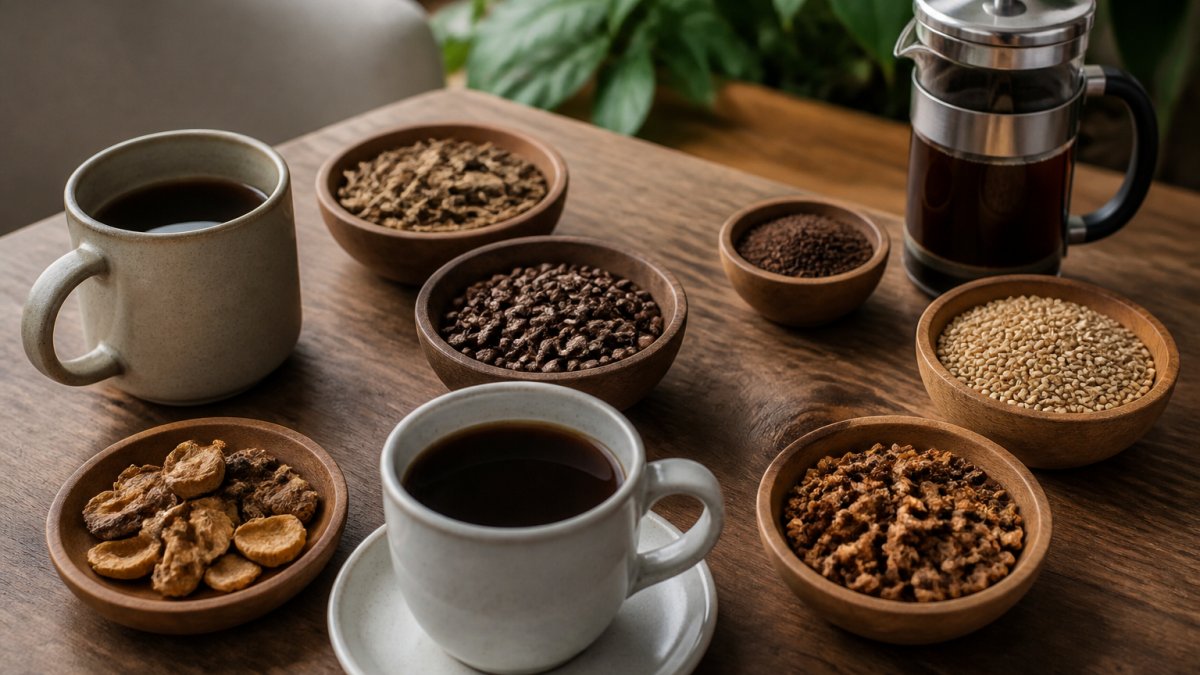
That last point matters more than most guides admit. Some alternatives brew in a French press exactly like ground coffee. Others are instant powders you stir into hot water. A few are steeped like tea.
We also flagged ingredients that matter for people with sensitivities, since "natural" on a label doesn't automatically mean allergen-free.
1. Teeccino Dandelion Dark Roast
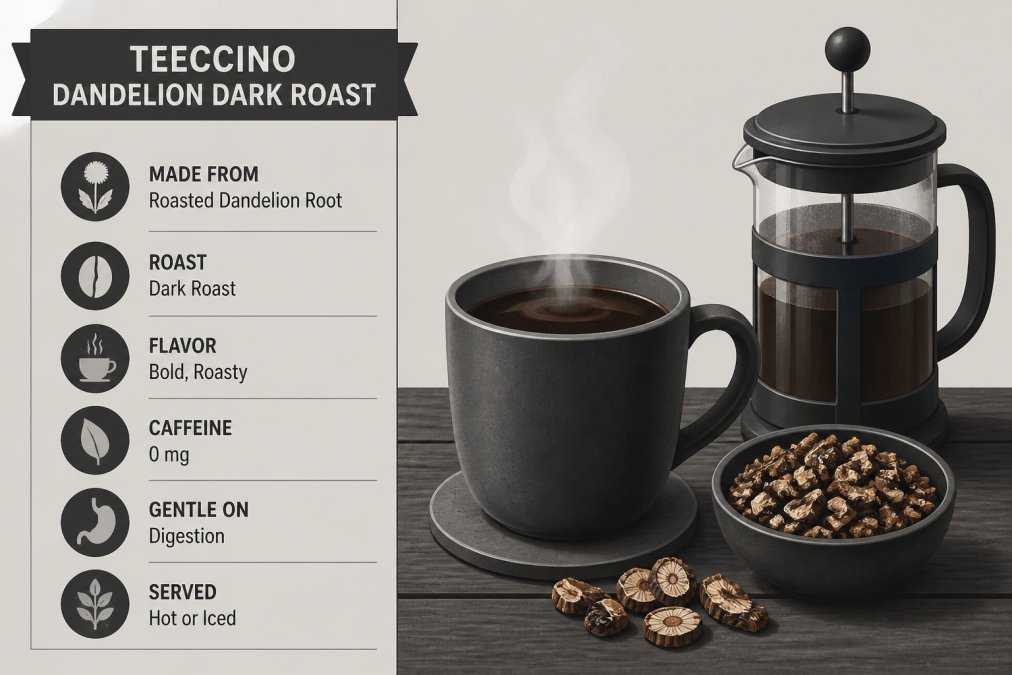
Teeccino Dandelion Dark Roast is a dandelion root coffee alternative built to mimic a bold, dark cup. It brews in a drip machine, French press, or espresso maker, so the preparation feels familiar from the first morning.
The dandelion root base gives it a deep, roasted flavor with a subtle bitterness that reads closer to coffee than most herbal blends. Many people find it works especially well as a latte with oat or whole milk, where the roasted notes carry through the foam.
Taste and Use Case
Expect a full-bodied, slightly earthy cup with a nutty finish and no acidity. That low-acid profile makes it a common pick for people whose stomachs react to regular coffee. It is best for dark-roast drinkers who want the closest possible stand-in for their usual morning brew.
2. Pero Instant Natural Beverage
Pero Instant Natural Beverage is an instant caffeine-free option made from roasted grains. You stir a spoonful into hot water, and you are done in under a minute.
That instant format is its main advantage. There is no grinder, no filter, and no cleanup beyond a spoon.
If you are transitioning off coffee and want the easiest possible swap, start here. The roasted grain flavor is mild and slightly sweet, and it takes milk and sweetener well.
3. Beyond Coffee (Certified Organic)
Beyond Coffee is a packaged caffeine-free coffee substitute sold as a one-time purchase, which suits buyers who want to try a single bag before committing to a subscription. The organic certification is the headline: for shoppers who prioritize ingredient sourcing, a certified organic label removes some of the guesswork about how the base ingredients were grown.
What the label tells you, and what it doesn't
The listing identifies the product as caffeine-free, but it does not spell out the full ingredient list or brewing instructions. That matters for two reasons. First, "coffee alternative" is not a regulated term, so a blend can legally contain small amounts of real coffee or green tea and still carry the label. Second, roasted grain bases, barley, rye, wheat, spelt, contain gluten, and chicory root is a source of inulin, a fiber that can cause bloating or gas in people who are sensitive to FODMAPs.
Taste, body, and how to brew it
Expect a medium-bodied, roasted-grain cup with a mild, slightly sweet finish, closer to a dark herbal tea than to espresso. It takes milk and sweetener well, and most people find it works best brewed strong (about one heaping teaspoon per 8 oz of hot water) and then cut with a splash of milk. Because it is a packaged blend rather than a single-origin root, the flavor is consistent bag to bag, which is an advantage if you dislike the batch-to-batch variation of loose dandelion or chicory.
Cost and availability
Packaged organic substitutes in this category typically run in the range of $0.30-$0.75 per 8 oz serving when bought as a single bag, and the per-serving cost drops if you buy a larger size. Availability is mostly online; it is less common on grocery shelves than Teeccino or Pero. If you are comparing on price alone, instant roasted-grain options like Pero usually come in cheaper per serving, while brewed root options like Teeccino sit at the higher end.
Who it's for
Beyond Coffee is the pick for the organic-focused buyer who wants a single, consistent packaged blend and does not mind ordering online. If you want the closest thing to a dark roast, dandelion root is a better match; if speed matters most, go instant.
4. Crio Bru and Coffig Roasted Fig Beverage
Crio Bru and Coffig Roasted Fig Beverage take a different route. Instead of roots or grains, they build the drink from roasted cacao and roasted fig respectively.
Crio Bru brews like ground coffee, so you can use your existing drip or French press setup. Coffig leans on roasted fig for a naturally sweet, slightly fruity cup that needs no added sugar.
The fig-based drink is the more unusual pick of the two. If you like a sweeter, fruit-forward profile and want to skip added sweeteners, it is worth a try.
5. Jnantik Superfood Maya Seed Coffee Alternative
Jnantik Superfood Maya Seed Coffee Alternative is a seed-based substitute named in a caffeine-free alternatives roundup. The Maya seed base sets it apart from the root, grain, and fruit options on this list.
Seed-based alternatives tend to have a lighter, cleaner flavor than dandelion or chicory, with less bitterness. That makes them a good fit if you found the darker roasts too intense.
Availability is the catch. Specialty seed-based substitutes are less common on grocery shelves, so you may need to order online. Confirm the caffeine-free status on the label before buying.
6. Four Sigmatic and Mushroom Coffee Without Caffeine
Mushroom coffee without caffeine is one of the fastest-growing categories, and Four Sigmatic is the brand most often named in caffeine-free roundups. These blends pair functional mushrooms with coffee-like bases to deliver a warm drink without the stimulant.
The appeal is the ritual plus the ingredient story. Functional mushrooms are marketed for focus and calm, though the evidence behind specific claims varies.
One caution: some mushroom coffee products do contain real coffee. If you want a fully caffeine-free cup, look for a blend that states it plainly on the front of the pack.
Quick Comparison: Which Caffeine-Free Coffee Alternative Fits You
Most roundups list products and stop there. This table goes further: it verifies caffeine status, flags the allergens that matter, and gives you a rough per-serving cost so you can choose on more than flavor alone. Prices are approximate U.S. retail ranges for a single 8 oz serving and will vary by retailer and package size.
| Product | Format | Base Ingredient | Caffeine Status | Taste & Body | Allergen / Sensitivity Flags | Approx. Cost per 8 oz | Best For |
|---|---|---|---|---|---|---|---|
| Teeccino Dandelion Dark Roast | Brewed (drip, French press, espresso) | Dandelion root | Caffeine-free | Full-bodied, earthy, nutty, low-acid | Inulin (chicory/dandelion), may cause bloating | $0.50-$0.90 | Dark-roast drinkers who want the closest stand-in |
| Pero Instant Natural Beverage | Instant powder | Roasted grains (barley, rye, chicory) | Caffeine-free | Light, mild, slightly sweet | Gluten (barley, rye); inulin (chicory) | $0.20-$0.40 | Speed and convenience |
| Beyond Coffee | Packaged | Certified organic blend | Labeled caffeine-free, verify on pack | Medium-bodied, roasted-grain, mild | Check panel for gluten and inulin | $0.30-$0.75 | Organic-focused buyers |
| Crio Bru | Brewed | Roasted cacao | Caffeine-free (trace theobromine) | Rich, dark, chocolate undertone | Cacao is a source of theobromine, a mild stimulant | $0.60-$1.00 | Chocolate lovers who want a brewed cup |
| Coffig | Brewed | Roasted fig | Caffeine-free | Naturally sweet, slightly fruity | Fig is high in fiber; may affect sensitive stomachs | $0.50-$0.90 | Sweet, fruit-forward taste without added sugar |
| Jnantik Maya Seed | Packaged | Maya seed | Labeled caffeine-free, verify on pack | Lighter, cleaner, less bitter | Seed-based; check for added coffee or tea | $0.60-$1.10 | Lighter, cleaner flavor |
| Four Sigmatic | Instant / brewed | Functional mushrooms + coffee-like base | Varies, some blends contain real coffee | Earthy, savory, mellow with milk | Check for actual coffee content | $0.80-$1.50 | Ritual plus focus story |
How to read this table
Caffeine status is not the same as "decaf." Decaffeinated coffee still contains a small amount of caffeine, typically 2-15 mg per 8 oz cup, depending on the decaffeination method (Swiss Water, CO2, or solvent-based). Truly caffeine-free drinks like roasted dandelion, chicory, barley, fig, and most herbal teas contain 0 mg.
Allergens hide in "natural" blends. Roasted barley, rye, and wheat contain gluten. Chicory and dandelion root contain inulin, a FODMAP that can cause gas or bloating in sensitive people. Cacao contains theobromine, a mild stimulant that is not caffeine but can still affect sleep in large amounts.
Cost tracks format, not quality. Instant powders and packaged blends are usually the cheapest per serving ($0.20-$0.40), brewed roots and seeds sit in the middle ($0.50-$1.10), and functional mushroom blends are the most expensive ($0.80-$1.50). Buying loose ingredients or larger bags lowers the per-serving cost across the board.
The bottom line
The best caffeine free coffee alternatives match your brewing habits first and your flavor preferences second. If you want the closest thing to a dark roast, start with dandelion root. If speed matters most, go instant. If you want a brewed cup with a chocolate note, try roasted cacao. And if you simply want a great cup without giving up caffeine, our in-house roasted beans at Third Space Coffee are worth a visit, stop by, try a pour-over, and see what fresh roasting tastes like.
Frequently Asked Questions
What can you drink instead of coffee without caffeine?
You can drink chicory root coffee, dandelion root coffee, roasted grain beverages like Pero, or herbal teas such as rooibos and turmeric lattes. Mushroom coffee without caffeine is another option. These drinks mimic the warmth and ritual of coffee without the stimulant. Many people rotate between two or three to match their mood.
Which caffeine-free coffee alternative tastes most like coffee?
Chicory root coffee and dandelion root coffee come closest to a coffee-like flavor, with a roasted, nutty, and slightly bitter profile. Teeccino Dandelion Dark Roast is specifically blended to mimic a dark roast. Roasted grain beverages like Pero offer a milder, sweeter taste. For a richer experience, try adding a splash of oat milk.
Are chicory root drinks caffeine-free?
Yes, chicory root coffee is naturally caffeine-free. Chicory root is a plant root that is roasted and ground to brew a coffee-like drink. It contains inulin, a prebiotic fiber that supports gut health, and no caffeine. Always check labels on blended products, as some may mix chicory with green tea or other caffeinated ingredients.
Can caffeine-free coffee alternatives still give you energy?
They do not provide the same stimulant effect as caffeine, but some ingredients like adaptogens and functional mushrooms may support steady energy and focus. For example, mushroom coffee without caffeine often includes lion's mane or chaga, which some users report helps with mental clarity. The energy boost is milder and lacks the jitters or crash.
How do you choose a coffee substitute that is easy on your stomach?
Look for low-acid options like chicory root coffee, dandelion root coffee, or roasted grain beverages. These are generally gentler than regular coffee. If you are sensitive to FODMAPs, test chicory in small amounts because its inulin content can cause bloating. Herbal teas like rooibos are also a good choice for sensitive stomachs.
Cutting back on caffeine is easier when you have a warm, satisfying drink to reach for, and harder when every option tastes like watered-down tea. At Third Space Coffee, we roast our beans in-house, offer gluten-free and vegan options, and welcome remote workers with reliable Wi-Fi and plenty of seating. If you are exploring caffeine-free choices or just want a better cup, visit us in Colorado Springs and make our space your own.