 ultimate-guide
In-House Coffee Roasting: Benefits for Your Café
Table of Contents
- Why In-House Coffee Roasting Matters
- Control Over Roast Profiles and Flavor Development
- Freshness and Supply Chain Transparency
- Wholesale vs. In-House Coffee Roasting: Financial Impact
- Commercial Coffee Roaster Cost and ROI
- FDA Regulations for Coffee Roasting Operations
- Product Differentiation and Brand Identity
- Scaling Production and Operational Efficiency
- Frequently Asked Questions
Last Updated: August 9, 2026
Why In-House Coffee Roasting Matters
The difference between a café serving stale beans and one serving coffee roasted hours earlier is substantial, it's the difference between a commodity product and something customers remember. In-house coffee roasting transforms how a café operates, how customers perceive quality, and ultimately, how much profit stays on the balance sheet.
Third Space Coffee understands this shift. When you roast beans on-site, you control the entire narrative around freshness, quality, and brand identity. The beans that arrive at your counter were roasted by people who work for you, in equipment you own, according to standards you set.
The business case is equally compelling. Wholesale coffee carries middleman margins built in. In-house roasting eliminates those layers. You buy green coffee beans directly, roast them to your specifications, and sell the finished product at retail prices. The margin difference is substantial.
But there's a threshold question first: Is in-house roasting right for your operation? The answer depends on your volume, capital availability, staffing capacity, and willingness to manage operational complexity.
Control Over Roast Profiles and Flavor Development
When you roast your own beans, you control every variable that determines how coffee tastes.
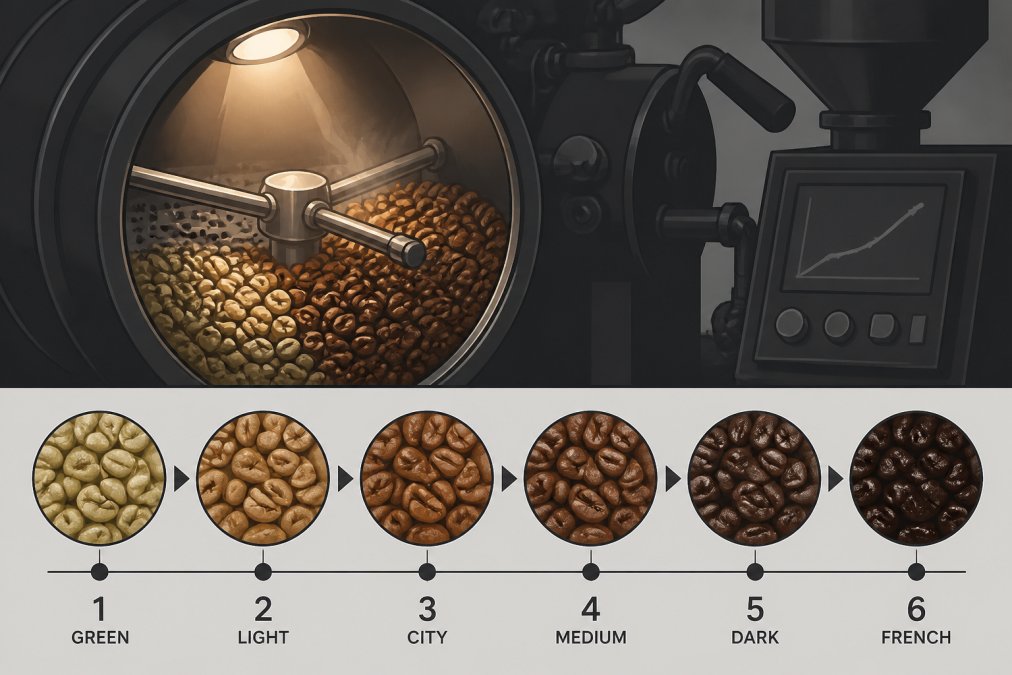
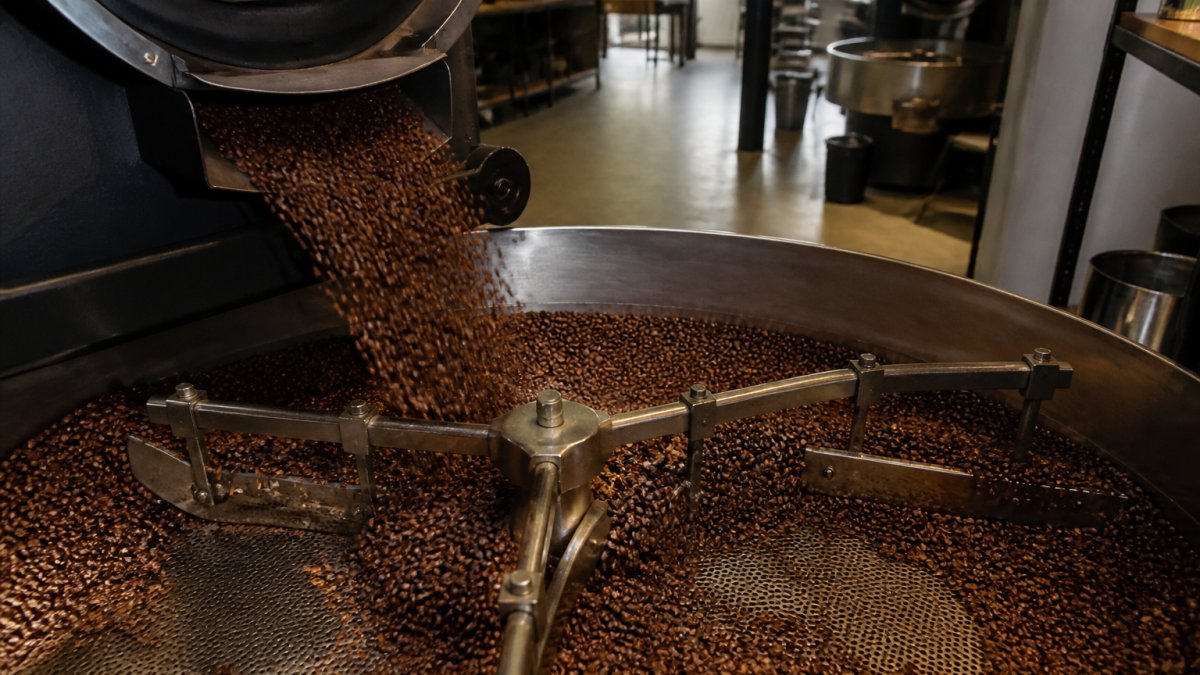
Roast profiles are the sequences of temperature and time that transform green coffee beans into the brown beans customers recognize. A light roast emphasizes origin flavors and acidity. A medium roast balances origin character with roasted sweetness. A dark roast develops body and reduces perceived acidity. The first crack and second crack are physical markers, sounds the beans make as they release pressure, that roasters use to judge development.
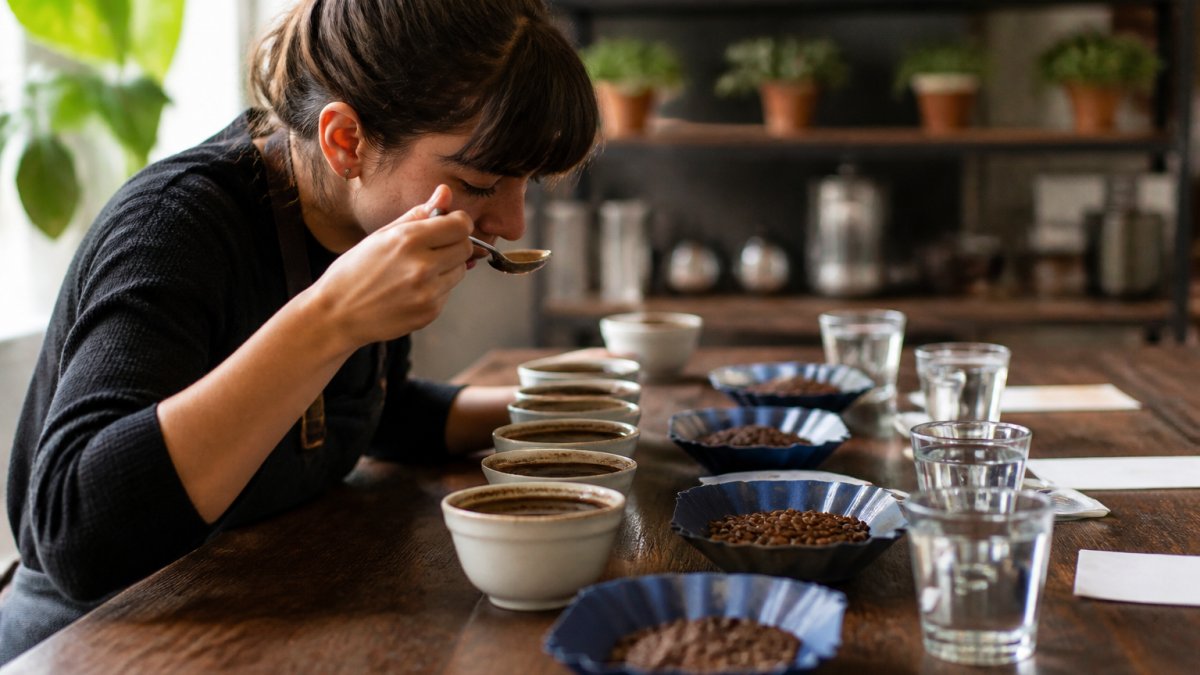
In-house roasting lets you adjust profiles for specific bean origins, customer preferences, and seasonal variations. A single-origin Ethiopian bean might need a different profile than a Brazilian bean to highlight its best characteristics. You can experiment, measure results through customer feedback, and refine your approach. A wholesale roaster serving 50 cafés cannot offer that customization.
The practical benefit is flavor consistency and differentiation. You're competing on something a wholesale roaster can't deliver: coffee roasted specifically for your customers' palates. Third Space Coffee uses this advantage to build loyalty.
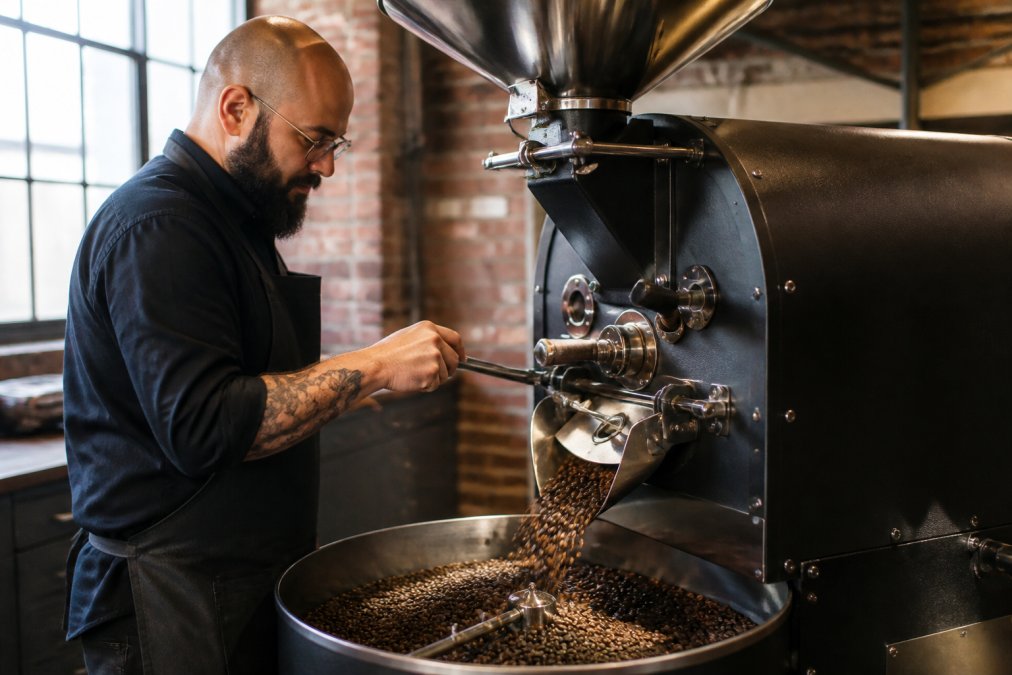
Roasting requires understanding how beans respond to heat, how to read color and sound cues, and how to adjust variables mid-roast. Most roasters need 3-6 months of consistent practice to develop reliable judgment.
Freshness and Supply Chain Transparency
Freshness is one of the few advantages a small roaster has over industrial competitors. A bean roasted this morning is fundamentally different from a bean roasted two weeks ago.
Coffee degassing begins immediately after roasting. Peak flavor typically occurs 5-14 days after roasting, depending on roast level and bean density. After that, flavor fades gradually. A bean roasted two weeks ago at a distant facility is already past its window of optimal flavor.
When you roast on-site, your customers drink coffee roasted days earlier, not weeks. This freshness translates directly to cup quality: brighter acidity, more pronounced aromatics, and sharper overall clarity.
Supply chain transparency is the second benefit. You know exactly where your green beans came from because you're buying them directly or through a vetted broker. You control storage conditions, roasting dates, and how long beans sit before sale. A customer asking "How fresh is this?" gets a specific answer: "Roasted three days ago, stored in sealed bags in a cool environment."
For a café positioning itself on quality, this transparency is a competitive moat and a story that's true.
Wholesale vs. In-House Coffee Roasting: Financial Impact
The financial comparison between buying wholesale roasted beans and roasting in-house involves several moving parts.
Wholesale roasting typically costs $4 to $8 per pound for specialty-grade beans. The roaster handles all roasting risk, equipment, and labor.
In-house roasting starts with green beans at $2 to $4 per pound. Roasted yield is typically 80-85% of green weight. A pound of green beans costing $3 yields 0.85 pounds of roasted beans, or $3.53 per roasted pound. Add labor ($0.50-$1.50), utilities ($0.20-$0.40), and packaging ($0.25-$0.50), and your total cost is roughly $4.50-$6 per pound.
If you sell roasted beans retail at $12-$16 per pound, your gross margin on in-house roasting is 50-65%. Wholesale beans at $6 per pound sold at the same retail price yield 50-62% margin.
The real advantage is in café operations. If you brew coffee at $1.50 per cup using in-house roasted beans costing $0.40-$0.60 per cup, your cost of goods is 27-40%. The same cup using wholesale beans at $0.70-$0.90 per pound costs 47-60% of revenue. Over 500 cups per week, that's a $100-$200 weekly difference in gross profit.
In-house roasting becomes less attractive at low volume. If you're selling 20 pounds per week, equipment costs and labor overhead make the economics unfavorable. But at 50+ pounds per week, the numbers shift in your favor.
Commercial Coffee Roaster Cost and ROI
A commercial coffee roaster is the largest capital investment in in-house roasting.
Entry-level commercial roasters (2-5 pound batch capacity) cost $3,000 to $8,000. They're suitable for small cafés or testing the model.
Mid-range roasters (5-15 pound batch capacity) cost $8,000 to $25,000. These are standard for independent cafés and offer faster roasting and better temperature control.
Larger roasters (15+ pound batch capacity) cost $25,000 to $100,000+. These are for operations roasting 200+ pounds per week.
You also need a roasting space with proper ventilation, cooling systems, and storage for green and roasted beans. Ventilation systems alone can cost $2,000-$5,000.
Total startup cost for a small café adding in-house roasting is typically $15,000-$35,000 including roaster, ventilation, storage, and initial green bean inventory.
ROI calculation depends on your current coffee costs and volume. If you're spending $300 per week on wholesale roasted beans and reduce that to $150 per week through in-house roasting, you're saving $150 weekly or $7,800 annually. A $20,000 equipment investment pays back in roughly 2.5 years.
The payback accelerates if you sell roasted beans retail. Third Space Coffee can sell bags at retail margins, which shortens the payback period and increases annual profit.
FDA Regulations for Coffee Roasting Operations
Operating a commercial coffee roasting facility in the United States requires compliance with federal food safety regulations.
The FDA's Food Safety Modernization Act (FSMA) establishes baseline requirements for facilities that manufacture, process, pack, or hold food for human consumption. Coffee roasting facilities fall under this definition.
Key regulatory requirements include:
Facility registration with the FDA. Any facility manufacturing food for interstate commerce must register and renew registration every two years.
Current Good Manufacturing Practices (CGMP) compliance. Your roasting facility must maintain sanitary conditions, use safe water, prevent contamination, and establish cleaning and sanitation procedures. This includes pest control, employee hygiene protocols, and documentation of cleaning schedules.
Allergen management. While coffee itself is not a common allergen, cross-contamination is possible if your facility handles other foods.
Traceability and recall procedures. You must be able to track green bean suppliers and roasted bean distribution. If a food safety issue arises, you need to identify affected batches and notify customers quickly.
Labeling compliance. Roasted beans sold retail must include ingredient declarations, net weight, manufacturer information, and allergen warnings if applicable.
State and local regulations may impose additional requirements. Check with your local health department for specific requirements in your area.
The regulatory burden is manageable for a small roasting operation but requires documentation and attention to detail. Many cafés establish simple written procedures for sanitation, supplier verification, and batch tracking.
Product Differentiation and Brand Identity
In a market saturated with coffee shops, differentiation is survival. In-house roasting is one of the few operational decisions that changes how customers perceive your brand.
When customers see a roaster, smell fresh-roasted beans, and taste coffee roasted hours earlier, they're experiencing something different from a chain café. This is a sensory signal that your café is serious about quality and control.
Third Space Coffee leverages this advantage explicitly. The brand positions itself around in-house roasted beans as a core differentiator. Customers aren't just buying coffee; they're buying the story of a local roaster controlling quality from green bean to cup.
This positioning supports premium pricing. Customers pay more for coffee they perceive as fresher and more carefully roasted. They also become brand advocates, telling others about the roastery.
Product differentiation extends to customization. You can offer single-origin beans roasted to highlight specific flavor profiles. You can create seasonal blends. You can adjust roast levels based on feedback. A wholesale roaster can't offer this flexibility to a single café.
Scaling Production and Operational Efficiency
As a café grows, in-house roasting becomes either a scaling asset or a scaling constraint.
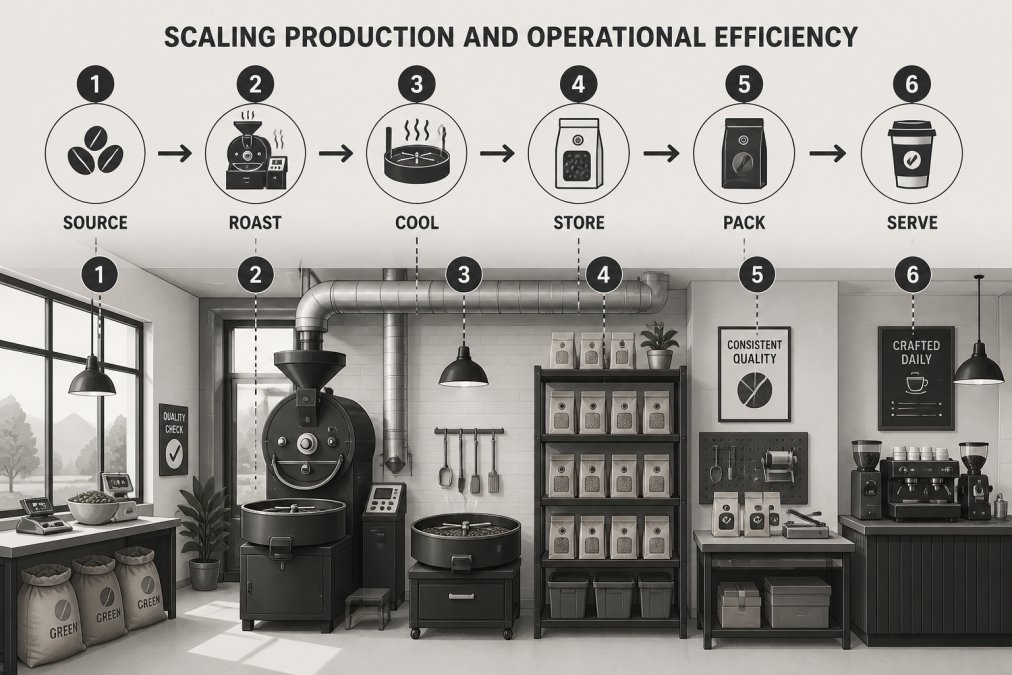
Batch size and frequency are the primary constraints. A 10-pound roaster can produce 40-50 pounds per week operating 5 days. If your café consumes 60 pounds per week and sells 20 pounds retail, you're at capacity. Adding a second roaster or upgrading to a larger machine becomes necessary.
At small volumes (20-50 pounds per week), roasting is a part-time activity. One person can roast 2-3 times per week in a few hours. At larger volumes (100+ pounds per week), roasting becomes a dedicated role.
Scaling also requires better inventory management. You need green bean storage capacity, roasted bean storage, and systems to track batch dates and quality. At larger volumes, you need documented procedures and possibly software to manage roasting schedules and inventory rotation.
Equipment scaling is significant. Upgrading from a 5-pound roaster to a 15-pound roaster is a $15,000-$30,000 investment. You need to ensure demand justifies the investment before committing capital.
The efficiency advantage of in-house roasting scales with volume. At 200+ pounds per week, the per-pound cost of roasting decreases significantly. Equipment is fully used, labor is efficient, and you're capturing maximum margin on wholesale bean sales.
For most independent cafés, the sweet spot is 100-250 pounds per week. This volume justifies the equipment investment, keeps labor efficient, and maintains the quality control that makes in-house roasting valuable.
In-house coffee roasting is not a default decision. It's a strategic choice that works for cafés prioritizing quality, control, and customer connection. Third Space Coffee demonstrates how the model works in practice: fresh beans, transparent sourcing, premium positioning, and a community-oriented brand identity.
The financial case is sound at volume above 50 pounds per week. The operational complexity is manageable with proper planning. The regulatory requirements are straightforward. The brand advantage is real and defensible.
The question isn't whether in-house roasting is possible. It's whether it aligns with your café's strategy, volume, and operational capacity. If it does, the benefits compound over time.
Frequently Asked Questions
How does in-house coffee roasting improve freshness compared to wholesale beans?
In-house roasting eliminates the time between roasting and serving. Wholesale beans lose flavor within 2-4 weeks after roasting as CO2 degasses and oils oxidize. When you roast on-site, customers receive beans at peak freshness, often within days of roasting. This difference is noticeable in cup quality, aroma, and the complexity of flavor notes that develop during the first crack and second crack stages of the roast.
What are the primary cost savings of roasting coffee in-house?
In-house roasting reduces wholesale markups (typically 40-60% above green bean cost) by allowing you to purchase green coffee beans directly and control your roast profiles. You also reduce inventory carrying costs since you roast smaller batches more frequently. Profit margins improve because you capture the roasting value, the difference between green bean cost and retail price, rather than paying a roaster's markup. However, you must factor in equipment investment, energy consumption, staff training, and waste management.
What FDA regulations apply to commercial coffee roasting operations?
Coffee roasting facilities must comply with FDA food safety regulations under the Food Safety Modernization Act (FSMA). You need proper facility registration, hazard analysis and critical control points (HACCP) procedures, and documentation of sourcing and roasting conditions. Ventilation systems must meet local air quality standards, and you must maintain records of roast batches, temperatures, and times. Consult your local health department and an FDA compliance expert before launching operations.
Is in-house roasting more profitable than buying wholesale coffee beans?
Yes, when scaled properly. Wholesale beans cost more per pound due to roaster markup, but in-house roasting requires capital expenditure on equipment, staff training, and operational overhead. Break-even typically occurs after 12-18 months of consistent volume sales. The real advantage emerges when you use roast customization and supply chain transparency as marketing tools, customers often pay premium prices for locally roasted, traceable beans, which improves overall profit margins beyond simple cost-per-pound calculations.
This article was written using GrandRanker