

TL;DR:
- Coffee origin encompasses geography, variety, processing, and traceability, not just country of origin.
- Processing methods significantly influence flavor and should be considered alongside roast level for accurate comparisons.
- Verifiable lot-level data and objective scoring ensure authenticity and quality in specialty coffee.
Most coffee lovers point to a country on a map and call it the origin story. Ethiopia. Colombia. Guatemala. But that single-word answer is only the beginning of what specialty coffee professionals actually mean when they talk about origin. The real picture is far richer, and far more useful for tasting. When you understand that origin is a bundle of geography, variety, processing method, and verifiable traceability, every cup you drink starts to tell a more honest story. This article breaks down what coffee origin truly means, how experts measure it, and how you can use that knowledge to get more out of every specialty brew you try.
Table of Contents
- What does 'coffee origin' really mean?
- The science behind origin and flavor: Beyond geography
- How specialty coffee defines and measures origin
- How to use origin knowledge to enhance your coffee experience
- Why true coffee origin matters more than ever in 2026
- Elevate your experience at Third Space Coffee Colorado Springs
- Frequently asked questions
Key Takeaways
| Point | Details |
|---|---|
| Origin is a bundle | True coffee origin includes geography, variety, processing method, and traceability, not just the country name. |
| Processing shapes flavor | How coffee is processed can impact taste more than where it’s grown. |
| Objective standards matter | Specialty status relies on evidence-based scoring and transparent origin, not marketing labels. |
| Control variables for fair tasting | Compare coffees fairly by matching processing and roast when evaluating origin flavor differences. |
| Empowered choices | Using origin knowledge helps you select, taste, and discuss coffee with greater confidence. |
What does 'coffee origin' really mean?
Here is the myth worth busting first: geography alone does not make a coffee special. Saying a coffee is from Ethiopia tells you something, but it does not tell you which farm, which variety, how the cherries were processed, or whether anyone with real credentials evaluated the cup. In specialty coffee, origin is a package deal.
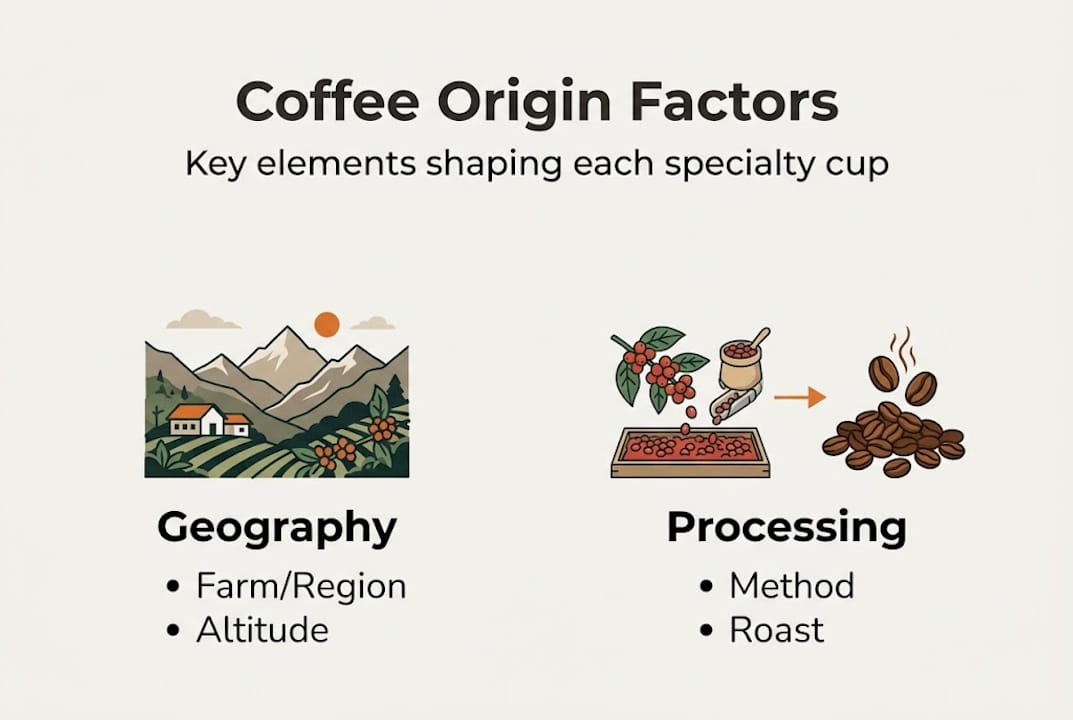
When roasters and buyers talk about origin, they mean a combination of factors working together:
- Geography and terroir: Altitude, soil, rainfall, and temperature all shape the raw bean.
- Variety: Heirloom Ethiopian cultivars taste nothing like a Gesha or a Bourbon, even from the same region.
- Processing method: How the cherry is removed from the seed after harvest changes flavor dramatically.
- Lot-level traceability: Can you trace the coffee back to a specific farm, cooperative, or harvest date? That evidence is what separates a real origin story from a marketing label.
This last point matters more than most enthusiasts realize. A bag that says "single origin" without any lot identification is offering you a story, not a verified fact. True origin claims are backed by documentation, not just design.
Certification labels add another layer of confusion. Fair Trade or organic seals speak to labor practices and farming standards, which are genuinely important. But they do not guarantee cup quality. As sensory and quality criteria in specialty coffee research confirm, specialty coffee is defined by objective sensory and quality criteria, such as an 80-plus point score from a trained Q-Grader, not by certification labels alone.
"Origin without traceability is just geography. Origin with traceability, variety data, and a verified score is a flavor roadmap."
If you want to start building your palate around real origin data, a solid coffee tasting guide will help you connect what you taste to what you know about a coffee's background. The more context you bring to the cup, the more the cup reveals.
The science behind origin and flavor: Beyond geography
Now that we know origin is a bundle of factors, let's unpack how those factors interact in your cup.
Geography sets the stage, but processing method often writes the script. The same coffee cherry, grown on the same farm, can taste completely different depending on whether it was washed, naturally dried, or honey processed. That is not a small variation. It is the difference between a clean, tea-like brightness and a jammy, fruit-forward richness.
Here is a quick comparison to make that concrete:
| Processing method | Flavor profile | Body | Common descriptors |
|---|---|---|---|
| Washed | Clean, bright | Light to medium | Citrus, floral, crisp |
| Natural | Fruity, complex | Full | Berry, wine, chocolate |
| Honey | Sweet, balanced | Medium | Stone fruit, caramel, smooth |
As research on processing and cup character confirms, processing type causes distinct, measurable differences in flavor. This means that if you taste two Ethiopian coffees and find them wildly different, the processing method is often the first variable to investigate, not the farm location.
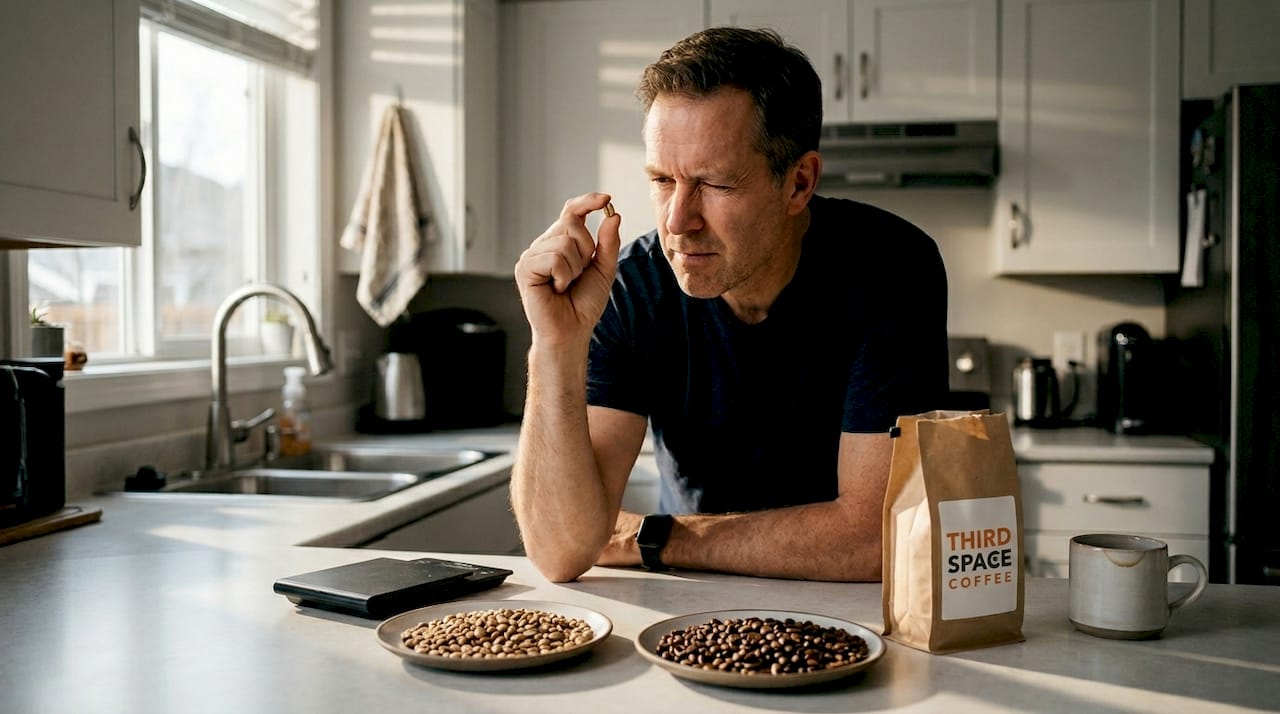
Roast level adds another layer of complexity. A light roast preserves more of the origin character, while a dark roast introduces roast-driven flavors that can mask what the terroir contributed. This is why specialty roasters often use color curve standards to quantify roast level. When roast is controlled, cross-origin comparisons become far more revealing. You can actually taste the difference between a Kenyan and a Yemeni coffee rather than just tasting the roast.
For a deeper look at how roast decisions affect what ends up in your cup, the coffee roasting guide at Third Space Coffee walks through the practical side of roast level and its flavor impact.
Pro Tip: When you try a new origin, ask your barista or roaster about both the processing method and the roast level before you taste. That context will sharpen your ability to connect what you experience to what the origin actually contributed.
How specialty coffee defines and measures origin
Understanding what shapes flavor, let's see how the specialty world formally measures and communicates origin.
Specialty coffee has a structured evaluation system, and it is more rigorous than most people expect. At the center of it is the Q-Grader, a certified professional trained by the Coffee Quality Institute to evaluate coffee using a standardized cupping protocol. A coffee must score 80 or above out of 100 to qualify as specialty grade. That score covers attributes like aroma, flavor, aftertaste, acidity, body, balance, and uniformity.
Research on quantitative benchmarks for coffee quality confirms that specialty coffee evaluation involves Q-Graders, scoring protocols, and roast level color standards, all working together to reduce subjectivity and produce repeatable results.
Here is how a coffee earns its official origin description, from field to your cup:
- Harvest and sorting: Cherries are picked and sorted at the farm level, with lot identification assigned.
- Processing: The chosen method (washed, natural, honey) is applied and documented.
- Green bean assessment: The raw bean is evaluated for defects and moisture content.
- Roasting for evaluation: A sample roast is applied using a standardized color curve to minimize roast-driven variables.
- Cupping: Q-Graders evaluate the brewed coffee using a structured scorecard.
- Score assignment: If the coffee scores 80 or above, it qualifies as specialty grade.
- Lot traceability: The approved lot is labeled with farm, region, variety, and process data.
- Retail communication: That verified information travels with the coffee to the roaster and onto the bag.
This chain of custody is what separates a traceable specialty coffee from a generic single-origin label. When you support local roasters who follow this process, you are investing in transparency, not just flavor.
| Evaluation stage | Key standard used |
|---|---|
| Green bean | Defect count, moisture % |
| Roast | Color curve calibration |
| Cup | Q-Grader scorecard (80+ = specialty) |
| Traceability | Lot-level ID and documentation |
How to use origin knowledge to enhance your coffee experience
With the methods in mind, here is how you can bring this expertise to your own coffee rituals.
Reading a coffee bag label becomes a completely different experience once you know what to look for. Not all labels are created equal, and the details they include (or leave out) tell you a lot about the roaster's commitment to transparency.
Here is what actually matters on a specialty coffee label:
- Country and region: Broad but necessary context.
- Farm or cooperative name: This signals lot-level traceability.
- Variety: Tells you what genetic profile you are tasting.
- Processing method: One of the biggest flavor predictors.
- Roast level or color curve reference: Helps you calibrate expectations.
- Harvest date or crop year: Freshness matters more than most people realize.
- Q-score or cupping notes from a credentialed evaluator: Evidence of objective quality assessment.
When you visit a roaster or cafe, ask questions. "What processing method is this?" and "How light is the roast?" are not pretentious questions. They are the fastest way to connect what you taste to what you know.
For a genuinely fair comparison between origins, control the variables. As empirical flavor evaluation standards show, the most reliable origin-to-flavor evaluations happen when roast level and processing method are held constant. Line up two washed, light-roast coffees from different regions and the terroir differences become audible, so to speak.
If you want to go further, the whole bean coffee selection at Third Space Coffee gives you traceable, specialty-grade options to start building those comparisons at home.
Pro Tip: Keep a tasting journal. Write down the origin, processing method, roast level, and your sensory impressions after each cup. After ten entries, patterns emerge that no article can teach you as effectively as your own documented experience.
Why true coffee origin matters more than ever in 2026
Now that you know how to apply origin knowledge, let's address what most miss about the hype and value of specialty coffee origin.
Conventional wisdom in coffee culture still leans too hard on geography. "I only drink Ethiopian" or "Kenyan coffees are always bright" are statements that feel informed but actually flatten a much more complex reality. Geography is one input, not the output. The educated enthusiast in 2026 knows that a poorly processed, under-evaluated Ethiopian coffee can disappoint, while a meticulously traced, Q-scored Honduran lot can be extraordinary.
The shift happening right now in specialty coffee is toward quantifiable traceability. Roasters and buyers are demanding lot-level documentation, objective scoring, and processing transparency because bundles of factors define specialty origin, not just marketing claims. That shift benefits you as a consumer because it means the information on your bag is increasingly verifiable, not just aspirational.
Marketing-origin stories, the ones built around a beautiful farm photo and a romantic narrative, are not worthless. But they are incomplete. The question to ask is always: what is the evidence? A score, a lot number, a processing record. These are the details that turn a story into a fact. Your tasting guide perspective grows sharper every time you demand that evidence and taste with it in hand.
Elevate your experience at Third Space Coffee Colorado Springs
Seeing the value of true origin, discover how you can experience and explore it firsthand.
At Third Space Coffee in Colorado Springs, we roast our coffees in-house and source with traceability in mind. Every cup we serve is a chance to put these concepts into practice, whether you are ordering from our specialty drinks menu or picking up a bag of whole bean coffee to brew at home.

Our team knows the processing methods, roast levels, and origin details behind every coffee we carry. Ask us. We love those conversations. Whether you want to compare two origins side by side or find a traceable, Q-scored bean that matches your flavor preferences, visit Third Space Coffee and let the origin story begin with real evidence in the cup.
Frequently asked questions
What makes a coffee's origin special?
A coffee's origin is special when it is defined by traceable geography, variety, processing method, and verified quality criteria, not just a country name on a bag.
How does processing method impact coffee flavor?
Processing method changes flavor dramatically: washed produces clean, bright cups, natural creates fruity richness, and honey lands somewhere in between with sweet complexity, as processing type research confirms.
Can you compare coffees from different origins fairly?
Yes. By controlling for roast level and processing method, you can make honest side-by-side comparisons, since color-curve standards reduce roast-driven bias and let terroir differences come through.
Is 'single-origin' always better than blends?
Not always. Single-origin coffees highlight one place's unique profile, but well-crafted blends can balance diverse flavors and create complexity that a single origin cannot always achieve on its own.
What should I look for when choosing a specialty coffee?
Look for clear origin info, processing details, roast level, and evidence of quality like Q-scores or lot traceability, since objective, evidence-based evaluation is what separates specialty coffee from the rest.
Recommended
- Coffee tasting guide for Colorado Springs enthusiasts
- Whole Bean Coffee | Third Space Coffee Colorado Springs, CO
- Coffee roasting guide: elevate your home brews like a pro
- Third Space Americano | Third Space Coffee Colorado Springs, CO
- Identifying quality coffee beans: a connoisseur's guide – Adira Coffee US