
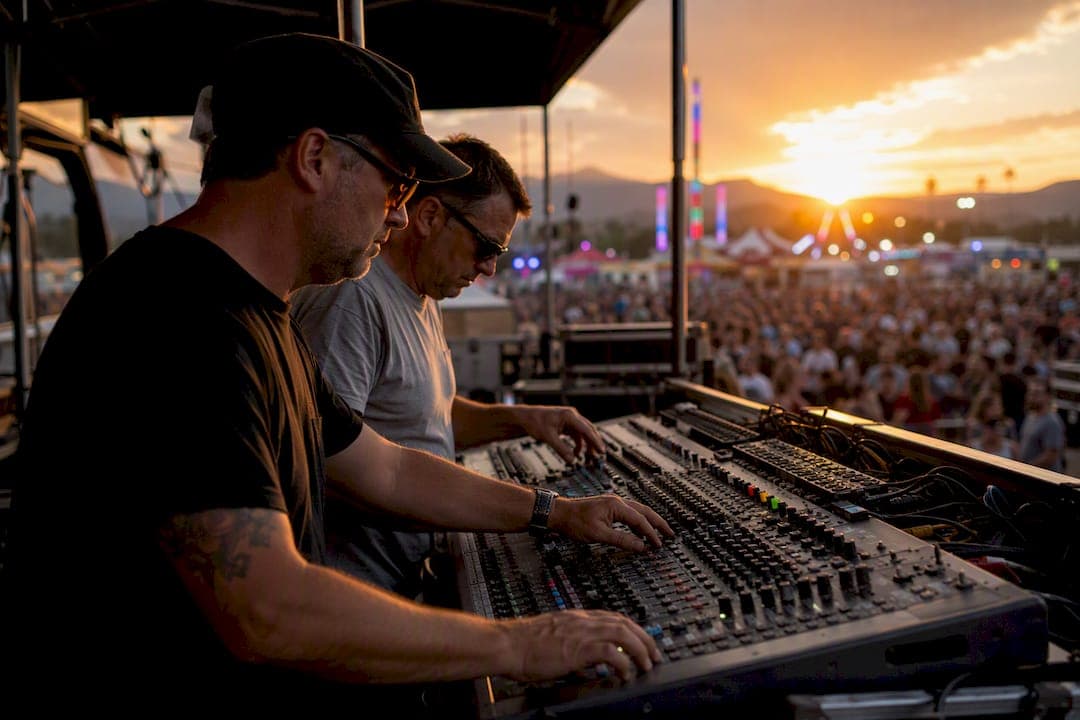
Venues like Ford Amphitheater can legally run louder and later than the standard rules allow, but only under a city-issued hardship permit with monitoring conditions attached, not as a blanket exemption from the law. That distinction matters for what comes next.
- Neighbors near permitted venues live under active sound monitoring, not silence.
- Repeated exceedances can trigger fines, mitigation orders, or lawsuits under state law.
- Your fastest path to action is filing a complaint through the city's official channels.
Key Takeaways
Colorado Springs allows venues to exceed standard noise limits only through city-issued hardship permits carrying monitoring and mitigation conditions, while state law still gives residents an independent path to sue over excessive noise.
| Point | Details |
|---|---|
| Permits aren't blanket exemptions | Venues like Ford Amphitheater operate under conditions requiring monitoring, not unrestricted noise levels. |
| State and city law run separately | The Noise Abatement Act and Article 9.8 can be enforced independently, even against a permitted venue. |
| Audibility alone can prove a violation | City code lets clear audibility at a set distance count as evidence, no meter required. |
| Reporting is fast and specific | GoCOS! and the Neighborhood Services complaint form route reports directly to code enforcement. |
| Smaller venues avoid the issue entirely | Thirdspacecoffee's indoor space for up to 150 guests keeps gatherings contained without permit or monitoring concerns. |
Table of Contents
- Understanding Event Noise Rules in Colorado Springs
- What the City Noise Ordinance Actually Allows
- The Ford Amphitheater Timeline Everyone's Talking About
- How to Report a Noise Complaint in Colorado Springs
- What Happens After You File a Report
- Advice for Event Hosts Who Want to Avoid Complaints
- A Local Take on Balancing Live Events and Quiet Nights
- A Quieter Way to Host Your Next Gathering
- Where to Check for Updates and Evidence
- Frequently Asked Questions
- Sources
Understanding Event Noise Rules in Colorado Springs
Two legal layers govern event noise here: state law and city code, and they don't always agree cleanly. The Colorado Noise Abatement Act sets statewide decibel limits by zoning and time of day, and gives residents a private right to sue when those limits are broken. It also carries an exemption for events tied to government or nonprofit entities, and that's where things get messy.
A Colorado Supreme Court opinion examined whether a private operator leasing a venue from a public or nonprofit landlord can still claim that exemption. The court's reasoning suggests the answer depends on the actual relationship between the entity holding the permit and the entity running the show, not just who owns the property. That ambiguity is precisely why Colorado Springs has seen both permit fights and courtroom fights over the same events.
For residents, the practical takeaway breaks down simply:
- If a venue's noise comes from a public or qualifying nonprofit event, statutory limits may not fully apply.
- If a private promoter is running the show for profit, the exemption is legally shakier, and a lawsuit under the NAA becomes a real option.
- Either way, city permit conditions run on a separate track from state law and can be challenged independently.
What the City Noise Ordinance Actually Allows
Article 9.8 of the city code makes "excessive or unusually loud" noise unlawful, and enforcement leans on specific, measurable rules rather than vague complaints.
- Noise is typically measured 25 feet from the property line or nearest public right of way.
- Short bursts get more leeway: small temporary increases in noise level for short periods are generally permitted under state statute, and city code applies similar periodic-noise logic.
- Permits issued under section 9.8.109 can override the standard time and level rules entirely for a defined event.
Here's the part most residents miss: you don't always need a decibel meter to file a valid complaint. City code allows noise to be established as a violation simply by being clearly audible at a set distance, which is why officer testimony and resident statements still carry weight. For permitted venues, though, the city increasingly relies on remote monitoring stations placed in nearby neighborhoods, feeding data the city can publish and compare against the permit's own thresholds.
The Ford Amphitheater Timeline Everyone's Talking About
The short version: the city issued a hardship permit for the 2026 concert season, and it didn't settle the debate, it restarted it.
Ford Amphitheater, near neighborhoods that had already logged years of complaints, became the test case for how far a hardship permit can stretch. The city's own release frames the decision as data-driven, built on measured sound levels and mitigation commitments rather than a blank check.
- The permit set defined end times and a geographic monitoring zone tied to the venue.
- Local reporting from The Gazette noted at least one councilmember pushed for tighter terms even after approval.
- Separately, eight residents filed suit against an outdoor venue, alleging noise exceeded NAA limits regardless of local permitting.
The coverage keeps circling back to one theme: transparency. Monitoring data and public reporting are now central to whether anyone, city council included, believes a venue is actually complying.
How to Report a Noise Complaint in Colorado Springs
Start here: file through GoCOS! and select the "Noise Complaint" topic, or go directly to the Neighborhood Services code enforcement form. Both route your report to the department that actually investigates, which matters more than calling a general city line and hoping.
- Log the exact date, start time, and duration of the noise, not just "it was loud last night."
- Note your address and, if possible, your distance from the source in feet.
- Record short audio or video clips with a timestamp, but understand phone recordings alone rarely hold up as precise decibel evidence.
- Write down what you heard specifically, bass, lyrics, announcements, since city code allows audibility itself to support a violation.
- Get a neighbor to co-sign your account if multiple households are affected.
- If you own or borrow a sound meter, note the reading, time, and your exact location.
- Ask the city whether published monitoring data exists for that venue before or after filing, since it can corroborate your complaint.
Pro Tip: Keep a simple noise log on your phone, one line per incident, with date, time, and a one-word description. Three months of consistent entries is far more persuasive to a code enforcement officer than one furious call.
What Happens After You File a Report
The city investigates first, then escalates. A single complaint typically triggers a records check and, for permitted venues, a look at monitoring data against the permit's thresholds. Repeated or corroborated complaints move things further.
- Short term: on-site checks, warnings to the venue, or a spot meter reading by code enforcement.
- Longer term: required mitigation (speaker adjustments, curfew tightening), fines tied to permit violations, or amended permit terms at renewal.
- If city action stalls: residents retain the option to sue directly under the Noise Abatement Act, as the eight residents did in the case covered above.
Timelines vary widely. A single complaint might get a callback within days; a pattern that reaches city council or the courts can stretch across an entire concert season.
Advice for Event Hosts Who Want to Avoid Complaints
If you're running an event, the fix is simpler than most organizers think: measure before you start, aim speakers away from homes, and share your data instead of hiding it.
- Take a baseline ambient reading roughly 15 minutes before showtime so your thresholds reflect real conditions, not guesswork.
- Angle speaker arrays away from residential property lines whenever the site allows it.
- Set a firm curfew and build your sound plan backward from it.
- Publish or offer access to your own monitoring readings if neighbors ask.
- Give neighbors a direct contact line during the event, not just a city complaint form to file after the fact.
Pro Tip: A Type I or Type II sound level meter gives you defensible, calibrated numbers a city inspector will actually accept; a phone decibel app is fine for a rough gut check, but treat its readings as a warning sign, not evidence. Smaller indoor bookings sidestep most of this entirely, which is worth weighing if you're planning something under 150 guests. A checklist for booking coffee events walks through what that lower-friction version looks like.
A Local Take on Balancing Live Events and Quiet Nights
Colorado Springs doesn't have to choose between live music and livable neighborhoods, but the city's current approach puts too much weight on permits and not enough on prevention. Residents should use GoCOS! without hesitation and show up to council meetings when permits come up for renewal. Hosting smaller, community-scale gatherings, the kind we handle regularly, shows that events and quiet streets can coexist when scale matches the setting.
A Quieter Way to Host Your Next Gathering
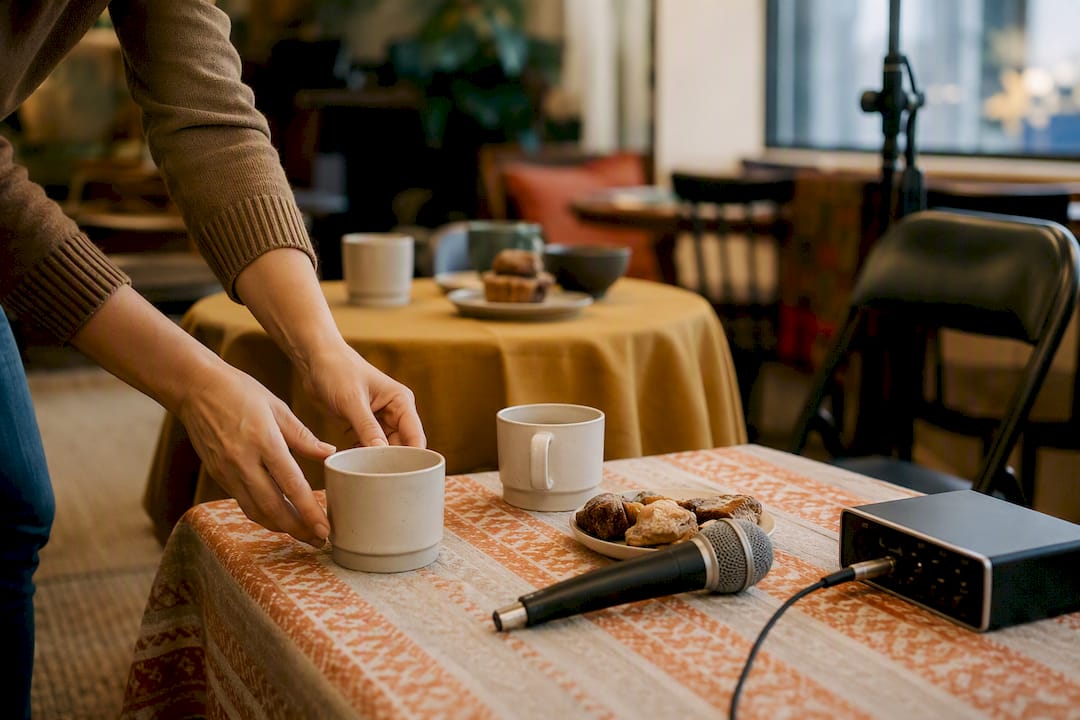
If the Ford Amphitheater debate has you rethinking big outdoor bookings, Thirdspacecoffee offers the opposite model: an indoor, community-sized space where noise conditions and city permits never enter the conversation. There's no hardship permit to negotiate, no monitoring station to worry about, and no neighbor hotline to set up, because the space itself keeps sound contained.

Whether you're planning a small celebration, a meeting, or a neighborhood gathering for up to 150 guests, our team handles the logistics so you can focus on the people in the room. Check availability and book your date on our home page to get started.
Where to Check for Updates and Evidence
Bookmark these pages for permit terms, monitoring data, and ongoing coverage before you file a complaint or attend a council meeting.
- Article 9.8 city noise code for the exact legal language enforcement relies on.
- GoCOS! complaint portal to file a report directly.
- Ford Amphitheater Project page for permit terms and monitoring updates.
- The Gazette's coverage for ongoing council debate and public reaction.
Frequently Asked Questions
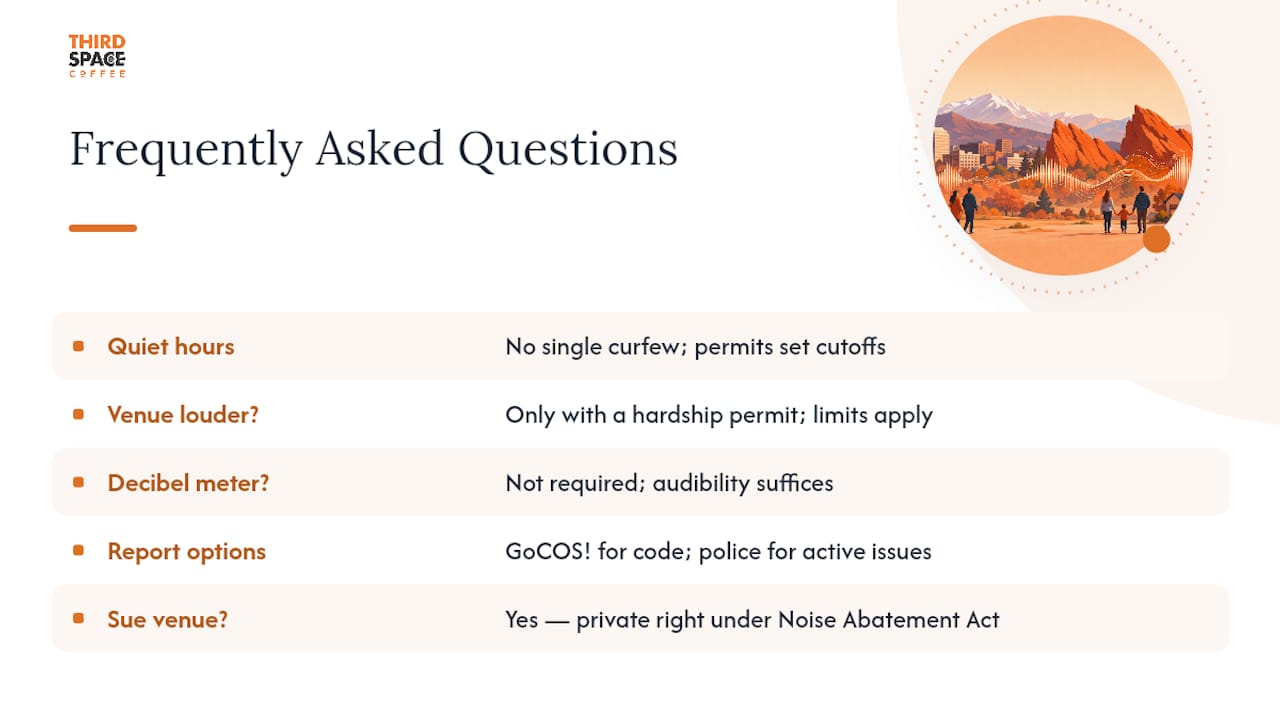
What time do quiet hours start in Colorado Springs? City code ties permissible noise levels to time of day rather than a single citywide curfew, and permitted venues like Ford Amphitheater typically must stop amplified sound by defined evening cutoffs set in their specific permit terms.
Can a venue legally be louder than my neighborhood's normal limit? Only if it holds a city-issued hardship permit under section 9.8.109, and even then, the permit comes with monitoring and mitigation conditions, not unlimited volume.
Do I need a decibel meter to file a complaint? No. City code allows a violation to be established by audibility alone at a measured distance, though a meter reading strengthens your case.
What's the difference between reporting through GoCOS! and calling police? GoCOS! and the Neighborhood Services form route to code enforcement for investigation and long-term tracking; call police non-emergency only for an active disturbance you need addressed immediately.
Can residents sue a venue directly over noise? Yes. The Noise Abatement Act gives residents a private right of action, separate from city permitting, as shown by the lawsuit filed against an outdoor Colorado Springs venue.
This article is general information, not a substitute for advice from a qualified lawyer. Consult a qualified legal professional about your own circumstances before acting on anything here.
Sources
- 9.8.101: Noise prohibited — City of Colorado Springs code (amLegal)
- City issues noise hardship permit for Ford Amphitheater 2026 concert season | City of Colorado Springs
- Ford Amphitheater receives noise permit for 2026 concert season; councilmember would still like changes | The Gazette
- Colorado Judicial Branch opinion 24SC216
- GoCOS! - Contact Us | City of Colorado Springs