
TL;DR:
- Event spaces can help small businesses build brand awareness, foster community, and diversify revenue streams.
- Choosing the right venue requires alignment with brand values, accessibility, and operational clarity.
Event spaces are one of the most underused tools a small business owner has. When used well, they do three things at once: build your brand, deepen community ties, and open revenue streams that your core product alone can't reach. The role of event spaces for small businesses goes well beyond renting out a room. They function as living extensions of your brand, giving customers a reason to show up, stay longer, and tell others about you.
Here's what that looks like in practice:
- Brand visibility: Hosting an event puts your business in front of people who may never have found you online.
- Community identity: Your space becomes a gathering point, not just a store.
- Revenue diversification: Rental fees, catering add-ons, and product sales during events create income beyond your daily operations.
- Real-time feedback: Face-to-face conversations with attendees tell you more than any survey.
- Partnership opportunities: Events attract collaborators, local nonprofits, and vendors who can extend your reach.
Table of Contents
- What are the key benefits of using event spaces for small business growth?
- How should you select and manage your event venue?
- How Thirdspacecoffee uses its space to build community and brand
- Practical tips for running your event space smoothly
- What types of events work best for small business growth?
- How do you use your event space to build real networking opportunities?
- How do you measure whether your event space is actually working?
- Key Takeaways
- Thirdspacecoffee: a community venue worth booking in Colorado Springs
What are the key benefits of using event spaces for small business growth?
Small businesses are uniquely positioned to offer something traditional venues cannot: a welcoming, character-rich atmosphere where people genuinely feel at ease. A bookstore, a plant shop, a coffee roaster — these spaces carry built-in warmth that a hotel ballroom never will.
The impact of in-person events on small businesses is direct and lasting. Customers who meet your team face to face convert faster and stay loyal longer than those who only interact with you through a screen. Events also generate foot traffic that spills into regular business days, as first-time attendees often return as repeat customers.
- Credibility: Hosting a polished event signals that your business is active, professional, and invested in the community.
- Lead generation: Attendees are already interested. They showed up, which means the conversation starts warmer.
- Multiple revenue streams: Venues offering diverse programming tend to see higher overall attendance and stronger community engagement, per Event Vesta's analysis of over 19,000 events in 2023.
- Cross-promotion: Retail sales, food and beverage, and event fees all feed each other when the space is designed thoughtfully.
- Economic lift: Multi-use venues keep communities economically and culturally vibrant, supporting local artists, nonprofits, and neighboring businesses simultaneously.
Pro Tip: Don't wait until you have a "perfect" event program. Start with one format, one audience, and one clear goal. A focused first event teaches you more than six months of planning.
How should you select and manage your event venue?
Venue choice sends a message about your business before anyone on your team says a word. The layout, lighting, and overall feel tell attendees how to think about you. A mismatched space undermines credibility even when the content is strong.
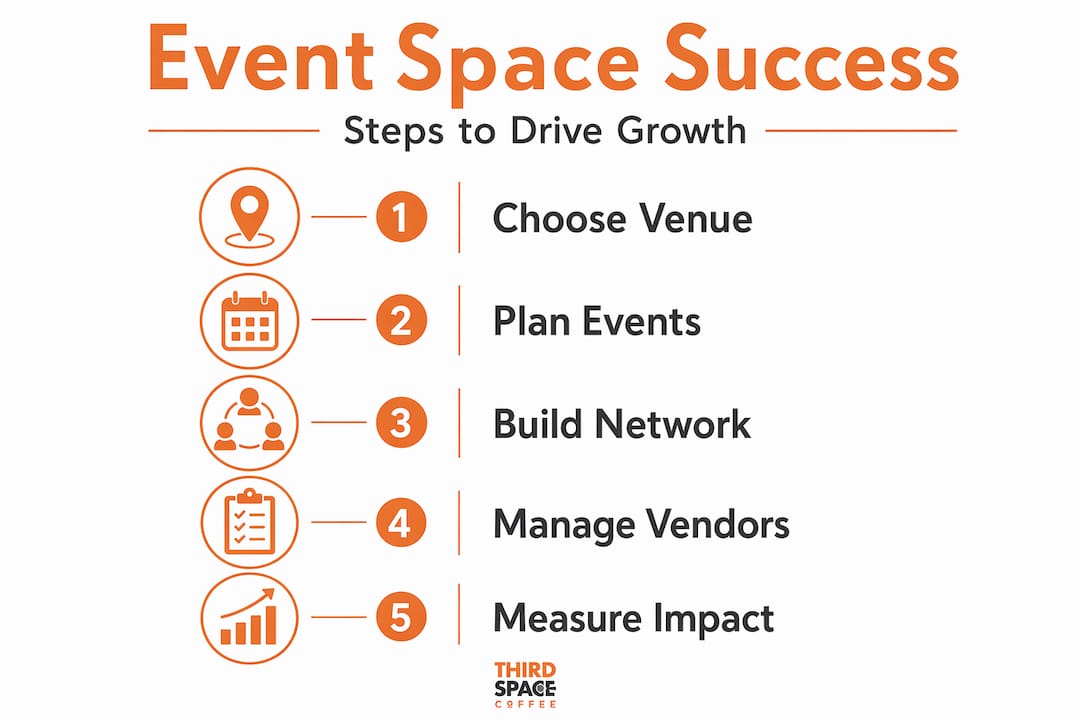
Selecting the right venue means asking whether the space reflects your values and serves your specific event goals. A product launch needs different energy than a community workshop. Accessibility matters too: parking, public transit access, and physical accommodations all affect who actually shows up.
Key considerations when evaluating and managing your space:
- Brand alignment: Does the space look and feel like your business?
- Operational clarity: Clear booking processes and standard operating procedures protect both you and your guests.
- Staffing: Dedicated management is crucial. Design principal Zoltan E. Pali puts it plainly: treat the event space as an extension of your business and hire someone dedicated to managing it.
- Cost structure: Labor, equipment, and materials must be budgeted separately from your core operations. Hosting events adds real costs that need to be recouped.
- AV and technical setup: A reliable sound system and projector are not optional. Beehive Bazaar in Provo, Utah surveyed potential customers and found a great sound system was the top request, so they had one installed before their first event.
Pro Tip: Build a preferred vendor list of caterers, DJs, and AV technicians you trust. When customers book your space, that list makes their planning easier and your events more consistent.
How Thirdspacecoffee uses its space to build community and brand
Thirdspacecoffee in Colorado Springs is a working example of how a small business can run dual-use event operations without losing focus on its core product. The shop roasts specialty coffee in-house and sells it retail, but the space also functions as a bookable venue for gatherings, meetings, and private parties.
The model works because the event side is treated as complementary, not primary. Events bring new people through the door who then discover the coffee. The coffee gives event guests something to talk about and take home. Each side feeds the other.
| Event Type | Community Benefit | Business Impact |
|---|---|---|
| Private meetings and workshops | Professionals gather in a relaxed setting | Repeat bookings, daytime revenue |
| Community gatherings and parties | Neighbors connect outside home and work | Brand recognition, word-of-mouth |
| Specialty coffee tastings | Education builds product loyalty | Direct retail sales during events |
| Local artist or vendor pop-ups | Supports local creative economy | Cross-promotion, new audience reach |
Thirdspacecoffee's approach reflects what sociologists call the "third space" concept: a place beyond home and work where people can be themselves and build community. Small businesses that embrace this role cultivate loyal regulars who see the space as theirs, not just a vendor's.
Practical tips for running your event space smoothly
Good event operations come down to preparation and people. The Utah-based retailer Cactus & Tropicals, which hosts weddings in its greenhouse, credits its success to one thing above all: a team that works well together and stays flexible when things shift unexpectedly.
Capturing attendee data is where many small businesses leave money on the table. In a small event of 20 people, losing context on five of them is a serious loss. Collect names, contact details, and notes before the room clears.
- Retreat zones: High-functioning venues include quiet rooms where hosts can manage logistics away from guests. A bridal suite or back office serves this purpose.
- Easy booking: Clear communication and a simple reservation process reduce friction and increase conversions.
- Cross-functional teams: Staff who can pivot between retail duties and event support keep costs manageable.
- Post-event follow-up: Send a message within 48 hours. Attendees who hear from you quickly are far more likely to return or refer others.
What types of events work best for small business growth?
The format matters less than the fit. The best event for your business is the one that attracts the right people and gives them a genuine reason to engage with what you offer.
Formats that consistently deliver results for small businesses include:
- Workshops and classes: Teach something useful related to your product or industry. A coffee shop can run brewing workshops; a plant retailer can host care clinics.
- Networking meetups: Low-barrier, high-value for entrepreneurs and local professionals. These build local connections that digital channels rarely replicate.
- Private celebrations: Birthdays, retirement parties, and small weddings generate rental revenue and introduce your space to entirely new audiences.
- Pop-up markets: Invite local vendors and artisans. Their audiences become yours.
- Community forums and panels: Position your business as a civic anchor, not just a retailer.
- Product launches and demos: Let people experience what you sell in a social setting where questions get answered in real time.
For event planners thinking through catering and hospitality logistics, resources like festive meal planning guides can help round out the attendee experience without overcomplicating your operations.
How do you use your event space to build real networking opportunities?
Networking works best when the environment removes pressure. A coffee shop, a plant-filled greenhouse, or a renovated retail space creates a relaxed atmosphere that a conference room never does. People talk more freely when they feel comfortable.

Structure matters too. Open-ended mixers often produce weak results because attendees don't know how to start conversations. Giving people a shared activity, a topic, or a structured introduction round changes the dynamic entirely.
Practical strategies that work:
- Curate the guest list: A focused room of 15–20 people with a shared interest produces better connections than a broad open invitation.
- Partner with complementary businesses: Co-hosting with a local nonprofit or professional association doubles your reach and adds credibility.
- Follow up with introductions: After the event, connect two attendees who should know each other. That gesture builds loyalty to your space faster than any marketing campaign.
- Create recurring events: A monthly meetup builds a habit. People plan around it, and your space becomes the default gathering point.
How do you measure whether your event space is actually working?
Most small businesses track event revenue but miss the fuller picture. The real return on an event space shows up in foot traffic trends, repeat customer rates, and social media mentions, not just the rental fee collected.
Metrics worth tracking:
- New customer acquisition: How many attendees were first-time visitors to your business?
- Retail sales lift: Did product sales increase on event days compared to comparable non-event days?
- Attendee retention: What percentage of event guests returned within 30 days?
- Referral rate: How many bookings came from word-of-mouth versus paid promotion?
- Social reach: Track tags, shares, and check-ins during and after events.
Most successful businesses with event spaces do not rely on event revenue alone. The space boosts overall business health by increasing brand presence, deepening customer relationships, and generating data that improves every future decision.
Key Takeaways
Event spaces work best when treated as strategic extensions of your business, not side projects.
| Point | Details |
|---|---|
| Brand extension | Your event space reflects your business identity before anyone speaks. |
| Revenue diversification | Events create income through rental fees, retail sales, and catering alongside your core product. |
| Community role | Small businesses that serve as third spaces build loyal communities that traditional venues cannot replicate. |
| Operational discipline | Dedicated staffing, clear booking processes, and attendee data capture determine whether events pay off. |
| Thirdspacecoffee model | Thirdspacecoffee in Colorado Springs combines specialty coffee retail with bookable event space, using each side to strengthen the other. |
Thirdspacecoffee: a community venue worth booking in Colorado Springs
If you're a small business owner who wants to host an event without the overhead of a standalone venue, Thirdspacecoffee offers something most event spaces don't: a space that already feels like somewhere people want to be. The shop roasts its specialty coffee in-house, which means your guests arrive to an environment with real character, not a blank room with folding chairs.

Thirdspacecoffee handles the atmosphere. You bring the agenda. Whether you're planning a team meeting, a community gathering, or a private celebration, the space is bookable and the coffee is genuinely good. Visit Thirdspacecoffee to check availability and plan your next event in Colorado Springs.