
TL;DR:
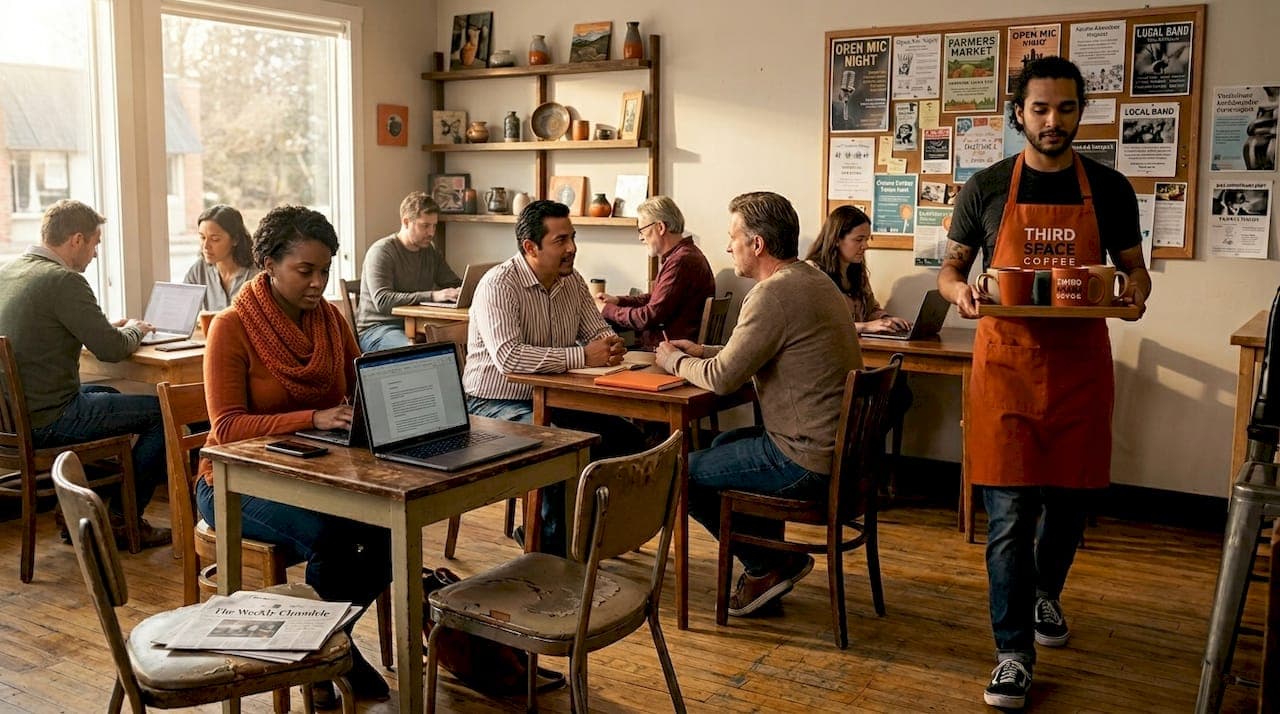
- Coffee shops offer warm ambiance, community energy, and flexible layout for engaging events.
- Recurring, intimate gatherings at coffee shops foster loyalty and long-term community building.
- Logistical advantages include integrated high-quality coffee, WiFi, parking, and experienced staff.
Most people picture a conference room when they think "event venue." Rows of folding chairs, fluorescent lighting, a projector that may or may not work. But Colorado Springs event planners are quietly discovering something better: the local coffee shop. These spaces do something no generic ballroom can replicate. They already carry warmth, community energy, and a built-in reason for people to gather. This guide breaks down exactly why coffee shop event spaces are outperforming traditional venues, what makes them work logistically, and how to use them to create gatherings people actually want to attend.
Table of Contents
- Why coffee shops are redefining event spaces
- Built-in community, recurring foot traffic, and event momentum
- Coffee culture meets practical event logistics
- Local highlights: Colorado Springs coffee shop events
- Nuances, rental models, and what most planners miss
- Why intimate coffee shop events outperform traditional venues
- Experience your own event at Third Space Coffee
- Frequently asked questions
Key Takeaways
| Point | Details |
|---|---|
| Coffee shops foster community | Event spaces in coffee shops build inclusive, accessible 'third spaces' for community connection. |
| Built-in attendees boost turnout | Recurring events leverage organic customer foot traffic for higher participation and repeat visits. |
| Integrated coffee service simplifies planning | On-site beverage options add ambiance and save planners the hassle of dealing with outside vendors. |
| Flexible rental models suit diverse needs | Options like after-hours or partial space rentals let planners customize their event logistics. |
| Local coffee events create unique experiences | Innovative events like latte throwdowns and tastings showcase quality and encourage deeper engagement. |
Why coffee shops are redefining event spaces
The idea of a "third space" goes back decades in urban planning circles. Simply put, it is any place that is not home and not work. Coffee shops have always filled that role naturally, but now they are stepping into something more intentional. Cafés are designed to serve as neutral, accessible third spaces that foster community engagement and serendipitous interactions beyond home or work. That is a powerful baseline for any event.
"A coffee shop is not just a place to drink coffee. It is a place where community happens by default — and that default is exactly what event planners should be building on."
Colorado Springs has fully embraced this shift. Locals who are passionate about supporting local roasters are already walking into these spaces with an open, social mindset. They are not guarded the way people can be in formal venues. That relaxed energy transfers directly into event dynamics.
What specifically makes coffee shops stand out as event spaces?
- Ambient atmosphere already in place. No need to rent lighting rigs or decor. The espresso bar, the warm tones, the curated playlists — it is all there.
- Built-in beverage service. Attendees get quality coffee without hiring a separate catering team.
- Flexible seating arrangements. Many shops can reconfigure tables for workshops, panels, or social mixers.
- Familiar, welcoming vibe. People associate coffee shops with comfort and conversation, not stiff formality.
- Local identity. Hosting at a neighborhood shop signals authenticity and community investment.
For coffee enthusiasts, the venue itself becomes part of the experience. That is something no generic hotel meeting room can offer.
Built-in community, recurring foot traffic, and event momentum
Here is something traditional venues cannot compete with: a coffee shop already has regulars. Every morning, the same faces walk in, order their usual, and linger. That is a pre-built audience waiting to be converted into event attendees.
Research confirms this dynamic. Events leverage built-in foot traffic, convert regulars into attendees, and boost repeat visits through recurring programming like workshops, meetups, and performances. In other words, a well-run event at a coffee shop is not just one-time activity. It seeds the next event automatically.
Event types and their attendance impact:
| Event type | Attendance pattern | Community value |
|---|---|---|
| Weekly open mic | Grows steadily over months | High — builds habit loops |
| One-time workshop | Strong single turnout | Medium — low long-term loyalty |
| Monthly tasting session | Steady, loyal audience | Very high — recurring commitment |
| Networking meetup | Variable but connected | High — professional relationships |
| Latte art throwdown | Strong, enthusiastic crowd | High — spectator energy |
The table shows a clear pattern: recurring events consistently outperform single-occasion gatherings in both loyalty and long-term community value. This is a lesson many coffee shop alternatives simply cannot replicate with their event strategies.
To build event momentum at a coffee shop venue, follow these steps:
- Start small and consistent. A monthly meetup builds more loyalty than a quarterly big event.
- Engage the shop's existing regulars. Ask the baristas to mention the event to familiar faces. That personal invitation converts.
- Create a feedback loop. After each event, ask attendees what they want next. Build programming around their answers.
- Cross-promote on social media. Coffee shops with active Instagram accounts extend your event's reach without extra marketing spend.
- Make attendance feel rewarding. Offer a tasting, a demo, or exclusive content that guests cannot get by simply walking in on a regular day.
Each step compounds. By month three of a recurring event series, you have a mini-community that organizes itself.
Coffee culture meets practical event logistics
Let's talk about the nuts and bolts of running an event, because this is where coffee shops quietly shine. The logistics that normally cost you extra time, money, and stress are frequently already handled.
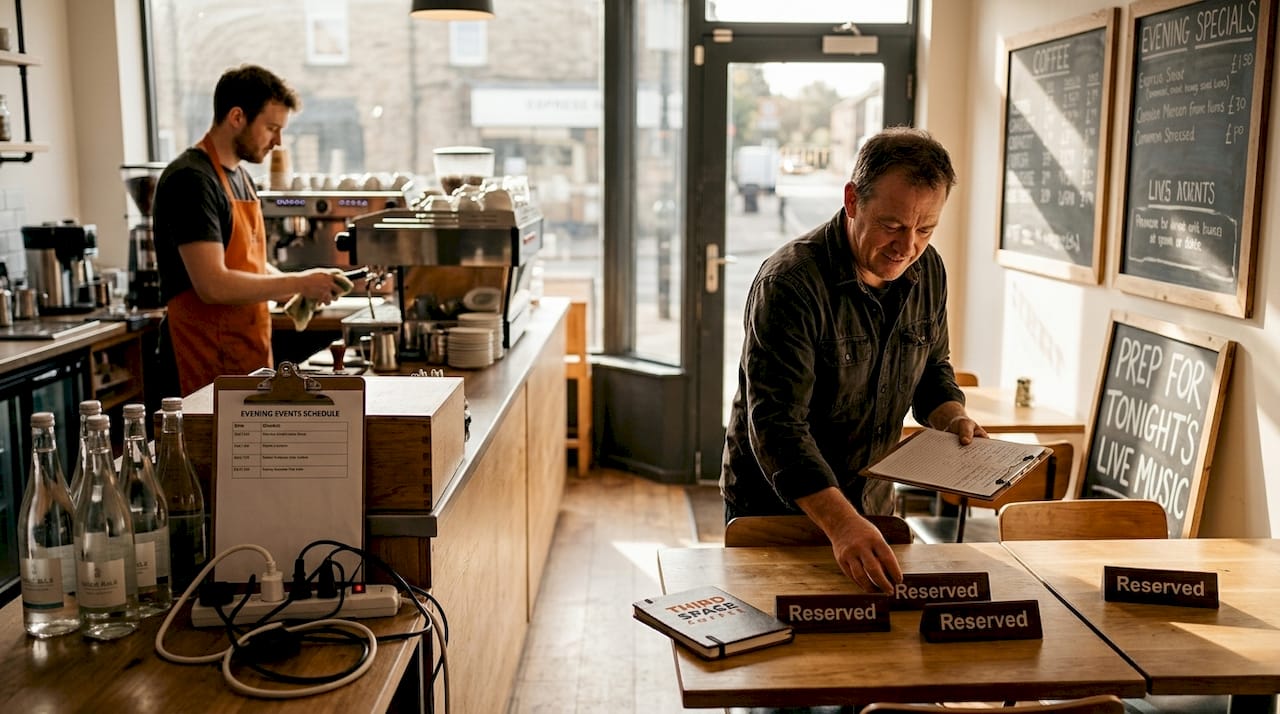
High-quality integrated coffee service enhances events without extra vendors, providing warmth, ambiance, flexible layouts, and practical infrastructure like WiFi and parking. Think about what that actually means for your planning checklist.
Here is what a well-equipped coffee shop typically brings to your event automatically:
- High-speed WiFi. Essential for hybrid events, presentations, and workshop materials.
- On-site parking. Especially relevant in Colorado Springs where driving is the default.
- Trained staff. Baristas who know how to read a room and keep service moving efficiently.
- Food and beverage service. From pastries to specialty espresso drinks, the catering question is mostly answered.
- Sound equipment. Many shops have audio setups for live music or presentations already installed.
- Natural lighting. Especially valuable for photo-worthy moments and content creation.
The role of venue staff is massively underrated in event success. Experienced baristas and shop managers have seen dozens of gatherings. They know how to keep coffee flowing during a panel discussion without disrupting the speaker. That expertise is baked into the rental.
Pro Tip: When booking a coffee shop event space, ask specifically about beverage packages. Many shops will negotiate a flat-rate package for your group, which means your attendees get unlimited drip coffee and a set number of specialty drinks without individual orders slowing things down. Exploring options like drip coffee service upfront helps you plan both budget and timeline more accurately.
If you want to impress guests who care about quality, pairing your event with a shop that does its own coffee roasting adds a layer of authenticity and conversation that pre-ground hotel coffee simply cannot touch.
Local highlights: Colorado Springs coffee shop events
Colorado Springs is not just catching up to this trend. It is leading it in some ways. Local shops have developed event programming that is worth studying closely.
Holdfast Coffee Roasters hosts community events like latte art throwdowns and patio gatherings specifically to create gathering spaces. These are not afterthoughts. They are deliberate programming decisions designed to build community identity around the shop.
Even more striking, Hold Fast expanded into Reception, a former event space, now used for slow bar coffee tastings and cuppings (guided sensory evaluations of coffee) by day, with the explicit goal of showcasing roastery products deliberately. That is a full event strategy built into the business model.
Coffee shop events vs. traditional venue events:
| Feature | Coffee shop events | Traditional venue events |
|---|---|---|
| Ambiance | Warm, curated, immediate | Generic, requires setup/decor |
| Beverage service | Integrated and high quality | Catered separately, often inferior |
| Community connection | Built-in, local audience | Audience must be built from scratch |
| Cost | Generally lower overhead | Often higher base costs |
| Flexibility | Adaptable layouts | Fixed room configurations |
| Authenticity | High, locally rooted | Low, interchangeable spaces |
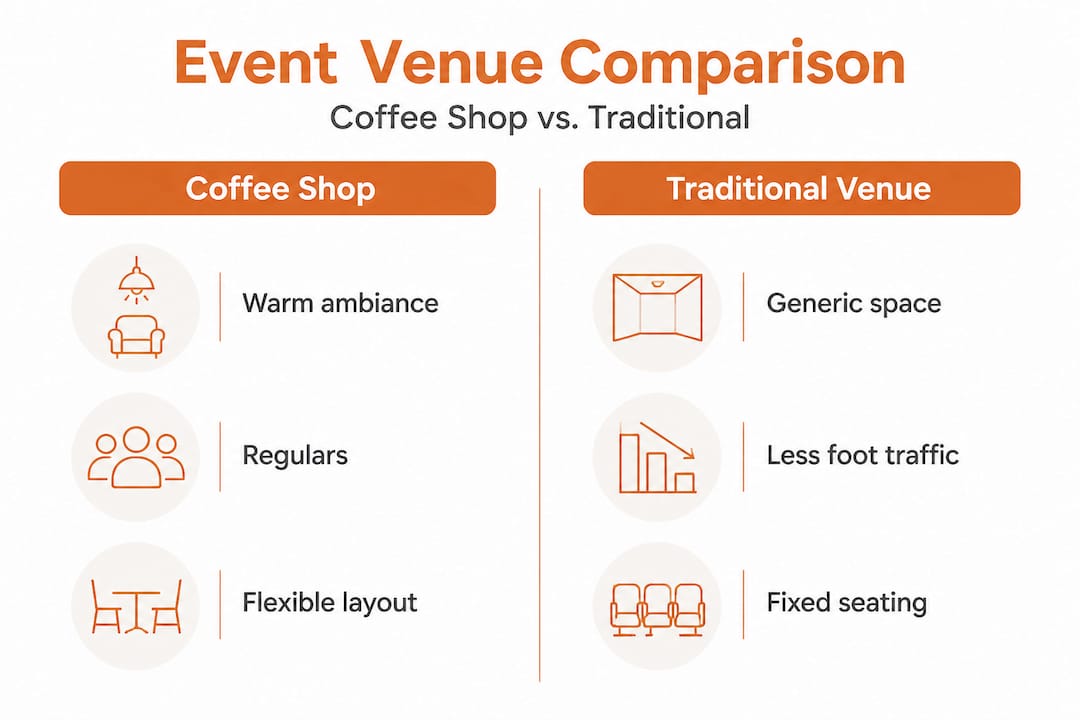
For event planners, this comparison is practical, not just philosophical. Every column where coffee shops outperform traditional venues is a line item on your planning checklist that becomes simpler and cheaper.
For anyone new to specialty coffee jargon, the industry terms glossary is a useful starting point before your first venue conversation with a specialty shop. Understanding terms like "cupping," "single origin," and "slow bar" helps you ask better questions and plan more targeted events.
The specialty drinks available at quality coffee shops also give you creative event concepts built around the menu itself, like a craft cocktail pairing event but centered on coffee.
Nuances, rental models, and what most planners miss
Not every coffee shop event is perfectly smooth. The planners who get the best results are the ones who understand the nuances before they sign anything.
Flexible after-hours rental models for full cafés or specific rooms, staff-supported beverage service, and partnerships with local vendors for cross-promotion are all available at many shops. But you need to ask explicitly because these options are rarely advertised.
There are also real challenges. Noise management, minimum spends, and power and water logistics for pop-up setups are all live issues that experienced planners navigate carefully. Ignoring them is how events go sideways.
Key watchouts every planner should address before booking:
- Clarify the fee structure upfront. Some shops charge a flat rental fee. Others require a minimum beverage spend. Knowing which model applies changes your budget math significantly.
- Discuss noise management. Evening events near residential areas may face volume restrictions. Ask about sound policies and any neighborhood considerations.
- Confirm power and water access. If you are bringing additional equipment like a projector, PA system, or pop-up displays, verify outlet locations and capacity.
- Understand staffing expectations. Will baristas stay for the full event or close early? Who handles setup and breakdown?
- Lock in the timeline in writing. Start time, end time, cleanup window. All of it. Ambiguity here is where disputes begin.
Pro Tip: Approach the shop owner or manager as a partner, not just a landlord. Offer to promote the event on your own channels, tag the shop in all social content, and bring in attendees who may become regulars afterward. That value exchange often results in better pricing and more flexible terms. Review venue terminology explained before your first conversation so you can speak the same language as the venue manager.
One emerging trend worth noting: sober coffee raves. These are energetic, alcohol-free events centered on music, movement, and high-quality coffee service. They are gaining real traction as wellness-focused alternatives to traditional nightlife, and coffee shops are the natural home for them. If your audience skews health-conscious or younger, this format is worth experimenting with.
Why intimate coffee shop events outperform traditional venues
Here is an opinion that may push back against your instincts: bigger is not better when it comes to community events. The obsession with headcount and square footage is a habit borrowed from trade shows and corporate conferences, and it often produces shallow experiences.
Building loyalty and community through intimate pop-up events consistently outperforms costly large-scale gatherings for roasters and community organizers. The data backs this up, and so does common sense. A room of 30 engaged, connected people leaves more lasting impact than a ballroom of 200 strangers who never speak to each other.
Coffee shops enforce intimacy by design. The physical space limits attendance. The layout encourages conversation. The shared experience of good coffee creates a natural social equalizer. No one is sitting far from the speaker or feeling lost in the crowd.
Post-pandemic, the value of third spaces has become even more urgent. People are hungry for connection that feels genuine rather than programmed. At the same time, the rise of takeout culture has challenged coffee shops to give people a reason to stay. Events solve that problem for the shop and for your attendees simultaneously.
We believe that the most memorable events are ones where people feel like they stumbled into something special rather than attended something scheduled. A well-programmed coffee shop event can manufacture that feeling by supporting local roasters, embedding the event into the neighborhood's identity, and keeping the guest count tight enough that everyone remembers someone they met.
The trend toward coffee raves and sensory-focused gatherings is not a gimmick. It is a signal that communities want experiences built around presence and quality, not volume and spectacle.
Experience your own event at Third Space Coffee
For those ready to move from theory to an actual booking, Third Space Coffee in Colorado Springs offers exactly the kind of space this article describes. The venue combines in-house roasted specialty coffee with flexible event space that works for professional meetings, community gatherings, and social celebrations alike.

Whether you want a laid-back neighborhood meetup or a curated tasting experience built around whole bean coffee roasted on-site, the setup is already there. The team handles beverage service so you can focus on your guests, and the atmosphere does a lot of the heavy lifting that traditional venues charge extra for. Check out the full range of specialty drinks options to start building your event menu, and reach out directly to discuss rental availability and pricing for your next gathering.
Frequently asked questions
What types of events are best suited for coffee shop spaces?
Coffee shops are ideal for workshops, small meetups, tasting sessions, and community gatherings that benefit from a cozy, accessible environment. Events leverage built-in foot traffic for workshops, meetups, and performances, making them a natural fit for recurring programming.
Do coffee shop venues in Colorado Springs offer private event rentals?
Many coffee shops offer flexible rental models, including after-hours and partial space options for private events. Flexible after-hours rentals with staff-supported beverage service and cross-promotion partnerships are available at well-equipped venues.
How do event planners handle logistics like noise, minimum spends, and set-up?
Planners should discuss noise management, fee structure, and logistics with the shop before booking, as most venues are experienced with these requirements. Noise management, minimum spends, and power logistics are the most common sticking points and are best addressed in writing.
What are sober coffee raves and why are they trending?
Sober coffee raves are energetic, alcohol-free gatherings focused on wellness and coffee culture, gaining traction as alternatives to traditional nightlife. They represent a growing demand for sober social events that center quality experience over alcohol consumption.
How does the quality of coffee enhance the event experience?
High-quality beverage service creates warmth and ambiance, making guests feel welcomed and elevating the overall event atmosphere. Integrated high-quality coffee service enhances events by replacing the need for separate vendors while adding genuine sensory value.