 listicle
Eco Friendly Bridal Shower Decoration Ideas for 2026
Table of Contents
- Why Sustainable Bridal Shower Themes Are Taking Over in 2026
- DIY Eco Friendly Party Decor You Can Make This Weekend
- Reusable Bridal Shower Decorations That Double as Party Favors
- Eco Friendly Bridal Shower Decoration Ideas for the Table
- Paperless Invitations and Zero-Waste Gift Wrapping
- How to Reduce Your Bridal Shower's Carbon Footprint
- End-of-Life Disposal Guide for Your Decorations
- Conclusion
- Frequently Asked Questions
Last Updated: September 11, 2026
Why Sustainable Bridal Shower Themes Are Taking Over in 2026
Eco friendly bridal shower decoration ideas have moved from niche to mainstream, and the reason is practical: single-use party decor creates a mountain of waste for a celebration that lasts four hours. According to the EPA's material management research on municipal solid waste, paper and paperboard products make up the largest share of landfilled municipal waste, and party supplies sit right in that stream.
This guide from Third Space Coffee walks through the full event lifecycle, from planning and vendor selection to what happens to your decor after the last guest leaves. Below, we'll show you exactly how to plan a shower that looks intentional, not sacrificial. The themes we cover have one thing in common: nothing gets thrown away in a black bag.
A common mistake is treating "eco-friendly" as a separate aesthetic. It isn't. It's a set of sourcing decisions, and most of them cost less than the plastic version.
DIY Eco Friendly Party Decor You Can Make This Weekend
DIY eco friendly party decor is the fastest way to cut waste and cost at the same time, because you're working with materials you already own or can source cheaply. Fabric scraps, kraft paper, and glass containers cover most of what you need.
Start with these three projects:
- Fabric bunting. Cut fabric scraps into triangles, about 15 cm wide at the top, and stitch or hot-glue them to a length of twill tape. This replaces paper streamers that tear and get tossed.
- Kraft paper table runners. Roll out recycled kraft paper from EcoEnclose and stamp or hand-letter names along the edge. It's compostable and costs a fraction of fabric.
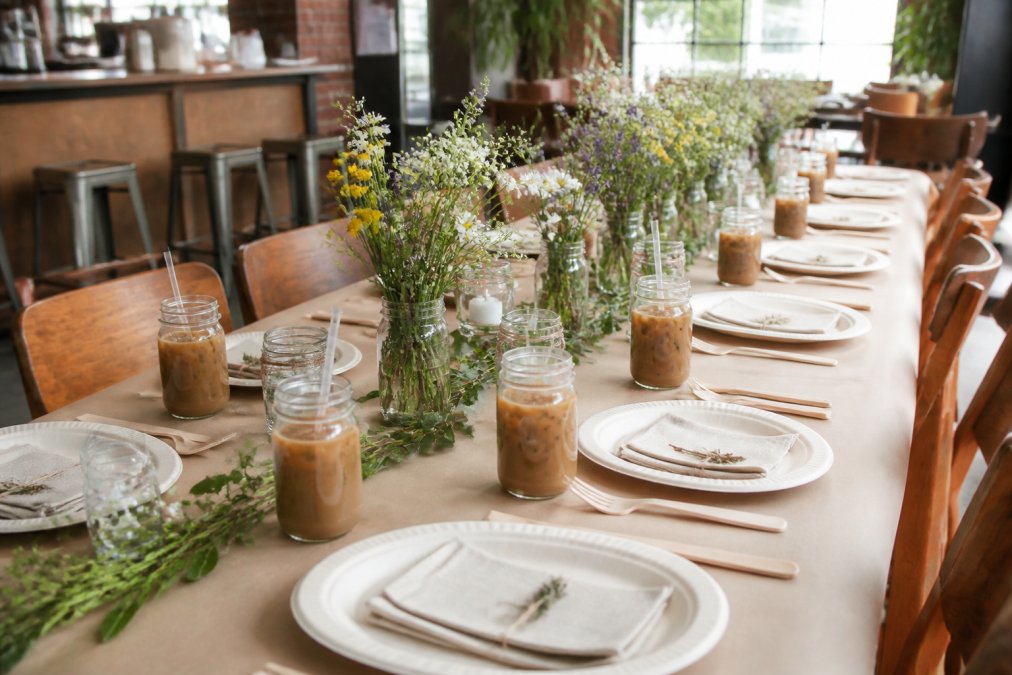
- Mason jar centerpieces. Fill reusable Mason Jar Lifestyle jars with wildflowers and herbs. They double as drinking glasses.
Reusable Bridal Shower Decorations That Double as Party Favors
Reusable bridal shower decorations that double as party favors solve two problems with one purchase. Instead of decor that gets discarded and favors that get forgotten, you buy one item that serves both roles.
The best performers here are glass and stainless steel. Kennedy Blue glass iced coffee cups work as table decor during the shower and go home with guests afterward. Klean Kanteen stainless bottles serve the same purpose at a higher price point, and Baggu's recycled nylon totes fold flat for gift packaging.
| Item | Role at the Shower | After the Shower | Best For |
|---|---|---|---|
| Glass iced coffee cups | Drinkware and table decor | Guest take-home gift | Brunch or coffee themes |
| Stainless bottles | Water station | Daily use favor | Larger budgets |
| Recycled nylon totes | Gift packaging | Reusable shopping bag | Multi-item favors |
| Collapsible straws | Place setting detail | Pocket or purse item | Intimate guest lists |
The trade-off is upfront cost. Reusable favors run higher per guest than disposable ones, but you're buying a gift and a decoration in one line item, which usually nets out cheaper than two separate purchases.
Eco Friendly Bridal Shower Decoration Ideas for the Table
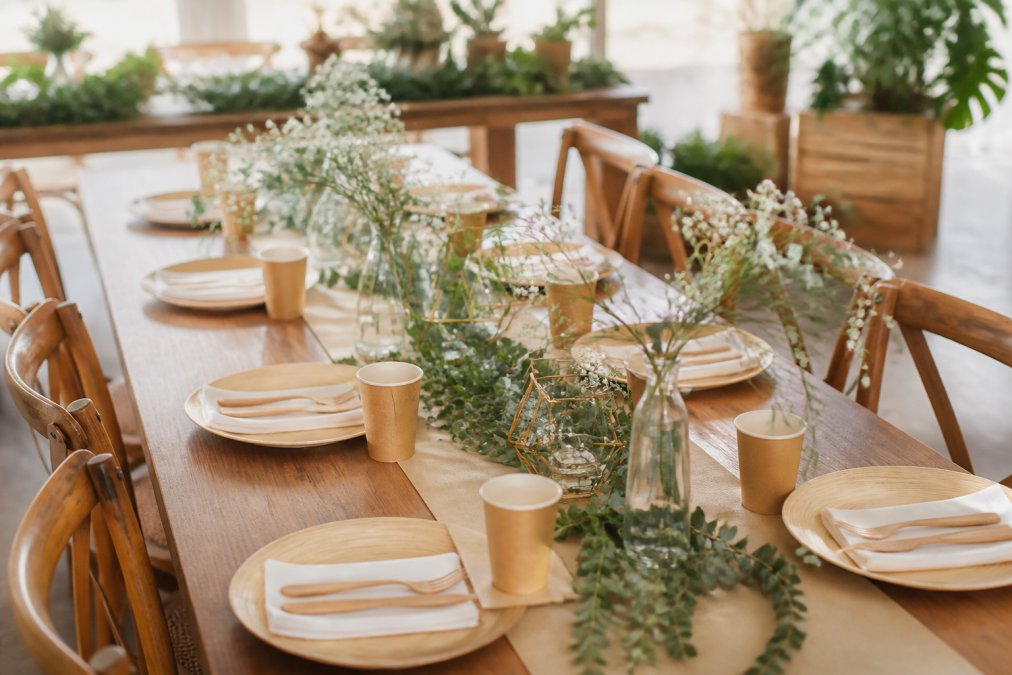
Eco friendly bridal shower decoration ideas for the table come down to three swaps: compostable dinnerware, glass instead of plastic, and kraft paper instead of fabric runners. Together they handle the entire tablescape without a single single-use plastic item.
For dinnerware, Smarty Had A Party's plant-based disposable sets are compostable and sturdy enough for hot food, though they need industrial composting to break down properly. For signage, roll out kraft paper and letter it by hand. It's not waterproof, so keep it away from the drink station.
Paperless Invitations and Zero-Waste Gift Wrapping
Paperless invitations cut the largest single source of paper waste in the planning process, and they cost less than printed suites. Greenvelope's digital invitation platform handles RSVP tracking and guest reminders in one place, which also removes the follow-up phone calls.
For wrapping, kraft paper and reusable totes replace tissue and foil. If you want the wrap itself to be a gift, Botanical PaperWorks seeded paper is embedded with wildflower seeds and can be planted after the shower. Just note that it needs specific planting conditions to actually grow.
How to Reduce Your Bridal Shower's Carbon Footprint
Reducing your bridal shower's carbon footprint starts with estimating the three biggest contributors: food, travel, and materials. Most hosts skip this step entirely, which is why so many "green" showers miss the mark. The good news is you don't need a consultant, you need a spreadsheet and about 30 minutes.
Here's a practical estimation framework you can run before and after the event:
1. Food and food waste. Weigh or estimate uneaten food after the event in pounds. A common pattern at catered events is 0.5 to 1 pound of surplus food per guest when portions aren't controlled. Food sent to landfill produces methane as it decomposes, so the disposal method matters as much as the quantity. If your caterer composts scraps or donates surplus through a food-rescue program, that surplus stops being a net emissions problem.
2. Guest travel. Multiply guest count by average round-trip distance in miles, then split the total between car, rail, and air. Car travel usually dominates the total for local showers; a single long-haul flight can outweigh every other line item combined. If most guests live within an hour, consolidating carpools or shifting the start time to avoid peak traffic is a low-effort win. sustainable wedding guest fashion.
3. Materials and decor. Weigh your decor and disposables before setup and again after teardown. The difference is your material footprint. Reusable items that go home with guests or get stored for the next event count as near-zero, while anything headed to a landfill counts at full weight.
Once you have rough numbers, rank the three categories. In most showers, travel and food together outweigh decor by a wide margin, so if you can only change one thing, change what happens to the food and how guests get there.
A sustainable vendor vetting checklist helps you pressure-test the claims before you sign anything:
- Ask whether the caterer composts food scraps or donates surplus through a recognized food-rescue program
- Confirm the venue has recycling and composting bins, not just trash, and ask where the contents actually go
- Request written sourcing information for produce and proteins, seasonal and regional items usually carry lower transport emissions
- Check whether rentals are reused or discarded after the event, and whether the rental company publishes that policy
- Ask about delivery consolidation to reduce vehicle trips for rentals, cake, and florals
- Request the venue's waste-hauling contract or a written summary if they claim zero-waste status
End-of-Life Disposal Guide for Your Decorations
Every decoration needs a disposal plan before you buy it. Sort your items into four streams, compost, recycle, donate, and reuse, and decide which stream each item belongs to at the moment of purchase, not the morning after.
Compost. Compostable dinnerware, kraft paper runners, and food scraps go to commercial composting if your area has it. Confirm two things before you commit: that your city or venue offers commercial composting (not just yard-waste pickup), and that the specific product is accepted by that facility. Many "compostable" plates are certified for industrial conditions only and will not break down in a backyard bin or a landfill. If commercial composting isn't available, compostable dinnerware behaves like any other waste in a landfill, so the certification only pays off if the infrastructure exists.
Recycle. Glass jars, stainless bottles, and clean rigid plastics go in curbside recycling if your hauler accepts them. Rinse food residue first; contaminated glass and plastic often get diverted to landfill. Check your hauler's accepted-materials list, because glass acceptance varies widely by municipality.
Donate. Reusable totes, glassware, vases, and fabric bunting that you don't want to store can go to thrift stores, shelters, or local Buy Nothing groups. Donate within a week of the event, items that sit in a garage for months usually end up in the trash.
Reuse. Fabric bunting stores flat in a bin for the next event. Mason jars return to the kitchen. Seeded paper gets planted per the package instructions, though it needs consistent moisture and the right season to actually germinate, treat it as a nice-to-have, not a guaranteed bloom.
What shouldn't have been purchased. Anything left that can't go into one of those four streams shouldn't have been bought in the first place. Foil balloons, glitter, and plastic streamers are the usual offenders, they contaminate recycling streams and don't compost.
A quick pre-purchase test. Before you buy any decor item, ask: which of the four streams will this go into, and does that stream actually exist in my area? If the answer is "none" or "I'm not sure," pick a different item. This single question prevents most of the post-event waste that ends up in a black bag.
Conclusion
Planning an eco friendly bridal shower takes more upfront decisions than a conventional one, and the venue is where most of them collide. Third Space Coffee offers a versatile after-hours event space with flexible meeting room rental, in-house roasted beans, and a welcoming setting. Get started with Third Space Coffee and host a celebration your guests will remember for the coffee, not the cleanup.
Frequently Asked Questions
What are some affordable decorations for a bridal shower?
Kraft paper rolls start around $20 and can serve as table runners, signage, or gift wrap. Mason jars start at about $5 each and work as vases, drinking glasses, or candle holders. Dig into fabric scraps for DIY bunting, and ask guests to bring potted plants instead of cut flowers. These eco friendly bridal shower decoration ideas keep costs low while reducing waste.
What are some DIY ideas for bridal shower decor?
Sew or no-sew fabric bunting from leftover fabric scraps. Fill mason jars with wildflowers from a local market. Stamp kraft paper with custom designs for place cards and banners. Create seeded paper favors that guests can plant after the event. These DIY eco friendly party decor projects take an afternoon and cost far less than store-bought alternatives.
What are some eco-friendly decoration materials?
Look for biodegradable confetti, compostable dinnerware made from plant-based materials, recycled kraft paper, seeded paper embedded with wildflowers, and reusable glass or stainless steel items. Natural materials like cotton fabric, jute twine, and potted plants also work well. Choosing reusable bridal shower decorations over single-use plastics is the single biggest waste reduction step you can take.
How can I host a zero-waste bridal shower on a budget?
Send digital invites to skip paper and postage. Borrow or thrift vases, linens, and serving pieces instead of buying new. Use potted plants as centerpieces, then give them away as favors. Choose compostable food service items and set up clearly labeled recycling and compost bins. These sustainable bridal shower themes prove that waste reduction and budget-friendly planning go hand in hand.