 how-to
How to Tell if Coffee Beans Are Fresh
Table of Contents
- Why Freshness Matters for Coffee Quality
- Check the Roast Date on the Bag
- Inspect Beans for Oil, Shine, and Color
- Evaluate Aroma and Smell
- How Long Do Coffee Beans Stay Fresh
- How to Tell If Coffee Beans Are Stale
- How to Store Coffee Beans for Maximum Freshness
- The Bloom Test During Brewing
- Frequently Asked Questions
Last Updated: October 6, 2026
Why Freshness Matters for Coffee Quality
Fresh coffee beans are the foundation of a great cup, and understanding how to tell if coffee beans are fresh ensures you're brewing at peak quality. Freshly roasted beans release vibrant flavors and aromatic compounds; as time passes, those flavors fade and stale beans taste flat and hollow.
Fresh beans taste bright and complex; stale beans taste dull and one-dimensional. That's why knowing how to tell if coffee beans are fresh matters for anyone who cares about their morning brew.
At Third Space Coffee, we roast in-house because freshness is non-negotiable, the moment beans are roasted, they begin losing peak flavor.
Check the Roast Date on the Bag
The roast date is your single most reliable freshness indicator, it tells you exactly when the beans were roasted, so you can calculate their age.
Look for the roast date printed on the bag, usually on the front or back.
Here's what the timeline looks like:
- 0-2 weeks after roasting: Peak flavor and aroma. This is the sweet spot.
- 2-4 weeks after roasting: Still excellent. Full complexity remains.
- 4-8 weeks after roasting: Noticeably flatter. Acidity fades.
- 8+ weeks after roasting: Stale. Oxidation has set in significantly.
If a bag has no roast date, that's a red flag, skip it and buy from a roaster transparent about their schedule.
When shopping, do the math. If today is October 6, 2026, and the roast date says September 22, 2026, those beans are just two weeks old. If it says July 15, 2026, they're nearly three months old and past their prime.
Inspect Beans for Oil, Shine, and Color
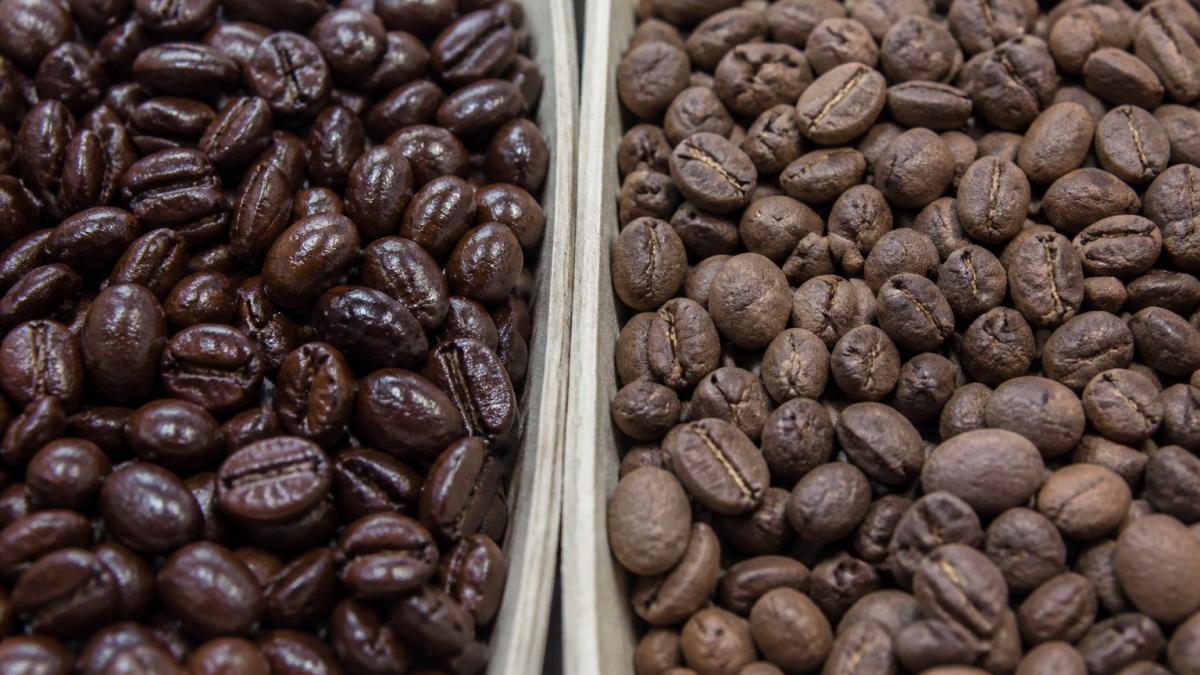
Visual inspection reveals a lot about freshness, but only if you read the cues correctly. A bean's surface is shaped by three things at once: age, roast level, and processing.
Start with the roast level, because it changes the baseline.
- Light roasts are roasted for less time and to a lower internal temperature, so fewer oils migrate to the surface. A light roast can be perfectly fresh and still look matte and dry. If you expect shine from a light roast, you'll wrongly reject good coffee.
- Medium roasts sit in the middle. You'll see a soft sheen rather than a heavy gloss. Some surface oil is normal, but a wet, slick look is not.
- Dark roasts are roasted longer and hotter, which pulls oils to the surface during the roast itself. A dark roast can look oily on day three and still be at peak. Shine here tells you almost nothing about age on its own.
Processing matters too. Washed coffees tend to have a cleaner, more uniform surface, while natural process coffees often look mottled or patchy. That unevenness is a processing signature, not a freshness problem.
To judge age visually, compare the bean against itself over time, not a generic ideal:
- Surface texture: Fresh beans feel dense and solid. As they age, they lose moisture and the surface can look chalky or papery.
- Color depth: A fresh roast holds its color. Oxidation mutes it toward gray or tan, regardless of roast level.
- Uniformity within the batch: A fresh batch looks consistent. Uneven discoloration across beans in the same bag suggests oxidation has set in unevenly.
- The oil test, done right: Oils on a dark roast are normal. What you're watching for is a change, beans that were glossy going matte, or a greasy film that smells off rather than rich.
Fresh surface oils smell sweet and roasty; oxidized oils smell rancid, like old nuts or cardboard. If the surface looks oily but smells flat or rancid, trust your nose, the oils have turned.
A practical habit: when you open a new bag, note the roast level and surface appearance on day one. From then on, track change rather than matching a universal standard, change is the real signal.
Evaluate Aroma and Smell
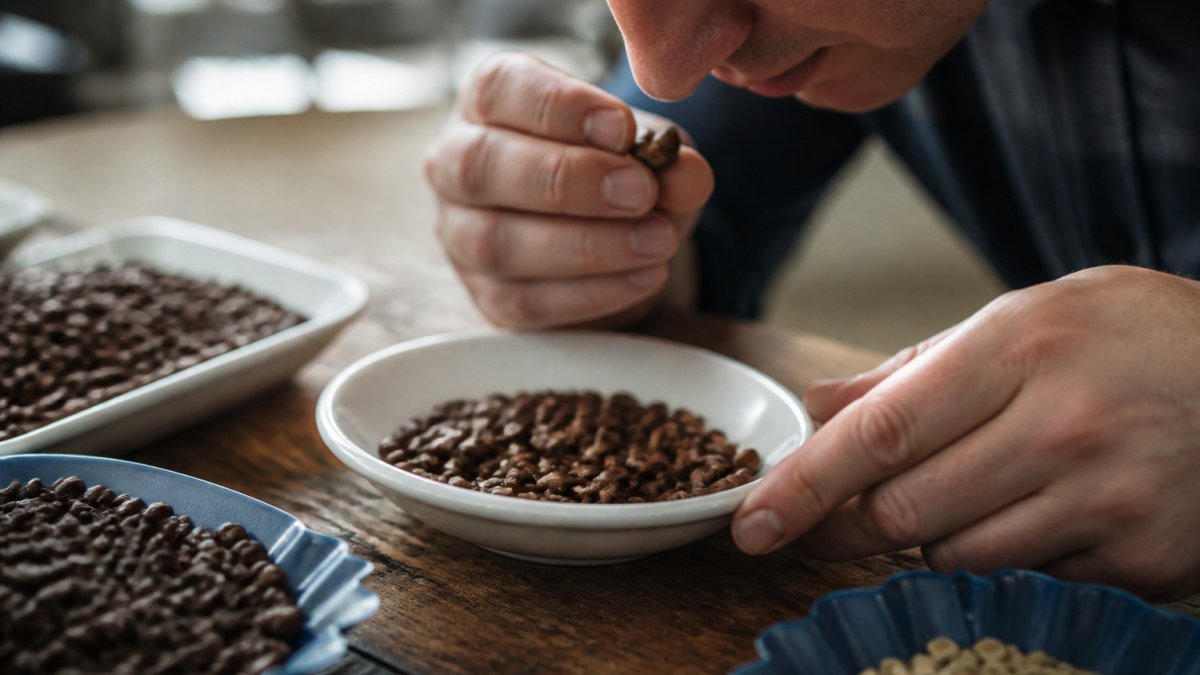
Your nose is one of your best freshness tools. Fresh coffee beans have a strong, inviting aroma; stale beans smell weak or flat.
Open a bag of fresh beans and take a deep breath. You should smell rich, complex notes, chocolate, fruit, nuts, flowers, bold and immediate, without having to work for it.
Stale beans smell muted, thin, and one-dimensional, sometimes musty or papery. If you have to lean in and sniff hard to detect anything, they're past their peak.
Here's the aroma progression:
- Fresh (0-2 weeks): Strong, complex, inviting. Fills your nose immediately.
- Still good (2-4 weeks): Still strong. Clear aromatic notes.
- Declining (4-8 weeks): Noticeably weaker. Simpler smell.
- Stale (8+ weeks): Faint or musty. Lacks vibrancy.
Trust your nose: aroma and flavor are linked, so beans that smell flat will taste flat.
How Long Do Coffee Beans Stay Fresh
Understanding shelf life helps you buy the right amount and use beans at their peak.
Most beans remain drinkable for about three months after roasting. But "drinkable" doesn't mean "good." The best window is much shorter.
Here's the realistic timeline:
- Peak flavor: 0-4 weeks after roasting
- Still excellent: 4-8 weeks after roasting
- Acceptable but declining: 8-12 weeks after roasting
- Stale: 12+ weeks after roasting
After about 12 weeks, oxidation is severe enough that most people notice, the coffee tastes flat and lifeless. Not dangerous, but not worth brewing.
The exact timeline depends on storage: beans kept airtight in a cool, dark place last longer than those exposed to light, heat, and oxygen.
Buy only what you'll use in two to three weeks if possible. Smaller, more frequent purchases mean fresher coffee in your cup.
How to Tell If Coffee Beans Are Stale
Stale coffee shows clear warning signs. Once you know what to look for, identifying old beans becomes automatic.
The most obvious sign is smell: stale beans smell weak, musty, or flat, lacking the vibrant aroma of fresh beans. If the bag barely smells like coffee, the beans are old.
Visual signs are equally clear:
- Matte, dull surface: No shine or gloss
- Pale or grayish color: Oxidation has dulled the beans
- Papery appearance: The beans look thin and lifeless
- Visible discoloration: Uneven color or dark spots
Taste is the final confirmation. Stale coffee tastes hollow and thin, with empty body, muted acidity, and vanished flavor notes, like burnt water.
Here's how to evaluate beans you're unsure about:
- Smell them first. Does the aroma excite you?
- Look at the surface. Are they glossy or dull?
- Check the roast date. How many weeks have passed?
- Brew a small amount. Does it taste vibrant or flat?
If the smell is weak, the surface is dull, the roast date is old, and the taste is flat, those beans are definitely stale. Move on to fresher options.
How to Store Coffee Beans for Maximum Freshness
Storage is where most coffee drinkers slip up.
The ideal storage container is airtight and opaque. Light degrades beans quickly, so avoid clear containers. Glass jars with rubber seals work well.
Here are the storage rules:
- Keep beans in an airtight container. Oxygen exposure accelerates oxidation and flavor loss.
- Store in a dark place. Light breaks down aromatic compounds.
- Keep temperature stable and cool. Heat speeds degradation. Room temperature is fine; avoid warm kitchens.
- Avoid the freezer. Freezing and thawing creates condensation that damages beans.
- Never store in the refrigerator. Moisture and temperature fluctuations harm flavor.
- Keep away from strong odors. Beans absorb surrounding smells.
The one-way valve on many coffee bags lets carbon dioxide escape (degassing) while blocking oxygen, which is why sealed bags with valves beat open containers.
Buy whole beans, not pre-ground, ground coffee oxidizes much faster due to increased surface area. Grind only what you need, right before brewing.
Store beans at room temperature in a dark cabinet. A cool pantry is ideal.
The Bloom Test During Brewing
The bloom test is the most reliable freshness check you can run at home, yet most guides describe it without explaining why it works.
Here's the chemistry: roasting traps carbon dioxide inside the bean's porous structure, and that gas escapes slowly over days and weeks, a process called degassing.
Hot water accelerates that release dramatically: trapped CO2 rushes out, pushing grounds upward into the bubbling, domed bed we call the bloom.
Here's how to run it properly:
- Grind your beans. Use a medium-fine grind, consistent with how you'd brew.
- Heat water to 195-205°F. Just off boiling is fine.
- Pour a small amount of water over the grounds. Use about twice the weight of water as grounds.
- Watch for 30-45 seconds. Fresh beans will visibly rise and bubble as carbon dioxide escapes.
- Observe the intensity. A vigorous bloom means fresh beans. A weak or absent bloom means stale beans.
Now the part most guides leave out: bloom intensity isn't a fixed standard. It varies with roast level and rest time, and reading it correctly means accounting for both.
- Roast level: Dark roasts degas faster and more completely than light roasts, because the longer, hotter roast creates a more porous structure. A dark roast may bloom less aggressively than a light roast of the same age, even though both are fresh. Don't penalize a dark roast for a calmer bloom.
- Rest time: This is the counterintuitive one. A bean roasted yesterday can actually bloom too much, so much CO2 is still trapped that it can disrupt even extraction and produce a gassy, uneven cup. This is why many roasters recommend a resting period of a few days to a week or two after roasting before brewing, letting the most aggressive degassing settle. A bean at its ideal rest window blooms strongly but not violently.
- Grind size: Finer grinds expose more surface area and release gas faster, so a fine grind blooms more dramatically than a coarse one from the same beans. Keep grind consistent if you're comparing batches.
A few practical notes: the bloom test confirms freshness but doesn't measure it precisely, it's a yes/no signal, not a stopwatch. It also only works on whole beans you grind yourself; pre-ground coffee has already released much of its CO2, so it blooms weakly even when fresh. One more reason to buy whole bean and grind right before brewing.
Run the test every time you open a new bag.
Frequently Asked Questions
What is the 15-15-15 coffee rule?
The 15-15-15 rule is a guideline for optimal coffee freshness: use beans within 15 days of the roast date, grind them 15 minutes before brewing, and brew with water that's 15 seconds off boil. This timing ensures peak flavor extraction and minimizes oxidation. Whole beans stay fresher longer than ground coffee, which degasses rapidly once the cellular structure is broken.
How long do whole coffee beans stay fresh?
Whole coffee beans remain at peak freshness for 2-4 weeks after the roast date, with the best flavor window between days 5-30. After 4 weeks, beans begin to lose vibrancy and develop flat, hollow taste profiles. Proper storage in an airtight container away from light and heat extends this window, but oxidation and CO2 degassing gradually diminish cup quality regardless of storage method.
Can you tell if coffee beans are stale by tasting them?
Yes. Stale coffee produces a flat, papery, or hollow taste with muted acidity and body. Fresh beans deliver vibrant, complex flavor notes with bright acidity. If your brew tastes dull or one-dimensional, the beans are likely past their peak freshness. Comparing a fresh brew to one made with older beans reveals the difference immediately, stale coffee lacks the punch and nuance of freshly roasted beans.
Do fresh coffee beans have a strong smell?
Fresh coffee beans emit a rich, vibrant aroma with distinct origin characteristics, fruity, floral, chocolatey, or nutty notes depending on the roast and processing method. Stale beans smell flat, muted, or musty. If beans have little to no aroma, they've lost volatile compounds through oxidation and CO2 degassing. A strong, inviting smell is one of the easiest ways to confirm freshness before brewing.