 How-to
How to Choose Decaf Coffee for Caffeine Sensitivity
Last Updated: November 20, 2026
Quick Summary
Choose decaf coffee for caffeine sensitivity by treating it as a low-caffeine drink, not a caffeine-free one, since decaf still contains small residual amounts. Track your servings and symptoms to find your personal threshold, keep cups small, and set an early afternoon cutoff.
- An 8 oz decaf drip typically contains about 2-15 mg of caffeine, not zero.
- A double decaf espresso is two shots, so it has more caffeine than a single.
- Test your threshold on a calm day, since stress mimics caffeine symptoms.
- Symptoms often appear within 30 to 60 minutes of a serving and fade over a few hours.
- A gradual switch starts with swapping your afternoon cup for decaf in week one.
Table of Contents
- What Caffeine Sensitivity Means for Your Coffee Order
- How Much Caffeine Is in Decaf Coffee?
- How Much Caffeine in Decaf Espresso vs Drip
- Does Decaf Coffee Keep You Awake?
- Decaffeinated Coffee Side Effects to Watch For
- How to Test Your Own Sensitivity Threshold
- A Gradual Switch-to-Decaf Plan
- Other Caffeine Sources in Your Daily Routine
- Frequently Asked Questions
What Caffeine Sensitivity Means for Your Coffee Order
Caffeine sensitivity is a reduced ability to process caffeine, and it changes how much decaf coffee for caffeine sensitivity actually makes sense for you.
That difference is real. It comes down to how your body clears caffeine, not willpower.
Common signs of caffeine sensitivity include:
- A racing heart after a small cup
- Jitters or shaky hands
- Trouble falling asleep, even from morning coffee
- Headaches or stomach upset after drinking it
- Feeling wired but tired at the same time
If any of that sounds familiar, you are not broken. You just need a lower-caffeine plan. The FDA guidance on caffeine and how much is too much is a good starting point for understanding your daily intake.
Decaf coffee is not caffeine-free, though (the FDA). That gap matters, and it is where most people get surprised.
How Much Caffeine Is in Decaf Coffee?
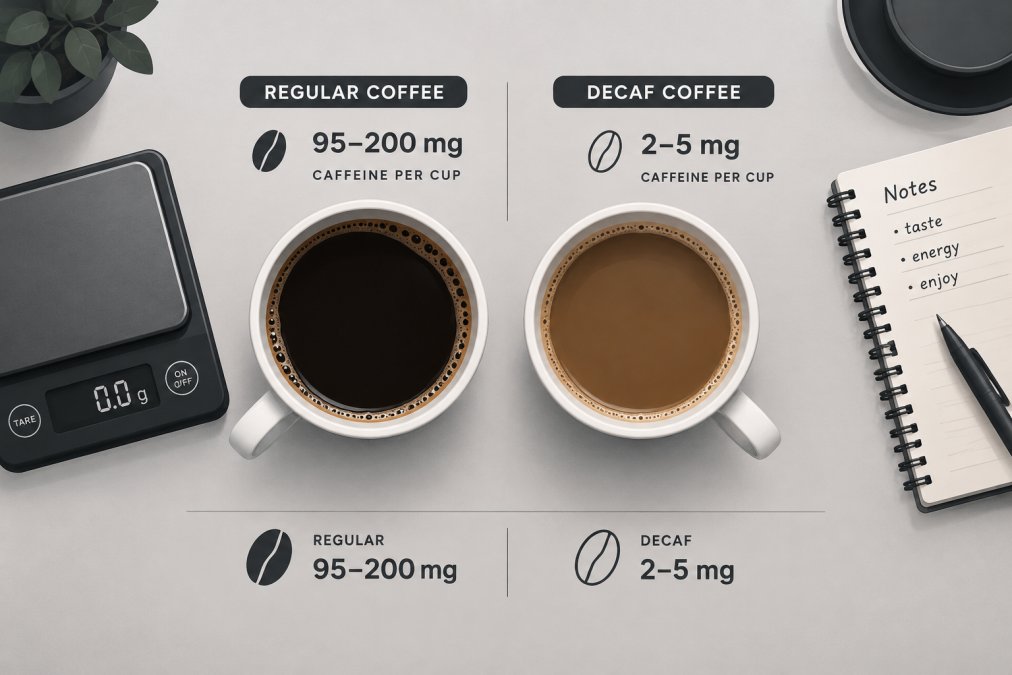
Most decaf coffee contains a small amount of residual caffeine, not zero. Decaffeination removes most of the caffeine, which leaves a little behind. Caffeine content per cup varies with the beans, process, and brew, and the exact amount for any Third Space Coffee drink can be confirmed with our staff.
Here is the key point: decaffeination removes most caffeine, not all of it. The exact amount depends on the beans, the process, how strong you brew, and how much you pour.
Residual Caffeine by Serving Size and Brew Method
Serving size and brew method both shift the amount of caffeine. Your actual cup depends on the roaster, the dose, and the brew ratio.
| Serving | Typical Caffeine Level | Watch For |
|---|---|---|
| 8 oz decaf drip | About 2-15 mg | Easy to underestimate across multiple cups |
| 12 oz decaf drip | About 3-22 mg | Adds up over a day |
| 16 oz decaf drip | About 4-30 mg | Roughly doubles an 8 oz cup |
| Single decaf espresso (1 oz) | About 1-4 mg | Small volume, concentrated |
| Double decaf espresso (2 oz) | About 2-8 mg | Two shots, not one |
| Decaf pour over (10 oz) | About 5-20 mg | Stronger extraction from a larger dose |
| Decaf cold brew (12 oz) | About 10-25 mg | Long steep time pulls more |
| Decaf instant (8 oz) | About 2-10 mg | Varies widely by brand |
Typical Caffeine Level
Bigger cups mean more total caffeine, even at the same strength.
A few practical rules help you apply the table:
- Treat the number on the menu as a starting point, not a guarantee. Decaf levels vary by roaster and batch.
- Count every cup, not just the first one. Residual caffeine is small per cup but cumulative across a day.
- Watch the espresso trap. A double decaf espresso is two shots, so it contains more caffeine than a single.
If you want the full picture on what "decaf" really means, read is decaf coffee actually caffeine-free.
How Much Caffeine in Decaf Espresso vs Drip
A single decaf espresso is a small serving, so it generally contains less total caffeine than a larger cup of decaf drip.
Drip coffee, by contrast, runs a lot of hot water through a lot of grounds. That pulls out more of whatever caffeine remains.
If you want to try the drip-style option at home, our pour over setup lets you control the ratio and see how your body responds.
Does Decaf Coffee Keep You Awake?
Decaf coffee can keep some sensitive people awake, especially late in the day, because it still contains a small amount of caffeine.
Timing matters as much as amount.
A few practical habits help:
- Set a cutoff time, often early afternoon
- Keep serving sizes small in the evening
- Watch how you feel, not just the label
If you are highly sensitive, treat decaf like a low-caffeine drink, not a free pass. The Sleep Foundation's overview of caffeine and sleep explains why even small amounts can affect rest.
Decaffeinated Coffee Side Effects to Watch For
Side effects can occur with any coffee, decaf included.
Watch out: some people switch to decaf and drink far more of it, which can bring back the same jitters they were trying to escape.
Other things to keep in mind:
- Decaf is still acidic and can bother sensitive stomachs
- Some decaf processes use chemical solvents, which some buyers prefer to avoid
- It is still a diuretic, so hydration matters
For a wider look at what too much coffee does to the body, see our guide on side effects of too much coffee.
How to Test Your Own Sensitivity Threshold
Finding your own threshold works best when you log what you drink and how you feel instead of relying on memory.
Try this:
- Pick a quiet week with no big deadlines and steady sleep.
- Drink one small decaf in the morning on day one.
- Note your heart rate, mood, focus, and sleep that night in a simple log.
- Repeat with a slightly larger serving the next day.
- Stop when you notice symptoms, and note that amount and the time it started.
- Hold that amount for two more days to confirm the pattern.
That number is your rough ceiling. Keep it in mind when you order.
Build a Simple Symptom and Intake Log
A notebook or a notes app works. For each day, record:
- Time and size of each decaf serving
- Other caffeine sources (tea, soda, chocolate, energy drinks, some pain relievers and supplements)
- Symptoms and when they started (racing heart, jitters, headache, stomach upset, trouble falling asleep)
- Sleep quality and bedtime
- Stress level for the day
After a week, look for the pattern. A common pattern is symptoms appearing within 30 to 60 minutes of a serving and fading over a few hours. If symptoms show up hours later or only at night, look at total daily intake rather than a single cup.
A common mistake is testing on a stressful day. Stress mimics caffeine symptoms, so your results get muddy. Test on a calm day for a clean read.
Watch out: if you experience chest pain, a very fast or irregular heartbeat, fainting, or severe anxiety after any caffeine or decaf serving, stop testing and talk to a clinician rather than adjusting servings on your own.
What to Do When Even Decaf Causes Symptoms
Some people react to decaf itself. Before you blame caffeine, consider the possibilities:
- Residual caffeine. Even decaf contains some caffeine, which can add up for a very sensitive person.
- Total daily load. Other caffeine sources can push you over your threshold even when your coffee is decaf.
If decaf still triggers symptoms, try smaller servings or move your last cup earlier in the day. If symptoms persist, discuss them with a clinician to rule out other causes.
For a wider look at what too much coffee does to the body, see our guide on side effects of too much coffee.
A Gradual Switch-to-Decaf Plan
A gradual switch can be easier than stopping all at once.
Here is a plan that works:
| Week | What to Do | Goal |
|---|---|---|
| Week 1 | Swap your afternoon cup for decaf | Cut late-day caffeine |
| Week 2 | Make your morning cup half regular, half decaf | Lower total dose |
| Week 3 | Go full decaf in the morning | Full switch |
| Week 4 | Adjust serving size to your threshold | Fine-tune |
Keep water handy and expect a mild headache in week one. It passes.
If you want backup options during the transition, our list of caffeine-free coffee alternatives gives you swaps that still feel like a treat.
Other Caffeine Sources in Your Daily Routine
Coffee is not the only place caffeine hides. If you are sensitive, these sneaky sources can undo your decaf plan.
Check these:
- Tea, especially black and green
- Soda and energy drinks
- Chocolate and cocoa
- Some pain relievers and supplements
- Certain protein bars and pre-workout mixes
Audit one full day of intake before you blame your coffee. You may find the real culprit elsewhere. Our full menu shows which of our drinks contain caffeine so you can plan your order with confidence.
Cutting caffeine does not mean giving up good coffee. It means choosing the right cup for your body. At Third Space Coffee, we roast our beans in-house, so you get fresh decaf you can actually enjoy, plus a comfortable space to sip it while you work or meet. Come try a decaf pour over and see how your body responds.
Frequently Asked Questions
Can I drink decaf coffee if I have caffeine sensitivity?
Most people with caffeine sensitivity can drink decaf coffee, but it is not caffeine-free. Decaf coffee retains a small amount of the original caffeine. If you react to very small amounts, start with a smaller cup, drink it earlier in the day, and note any symptoms like jitters or a raised heart rate before increasing.
Does decaf coffee keep you awake?
Decaf coffee can keep some sensitive people awake, especially late in the day, because it still contains a small amount of caffeine. Try finishing decaf by early afternoon and see whether your sleep changes. If it does, switch to a caffeine-free alternative in the evening.
How much caffeine is in decaf espresso compared with brewed decaf?
Decaf espresso is a smaller serving than a cup of brewed decaf, so it generally contains less total caffeine. If you are sensitive, ask about serving size and preparation method, and treat a double shot as closer to a full cup.
What are the downsides of decaffeinated coffee?
Decaf coffee still contains some residual caffeine, which can trigger symptoms in highly sensitive people. If you notice symptoms, check the process used and try a water-process option before giving up on decaf.