 listicle
Best Coffee for Vegan Diet: 7 Top Picks
Table of Contents
- What Makes Coffee Vegan
- Best Coffee for Vegan Diet: Quick Comparison
- Top Vegan Coffee Picks
- 1. Third Space Coffee, Best for Fresh, Local Quality
- 2. Equal Exchange Organic Ground Coffee, Best for Ethical Sourcing
- 3. Ethical Bean Coffee, Best for Transparency
- 4. Jim's Organic Coffee, Best for Pure, Natural Flavor
- 5. Tiny Footprint Coffee, Best for Environmental Impact
- 6. Purity Coffee, Best for Health Optimization
- Best Vegan Coffee Creamer Brands
- How to Make Vegan Coffee Drinks at Home
- Understanding Ethical Coffee Certifications
- Frequently Asked Questions
Last Updated: August 16, 2026
What Makes Coffee Vegan
Coffee itself is naturally vegan, it's roasted beans. The issue arises with what we add to it. Traditional coffee drinks rely on dairy milk and honey-based sweeteners, both animal products. A truly vegan coffee drink requires plant-based alternatives at every step: the milk, the sweetener, even some flavorings.
Not all plant-based creamers perform equally in hot beverages. Some curdle, some separate, some fail to froth. The best vegan coffee experience demands creamers specifically formulated for coffee applications. Beyond the cup, ethical sourcing of beans matters to most vegans. Third Space Coffee, for instance, focuses on in-house roasted beans that reflect both quality and community values, making it a natural fit for plant-based coffee enthusiasts seeking alignment between their drink and their principles.
The best coffee for vegan diet goes deeper than swapping dairy for oat milk. It's about finding beans you trust, creamers that actually work in your cup, and sweeteners that don't compromise flavor.
Best Coffee for Vegan Diet: Quick Comparison
| Coffee Brand | Best For | Key Certification | Standout Feature |
|---|---|---|---|
| Third Space Coffee | Local quality & community | In-house roasted | Freshly roasted daily, versatile vegan options |
| Equal Exchange Organic | Fair trade commitment | Fair Trade + USDA Organic | Worker-owned cooperative model |
| Ethical Bean Coffee | Transparency | Organic + Fairtrade | QR code farm traceability |
| Jim's Organic Coffee | Pure, natural flavor | USDA Organic + Fair Trade | Clean, additive-free beans |
| Tiny Footprint Coffee | Climate impact | Organic + Fair Trade + Carbon-negative | Reforestation investment with every bag |
| Purity Coffee | Health optimization | Specialty-grade + Lab-tested | Mold-free, maximized antioxidants |
Top Vegan Coffee Picks
1. Third Space Coffee, Best for Fresh, Local Quality
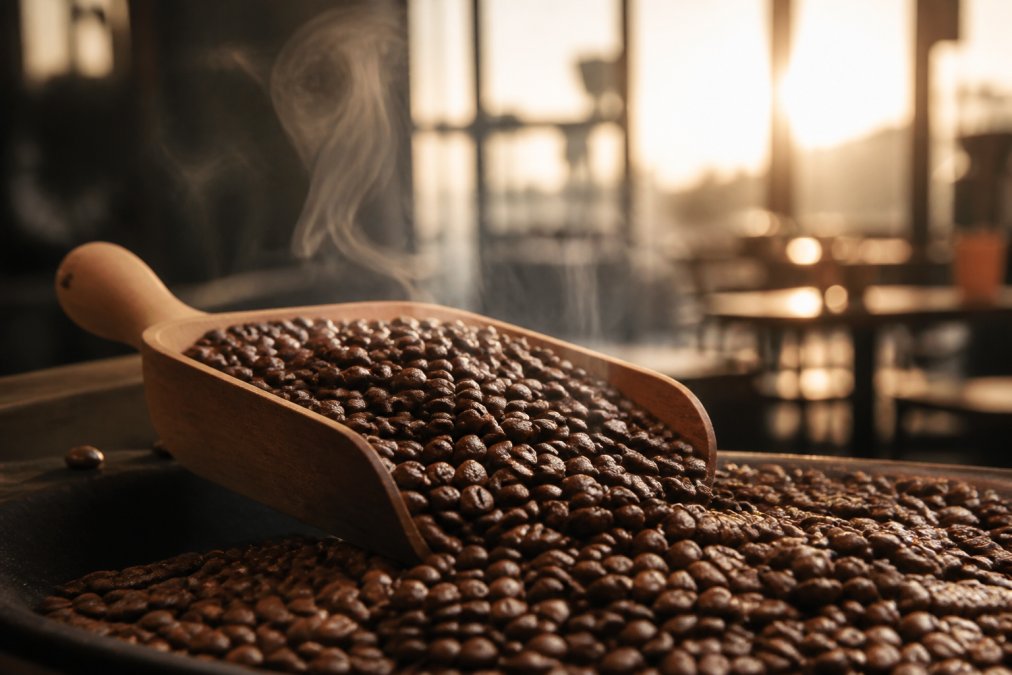
Third Space Coffee stands out because beans are roasted in-house daily, ensuring peak freshness. For vegans seeking quality without compromise, this matters enormously. The roasting process directly influences flavor complexity and how the coffee pairs with plant-based milk alternatives.
Third Space isn't just a coffee shop, it's a community hub designed around accessibility. The team understands diverse dietary needs from experience and actively supports a vegan-friendly environment. In-house roasting means you can ask about origin, roast profile, and flavor notes in real time, helping you choose beans that pair best with your preferred plant-based milk.
2. Equal Exchange Organic Ground Coffee, Best for Ethical Sourcing
Equal Exchange operates as a worker-owned cooperative, meaning farmers and workers have actual ownership stakes. This structure directly impacts fair wages and sustainable farming practices. Every bag carries Fair Trade and USDA Organic certification, guaranteeing farmers receive minimum prices plus premiums for certified organic beans.
The coffee spans single-origin and blends, giving you options whether you prefer bright Ethiopian or balanced Brazilian. You know exactly where your money goes and how farmers are treated. The trade-off: Equal Exchange costs slightly more than conventional brands, reflecting the true cost of ethical sourcing.
3. Ethical Bean Coffee, Best for Transparency
Ethical Bean Coffee's defining feature is radical transparency through QR code traceability. Scan the code on any bag and access the farm's location, farmer's name, harvest date, and processing method. The coffee is certified organic and Fairtrade, grown on farms practicing sustainable agriculture.
For the best coffee for vegan diet when you want accountability, Ethical Bean delivers it. The limitation: it isn't as widely available as larger brands in every region and may require online ordering.
4. Jim's Organic Coffee, Best for Pure, Natural Flavor
Jim's Organic Coffee prioritizes highlighting natural flavor notes rather than masking them. Every bean is USDA certified organic, and the roasting process brings out distinct characteristics. Jim's partners with Fair Trade farmers, ensuring wages and working conditions align with ethical standards.
The focus on clean flavor matters when pairing with plant-based milk, because the creamer won't overpower the bean's natural character. The consideration: Jim's emphasizes single-origin and classic blends over flavored varieties, which some drinkers may find limiting.
5. Tiny Footprint Coffee, Best for Environmental Impact
Tiny Footprint Coffee is the world's first carbon-negative coffee. Every bag sold directly funds reforestation projects that offset more carbon than the coffee's entire supply chain produces. The beans are certified organic and Fairtrade, and the coffee quality stands on its own.
For someone whose environmental commitment extends to climate action, this is the most direct way to turn a coffee purchase into positive impact. The trade-off: Tiny Footprint costs more than conventional options, reflecting the reforestation investment.
6. Purity Coffee, Best for Health Optimization
Purity Coffee focuses on purity and health benefits. Every batch is lab-tested for mold, mycotoxins, and contaminants. The beans are specialty-grade and roasted to maximize antioxidant content. For health-conscious vegans, this is the most scientifically rigorous option.
If you're drinking coffee daily, purity matters. Mold contamination in coffee is a real industry issue, and most brands don't test for it. The consideration: Purity is the most expensive option, roughly double conventional organic coffee, making it an investment for someone already committed to health optimization.
Best Vegan Coffee Creamer Brands
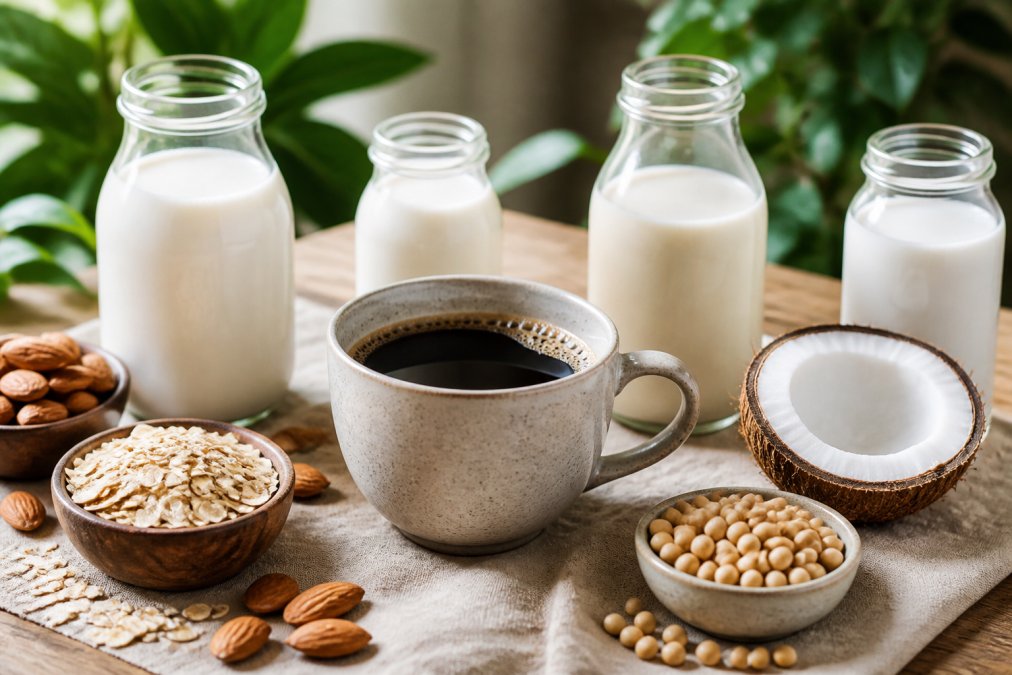
The best coffee for vegan diet depends as much on the creamer as the beans themselves. A great coffee paired with a mediocre creamer creates a mediocre drink. The creamers below are specifically formulated to perform in hot coffee, they froth, steam, and don't curdle or separate.
Oat-Based Creamers
Oatly Barista Edition Oat Milk stands as the industry standard for home and professional use. It froths and steams exceptionally well, creating rich, stable microfoam that rivals dairy milk. The naturally sweet flavor complements coffee without overpowering it. For most people seeking the best vegan coffee creamer, Oatly Barista Edition is the safest choice. A 32 fl oz carton of Oatly Barista Edition Oat Milk typically costs between $4.49 and $6.79. The limitation: it costs more than standard oat milk.
Califia Farms Oat Barista Blend offers a solid alternative. A 32 fl oz carton of Califia Farms Oat Barista Blend can cost around $4.49 to $6.79. It froths adequately and steams without separation. The performance isn't quite as refined as Oatly, but it's reliable and accessible.
Soy-Based Creamers
Pacific Foods Barista Series Soy Original is a longtime favorite of professional baristas. It handles high-heat steaming without breaking down, produces stable foam, and maintains a neutral flavor profile. The trade-off: Pacific Foods sells primarily in bulk cases, making it less convenient for individual home users.
For home use, soy creamers from mainstream brands like Silk or So Delicious offer easier access, though they don't perform quite as well in espresso machines.
Almond-Based Creamers
Elmhurst 1925 Barista Almond Milk represents the clean-label approach. It's made with just almonds, water, and rice, no gums, oils, or thickeners. Despite minimal ingredients, it froths reasonably well. Almond creamers are thinner than oat or soy options, creating less dramatic microfoam, but they're an affordable option and perform adequately for flat whites or cortados.
How to Make Vegan Coffee Drinks at Home
Creating café-quality vegan coffee at home requires the right equipment, technique, and ingredients.
Essential Equipment and Ingredients
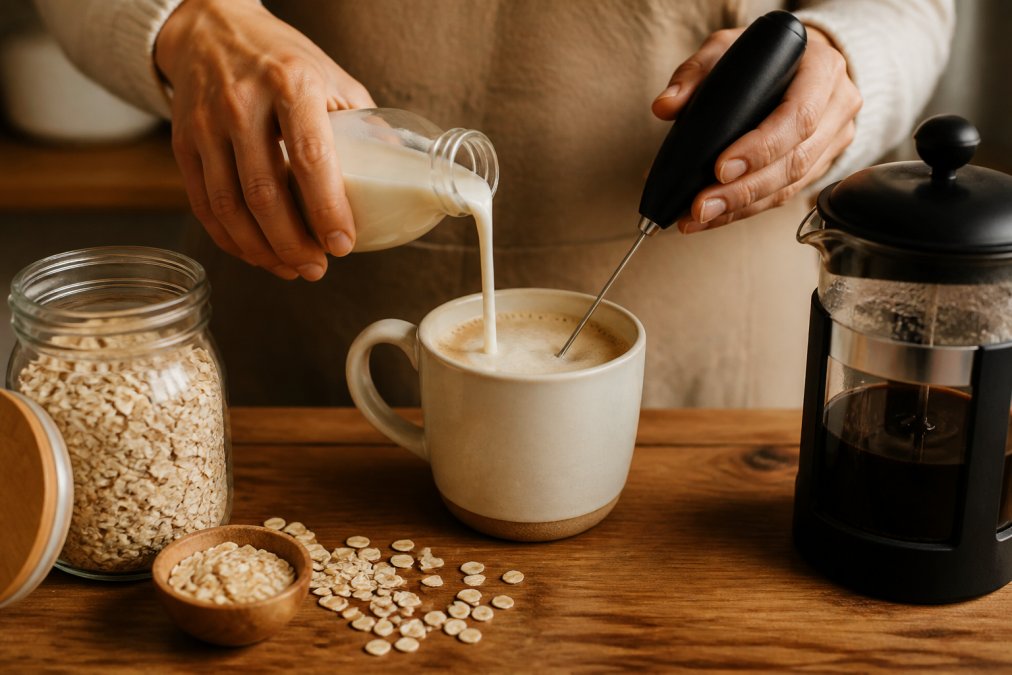
Start with a milk frother. A handheld electric frother costs under $20 and works adequately. An aeroccino or automatic frother, which can range from approximately $25 to over $100, produces more consistent microfoam. For serious home baristas, a steam wand on an espresso machine offers maximum control.
You need quality plant-based milk formulated for coffee. Standard grocery store oat or soy milk won't work, barista-edition creamers are essential. Stock a vegan-friendly sweetener: agave syrup, maple syrup, or coconut sugar all dissolve smoothly and add subtle flavor complexity.
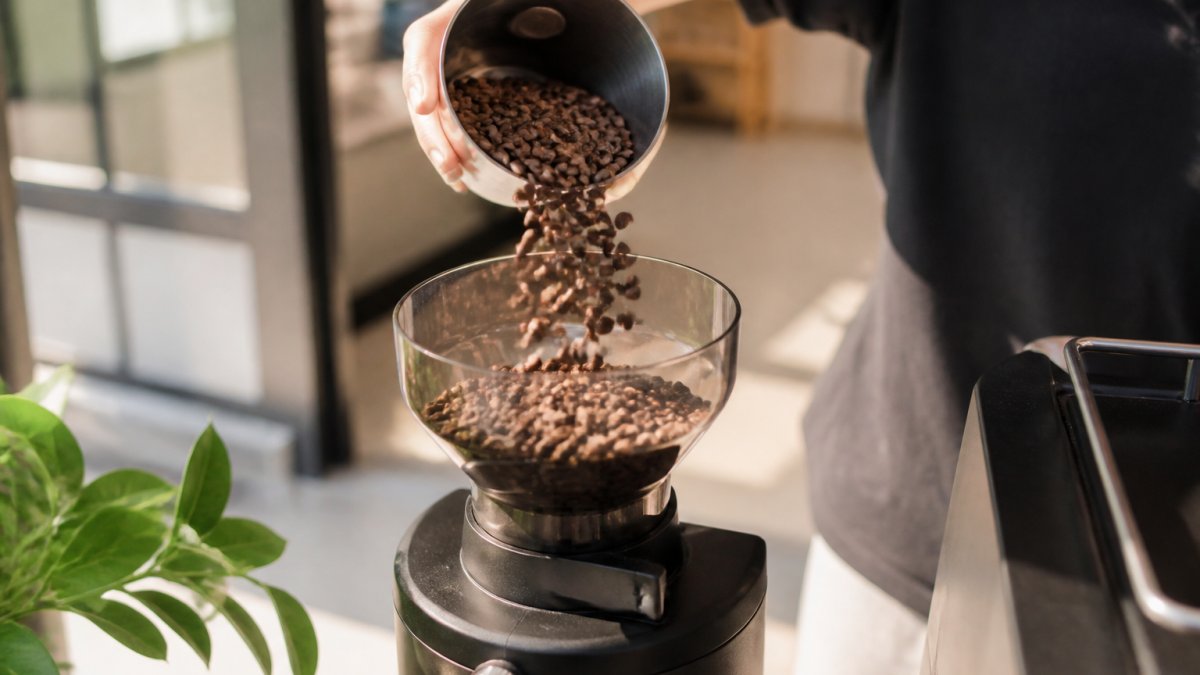
Fresh beans matter most. Whole beans stay fresher than pre-ground coffee. A burr grinder (around $30-100) gives you control over grind consistency, which dramatically affects extraction and flavor.
Frothing and Steaming Techniques
Frothing creates microfoam, tiny air bubbles suspended in milk that add texture. With a handheld frother, submerge the whisk just below the milk's surface and move in small circles. Stop when the milk reaches about 150-155°F (65-68°C).
Steaming with an espresso machine's steam wand creates finer, more stable foam. Position the wand just below the surface to incorporate air initially, then move it deeper to heat the milk. The entire process takes 20-30 seconds for a 10-ounce pitcher.
Common mistakes: overheating the milk (which breaks down plant proteins), incorporating too much air too quickly (which creates large bubbles instead of microfoam), or using cold milk (which takes longer to heat). Practice with barista-edition creamers, which are more forgiving.
Vegan-Friendly Sweeteners and Syrups
Refined white sugar doesn't dissolve smoothly in hot coffee. Instead, use liquid sweeteners: agave syrup adds subtle sweetness, maple syrup brings earthy notes that complement darker roasts, and coconut sugar dissolves well and adds slight caramel notes.
For flavored drinks, create simple syrups by dissolving sweeteners with spices or extracts. A vanilla-agave syrup works in any coffee drink. A cinnamon-maple syrup pairs beautifully with medium roasts. Store homemade syrups in the refrigerator for up to two weeks.
Understanding Ethical Coffee Certifications
For vegans who view their coffee choice as an ethical statement, certifications matter. Understanding what each one guarantees helps you make informed decisions.
Fair Trade Certification ensures farmers receive a minimum price for their beans, plus premiums for certified organic production. It mandates labor standards and environmental practices. When you buy Fair Trade coffee, you're directly supporting farmer livelihoods and sustainable farming methods.
USDA Organic Certification means the coffee was grown without synthetic pesticides, fertilizers, or genetically modified organisms. Organic farming protects soil health, water quality, and biodiversity.
Carbon-Negative Certification (held by Tiny Footprint) means the company actively removes more carbon from the atmosphere than its operations produce. This represents genuine climate action rather than just harm reduction.
Rainforest Alliance Certification focuses on biodiversity and ecosystem protection. Certified farms maintain forest cover and protect wildlife habitats.
The best coffee for vegan diet often carries multiple certifications. Equal Exchange, Ethical Bean, Jim's Organic, and Tiny Footprint all combine Fair Trade and Organic. When shopping, look for at least Fair Trade and Organic combined, this dual certification signals genuine commitment to both farmer welfare and environmental protection.
The best coffee for vegan diet isn't one-size-fits-all. It depends on whether you prioritize freshness, ethical sourcing, environmental impact, health optimization, or great taste. Most likely, you care about multiple factors simultaneously.
Start with beans that align with your values, whether that's Third Space Coffee's in-house roasting and community focus, or a certified option like Tiny Footprint if climate action is your priority. Pair those beans with a barista-edition plant-based creamer formulated specifically for coffee. Learn to froth properly so the milk complements rather than masks the coffee's character. Use vegan-friendly sweeteners that dissolve smoothly and add subtle complexity.
Quality vegan coffee is entirely achievable at home. It requires intention and slightly more attention than grabbing a convenience store cup, but the result is worth the effort, coffee that tastes genuinely good and aligns with your values.
Frequently Asked Questions
What coffee can vegans drink?
Most black coffee is naturally vegan, as it contains only water and roasted coffee beans with no animal-derived ingredients. However, many vegans avoid coffee processed with bone char, a filtering agent used by some manufacturers. Look for coffees certified as vegan or organic, which typically avoid this processing method. Brands using fair trade and organic certifications tend to employ plant-friendly methods throughout production.
Which non-dairy milk tastes best in coffee?
Oat milk and soy milk perform best in coffee due to their frothing ability and neutral flavor. Oatly Barista Edition and Califia Farms Oat Barista Blend create rich, stable foam for lattes and cappuccinos. Pacific Foods Barista Series Soy Original excels at steaming and doesn't overpower coffee's natural flavors. Almond milk works well for cold brew but may not froth as effectively. Your choice depends on whether you prefer a creamy, neutral taste or a subtle flavor profile.
How can I tell if my coffee is ethically sourced?
Look for certifications like Fair Trade, USDA Organic, and Rainforest Alliance on the packaging. Fair Trade certification ensures farmers receive fair wages and work under safe conditions. Ethical Bean Coffee uses QR code traceability, allowing you to track your beans from farm to cup. Jim's Organic Coffee and Equal Exchange emphasize transparency in their supply chains. Tiny Footprint Coffee goes further by being carbon-negative, investing in reforestation with each purchase.
Are there animal products in coffee beans?
Coffee beans themselves contain no animal products. However, some processing methods use bone char as a filtering agent, which makes the final product non-vegan. Most specialty and organic coffees avoid bone char filtering. The concern also extends to additives in flavored or instant coffees, which may contain milk derivatives or honey. Always check the ingredient list or seek vegan-certified labels to ensure your coffee is completely free from animal-derived substances.
This article was written using GrandRanker