
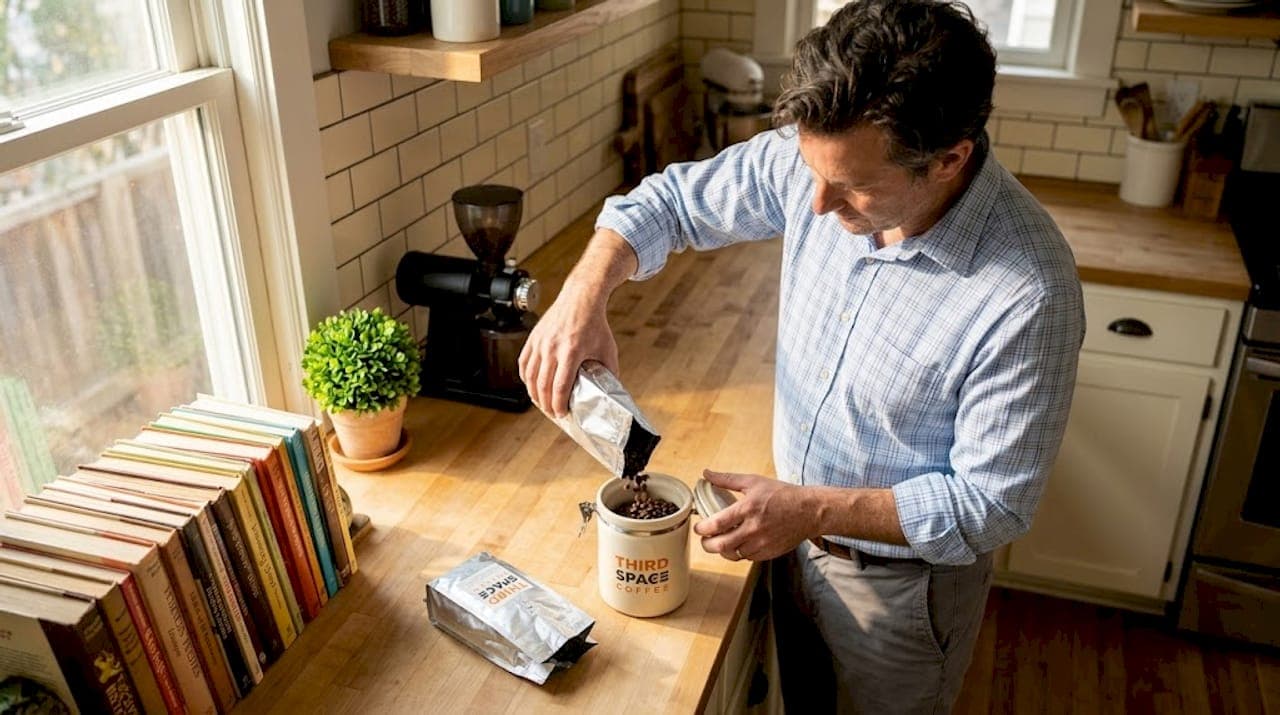
TL;DR:
- Proper storage of coffee beans is crucial in preserving freshness by protecting them from oxygen, light, heat, and moisture. An opaque, airtight container kept in a cool, dark place for up to four weeks offers the best everyday solution, while freezing in small portions extends shelf life for months without flavor loss. Avoid refrigeration and pre-ground storage, and buy fresh beans in small quantities to ensure every cup remains flavorful.
You buy great coffee, brew it carefully, and still wind up with a flat, lifeless cup. The problem usually isn't your technique. It's how you're storing your beans. Getting your coffee bean storage tips right is the single most impactful thing you can do between roast and brew. Most people either overthink it with expensive gear or completely ignore it and toss beans in any open container on the counter. This guide cuts through both mistakes and gives you what actually works.
Table of Contents
- Key takeaways
- 1. The core coffee bean storage tips you need to know
- 2. What the ideal storage environment actually looks like
- 3. Original packaging: better than you think, but not perfect
- 4. Airtight containers: the best everyday storage solution
- 5. Freezing beans: the right way and the wrong way
- 6. Why refrigeration is a bad idea
- 7. Comparing storage methods side by side
- 8. A practical step-by-step storage routine
- 9. Buying, grinding, and usage habits that make storage easier
- My honest take on coffee storage
- Get fresh beans worth storing from Thirdspacecoffee
- FAQ
Key takeaways
| Point | Details |
|---|---|
| Airtight containers matter most | Blocking oxygen exposure is the number one way to slow down flavor loss in stored beans. |
| Avoid the fridge | Refrigerators introduce moisture and odors that actively degrade your beans faster than room temperature. |
| Buy smaller, fresher batches | Matching your purchase quantity to a two-week window keeps every cup tasting its best. |
| Freeze only for long-term storage | Properly sealed beans can freeze well, but only if you never refreeze after thawing. |
| Location is often the overlooked factor | Keeping beans away from heat sources and sunlight matters as much as the container you choose. |
1. The core coffee bean storage tips you need to know
Before you spend a dollar on a fancy canister, understand what actually degrades coffee beans. Four enemies attack your beans from the moment they leave the roaster: oxygen, light, heat, and moisture. Every storage decision you make should protect against at least one of these.
Here is what each enemy does:
- Oxygen triggers oxidation, which breaks down aromatic compounds and flattens flavor. The coffee oxidation process starts the moment a bag is opened.
- Light accelerates chemical reactions that stale beans faster, especially UV light from sunlight or strong indoor lighting.
- Heat speeds up nearly every degradation reaction and drives off the volatile compounds responsible for aroma.
- Moisture causes beans to absorb water and surrounding odors, fundamentally changing their taste profile.
Whole coffee beans maintain peak flavor for two to four weeks after roasting when stored airtight in a cool, dark, dry place at room temperature. That is your benchmark. Everything else in this guide supports hitting that window consistently.
Pro Tip: Buy only what you will drink in two weeks. No storage method compensates for sitting on stale beans for months.
2. What the ideal storage environment actually looks like
Temperature and humidity are two variables most people never consider. The ideal storage temperature is around 60°F with roughly 60% humidity, and fluctuations in either accelerate staling. A stable environment preserves the volatile aroma compounds that make your morning cup worth waking up for.
A kitchen counter near the stove is one of the worst spots for beans. Ovens, dishwashers, and direct sunlight exposure all create heat and light conditions that destroy quality fast. A cabinet away from appliances, at roughly room temperature, is almost always the right answer. You do not need a cellar or a climate-controlled room. You just need consistency.
Avoid spots in your kitchen that experience regular temperature swings, like shelves above the dishwasher or next to a window that gets afternoon sun. Stability matters more than hitting a perfect number.
3. Original packaging: better than you think, but not perfect
That bag your coffee came in is actually designed with freshness in mind. One-way valve bags allow CO2 released by freshly roasted beans to escape without letting oxygen back in. This is a genuinely clever design that maintains freshness during the initial storage period after roasting.
The problem is that once you open the bag, most people fold the top and clip it. That is better than nothing, but far from airtight. Every time you open and reseal, oxygen sneaks in. The valve also stops functioning as intended once the bag is open and folded.
If you plan to finish the bag within a few days of opening, the original packaging works fine. For anything longer, transfer your beans to a dedicated container.
4. Airtight containers: the best everyday storage solution
For most people, an opaque airtight container is the best answer to how to store coffee beans at home. Simple airtight containers block light, air, and moisture effectively at a fraction of the cost of specialized coffee gadgets.
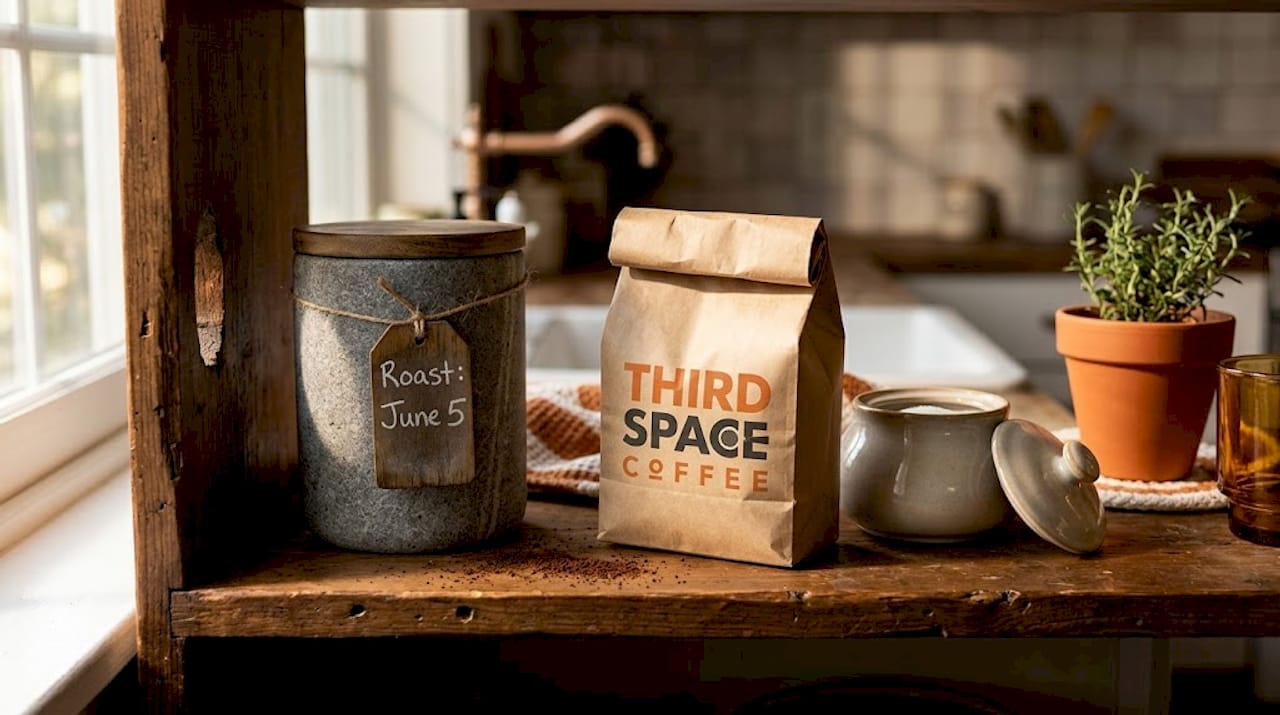
Opaque matters. Clear glass or plastic lets light in, even if it seals well. A ceramic or stainless steel canister with a tight lid stored in a cabinet is genuinely all you need. You can spend $15 or $150, and the $15 option will often do the same job if it seals properly.
What you want to avoid: containers with loose lids, oversized containers that hold way more coffee than you will use in two weeks (leaving too much air inside), and clear containers left on open shelves. Match the container size to your typical weekly usage, and you are most of the way there.
Pro Tip: If your container is too large for your current supply, add a small piece of plastic wrap directly on top of the beans before sealing to reduce the air gap.
5. Freezing beans: the right way and the wrong way
Freezing is one of the most debated topics in coffee storage, and the answer is more nuanced than "yes" or "no." Done correctly, freezing extends shelf life for three to four months with minimal flavor loss. Done carelessly, it ruins beans faster than leaving them on the counter.
The rules for freezing correctly:
- Use freezer-safe, airtight bags or containers. Squeeze out all excess air before sealing.
- Divide beans into single-use portions before freezing. Each portion should be one to two weeks of coffee.
- Never refreeze. Repeated thawing cycles create condensation that damages bean structure and flavor.
- Thaw beans at room temperature inside the sealed container so condensation forms on the outside of the bag, not on the beans.
Freezing is best suited for people who buy in bulk, receive coffee as a gift, or want to stockpile a seasonal release. For everyday drinkers going through a bag every week or two, room temperature storage in an airtight container is simpler and just as effective.
6. Why refrigeration is a bad idea
Refrigerating coffee beans is a common mistake, and it consistently backfires. Refrigerators introduce moisture and expose beans to a constant stream of food odors. Coffee is extremely porous and absorbs smells readily. That leftover takeout or open container of onions will find its way into your cup.
The humidity inside a refrigerator is also inconsistent and often too high. Combined with the temperature swings that happen every time the door opens, beans stored in the fridge typically stale faster than beans stored in a sealed container at room temperature.
The only exception worth considering is if you live somewhere unusually hot and humid and have no cool cabinet space available. Even then, a freezer in airtight portions beats a refrigerator every time.
7. Comparing storage methods side by side
Here is a quick look at how the main storage methods stack up against each other:
| Method | Freshness window | Cost | Best for |
|---|---|---|---|
| Original valve bag (sealed) | Up to 2 weeks after opening | Free | Short-term, first few days |
| Opaque airtight container | 2 to 4 weeks | $10 to $30 | Everyday use |
| Freezer (airtight, portioned) | Up to 3 to 4 months | $5 to $15 for bags | Bulk buyers, long-term storage |
| Refrigerator | Less than 1 to 2 weeks | Free | Not recommended |
| Clear container on counter | Under 1 week | Varies | Not recommended |
The takeaway from this table is that cost and complexity do not determine results. The opaque airtight container wins for most people because it balances freshness, convenience, and price in a way nothing else does at the everyday scale.
8. A practical step-by-step storage routine
Here is exactly how to handle your beans from the moment you get them home:
- Check the roast date. Fresh beans are roasted within the last one to two weeks. Learn about fresh beans and peak flavor to understand why this matters more than the expiration date.
- Transfer beans immediately. Move them from the store bag into your opaque airtight container the same day you get home if you plan to use them within two weeks.
- Portion for longer storage. If you have more beans than you will use in two weeks, divide them into portions and freeze the excess using the method in section five.
- Store in the right spot. Keep your container in a cabinet away from the stove, oven, and any windows that receive direct sun.
- Grind only what you brew. Ground coffee stales rapidly within minutes to hours once ground, so measure and grind immediately before brewing.
- Seal the container completely after every use. It sounds obvious, but a lid left slightly ajar is one of the most common storage mistakes.
Pro Tip: Label your container with the roast date using a piece of masking tape. It takes three seconds and prevents you from ever guessing whether your beans are still at their peak.
9. Buying, grinding, and usage habits that make storage easier
The best storage routine in the world cannot fix buying habits that work against freshness. Buying in smaller quantities and aligning your purchase size to roughly two weeks of consumption is one of the most underrated coffee bean preservation tips.
A few habits that make a measurable difference:
- Buy freshly roasted beans. Look for a roast date on the bag, not just an expiration date. Beans roasted more than a month ago are already past their peak before you open the bag.
- Grind immediately before brewing. Pre-grinding and storing ground coffee is a significant downgrade. If you must store ground coffee, keep it in an airtight container and use it within three to five days.
- Clean your storage containers regularly. Coffee oils go rancid and build up inside containers. A quick wash with warm, soapy water every few weeks keeps flavors clean.
- Consider your local climate. If you live in a humid region, pay extra attention to moisture control and opt for containers with rubber-sealed lids. Colorado Springs, for example, runs dry enough that basic airtight storage works exceptionally well year-round.
These habits cost nothing and take almost no extra time. They just require a bit of consistent attention.
My honest take on coffee storage
I have spent more time than I care to admit testing coffee storage gear. Vacuum-seal canisters, CO2 canister systems, specialized nitrogen-flush bags. You name it, I have probably tried it. Here is what I actually learned: almost none of it made a difference I could taste blind.
What consistently made the biggest difference was the basics. An opaque container that actually seals. Kept away from heat. Beans bought fresh and used within two weeks. The airtight container advantage over complex gadgets is real, and most people need to hear it more than they need another product recommendation.
The one habit I would push hardest: stop buying large bags to save a few dollars. Stale coffee wastes more money than the small-batch premium ever costs you. Fresh beans stored simply always beat fancy storage with old beans. That is the truth the coffee gear industry does not want you to sit with.
— Tanya
Get fresh beans worth storing from Thirdspacecoffee
All the storage tips in the world only matter if your beans were fresh to begin with. Thirdspacecoffee roasts whole bean coffee in-house at their Colorado Springs location, which means what you buy is actually fresh, not sitting in a warehouse for weeks before it reaches your bag.

If you want to put these storage methods to real use, start with beans that give you something worth protecting. Thirdspacecoffee offers freshly roasted whole beans you can pick up in store or pre-order online for fast front-of-store pickup. And if you want to experience what properly fresh coffee tastes like before committing to a bag, stop in for one of their specialty drinks made with the same care. Great storage starts with great beans.
FAQ
How long do coffee beans stay fresh after roasting?
Whole coffee beans maintain peak flavor for two to four weeks after roasting when stored in a cool, dark, airtight container at room temperature. Quality noticeably declines after that window.
Can you store coffee beans in the freezer?
Yes, but only if you portion them first and never refreeze after thawing. Freezing in airtight, moisture-proof packaging can extend shelf life to three to four months without major flavor loss.
What is the best container for storing coffee beans?
An opaque, airtight container stored in a cool cabinet away from heat and light is the most effective and practical option for everyday home storage.
Why should you avoid storing coffee in the fridge?
Refrigerators expose coffee beans to moisture and food odors that beans absorb easily, degrading flavor faster than proper room temperature storage in a sealed container.
Does grinding ahead of time ruin coffee?
Grinding dramatically accelerates staleness. Ground coffee loses most of its aromatic compounds within hours of grinding, so grinding immediately before brewing preserves the most flavor.