
TL;DR:
- Coffee reaches peak flavor 7 to 14 days after roasting due to degassing and oxidation processes.
- Proper storage in airtight, opaque containers in a cool, dark place extends freshness and flavor.
- Grinding just before brewing preserves aromatic compounds and prevents rapid staling.
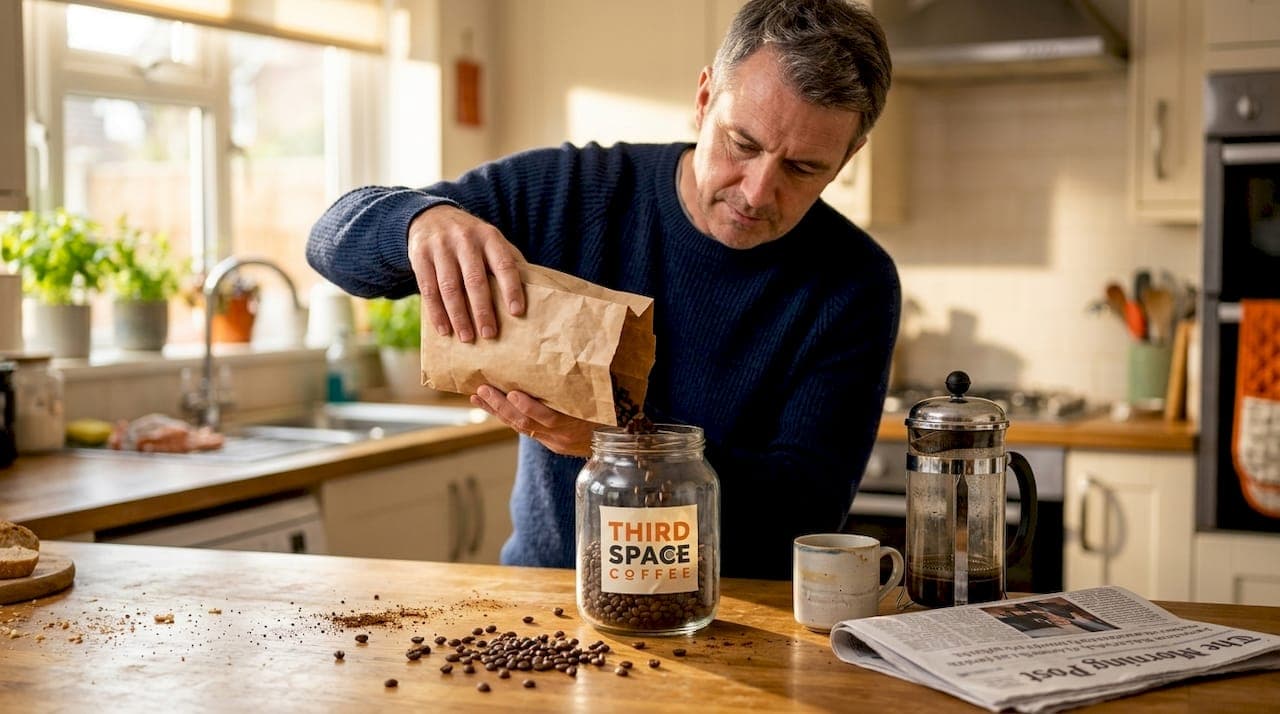
Most people assume that once coffee is roasted, it's ready to deliver the same flavor whether you brew it today or three months from now. That assumption costs you a lot of pleasure in your cup. Freshness has a measurable, real impact on aroma, taste complexity, and brewing results. In Colorado Springs, where specialty coffee culture is thriving, knowing how to buy, store, and brew fresh beans is the difference between a forgettable cup and one that actually excites you. This guide walks through the science of coffee freshness, what staling really means, and practical steps to get the most from every bag.
Table of Contents
- What makes coffee 'fresh'? Roasting, aging, and peak flavor
- How freshness impacts flavor, aroma, and extraction
- Why and how coffee goes stale: The science of degradation
- Maximizing freshness: Sourcing, storing, and brewing for the best cup
- Why the 'fresh is best' mantra is (almost) always right—but with a twist
- Explore the freshest beans and specialty drinks in Colorado Springs
- Frequently asked questions
Key Takeaways
| Point | Details |
|---|---|
| Coffee freshness defined | Freshness is determined by roast date, storage, and how recently beans were ground. |
| Flavor peaks after roasting | Beans typically hit peak aroma and taste 7-14 days after roasting. |
| Staling is chemical and preventable | Heat, air, and moisture speed up loss of quality, but airtight storage helps delay this. |
| Smart buying maximizes taste | Buy whole beans in small batches and store them properly to enjoy the best flavors. |
| Personal taste matters | The 'best' freshness window may vary—experiment and enjoy what tastes best to you. |
What makes coffee 'fresh'? Roasting, aging, and peak flavor
Freshness in coffee is not just a marketing phrase. It refers to something measurable and specific. The moment beans finish roasting, a clock starts ticking. Two key processes begin immediately: CO2 degassing and oxidation.
During roasting, carbon dioxide builds up inside the bean. After roasting ends, that CO2 slowly escapes over 24 to 72 hours. This is called degassing. Brew too soon and the CO2 interferes with water penetration, giving you uneven, underdeveloped flavor. Wait too long, and the beans oxidize to the point where the aroma and brightness fade. The sweet spot, according to sensory profile findings, is that the 7-14 day peak after roasting is when most coffees deliver their best complexity and aroma.
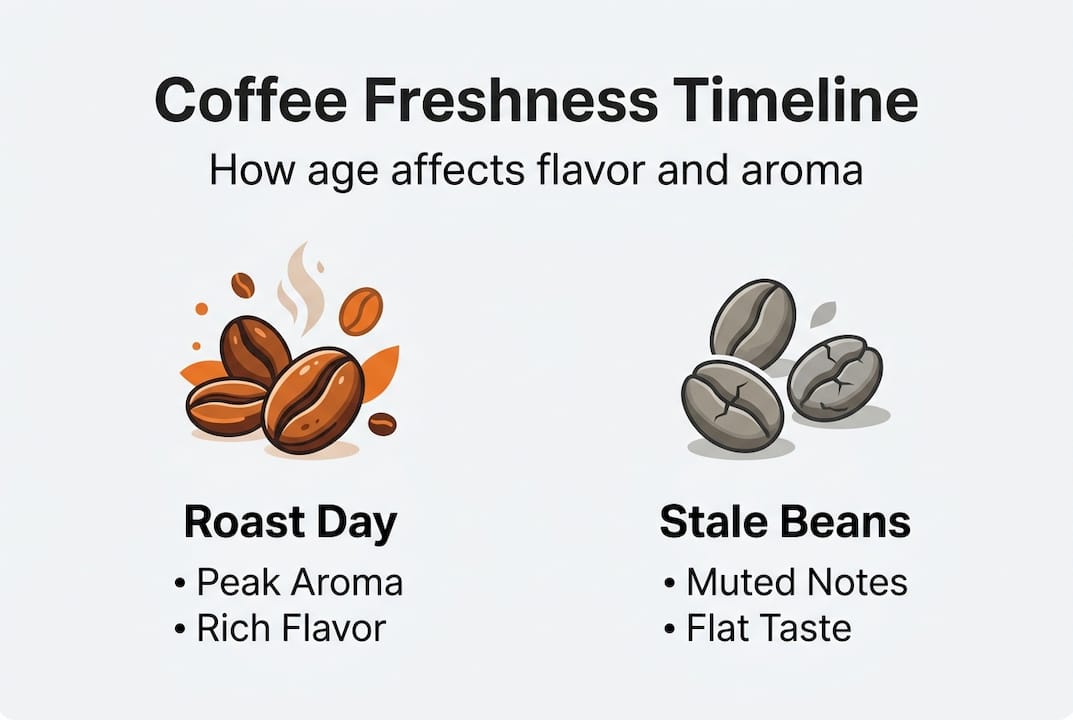
Understanding coffee roasting basics helps you appreciate why timing matters so much. The roast level, bean origin, and processing method all influence how quickly a coffee moves through its freshness window. Light roasts tend to stay vibrant a little longer. Dark roasts degas faster and can turn flat sooner.
Flavor and aroma changes by age from roast date
| Days since roast | Flavor profile | Aroma intensity | Brew result |
|---|---|---|---|
| 1 day | Underdeveloped, grassy | Muted | Uneven extraction |
| 7 to 14 days | Bright, complex, peak notes | High | Best extraction |
| 30 days | Mellowing, rounded | Moderate | Consistent but softer |
| 90+ days | Flat, dull, possibly stale | Low | Thin, lifeless |
The chemistry behind this is straightforward. Here are the main reactions happening inside your bag after roasting:
- Oxidation: Oxygen reacts with aromatic compounds, breaking down the bright, volatile notes that define quality coffee
- CO2 degassing: Beneficial early on, but once it slows, the bean becomes more vulnerable to moisture and oxygen
- Maillard by-product breakdown: The complex flavor molecules formed during roasting slowly degrade over time
- Lipid oxidation: Coffee oils on the surface of the bean go rancid if exposed to heat, light, or air too long
Exploring coffee origins explained also reveals how origin affects freshness windows. Ethiopian naturals, for example, carry dense fruity compounds that can shift significantly with age.
Pro Tip: Never grind your beans until right before you brew. Grinding increases surface area dramatically, and oxidation accelerates the moment you do it.
How freshness impacts flavor, aroma, and extraction
With a solid grasp on what freshness means, it is time to explore how that freshness directly influences the sensory experience in your cup.
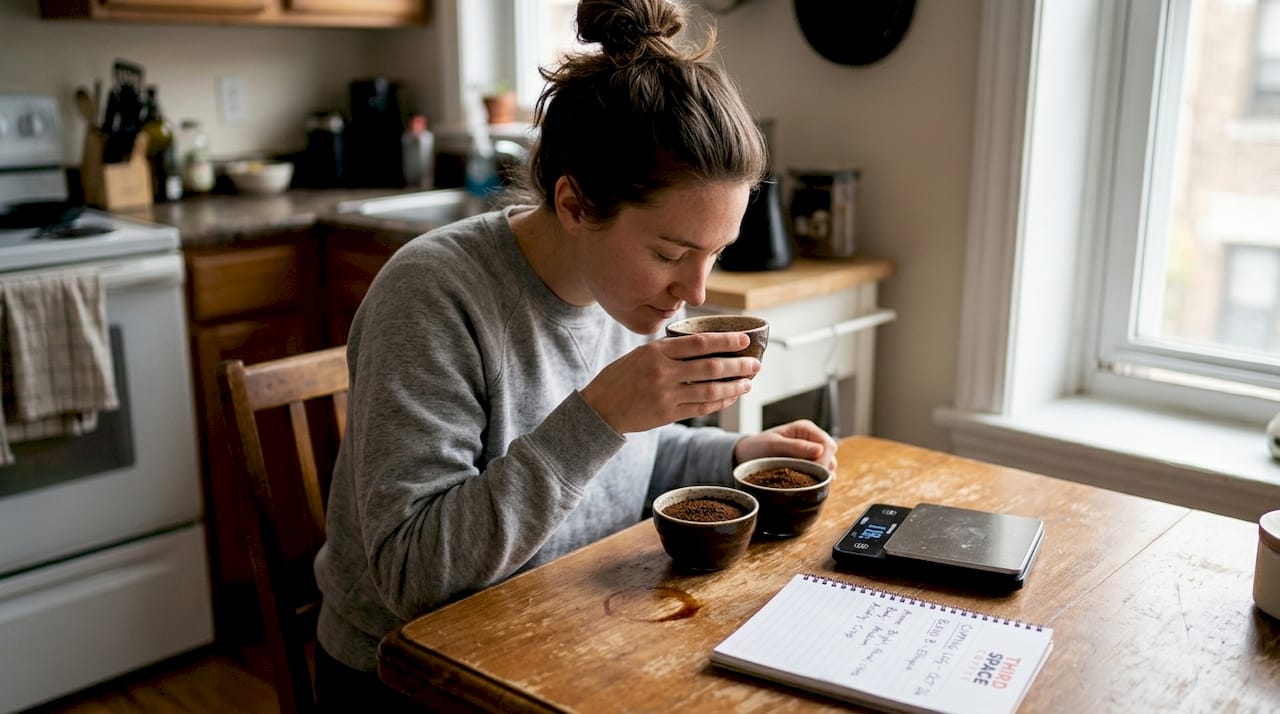
Fresh coffee carries volatile aromatic compounds that produce the floral, fruity, or chocolatey notes you read on the bag. These are not just poetic descriptions. They are real chemical compounds. Esters produce fruity notes. Pyrazines create nutty and roasted character. Aldehydes contribute brightness. All of them degrade at different rates, which is why coffee flavor shifts so noticeably with age.
Recent research shows that sensory differences are measurable between fresh and aged beans, though some studies suggest minimal quality drop between ultra-fresh and well-rested beans. The range most coffee professionals rely on remains 7 to 14 days post-roast for peak complexity.
Taste and aroma comparison by bean age
| Bean age | Aroma score | Flavor complexity | Mouthfeel | Overall experience |
|---|---|---|---|---|
| 7 days | 9/10 | High | Full, vibrant | Exceptional |
| 30 days | 7/10 | Medium | Rounded | Good |
| 120 days | 4/10 | Low | Thin, flat | Disappointing |
Want to experience this yourself? Try a simple home tasting to notice freshness differences:
- Purchase beans from two roast dates, one recent and one at least 60 days old
- Store both identically under the same conditions and equipment
- Grind both samples fresh right before brewing
- Brew using the same method, ratio, water temperature, and timing
- Taste side by side without adding milk or sugar, and note aroma, brightness, and finish
Most people are surprised by how stark the difference is. Fresh beans bloom beautifully when you add hot water, releasing a rich CO2 burst. Older beans barely react. That bloom is visual proof of freshness in action.
Practicing coffee tasting steps regularly sharpens your palate for detecting freshness quickly. If you are still building your vocabulary for flavor, reviewing guides on choosing coffee blends can help you connect what you taste to what the roast was designed to deliver.
Why and how coffee goes stale: The science of degradation
Knowing how incredible fresh coffee tastes, let us look at the forces working against your beans and the science behind coffee losing its fresh edge.
Four environmental factors drive coffee staling: air, light, heat, and moisture. Of these, oxygen is the biggest culprit. The moment your bag is opened, every breath of air accelerates the breakdown of the aromatic compounds that give specialty coffee its character.
- Oxygen: Triggers oxidation that breaks down volatile aromatics and coffee lipids on the bean surface
- Light: UV exposure degrades polyphenols (plant-based antioxidant compounds) and accelerates chemical breakdown
- Heat: Speeds up every chemical reaction including lipid oxidation, robbing coffee of depth
- Moisture: Causes hydrolysis (water-driven chemical breakdown) which rapidly dulls flavor and can promote mold
Heat, light, air, and moisture all accelerate oxidation and degrade coffee polyphenols over time. Polyphenols are a big deal because they contribute to body, bitterness balance, and antioxidant value.
"Polyphenols degrade with a half-life of approximately 3 months if vacuum-roasted and stored properly. Improper storage can cut that timeline dramatically."
For home storage, the practical takeaways are direct. Keep beans in an opaque, airtight container away from your stove or any heat source. A cool, dry pantry shelf works well. A cabinet above the coffee maker does not. That gentle warmth radiating up shortens your beans' peak window faster than you might think.
Familiarizing yourself with coffee freshness terms like degassing valves, oxidation, and headspace will make you a much sharper shopper and a smarter home brewer. Look for bags with one-way degassing valves, which let CO2 escape without letting oxygen in.
Maximizing freshness: Sourcing, storing, and brewing for the best cup
The science makes clear that you cannot stop time, but you can outsmart it. Here are practical strategies that really work for coffee enthusiasts in Colorado Springs.
Start with sourcing. Local roasters and specialty coffee shops roast in smaller batches and turn over inventory faster than grocery chains. That means fresher beans reach you. Farmer's markets, local roasters, and specialty shops all beat a supermarket shelf for roast date transparency. When beans arrive in bags with printed roast dates (not just "best by" dates), that is a strong sign the roaster is confident in their product.
Airtight, opaque, valved bags and cool, dry storage are the gold standard for preserving peak bean quality. Once you open the bag, the clock moves faster.
Here is a step-by-step approach for optimal freshness from purchase to cup:
- Buy fresh: Look for a roast date within the past 7 to 14 days
- Buy small: Purchase only what you will use within two weeks
- Seal well: Reseal the original valved bag tightly after each use or transfer to an airtight, opaque container
- Store smart: Keep beans at room temperature in a cool, dark place away from heat and light
- Grind last: Grind immediately before brewing, never in advance
- Brew with care: Use filtered water and dial in your grind size for the chosen brew method
For supporting local roasters in Colorado Springs, the benefit goes beyond freshness. You get traceability, story, and the ability to ask the roaster directly about the origin and roast date. Exploring whole bean options from local sources is one of the fastest ways to upgrade your home brewing.
Pro Tip: Buy just enough for one to two weeks at a time. It feels like a small discipline, but it is the single most effective habit for keeping every cup at its best.
Why the 'fresh is best' mantra is (almost) always right—but with a twist
Here is something few people in coffee circles say out loud: the obsession with extreme freshness can occasionally go too far. Beans pulled from the roaster and brewed within 24 hours are actually worse than beans rested for a week. The CO2 is still aggressively degassing, and the extraction becomes chaotic and uneven.
Beyond that, some coffees genuinely develop character with a little more time. A dense, naturally processed Ethiopian coffee at 21 days might taste rounder and more integrated than the same bean at 8 days. Recent research confirms that no clear quality difference always exists between ultra-fresh and well-matured beans, depending on the specific coffee and drinker.
What this means practically is that the 7-14 day guideline is an excellent starting point, not a rigid law. If you have a bag that is 20 or even 25 days out from roast and it still smells vibrant and complex, trust your nose. Freshness is about sensory reality, not just a calendar date. Experiment and build your own preferences. A learned palate often discovers that slightly mellowed beans suit certain brew methods beautifully.
Explore the freshest beans and specialty drinks in Colorado Springs
Putting this knowledge into practice starts with having great beans in your kitchen. Third Space Coffee roasts whole beans in-house right here in Colorado Springs, so you know exactly how fresh they are when they reach you.

Browse fresh whole beans roasted to order and matched to the freshness window this guide describes. If you want to taste what peak extraction actually feels like before brewing at home, try one of the specialty drinks crafted in-store. Ready to explore more? Visit the full shop coffees selection and find the next bag that earns a spot in your pantry.
Frequently asked questions
How can I tell if my coffee beans are fresh?
Check the bag for a printed roast date within the past two weeks, a strong aroma when you open it, and slight puffiness from trapped CO2. Beans at 7-14 days post-roast typically show all three signs.
Does grinding coffee in advance reduce freshness?
Yes, grinding accelerates staling because it exposes far more surface area to oxygen. Coffee staling accelerates with more surface area exposed to air, so always grind right before you brew.
Can I freeze coffee beans to keep them fresh longer?
Freezing whole beans in airtight, moisture-proof containers can slow staling effectively. Airtight and moisture-free conditions best preserve roasted beans, but avoid thawing and refreezing repeatedly.
How long do roasted coffee beans really stay at their peak?
Most roasted beans hit their best flavor between 7 and 14 days after roasting. The industry consensus points to this window for peak complexity, with quality gradually softening after 30 days.
Recommended
- Whole Bean Coffee | Third Space Coffee Colorado Springs, CO
- Coffee origins decoded: assess and appreciate specialty brews
- Essential industry terms every coffee enthusiast should know
- Coffee blends explained: how to choose the perfect cup
- Why freshness matters in coffee: flavor and quality – Adira Coffee US