
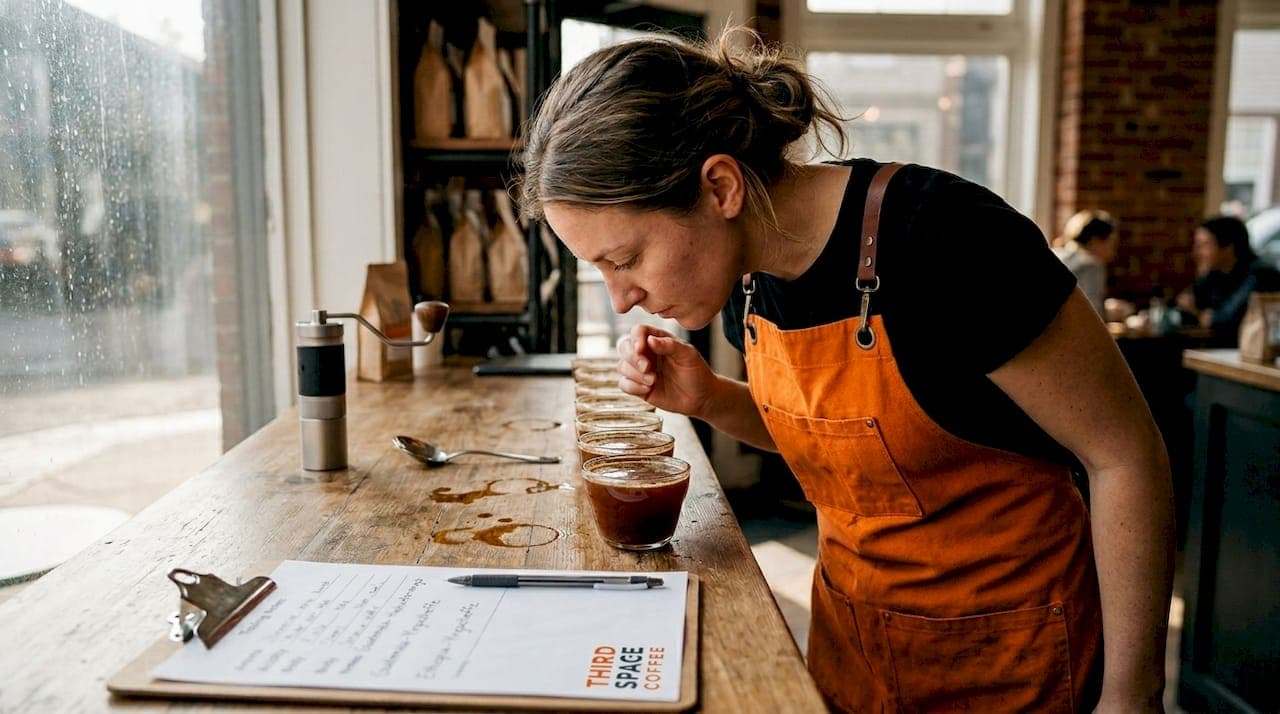
TL;DR:
- Coffee cupping is an accessible practice that trains enthusiasts to evaluate coffee’s aroma, flavor, and quality. It involves a standardized process, following SCA guidelines, to reliably compare coffees and deepen sensory awareness. Engaging in cupping fosters a slower, more attentive relationship with coffee, connecting drinkers to its origin and craft.
Most people assume coffee cupping is a ritual reserved for professionals with highly trained palates and years of industry experience. The truth is, coffee cupping is one of the most accessible and eye-opening skills any enthusiast can pick up. Whether you've been visiting specialty cafes in Colorado Springs for years or you're just starting to explore what makes a great cup different from a mediocre one, understanding cupping will permanently change how you taste coffee. This guide breaks down what coffee cupping is, walks you through a real session step by step, and shows you how to start practicing on your own.
Table of Contents
- What is coffee cupping and why does it matter?
- Step-by-step: How a coffee cupping session works
- What can you discover in a cupping? Interpreting flavors and aromas
- Tips for hosting or joining coffee cupping events in Colorado Springs
- Why coffee cupping matters more than you think
- Experience specialty coffee: Your next step in cupping
- Frequently asked questions
Key Takeaways
| Point | Details |
|---|---|
| Cupping is accessible | Anyone can learn the basics of coffee cupping to deeply appreciate specialty coffee. |
| Standardized method matters | Following SCA procedures leads to better, fairer coffee comparisons and tastings. |
| Sensory skills improve flavor | Noticing subtle aromas and tastes makes every cup more enjoyable. |
| Community boosts learning | Group cupping events offer fun, social ways to expand your coffee knowledge. |
What is coffee cupping and why does it matter?
Coffee cupping is a standardized method used to evaluate coffee based on its aroma, flavor, acidity, body, sweetness, and aftertaste. Professionals across the coffee supply chain, from farmers to importers to roasters, rely on cupping to assess bean quality and make informed buying and blending decisions. But it's not just a trade tool. Curious drinkers use cupping to compare beans side by side and develop a sharper sense of what they actually enjoy.
"Cupping is the universal language of coffee. It gives every person at the table, regardless of experience level, a structured way to evaluate and describe what they're tasting."
The Specialty Coffee Association (SCA) sets the global standard for how cupping sessions should be run. SCA cupping standards outline precise procedures for dose, water temperature, steep time, and evaluation criteria, ensuring that results are consistent and comparable across different settings. Even if you're not pursuing a professional certification, reviewing these guidelines gives beginners a reliable foundation to build on.
Here's why cupping matters for everyday coffee lovers:
- Flavor awareness: Cupping trains your palate to notice nuances like fruit brightness, chocolate depth, and floral fragrance that you'd likely overlook in a casual sip.
- Origin comparison: Side-by-side cupping reveals how geography, altitude, and processing method shape a coffee's personality.
- Freshness detection: Stale beans taste flat and papery during a cupping. You'll never let bad coffee slide again.
- Community learning: Group cuppings create shared vocabulary and make coffee more social and approachable.
If you want to build on this foundation, our tasting guide walks through sensory fundamentals specific to Colorado Springs coffee lovers. And understanding why coffee quality matters at the source makes cupping results far more meaningful.
Local specialty cafes here in Colorado Springs use cupping sessions regularly to train staff and select the beans they'll feature. When your barista recommends a specific origin or describes a coffee as having "stone fruit brightness," that language comes directly from cupping practice.
Step-by-step: How a coffee cupping session works
Understanding the value of cupping is one thing. Knowing exactly how to run a session is another. The process follows a clear sequence, and sticking to that sequence is what makes results reliable and repeatable.
Cupping setup procedures are a core part of professional coffee training for a reason. Small deviations in grind size or water temperature can dramatically shift what ends up in your cup, making it impossible to compare coffees fairly.
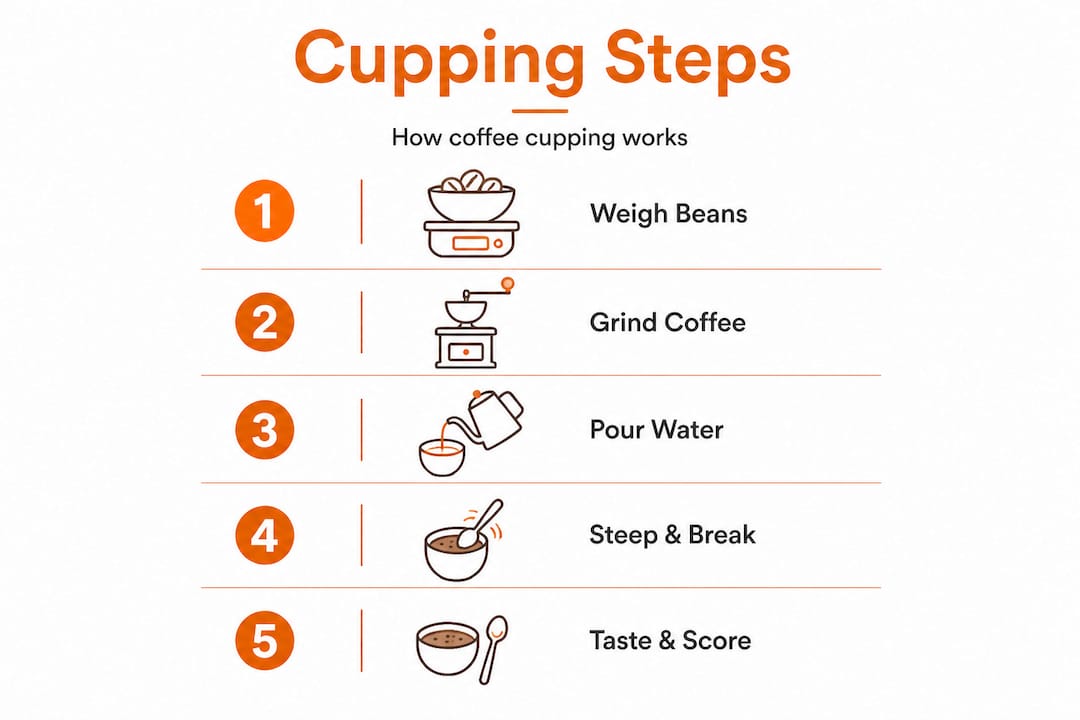
Here's how a standard cupping session unfolds:
- Grind the coffee fresh: Use a burr grinder and a medium-coarse grind, similar to what you'd use for a French press. Grind just before the session so volatile aromas don't escape.
- Smell the dry grounds: This is the first official evaluation step. The dry aroma reveals fragrance notes before water changes the chemistry. Take several short sniffs rather than one deep inhale.
- Add hot water: Pour water directly over the grounds. The SCA recommends water between 200°F and 205°F for cupping.
- Evaluate the wet aroma: As the crust of grounds forms on top and the coffee steeps, lean in and inhale. Wet aroma is often more expressive than dry fragrance and gives you an early read on the flavor profile.
- Break the crust: At exactly four minutes, use the back of your cupping spoon to break the surface crust gently. Push it away from you while sniffing the steam released. This moment is one of the most revealing in the whole session.
- Skim the grounds: Remove the floating grounds from the surface using two spoons, cleaning the cup so you can taste clearly.
- Taste by slurping: Use a deep, fast slurp to spray the coffee across your entire palate. This sounds impolite, but it's essential because it aerates the liquid and spreads it across all your taste receptors simultaneously.
- Evaluate and record: Note the acidity, body, sweetness, flavor descriptors, and aftertaste. Taste again as the coffee cools, since new notes often emerge at lower temperatures.
| Parameter | SCA Standard |
|---|---|
| Coffee dose | 8.25g per 150ml of water |
| Grind size | Medium-coarse (similar to French press) |
| Water temperature | 200°F to 205°F (93°C to 96°C) |
| Steep time | 4 minutes before breaking crust |
| Cups per sample | Minimum 2 cups per coffee evaluated |
| Tasting window | 8 to 10 minutes after breaking crust |
Pro Tip: Don't rush the session. Move slowly through each step and give yourself at least 30 seconds between evaluations. Aromas open up over time, and flavors shift noticeably as coffee goes from near-boiling to warm to room temperature.
Our coffee roasting guide is a great companion resource here because the roast level directly affects what you'll encounter during a cupping. And if some of the terminology feels unfamiliar, our breakdown of coffee terms basics makes everything easier to follow.
What can you discover in a cupping? Interpreting flavors and aromas
Here's where cupping gets genuinely exciting. Once the mechanics feel comfortable, you start noticing flavors that you never knew were hiding in your morning cup. A naturally processed Ethiopian coffee might taste like blueberry jam. A washed Colombian might remind you of caramel apple and sweet tea. These aren't marketing inventions. They're real compounds produced during fermentation, drying, and roasting.

The SCA developed the coffee flavor wheel as a shared vocabulary tool. It organizes hundreds of descriptors into categories so that everyone at the table is speaking the same language. Beginners should get familiar with the main sensory categories before focusing on specific descriptors.
| Sensory category | What it measures | Common descriptors |
|---|---|---|
| Aroma | Smell before and after brewing | Floral, earthy, fruity, smoky |
| Acidity | Perceived brightness or tartness | Citric, malic, phosphoric, winey |
| Body | Weight and texture in the mouth | Light, silky, heavy, buttery |
| Sweetness | Natural sugar perception | Caramel, honey, molasses, brown sugar |
| Aftertaste | Flavor that lingers after swallowing | Clean, bitter, roasty, lingering fruit |
| Balance | How well the attributes work together | Harmonious, complex, disjointed |
Tips for building your sensory vocabulary:
- Start with two coffees at once. Comparing two very different origins side by side (say, Ethiopia and Brazil) makes differences much easier to identify than evaluating a single coffee in isolation.
- Write everything down. Even if your notes feel clumsy at first, putting words to taste builds a mental library you'll draw from automatically over time.
- Reference real foods while tasting. If something reminds you of dried apricot, write that down. You don't need official SCA language to cup effectively.
- Smell the grounds again after breaking the crust. The shift in aroma from dry to wet is often dramatic and tells you a lot about how the coffee was processed.
- Taste at three temperatures. Hot, warm, and near-room-temperature sips reveal entirely different flavor layers in the same cup.
Pro Tip: Use the same cup for repeated tastings throughout the session. Switching cups introduces variables. Sticking with one cup lets you track how the flavor evolves as the coffee cools.
Our guide to understanding coffee profiles goes deeper on how roast levels and processing methods shape the flavors you'll encounter. If you want to understand why a Kenyan coffee tastes so different from a Guatemalan one, our coffee origins explained article lays out the geography and farming conditions behind each flavor profile.
Tips for hosting or joining coffee cupping events in Colorado Springs
The good news for Colorado Springs coffee enthusiasts is that you don't need a professional setup to start cupping. A basic at-home session is entirely within reach, and local events make it easy to learn alongside others.
Cupping setup and evaluation procedures translate directly to home practice with a few affordable supplies. Here's what you need to get started:
- A burr grinder (blade grinders produce uneven particles that muddy results)
- At least two different coffees for comparison
- A kitchen scale accurate to 0.1 grams
- A gooseneck kettle with temperature control
- Four to six wide, identical cups or bowls (wider openings release more aroma)
- Cupping spoons, which are round and deep to hold a full slurp
- A timer
- A notepad or cupping form for recording evaluations
Making cupping social transforms it from an exercise into an experience. When you cup with others, you immediately notice that different people pick up on different notes. One person tastes cherry while someone else notices dark chocolate in the same cup. Neither person is wrong. This is the point. Coffee flavor is genuinely complex, and group cupping teaches you to trust your senses while staying open to different perspectives.
To find cupping events in Colorado Springs, check local specialty coffee shop social media pages and event listings. Many shops host open cuppings on weekends or partner with roasters for themed tasting events. If you're thinking about organizing your own event, our guide to organize coffee events covers logistics from start to finish.
Pro Tip: Keep a cupping journal after every session. Note the coffee name, origin, roast date, and your flavor impressions. After six to eight sessions, you'll start seeing patterns in what you consistently enjoy, which makes choosing new coffees much easier.
For those building a home practice between events, our home coffee brewing guide connects cupping insights to everyday brewing methods so the skills you develop during cupping actually improve your morning routine.
Why coffee cupping matters more than you think
Here's an honest observation from years spent in specialty coffee: most people come to cupping chasing rare flavors. They want to be the person who confidently identifies "bergamot" and "dark cherry" in an Ethiopian natural. That's a fine goal, but it's also the least interesting thing cupping has to offer.
What cupping actually gives you is a reason to slow down. In a world where most people drink coffee to fuel productivity, a cupping session forces you to sit with a cup and pay attention. No phone. No multitasking. Just coffee, your senses, and the people around you. That shift in attention changes your relationship with every cup you drink afterward.
There's also a deeper story in every cupping. When you taste a specific coffee and identify sweetness and acidity, you're tasting the result of decisions made by a farmer on the other side of the world: which variety to plant, when to harvest, how long to ferment. Cupping connects you to that chain of choices in a way that drinking casually never does.
Colorado Springs has a genuinely vibrant specialty coffee community, and cupping is the practice that ties it together. Local roasters here care deeply about sourcing ethical, high-quality beans. When you participate in cupping, you're not just improving your palate. You're engaging with and supporting that craft.
The origins and culture of coffee behind what ends up in your cup matters. Cupping is the bridge between the story and the sip. It doesn't require you to sound like an expert. It requires you to be curious and willing to pay attention.
Experience specialty coffee: Your next step in cupping
Inspired to experience coffee in new ways? Here's how to get started locally.
At Third Space Coffee in Colorado Springs, we roast our beans in-house because we believe the best cupping experiences start with truly fresh coffee. You can explore our full range of specialty coffee drinks or pick up whole bean coffee to start your home cupping practice with beans you know are fresh and traceable.

Bring a friend and make it an experience. Our space is built for exactly this kind of gathering, whether it's a casual tasting between two coffee-curious friends or a small group event where everyone brings their cupping notes. Check out our coffee selection and plan your first session or your next one with us. Great coffee tastes even better when you know the story behind it and share it with others.
Frequently asked questions
Is coffee cupping the same as coffee tasting?
Coffee cupping is a formal, standardized evaluation process with specific parameters for dose, temperature, and timing, while casual tasting is unstructured and less consistent for comparison purposes.
What equipment do I need for a coffee cupping session at home?
You need a burr grinder, kitchen scale, temperature-controlled kettle, at least two coffees, identical wide cups, cupping spoons, a timer, and a notepad to record your impressions.
How do I know if I'm doing coffee cupping correctly?
Follow the SCA standard procedures as closely as possible and focus on consistency in every step, especially grind size, water temperature, and steep time, to get reliable and comparable results.
Where can I join a coffee cupping event in Colorado Springs?
Local specialty coffee shops like Third Space Coffee regularly host cupping events that welcome first-timers, making them a great starting point for hands-on experience in a relaxed setting.
Why do professionals use SCA standards for cupping?
SCA standards create consistency and reliability across every session, ensuring that comparisons between different coffees are fair and that results carry meaning regardless of who conducts the evaluation.