
TL;DR:
- Oxidation rapidly degrades coffee's flavor by breaking down aromatic compounds, especially after grinding.
- Storing beans in airtight, opaque containers at cool temperatures can significantly slow this process, preserving freshness.
- Grinding immediately before brewing and minimizing air exposure are the most effective ways to maintain optimal coffee quality at home.
You pull open a bag of coffee you bought two weeks ago, and something is just... off. The aroma is muted. The cup tastes flat. You blame the beans, or the roast, or maybe even your brewer. But the real culprit is almost certainly oxidation, and it started working against you the moment those beans left the roaster. This isn't a vague concept reserved for chemistry classrooms. Oxidation is the single biggest driver of coffee staling, and it moves fast regardless of whether you live at sea level or here in Colorado Springs at over 6,000 feet. Understanding it changes how you buy, store, and brew.
Table of Contents
- What is coffee oxidation?
- How oxidation affects whole beans vs. ground coffee
- How to slow oxidation at home
- Oxidation and brewing: maximizing taste in every cup
- Why most coffee lovers underestimate oxidation's impact
- Take your coffee further with Third Space
- Frequently asked questions
Key Takeaways
| Point | Details |
|---|---|
| Oxidation drives staling | Oxidation is the main reason coffee loses its freshness, aroma, and flavor over time. |
| Grind just before brewing | Ground coffee oxidizes and stales far faster than whole beans, so grind right before you brew. |
| Store beans air-tight | Keeping coffee beans in air-tight, opaque containers away from heat and light dramatically slows oxidation. |
| Colorado tips matter | While low humidity helps in Colorado Springs, proper storage and grinding remain crucial to preserve flavor. |
What is coffee oxidation?
Now that you know coffee's rapid staling isn't just anecdotal, let's unpack what oxidation actually is and how it unfolds.
Oxidation is a chemical reaction that happens when oxygen molecules interact with organic compounds in roasted coffee. When oxygen contacts the hundreds of volatile aromatic compounds in your beans, those compounds break down or transform into less appealing molecules. The result is a loss of the bright, complex, layered flavors that make a great cup worth savoring. This is not a slow, passive process. It begins the instant roasted coffee is exposed to air.
Roasting transforms green coffee into the aromatic, richly flavored beans you know, but that transformation also makes the coffee chemically unstable. The high heat creates thousands of volatile compounds that are literally waiting to escape or react. Lipids (the fats inside the bean) are especially vulnerable, turning rancid when exposed to oxygen over time. Meanwhile, the aromatic compounds responsible for floral notes, stone fruit, chocolate, and nuttiness start to evaporate or oxidize into flat, cardboard-like molecules.
Here is what changes during oxidation:
- Aroma: The most immediate loss. Bright, volatile aromatics disappear within hours of grinding or days of opening a bag.
- Acidity: The pleasant, fruity brightness in light roasts fades and can turn harsh or sour.
- Body: Oxidized lipids change mouthfeel, making the cup feel thin or waxy.
- Flavor complexity: Multi-layered notes collapse into a single dull, generic "coffee" taste.
- Sweetness: Natural sugars and caramelized compounds degrade, removing the clean sweetness that balances bitterness.
Getting familiar with this process means getting fluent in coffee terminology that separates enthusiasts from casual drinkers.
On shelf life and oxygen: Reducing oxygen to 0.5% in packaging can increase roasted coffee shelf life by up to 20 times, and CO2 buildup from degassing in valved bags partially displaces oxygen, meaningfully slowing the oxidation clock.
That statistic alone should change how you look at every bag of coffee you buy.
How oxidation affects whole beans vs. ground coffee
Having seen how oxidation works overall, it's essential to compare its effects on different coffee forms you use at home.
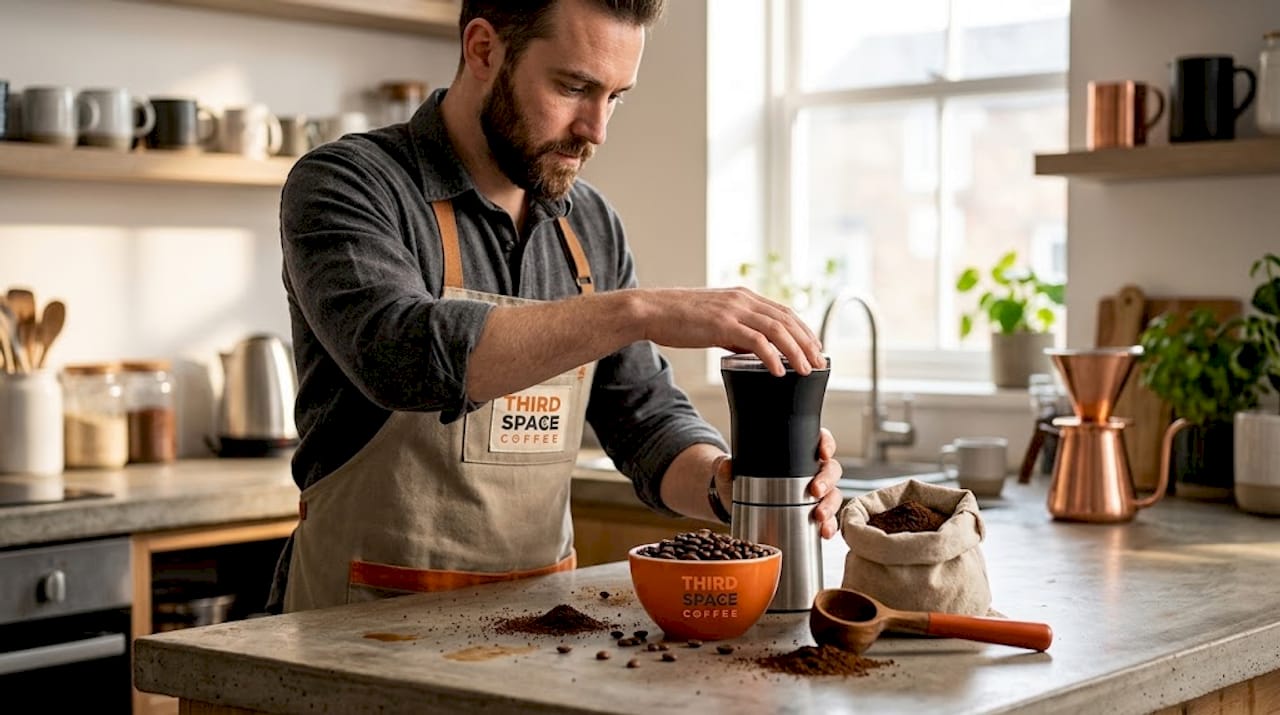
The most critical variable in how fast your coffee oxidizes is surface area. A whole bean exposes only its outer layer to air. The moment you grind it, you shatter that protective structure into hundreds of tiny particles, each one exposing fresh, reactive surfaces to oxygen simultaneously. The math is staggering: grinding multiplies surface area by 500 to 1,000 times, causing oxidation, evaporation, and staling to accelerate from a crawl to a sprint. Ground coffee can stale in minutes to hours. Whole beans can stay vibrant for weeks.
| Coffee form | Surface area exposed | Practical shelf life | Primary threat |
|---|---|---|---|
| Green (unroasted) beans | Minimal | Up to 1 year or more | Moisture, mold |
| Whole roasted beans | Low (outer skin only) | 2 to 4 weeks post-roast | Oxygen, light, heat |
| Ground coffee (open air) | Extremely high | 15 minutes to a few hours | Rapid oxidation, off-gassing |
| Ground coffee (sealed) | High (post-opening) | 1 to 2 weeks | Oxygen after opening |
The takeaways from this table are hard to argue with. The jump in staling speed between whole beans and ground coffee is not incremental. It is dramatic. Every extra minute between grinding and brewing is costing you flavor.
Here are the three major flavor losses that happen fastest after grinding:
- Aroma dissipation: Those beautiful top notes you smell when you first open a fresh bag? They are mostly gone within 15 to 30 minutes of grinding.
- Brightness loss: The lively acidity that gives well-roasted coffee its personality oxidizes quickly into flat, muted tones.
- Sweetness degradation: The caramelized sugars that round out bitterness become less perceptible as oxidation advances.
Understanding why fresh beans matter is the first step toward consistently better cups.
Pro Tip: Grinding immediately before brewing is your single most powerful move against oxidation. At Colorado Springs' altitude, water boils at a lower temperature, so every variable matters even more. Keeping grind fresh is the one variable you can control completely, and it costs nothing extra.
If you're in the market for whole bean coffee that makes grinding fresh worth the effort, starting with quality roasted-in-house beans makes the practice genuinely rewarding.
How to slow oxidation at home
With evidence in hand on how fast ground coffee oxidizes, it's time to explore real ways you can defend peak flavor at home.
Colorado Springs actually gives you one natural advantage: low humidity. High humidity accelerates coffee's degradation by enabling hydrolysis, a chemical breakdown process that runs parallel to oxidation. Our dry climate slows that particular reaction. But do not let that lull you into complacency. Air exposure, heat, and light are still perfectly capable of ruining your beans even in an arid environment.
Storage dos:
- Store beans in an opaque, airtight container with a one-way valve if possible
- Keep the container in a cool, dark spot between 59 and 72 degrees Fahrenheit
- Buy beans in smaller quantities so you consume them within 2 to 3 weeks of the roast date
- Use the original bag if it has a resealable top and a CO2 valve, since those bags are engineered to minimize oxidation
- Write the date you opened the bag so you can track actual freshness
Storage don'ts:
- Never store coffee in a clear glass jar on the counter. Light accelerates oxidation directly.
- Avoid the freezer for everyday beans. Condensation from temperature cycling introduces moisture.
- Don't keep coffee near the stove or any heat source. Heat speeds up the chemical reactions that cause staling.
- Skip the built-in cabinet above the coffee maker. It's consistently warm and poorly ventilated.
- Don't buy ground coffee in large quantities thinking you'll use it in time. You probably won't before it fades.
The research on storage formats is revealing. Empirical shelf life data shows that vacuum-sealed roasted beans last around 3 months, while trilaminate valved packaging for ground coffee can preserve it for up to 40 months. For everyday home use, the format matters enormously.
| Storage method | Estimated shelf life | Notes |
|---|---|---|
| Open bowl or plate | 15 to 30 minutes | Essentially unusable after brewing window |
| Unsealed bag or pantry jar | 3 to 5 days | Rapid flavor loss |
| Airtight opaque container | 2 to 3 weeks (whole beans) | Best everyday option |
| Valved resealable bag | 3 to 4 weeks (whole beans) | Excellent, mirrors commercial packaging |
| Vacuum-sealed container | Up to 3 months (roasted whole) | Best for extended storage |
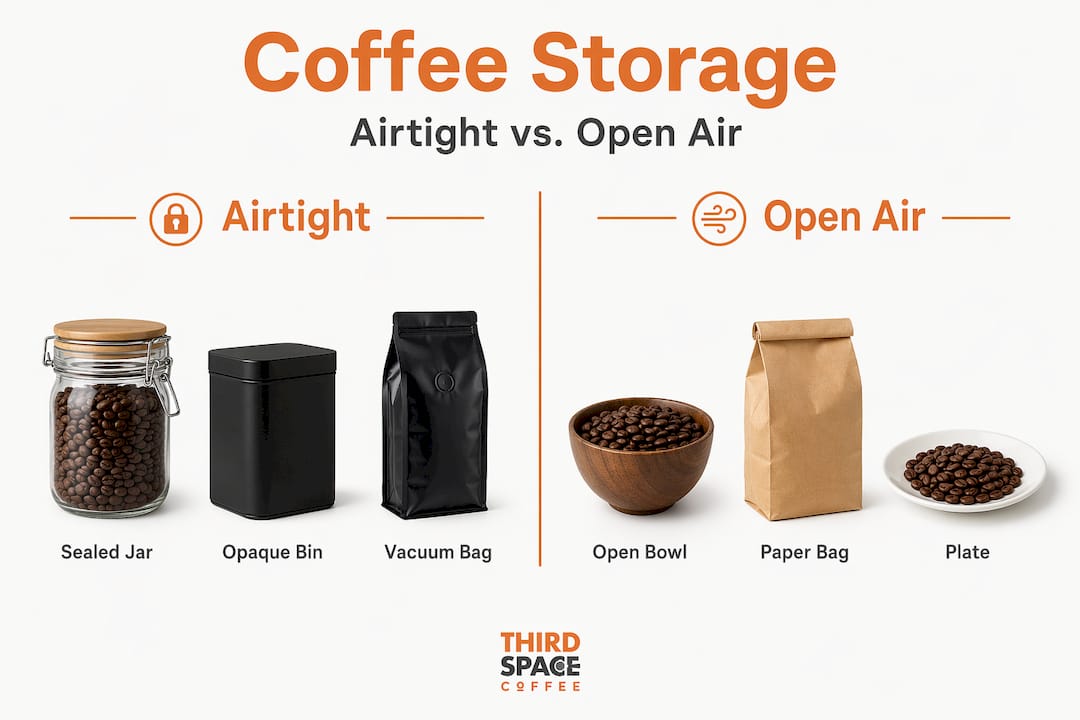
For Colorado Springs home brewers specifically, practical storage tips confirm that airtight, opaque, valved containers at cool room temperature do the most to preserve that carefully developed roast character.
Pro Tip: Divide a large bag of beans into smaller portions when you first open it. Keep one portion in your everyday container and seal the rest in small airtight bags or jars. This limits how often the bulk of your beans gets exposed to air, and it mimics the commercial practice of reducing headspace oxygen in packaging.
Choosing the right bean in the first place also matters. Learning how to choose coffee beans based on roast date, variety, and processing method helps you start the oxidation clock in the best possible position.
Oxidation and brewing: maximizing taste in every cup
Storing beans well is only part of the battle. How and when you brew makes all the difference for oxidation impact in your cup.
Even with perfect storage, poor brewing timing can undo your work. A bag of beans stored flawlessly but ground an hour before you brew has already lost a significant portion of its aromatic potential. Here are the steps to brew in a way that keeps oxidation's damage minimal:
- Grind immediately before brewing. Not 10 minutes before. Not while you're waiting for the kettle. Right before you pour.
- Brew promptly after grinding. Once you grind, the clock is running. Every minute of delay is measurable flavor loss.
- Use the right water temperature. At altitude in Colorado Springs, water boils around 202 degrees Fahrenheit. This affects extraction, and using freshly ground coffee compensates for slightly lower extraction efficiency.
- Avoid letting brewed coffee sit. Oxidation also affects liquid coffee. A pot left on a warming plate for 30 minutes starts to taste bitter and hollow as the compounds continue reacting.
- Don't pre-grind for the week. It feels convenient, but you're essentially trading flavor for time savings. Five minutes of grinding each morning versus a week of flat-tasting coffee is an easy trade-off once you've tasted the difference.
Building strong home brewing skills naturally weaves these oxidation-aware habits into your daily routine.
The aroma staling data is striking: ground coffee stales in minutes to hours compared to weeks for whole beans, meaning a cup brewed from coffee ground the night before can taste as flat as beans that have been open for a month.
Try this test at home: grind a portion of your current beans and brew one cup immediately. Seal the rest of that ground coffee in a small jar. The next morning, brew another cup from the sealed jar and compare. The difference will likely surprise you, and it's one of the clearest, most convincing demonstrations of oxidation you can run without a lab. Understanding the full picture of coffee quality insights puts these practical habits in a broader context.
Why most coffee lovers underestimate oxidation's impact
Here's the part most coffee articles skip over: oxidation is easy to underestimate not because it's subtle, but because it's gradual. Flavor decline happens on a curve, not a cliff. You don't notice the change on day two. By day eight, you've recalibrated your expectations without realizing it. The coffee tastes "fine," and you move on. That gradual shift is exactly why even experienced home brewers consistently underrate how much oxidation is costing them in their daily cup.
There's also a persistent myth in Colorado that the dry climate offers meaningful protection. It does reduce one pathway of degradation, humidity-driven hydrolysis, but it does nothing to slow oxidation from air exposure. If your beans are sitting in a loosely sealed bag on the counter, the Rocky Mountain air is still doing quiet damage every minute of every day.
What oxidation really breaks is the chain of freshness. Every bean has a roast date, a grind date, and a brew date. Each gap in that chain is a window for oxygen to work. Specialty roasters obsess over the roast-to-bag timeline. Baristas at thoughtful coffee shops know the grind-to-brew gap matters. But at home, those links in the chain often go unmanaged. The roast date gets ignored. Beans sit for weeks past their peak. Coffee gets ground the night before.
One week of open-air ground coffee often tastes as faded as month-old whole beans. That comparison, when people actually do it side by side, tends to reset their entire approach to home brewing. Even people who consider themselves coffee-forward don't catch the oxidation creep until a direct comparison forces the issue. We've had customers at Third Space try their pre-ground coffee next to a cup made from freshly ground whole beans of the same origin, and the reaction is almost always the same: surprise, then a question about what they've been missing.
That's not a knock on anyone. Oxidation is invisible. It doesn't smell bad until it's really advanced. It just slowly erases what makes good coffee worth drinking. Understanding the full coffee roasting process helps you appreciate how much work goes into building the flavors that oxidation quietly dismantles.
Take your coffee further with Third Space
Ready to upgrade your coffee experience with better beans and practices? Here's how Third Space can help you go further.
Everything you've read about oxidation points to the same truth: the right beans, handled well, make an extraordinary difference. At Third Space Coffee in Colorado Springs, we roast our whole bean coffees in-house, which means you're starting with beans at peak freshness, not beans that have been sitting in a warehouse for months.

When you shop our whole bean coffee selection, you're choosing beans roasted to be used fresh, with the full aromatic complexity that oxidation destroys when beans sit too long. Store them right, grind them just before brewing, and you'll taste exactly what we intended. If you'd rather experience what freshly roasted, expertly crafted coffee tastes like before committing to a bag, come explore our specialty drinks in person or order online for quick pickup. We love being the place where Colorado Springs coffee enthusiasts learn to love their cup all over again.
Frequently asked questions
How fast does ground coffee lose flavor after grinding?
Ground coffee can lose noticeable flavor in as little as 15 minutes to an hour due to the rapid oxidation triggered by its dramatically increased surface area. Brewing immediately after grinding is the most effective way to capture the full aromatic profile.
What is the best way to store coffee beans at home?
Store whole beans in an airtight, opaque container at cool room temperature between 59 and 72 degrees Fahrenheit, away from light or heat sources. Valved containers or bags are even better since they allow CO2 to escape without letting oxygen in.
Does Colorado's climate slow coffee oxidation?
Low humidity does reduce moisture-driven degradation, but oxidation from air exposure still occurs rapidly when beans or grounds contact oxygen. An airtight container matters far more than where you live.
Why does whole bean coffee stay fresh longer than pre-ground coffee?
Whole beans have a dramatically smaller exposed surface area, which slows how quickly volatile aromatic compounds react with oxygen. Grinding multiplies surface area by 500 to 1,000 times, turning a slow oxidation process into a rapid one measured in minutes rather than weeks.