
TL;DR:
- Well-crafted coffee blends are deliberate creations designed for consistent flavor and complexity.
- Blends typically combine 2-5 beans with specific ratios to balance body, brightness, and earthiness.
- Post-roast blending offers the most control, enhancing flavor harmony and tailored profiles.
Most people assume a coffee blend is just a bag of leftover beans tossed together to fill space on a shelf. That assumption sells the craft short by a wide margin. A well-made blend is one of the most intentional products in specialty coffee, built from the ground up to deliver a specific flavor, body, and aroma every single time you brew. Whether you're pulling an espresso shot or pouring a slow drip, the blend in your grinder was likely the result of weeks of testing and tasting. This guide breaks down what blends really are, how they're made, and how you can choose one that matches your palate right here in Colorado Springs.
Table of Contents
- What defines a coffee blend?
- How coffee blends are made: methods and approaches
- The anatomy of a blend: ratios, beans, and flavor profiles
- Why blends matter: harmony, reliability, and debate
- What most guides miss about coffee blends
- Explore exceptional blends in Colorado Springs
- Frequently asked questions
Key Takeaways
| Point | Details |
|---|---|
| Coffee blend basics | A coffee blend combines beans from different origins for a balanced and consistent taste. |
| Blending methods | Post-roast blending offers superior control over flavor, while pre-roast is simpler but riskier. |
| Ideal blend ratios | Blend ratios typically feature one dominant bean supported by others for complexity and depth. |
| Importance of harmony | Blends are crafted to deliver reliability and harmony, while single-origin coffees highlight unique flavors. |
| Local exploration | Colorado Springs offers locally roasted blends worth exploring for enthusiasts seeking quality. |
What defines a coffee blend?
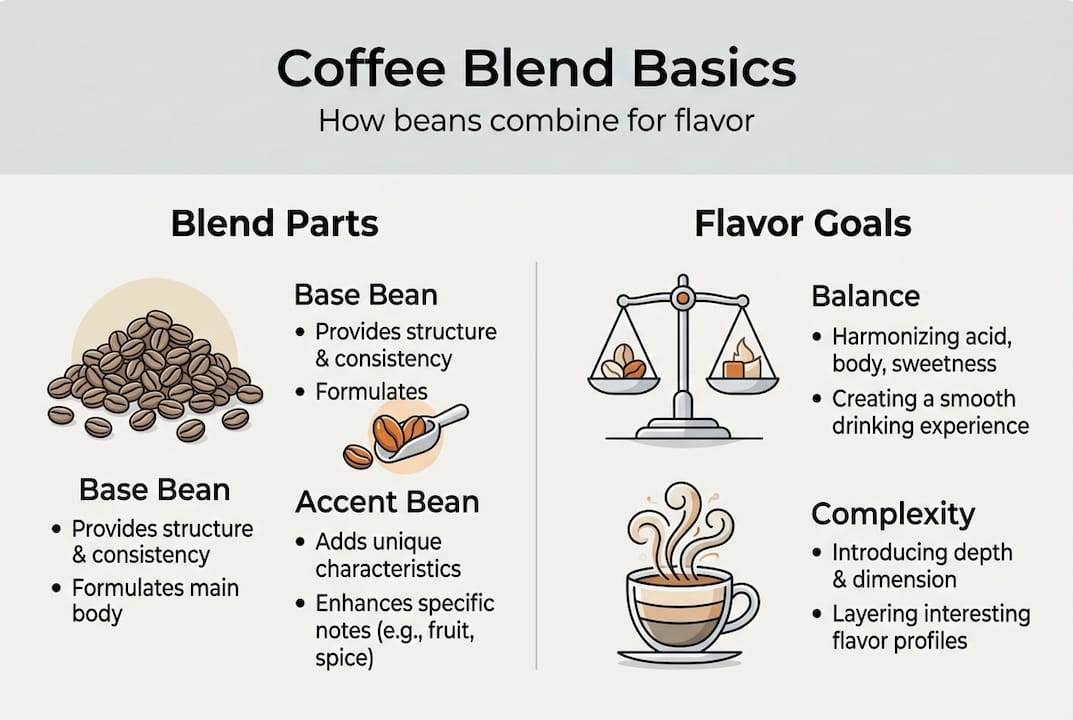
Let's clear up the biggest misconception first. A coffee blend is not a compromise or a cost-cutting move. According to specialty roasters, a coffee blend combines two or more beans from different origins, regions, farms, roast profiles, or processing methods to create a balanced, consistent, and complex flavor profile. That's a deliberate act of craft, not a shortcut.
The goal of blending is to build something greater than the sum of its parts. One bean might bring a rich, chocolatey body. Another adds a bright, citrus-forward acidity. A third rounds out the finish with a hint of earthiness. Together, they create a cup that no single origin could produce on its own.
This is where blends and single-origin coffees part ways. Single-origin beans come from one farm, region, or country, and they're celebrated for showcasing the unique character of that specific place, what coffee people call "terroir." If you want to taste what a high-altitude Ethiopian farm produces, single-origin is your answer. But if you want a reliable, well-rounded cup that performs the same way every morning, a blend is built for you.
Here's what a well-crafted blend typically delivers:
- Consistency: The same flavor profile cup after cup, season after season
- Balance: No single note dominates; acidity, sweetness, and body work together
- Versatility: Performs well across brew methods, from espresso to pour-over
- Complexity: Multiple flavor layers that evolve as the cup cools
- Accessibility: Approachable for a wide range of palates
"A great blend isn't hiding anything. It's building something intentional that a single bean simply can't achieve alone."
If you're still getting familiar with coffee industry terms like terroir, body, or finish, brushing up on those basics will make your tasting experience far more rewarding. And once you know what to look for, using coffee tasting tips to evaluate a blend becomes genuinely fun rather than intimidating.
How coffee blends are made: methods and approaches
Knowing what a blend is only gets you halfway there. The real magic happens in how it's made. There are two primary approaches every roaster chooses between, and each one produces a noticeably different result in the cup.
The two main blending methods are pre-roast blending (also called green blending, where unroasted beans are mixed before going into the roaster together) and post-roast blending (where each bean is roasted separately to its ideal level, then combined). Post-roast blending is preferred by many specialty roasters because it gives far greater control over each component.
Here's a quick comparison of both methods:
| Feature | Pre-roast blending | Post-roast blending |
|---|---|---|
| Process | Beans mixed before roasting | Beans roasted separately, then mixed |
| Flavor integration | More unified, seamless | Distinct layers, more complex |
| Roast control | Limited, one profile for all beans | Full control per bean |
| Risk | Uneven roasting across bean types | Requires more time and equipment |
| Best for | Simple blends with similar bean sizes | Specialty and precision blends |
Why does this matter to you as a coffee lover? Because the method directly affects what ends up in your cup. Pre-roast blending can produce a beautifully integrated flavor, almost like the beans grew up together. But if the beans have different densities or moisture levels, they may roast unevenly, leaving some underdeveloped and others slightly overdone.
Post-roast blending solves that problem. Each bean gets exactly the roast it needs. A delicate Ethiopian bean won't be over-roasted just because it's sitting next to a dense Brazilian bean in the drum. The roaster treats each component as its own project, then assembles the final blend like a chef plating a dish.
Here's how a specialty roaster typically approaches post-roast blending:
- Select candidate beans based on flavor goals
- Roast each bean to its individual optimal profile
- Cup (taste) each roasted component separately
- Experiment with ratios in small test batches
- Evaluate the combined cup for balance and consistency
- Adjust ratios until the target profile is achieved
For coffee roasting tips that help you understand how roast level shapes flavor, that resource is worth bookmarking before you start experimenting.
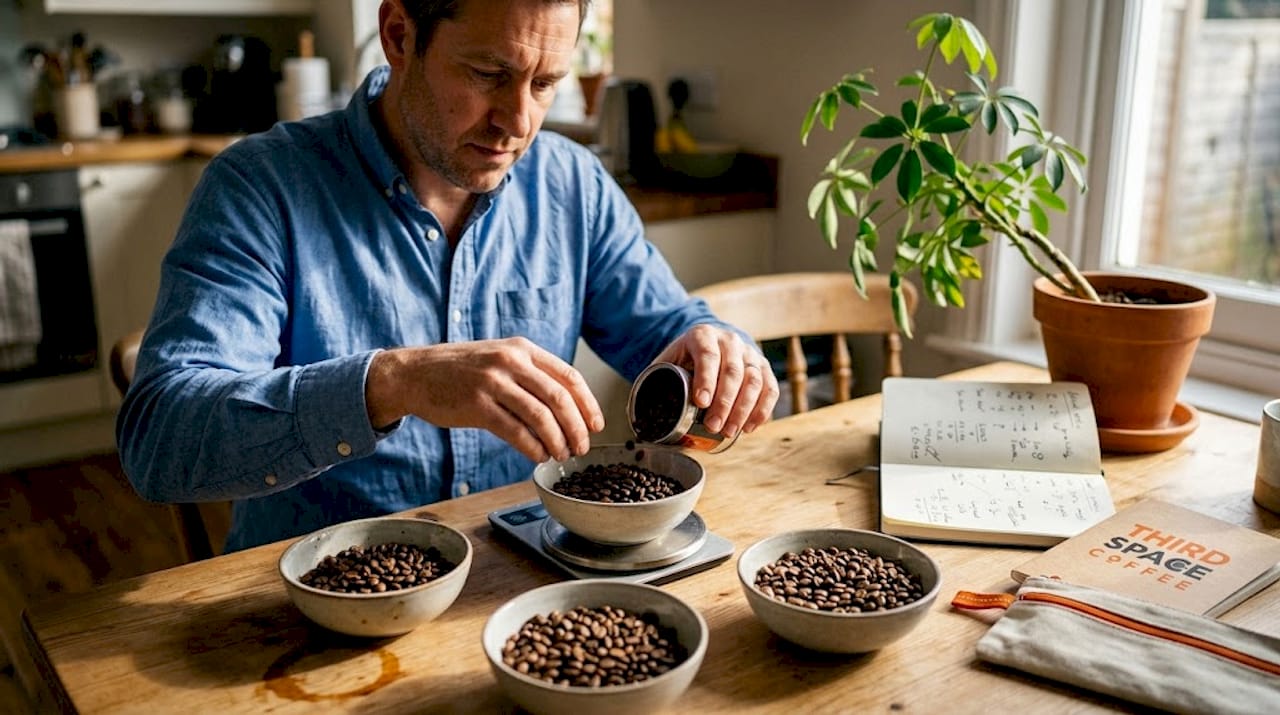
Pro Tip: If you want to try blending at home, start with post-roast blending. Buy two or three different whole bean coffees you already enjoy, taste each one separately, then mix small amounts in different ratios. You'll learn a lot about your own flavor preferences in a single afternoon.
The anatomy of a blend: ratios, beans, and flavor profiles
Once you understand the method, the next question is: what actually goes into a blend? The answer follows a fairly consistent structure, even if the specific beans change.
Most blends use a dominant base bean that makes up 50 to 70 percent of the total. This base provides the body and sweetness that anchor the cup. Brazilian and Colombian beans are the most common choices here because they're known for their smooth, nutty, chocolate-forward character. They're crowd-pleasers by nature.
The most common blend ratios use two to five beans, with one dominant base for body and sweetness (50 to 70 percent), a highlight bean for brightness and fruit (10 to 30 percent, often Ethiopian or Kenyan), and a depth bean for earthiness (10 to 30 percent, often Sumatran). Classic ratio examples include 60/25/15, 65/35, and 70/30.
| Blend role | Bean origin | Flavor contribution | Typical percentage |
|---|---|---|---|
| Base | Brazil, Colombia | Chocolate, nuts, body | 50 to 70% |
| Highlight | Ethiopia, Kenya | Fruit, brightness, acidity | 10 to 30% |
| Depth | Sumatra, Guatemala | Earth, spice, weight | 10 to 30% |
Here's what this looks like in practice:
- Espresso blends often lean heavily on Brazilian or Colombian beans for crema and sweetness, with a smaller Ethiopian component for complexity under milk
- Drip blends tend to be more balanced, with enough brightness to shine without cream or sugar
- Seasonal blends swap in new highlight beans as harvests change, keeping the base consistent while refreshing the cup
One key rule from experienced blenders: resist the urge to add more beans just because you can. More is not always better. Using too many components muddies the flavor and makes it nearly impossible to identify what each bean is contributing. Two or three well-chosen beans almost always outperform a five-bean blend assembled without clear intention.
If you want to see this in action, the whole bean options at Third Space Coffee are a great starting point for tasting how these principles apply to locally roasted blends. The Americano blend example is a solid reference for how a base-forward blend performs in a classic preparation.
Why blends matter: harmony, reliability, and debate
Blends sit at the center of a long-running conversation in the specialty coffee world. On one side, you have enthusiasts who argue that single-origin beans are the purest expression of coffee's potential. On the other, roasters and café owners who rely on blends for the consistency their customers expect every single day.
Both sides make valid points. Blends prioritize harmony and reliability over terroir expression, while single-origin coffees let one region's character speak for itself. Blends aren't always superior, but they are always purposeful. That distinction matters.
For a café, consistency is everything. If your house blend tastes different every week, customers notice. Blends allow roasters to compensate for seasonal variation in any single origin by adjusting ratios or swapping in a comparable bean. The cup stays stable even when the harvest doesn't.
"The best blends aren't just reliable. They're memorable. They make people come back not because they have to, but because nothing else tastes quite like it."
For home enthusiasts, the blend versus single-origin debate is less about right and wrong and more about what experience you're after. Single-origin coffees reward curiosity. They teach you what Yirgacheffe tastes like versus Huila versus Mandheling. Blends reward routine. They deliver a familiar, satisfying experience that holds up across different brew methods and moods.
Curious about global café blending traditions? Coffee culture around the world approaches blending differently, and exploring those differences adds real depth to your appreciation of what goes into the cup.
For everyday drinking, the drip coffee blends at Third Space Coffee are worth exploring, and the full shop coffee selection gives you a range of options to find what resonates with your palate.
Pro Tip: Use blends as your daily driver and single-origin coffees for intentional tasting sessions. That approach lets you build a reliable morning routine while still exploring what makes each origin unique.
What most guides miss about coffee blends
Here's something the technical breakdowns rarely say out loud: blending is storytelling. Every ratio, every bean choice, every roast level is a decision about what experience the roaster wants you to have. That's not chemistry. That's craft.
Most enthusiasts get caught up counting beans and memorizing origins when the real question is simpler: does this cup make you want another? That's the standard a great blend is held to.
Seasonal adaptation is where local roasters earn their reputation. Avoiding more than five beans prevents muddled flavors, and seasonal adaptation keeps consistency without compromising quality. A roaster who adjusts their blend twice a year to account for harvest cycles is doing the hard work that most people never see.
In Colorado Springs, that kind of attention to detail matters more than it might in a city with dozens of specialty roasters on every block. When a local roaster puts their name on a blend, they're making a promise about what's in the bag. That relationship between roaster and customer, built on trust and repeat experience, is what makes local coffee culture worth supporting. Use the local tasting guide to sharpen your palate and get more from every cup you try.
Explore exceptional blends in Colorado Springs
You now know how blends are built, why they work, and what separates a thoughtful blend from a forgettable one. The next step is tasting that knowledge in action.

At Third Space Coffee, every blend is roasted in-house with the same intentionality this guide describes. Start with the whole bean blend selection to explore what locally roasted beans taste like when the ratios are dialed in. If you want to experience a blend built for espresso, the 50/50 espresso blend is a strong starting point. And if you prefer to taste blends in prepared form first, the specialty drinks menu lets you try before you buy. Order online for quick front-of-store pickup and taste the difference a local roaster makes.
Frequently asked questions
Are coffee blends better than single-origin beans?
Blends prioritize harmony and reliability over terroir expression, while single-origin beans highlight unique regional flavors. The best choice depends entirely on your taste preferences and what you want from a cup.
How many coffee beans are typically used in a blend?
Most blends use between two and five beans, with one dominant base bean providing the primary body and sweetness that anchors the overall flavor profile.
Does the blending method affect the flavor of coffee?
Yes. Post-roast blending allows greater flavor control over each component, while pre-roast blending can offer a more integrated profile but risks uneven roasting when bean densities differ.
What is the purpose of blending coffee beans?
Blending creates a balanced, consistent, and complex flavor profile that no single-origin coffee can reliably produce on its own across every season and harvest.
Can I make coffee blends at home?
Yes. Start with post-roast blending by combining two or three whole bean coffees you already enjoy, then experiment with small batch ratios until the flavor balance matches what you're looking for.
Recommended
- Coffee roasting guide: elevate your home brews like a pro
- Essential industry terms every coffee enthusiast should know
- Coffee tasting guide for Colorado Springs enthusiasts
- Whole Bean Coffee | Third Space Coffee Colorado Springs, CO
- Mushroom Powder For Coffee: Benefits And How To Use It – LongevityBotanicals