

TL;DR:
- Fresh coffee extraction hinges on managing CO₂ degassing to ensure even water contact and optimal flavor balance. Properly timing the rest period, using appropriate bloom duration, and adjusting grind size are essential for achieving the desired extraction yield of 18 to 22%. Brewing within 7 to 10 days after roasting improves flavor clarity and prevents channeling caused by high CO₂ levels.
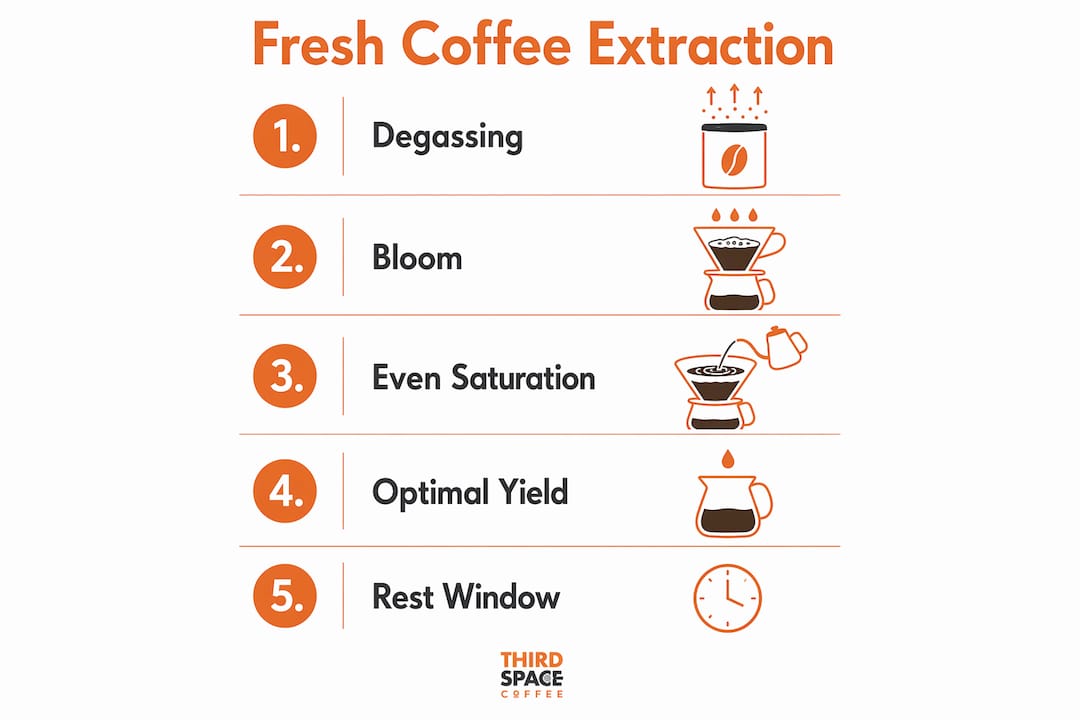
Fresh coffee extraction is the process of dissolving soluble flavor compounds from freshly roasted coffee grounds using hot water, and the results depend almost entirely on how well you manage CO₂ degassing in the early stages of brewing. The industry term for this process is extraction yield, measured as the percentage of dissolved solids pulled from your grounds. Defining fresh coffee extraction means understanding that freshness is not just about aroma. It directly controls how evenly water contacts your coffee, which compounds dissolve first, and whether your cup tastes bright, sweet, or unpleasantly bitter. Get this right, and every brew method from pour-over to espresso becomes more predictable and more rewarding.
What is fresh coffee extraction and why does CO₂ matter?
CO₂ degassing is the single most misunderstood variable in fresh coffee brewing. When coffee is roasted, carbon dioxide forms inside each bean and continues escaping for days afterward. This trapped gas creates a physical barrier between your grounds and the water trying to saturate them.
The degassing process follows a clear curve. Rapid CO₂ release happens in the first 72 hours after roasting, then slows to a gradual release that continues for weeks. The optimal brewing window sits in the middle: enough gas has escaped for even extraction, but the volatile flavor compounds responsible for aroma and brightness are still intact.
Brew too soon after roasting and the consequences are measurable. CO₂ repels water, forcing it around pockets of dry grounds rather than through them evenly. This creates channeling, where water finds the path of least resistance and over-extracts some grounds while under-extracting others. The result is a cup that tastes simultaneously sour and bitter, two faults that normally signal opposite problems.
The bloom phase is your primary tool for managing this. Pouring a small amount of hot water over your grounds and waiting 30 to 45 seconds before continuing your brew allows the first wave of CO₂ to escape before full saturation begins. A 30 to 45 second bloom reduces CO₂ interference and measurably improves extraction evenness across the entire bed of grounds.
Here is what changes when you manage the bloom correctly:
- Grounds saturate more uniformly, reducing dry pockets
- Water flow through the bed becomes consistent
- Extraction yield moves closer to the target range of 18 to 22%
- The final cup shows cleaner separation between brightness, sweetness, and body
Pro Tip: Weigh your bloom water at roughly twice the weight of your dry grounds. For 20 grams of coffee, use 40 grams of water for the bloom. This ratio saturates the bed without flooding it.
How dissolved compounds shape fresh coffee flavors
Understanding coffee extraction methods means understanding the sequence in which compounds leave the grounds. Extraction is not a single event. It is a timeline, and where you stop that timeline determines which flavors dominate your cup.
The sequence of soluble compounds follows a consistent order across brew methods:
- Acids dissolve first, contributing brightness and the sharp, citrus-like notes associated with light roasts. These are desirable in balance but overwhelming when extraction stops too early.
- Sugars and caramelized compounds extract mid-timeline, adding sweetness, body, and the rounded quality that makes a cup feel complete rather than thin.
- Bitter compounds arrive last, including certain chlorogenic acids and melanoidins. These add complexity in small amounts but dominate the cup when extraction runs too long.
The practical implication is direct. A sour cup means you stopped too early and captured mostly acids. A bitter, dry cup means you ran too long and pulled the compounds that should stay in the grounds. A balanced cup sits in the middle, where sweetness and brightness coexist without either extreme taking over.
Ideal extraction yield for most brew methods lands between 18 and 22%. Below 18% and you are under-extracted. Above 22% and bitterness begins to dominate. Extraction yield and strength, measured as total dissolved solids (TDS), are separate metrics. You can have a strong but under-extracted cup, or a weak but perfectly extracted one. Chasing concentration alone without tracking yield produces inconsistent results.
Fresh coffee adds a layer of complexity to this sequence. High CO₂ levels during early extraction can compress the timeline unevenly, pulling acids faster in some areas of the grounds while leaving sugars and body compounds behind. This is why a bloom pause matters even for filter coffee, not just espresso.
What is the ideal freshness window for brewing?
The recommended rest period after roasting is 7 to 10 days for most brew methods, with espresso requiring a longer rest due to its sensitivity to CO₂ back pressure. This window is not arbitrary. It reflects the point at which enough gas has escaped to allow even water contact while the beans still hold their peak aromatic compounds.
| Brew method | Recommended rest after roasting | Primary reason |
|---|---|---|
| Pour-over / filter | 5 to 10 days | Reduces CO₂ interference in bloom phase |
| French press | 5 to 7 days | Immersion tolerates slightly fresher beans |
| Espresso | 10 to 14 days | CO₂ back pressure causes under-extraction |
| Cold brew | 7 to 14 days | Extended contact time amplifies CO₂ effects |
Espresso deserves special attention here. Fresh espresso beans create CO₂ back pressure inside the puck, which inflates crema volume while the actual liquid yield stays low. The shot looks correct visually but is under-extracted. Adjusting grind size alone does not fix this because the gas is acting like a coarser grind regardless of your setting. Resting the beans is the only reliable solution.
Roast level also affects the rest window. Darker roasts degas faster because the roasting process drives out more CO₂ during the roast itself. Light roasts retain more gas and typically need the full 10 to 14 days before espresso extraction becomes consistent. Storage matters too. Beans kept in an airtight container at room temperature degas at a predictable rate. Beans stored in the freezer degas more slowly, which can extend the usable freshness window but also delays when they are ready to brew. For more on protecting your beans between roast and brew, the fresh beans peak flavor guide from Thirdspacecoffee covers post-roast degassing in practical detail.
Pro Tip: Write the roast date on your bag with a marker the day you buy it. Most specialty roasters print this date, but tracking it yourself builds the habit of brewing within the optimal window.
How to adjust your brewing variables for fresh coffee
The five controllable variables in coffee brewing are grind size, water temperature, brew ratio, brew time, and bloom duration. For fresh coffee specifically, bloom duration and grind size require the most active management. The main variables controlling extraction speed and balance are grind size, brew ratio, brew time, and water temperature, and each interacts differently when CO₂ levels are high.
Here is how to adjust each variable when brewing with fresh beans:
- Grind size: Grind slightly coarser than your standard setting for the first week after roasting. High CO₂ accelerates early extraction, and a coarser grind slows the process to compensate. Dial back toward your normal setting as the beans age past day 10.
- Water temperature: Use water between 195°F and 205°F (90°C to 96°C). Hotter water extracts faster, which can push you into over-extraction territory when CO₂ is already disrupting flow. Staying at the lower end of this range gives you more control.
- Brew ratio: A ratio of 1:15 to 1:17 (coffee to water by weight) works well for most filter methods. Fresh beans with high CO₂ can produce a denser, more concentrated extraction in early contact, so a slightly higher ratio dilutes this effect without sacrificing body.
- Bloom time: Extend your bloom to 45 seconds for beans roasted within the past five days. For beans at the 7 to 10 day mark, 30 seconds is sufficient. The goal is visible bubbling to slow down before you continue pouring.
- Brew time: If your total brew time runs short, your extraction is likely incomplete. For a standard V60 or Chemex pour-over with 20 grams of coffee, target a total brew time of 3 to 4 minutes. Adjust grind size if you fall outside this window.
Grinding releases trapped CO₂ and alters extraction behavior based on how much time passes between grinding and brewing. The same bag of coffee can produce noticeably different results when brewed immediately after grinding versus 10 minutes later. For fresh beans, brewing within two minutes of grinding preserves the aromatic volatiles that define fresh coffee flavors. For more practical measurement techniques, the home brewing extraction guide from Thirdspacecoffee walks through yield and TDS tracking without requiring expensive equipment.
Key takeaways
Fresh coffee extraction requires managing CO₂ degassing, compound dissolution timing, and brewing variables together to achieve a balanced, repeatable cup.
| Point | Details |
|---|---|
| CO₂ disrupts extraction evenness | Brew within the 7 to 10 day rest window to reduce channeling and flavor faults. |
| Compounds dissolve in sequence | Acids extract first, sugars mid-brew, bitters last. Stop at the right moment for balance. |
| Espresso needs longer rest | CO₂ back pressure inflates crema and causes under-extraction. Rest beans 10 to 14 days. |
| Bloom time is adjustable | Use a 30 to 45 second bloom to release CO₂ before full saturation begins. |
| Grind and ratio work together | Adjust coarser and use a 1:15 to 1:17 ratio for fresh beans to slow early extraction. |
Why most home brewers get fresh coffee wrong
I have watched a lot of home brewers buy excellent freshly roasted coffee and then immediately brew it the same way they brew beans that are three weeks old. The results disappoint them, and they blame the beans or the method. The actual problem is almost always timing.
The counterintuitive truth about fresh coffee extraction is that fresher does not automatically mean better in the cup. Beans roasted yesterday are genuinely harder to brew well than beans roasted nine days ago. The CO₂ content is too high, the bloom is violent, and the extraction is uneven no matter how carefully you pour. I have brewed the same bag on day two and day eight and tasted a completely different coffee. Day eight wins almost every time.
The other mistake I see constantly is skipping the bloom for immersion methods like French press. People assume that because the grounds are fully submerged, CO₂ is not a factor. It is. The gas still escapes during the steep and creates uneven saturation in the first minute. A 30 second pre-bloom pour before adding the rest of your water makes a measurable difference in body and clarity.
My honest recommendation: treat your rest window as seriously as your grind setting. Buy beans with a printed roast date, note it, and brew between day 7 and day 14 for most methods. Adjust your bloom time based on how much visible bubbling you see. Taste the difference between day 5 and day 10 with the same bag. That single experiment will teach you more about fresh coffee extraction than any chart or formula.
— Tanya
Taste the difference with Thirdspacecoffee

Thirdspacecoffee roasts whole bean coffee in-house at their Colorado Springs location, which means you know exactly when your beans were roasted and can plan your brew window with confidence. Their freshly roasted whole beans come with roast date information so you can apply everything covered in this article from day one. If you want to experience what properly extracted fresh coffee tastes like before dialing in your home setup, their specialty drinks menu showcases beverages crafted to highlight the brightness, sweetness, and body that balanced extraction produces. Stop in, taste the benchmark, and then bring the beans home to practice.
FAQ
What is coffee extraction in simple terms?
Coffee extraction is the process of dissolving soluble flavor compounds from ground coffee using hot water. The goal is to pull the right compounds in the right amounts, targeting an extraction yield of 18 to 22% for most brew methods.
How does fresh coffee affect extraction differently than older beans?
Fresh beans contain high levels of CO₂ that repel water and disrupt even saturation, leading to channeling and mixed flavor faults. Resting beans for 7 to 10 days after roasting allows enough gas to escape for consistent, repeatable extraction.
Why does espresso taste sour when brewed with very fresh beans?
CO₂ back pressure in fresh espresso causes the puck to resist water flow, resulting in under-extraction despite a normal shot time. The fix is resting espresso beans for 10 to 14 days post-roast before pulling shots.
How long should the bloom phase last for fresh coffee?
A bloom of 30 to 45 seconds works for most filter methods. Beans roasted within five days benefit from the longer end of that range, while beans at the 7 to 10 day mark need only 30 seconds to release enough CO₂ for even extraction.
Does grind timing affect fresh coffee extraction?
Yes. Grinding releases CO₂ immediately, and brewing within two minutes of grinding preserves aromatic volatiles while reducing the variable of gas escaping between grind and brew.