
TL;DR:
- Proper coffee extraction determines flavor balance and consistency in your brew.
- Adjusting grind size is the most responsive way to fix under- or over-extraction issues.
- Altitude and local water chemistry significantly influence extraction and flavor in Colorado brewing.
You pull two shots from the same beans, same grind, same water temperature, and somehow one tastes bright and balanced while the other is flat and bitter. If that sounds familiar, you are not alone. Most home brewers blame the beans or the equipment, but the real culprit is almost always extraction. Understanding how water pulls flavor compounds out of coffee grounds is the single most powerful skill you can develop to get consistent, delicious results every time you brew.
Table of Contents
- What is coffee extraction and why does it matter?
- Understanding extraction yield and common mistakes
- How brew methods impact extraction
- Practical tips and troubleshooting extraction at home
- Our take: Why extraction is Colorado's sleeper coffee advantage
- Brew with the best: Specialty coffee from Colorado Springs
- Frequently asked questions
Key Takeaways
| Point | Details |
|---|---|
| Extraction shapes flavor | The extraction process determines what flavors, aromas, and textures make it into your cup. |
| Brew method affects yield | Espresso uses pressure for fast extraction, while pour-over maximizes nuance and control. |
| Fix bad cups by adjusting variables | Use grind size, water temperature, and time to correct sour or bitter coffee. |
| Taste matters most | Numbers help, but your palate is the best extraction tester at home. |
What is coffee extraction and why does it matter?
Extraction is the foundation of every cup you make. Coffee extraction is the process where hot water acts as a solvent to dissolve soluble compounds, including acids, sugars, bitters, and oils, from your ground coffee. Not all of those compounds dissolve at the same rate, and that sequence is exactly what shapes your cup's flavor.
Here is the order in which water pulls flavor from coffee:
| Order | Compound | Flavor impact |
|---|---|---|
| 1st | Acids | Bright, citrusy, lively |
| 2nd | Sugars | Sweetness, body, roundness |
| 3rd | Bitters | Structure, depth, harshness |
When you stop extraction too early, you get mostly acids with little sweetness to balance them. Push it too far, and the bitter compounds dominate. The sweet spot, roughly the middle third of the extraction window, is where balance lives.
It helps to think of coffee grounds like a layered sponge. The first water that touches them grabs the lightest, most soluble compounds first. Only as time, temperature, and contact continue does the water reach the heavier, more complex molecules deeper inside.
You can find a clear breakdown of these concepts in our coffee terms glossary if any of this language is new to you.
"Chasing numbers without tasting your coffee is like reading a recipe without ever eating the dish. The cup always tells the truth." — specialty coffee educator
The takeaway here is simple. Extraction is not a fixed event. It is a moving process you can control, and knowing what is happening chemically gives you real power over what ends up in your mug.
Understanding extraction yield and common mistakes
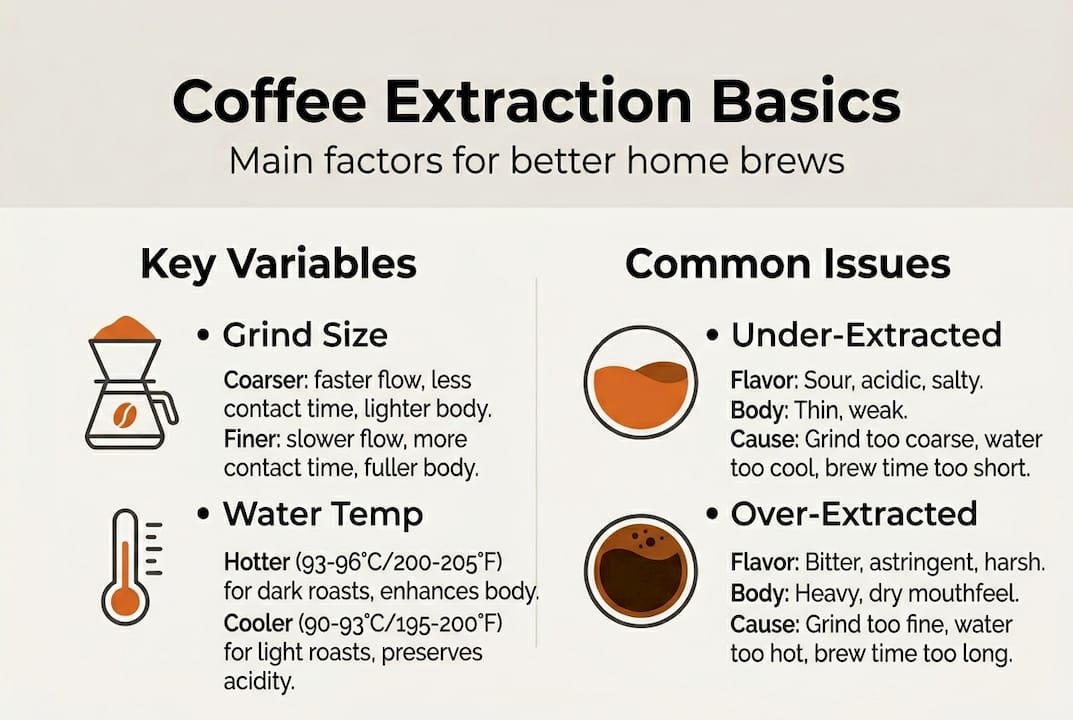
Once you understand that extraction brings flavors out of coffee, you can use extraction yield to spot and fix common problems. Extraction yield, often written as EY, is simply the percentage of your dry coffee grounds that actually dissolved into your brew. The ideal EY range sits between 18% and 22% for most brewing methods.
Here is how the three zones compare:
| Extraction level | EY % | Flavor profile | Fix |
|---|---|---|---|
| Under-extracted | Below 18% | Sour, thin, grassy | Finer grind, hotter water, longer time |
| Ideal | 18 to 22% | Balanced, sweet, complex | Maintain current variables |
| Over-extracted | Above 22% | Bitter, dry, astringent | Coarser grind, cooler water, shorter time |
Under-extraction is the most common mistake for new home brewers. The coffee tastes sharp and almost sour, like unripe fruit. That is because you are pulling mostly acids without giving the sugars enough time to dissolve. Over-extraction feels the opposite: dry, hollow, and harshly bitter in a way that lingers unpleasantly.
Here is a simple process to correct extraction issues:
- Taste your coffee and identify whether it reads sour or bitter.
- If sour, adjust one variable at a time: try a finer grind first.
- If bitter, go coarser before changing anything else.
- Brew again and taste. Repeat until balanced.
- Once balanced, lock in those variables and brew consistently.
Pro Tip: Grind size is your most responsive lever. Temperature and brew time matter, but a single grind adjustment often fixes what feels like a complicated problem. Start there before touching anything else.
Our coffee tasting guide can help you build the vocabulary to describe what you are tasting, which makes troubleshooting much faster.
How brew methods impact extraction
Extraction is not just about how long coffee and water meet. Brew method changes everything, from the pressure applied to the grind size required to the body and clarity in your final cup.
Espresso uses pressure to accelerate extraction, typically around 9 bar, forcing water through very finely ground coffee in 25 to 30 seconds. That pressure makes it possible to extract efficiently at a much finer grind without the grounds clogging the system. The result is a concentrated, syrupy shot with intense flavor in a small volume.
Pour-over brewing relies on gravity. Water moves through the grounds at its own pace, giving you exceptional control over flow rate, temperature, and contact time. It rewards patience and precision, making it one of the best methods for tasting subtle flavor differences between beans.
French press uses full immersion, meaning grounds sit in water for the entire brew time. This typically yields a fuller body and a slightly higher bitter presence because more surface area stays in contact with water longer.
Here is a quick breakdown of extraction control by method:
- Espresso: Fastest extraction, highest pressure, most concentrated. Least forgiving of grind inconsistency.
- Pour-over: Gravity-based, highly adjustable, excellent for nuance. Best for learning extraction variables.
- French press: Full immersion, rich body, less clarity. Easy to over-extract if you leave it too long.
- Drip machine: Automated, consistent, but limited control over individual variables.
"Empirical benchmarks show espresso at 25 to 30 seconds and 9 bar yields 18 to 22% EY, while pour-over maintains a stable 18 to 22% EY with proper technique."
If you want to explore how bean origin shapes what each method brings out, our guides on specialty brews and coffee blends are worth reading alongside this one.
Practical tips and troubleshooting extraction at home
Knowing the science is great, but small improvements at home are where extraction mastery pays off. The good news is that you do not need expensive equipment to brew well. You need a consistent process and the willingness to taste critically.
Here are the tools that help, ranked by usefulness:
- Burr grinder: The single most impactful upgrade for extraction consistency.
- Kitchen scale: Measuring coffee and water by weight removes a major variable.
- Thermometer: Keeps brew temperature in the 195 to 205°F sweet spot.
- Refractometer or TDS meter: Measures total dissolved solids to confirm EY. Advanced but useful.
According to SCA standards, repeatability is the goal, and while taste should always be your primary judge, tools like a TDS meter can confirm what your palate is telling you.
Here is a practical troubleshooting sequence for home brewers:
- Brew your usual recipe and taste it before changing anything.
- Identify the dominant flaw: sourness points to under-extraction, bitterness to over-extraction.
- Adjust grind size by one or two steps in the right direction.
- Keep water temperature, dose, and brew time the same for this round.
- Taste again. If improving, continue in the same direction. If worse, reverse.
- Once taste is balanced, record your variables so you can repeat them.
Pro Tip: Pour-over is the best method for learning extraction control because every variable is visible and adjustable in real time. If you are serious about improving, start here before moving to espresso.
For brewers thinking about sourcing better beans to practice with, our home roasting tips offer useful context on how roast level affects extraction behavior.
Common home troubleshooting hits and misses:
- Works: Adjusting grind size before anything else.
- Works: Brewing with filtered water at a consistent temperature.
- Doesn't work: Changing multiple variables at once. You will never know what fixed it.
- Doesn't work: Assuming fresher beans automatically fix extraction problems.
- Works: Tasting your brew at different stages to understand the extraction arc.
Our take: Why extraction is Colorado's sleeper coffee advantage
Here is something most online brewing guides skip entirely: altitude changes everything. In Colorado Springs, water boils at roughly 202°F instead of 212°F. That lower boiling point means your brew water is cooler than sea level guides assume, which slows extraction and shifts the flavor balance toward under-extracted territory if you follow standard advice without adjusting.
This is not a small detail. It is the reason a recipe that tastes perfect in a YouTube video might taste thin or sour when you try it at home. The fix is straightforward: brew at a slightly higher temperature setting, or extend your brew time a little to compensate.
Local water chemistry adds another layer. Colorado Springs water has its own mineral profile that affects how efficiently extraction happens and which flavors come forward. That is why starting with local Colorado beans roasted specifically for this region gives you a real head start. Local roasters understand these variables and often dial in roast profiles with altitude in mind. The advantage is real, and most people brewing here have no idea they can use it.
Brew with the best: Specialty coffee from Colorado Springs
Ready to explore coffee extraction hands-on? Everything you have learned here becomes much more tangible when you are working with high-quality, freshly roasted beans that actually reward careful brewing.

At Third Space Coffee in Colorado Springs, we roast our beans in-house so you get the freshest possible starting point for your extraction experiments. Pick up our whole bean coffees and taste how different roast profiles respond to your brew variables. Or come in and try our specialty drinks to experience what dialed-in extraction actually tastes like across different brew styles. Order online for quick front-of-store pickup and start brewing smarter today.
Frequently asked questions
What are the first flavors extracted during brewing?
Acids are extracted first, bringing bright and citrusy flavors to the cup before sugars and bitters follow in sequence.
How do you fix under-extracted coffee?
Use a finer grind, hotter water, or a longer brew time to pull more flavor compounds from the grounds.
What is the ideal extraction yield for home brewers?
Aim for an extraction yield between 18% and 22%, which delivers the best balance of sweetness, acidity, and body for most brewing methods.
Does grind size really change extraction?
Yes, a finer grind boosts extraction by exposing more coffee surface area to water, making it one of the fastest and most effective variables to adjust.