
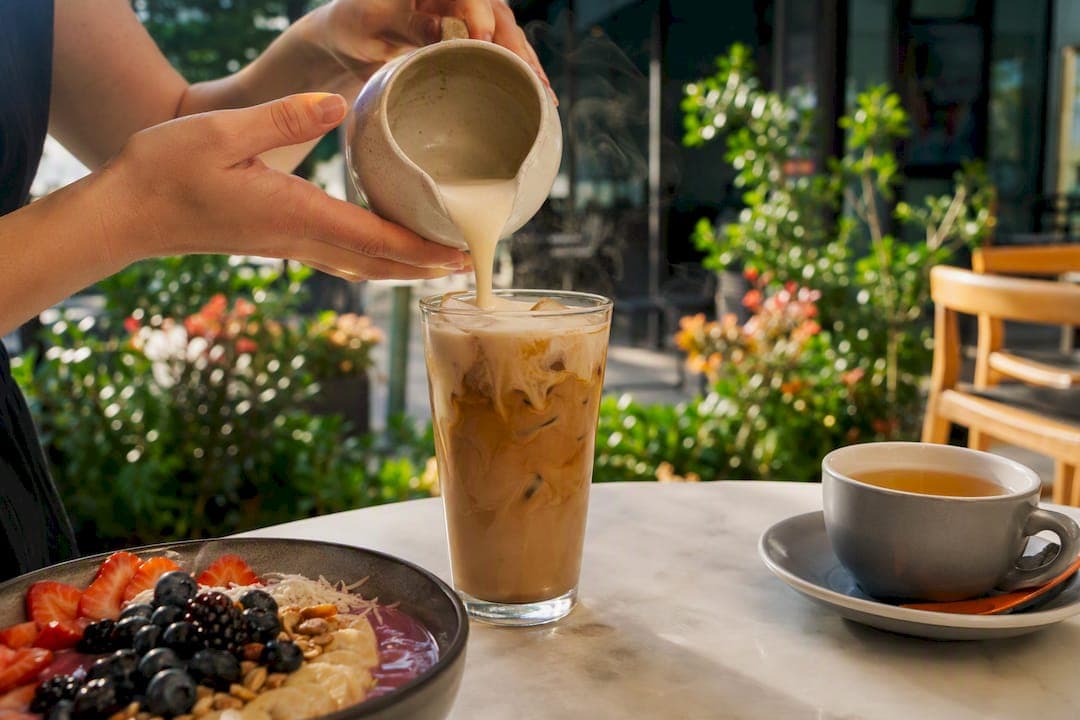
Pick one of three menus and match it to a service style, and your event coffee is basically solved. For an efficient budget event, run a Basic Menu: drip urns plus one staffed espresso station. For a premium experience, go Premium: a staffed espresso cart, cold brew on tap, and one seasonal specialty drink. For brunches, showers, or alcohol-free events, build a Spirit-Free Menu around elevated non-coffee options served with the same care as a cocktail bar.
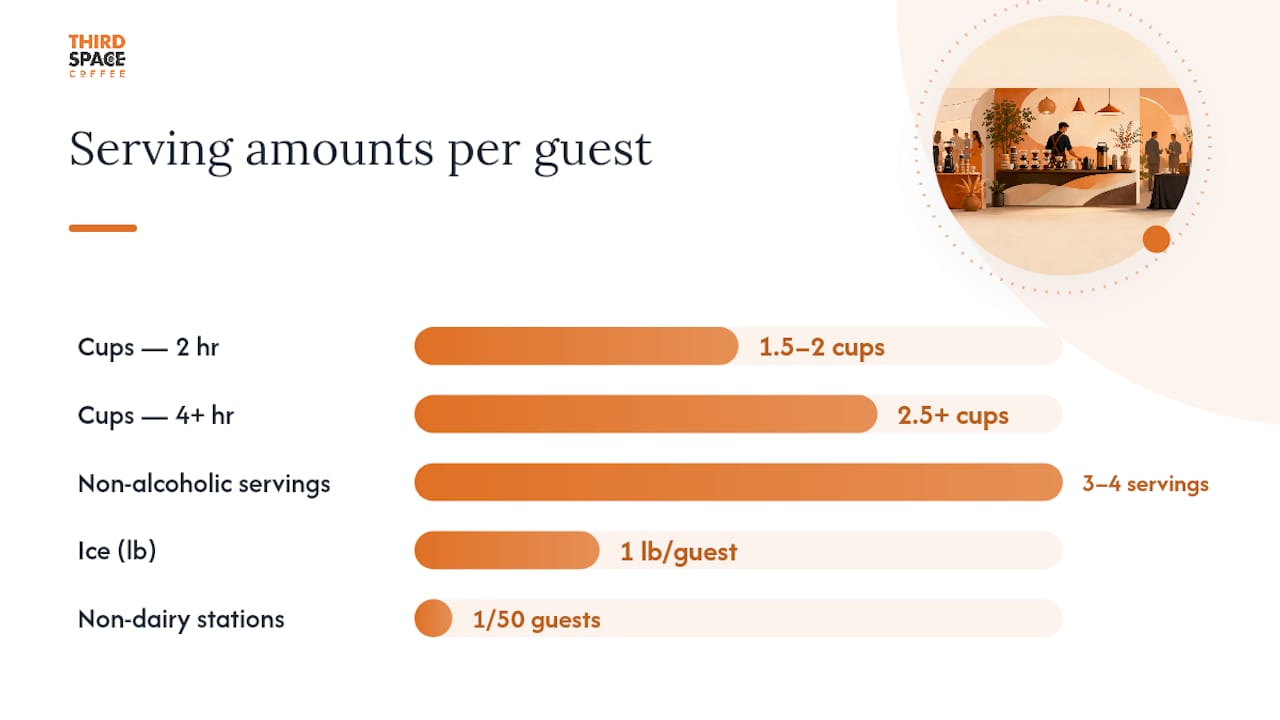
Plan on 1.5 to 2 cups of coffee per guest for a two-hour event, rising to about 2.5 cups for anything running four hours or longer, according to guidance from Colada Kulture's coffee catering guide. Budget separate decaf and non-dairy milk stations no matter which menu you choose.
- Basic → Urn + drip + one staffed espresso machine. Best for 50+ guests, tight budgets, fast service.
- Premium → Staffed cart + cold brew + seasonal specialty drink. Best for corporate receptions, weddings, brand activations.
- Spirit-Free/Brunch → Coffee bar + elevated non-alcoholic drinks + hot chocolate or tea station. Best for daytime events, sober guests, family gatherings.
Pro Tip: Event professionals report that 78% want more emphasis on interesting alcohol-free drinks. Treat that station like a feature, not an afterthought.
Key Takeaways
A well-run event coffee menu succeeds when the menu, service style, and servings math are chosen together rather than separately.
| Point | Details |
|---|---|
| Choose one of three menus | Basic (urn + drip + espresso), Premium (cart + cold brew + specialty), or Spirit-Free (coffee + elevated non-alcoholic drinks). |
| Match staffing to service style | Budget 1 barista per 50–75 guests for espresso; 1 attendant per 100–150 guests for urn service. |
| Plan servings by event length | Use 1.5–2 cups per guest for 2 hours, 2.5+ cups for events running 4 or more hours. |
| Make alcohol-free drinks visible | Offer at least 2–3 elevated options in matching glassware, not an afterthought station. |
| Work with a local roaster | Third Space Coffee builds staffing, bean quantities, and menu choices around your exact guest count and service style. |
Table of Contents
- Event Coffee Menu Ideas: Three Ready-to-Use Templates
- Which Coffee Service Style Fits Your Event?
- What Should Be On a Coffee Menu for an Event?
- Coffee Station Equipment and Setup Checklist
- How Much Coffee Do You Need for Your Event?
- Food Pairings That Make Your Coffee Bar Feel Complete
- How to Make Alcohol-Free Options Feel Special
- How Third Space Coffee Plans a Corporate Reception
- Handling Dietary Restrictions and Allergies
- Sustainable Coffee Service Options Worth Considering
- What I Tell Every Client Before Their Event
- Book Your Event Coffee Service With Third Space Coffee
- Sources
Event Coffee Menu Ideas: Three Ready-to-Use Templates
You don't need to design a coffee menu from scratch. Below are three templates built around what event professionals already know works: a manageable core list, dependable milk and decaf options, and enough personality to feel intentional rather than generic. JOLLYCHEF's guidance on event coffee menus recommends sticking to 3 to 5 core coffee choices plus 2 to 3 non-coffee options, and that ratio holds up across all three templates here.
The Basic Menu
This is the workhorse setup for office parties, community events, and any gathering where speed matters more than spectacle.
- Drip coffee (regular and decaf, kept in insulated airpots)
- One espresso machine staffed for lattes, cappuccinos, and Americanos
- Hot water station for tea
- Whole milk, oat milk, and half and half
- Sugar, raw sugar, and a sugar-free option
One-line menu card: "Hot coffee, decaf, and espresso drinks made to order. Ask your barista about oat milk."
The Premium Menu
This is where you spend the extra budget on a mobile cart and a barista who can build a drink menu people photograph.
- Staffed espresso cart (lattes, cappuccinos, macchiatos, cortados)
- Cold brew on tap or in labeled dispensers
- One seasonal specialty drink (see customization notes below)
- Oat, almond, and coconut milk alongside dairy
- Flavored syrups: vanilla, caramel, seasonal options
- Whipped cream and cinnamon or cocoa garnish
Menu card line: "Espresso bar, cold brew, and our seasonal special: [name it]. Dairy-free milks available."
The Spirit-Free / Brunch Menu
Built for daytime events or any gathering where alcohol-free guests deserve the same attention as everyone else at the bar.
- Drip coffee and staffed espresso
- Chai latte and matcha latte
- Hot chocolate station with marshmallows and peppermint stick garnish
- Iced tea and sparkling water with fruit infusions
- Non-dairy milks as the default, not the exception
Menu card line: "Coffee, chai, matcha, and hot chocolate. Something for every guest, alcohol-free by design."
Portion and Setup Reference
| Element | Recommended Amount |
|---|---|
| Cups per guest (2-hour event) | 1.5–2 cups, per Colada Kulture |
| Cups per guest (4+ hour event) | 2.5+ cups |
| Non-alcoholic servings per guest | 3–4 servings, per Hire Space |
| Ice per guest | 1 pound, per Hire Space |
| Non-dairy milk stations | At least 1 per 50 guests |
| Elevated alcohol-free options | 2–3 minimum, per PCMA |
Seasonal swaps are easy to bolt onto any of these three menus. Swap the seasonal specialty for pumpkin spice in fall, peppermint mocha in winter, or a floral honey lavender latte in spring. For more menu-building detail, Third Space Coffee's guide to crafting a unique coffee menu walks through seasonal pairing logic in depth.
Which Coffee Service Style Fits Your Event?
The menu is only half the equation. The service style determines whether your line moves or backs up into the appetizer table.
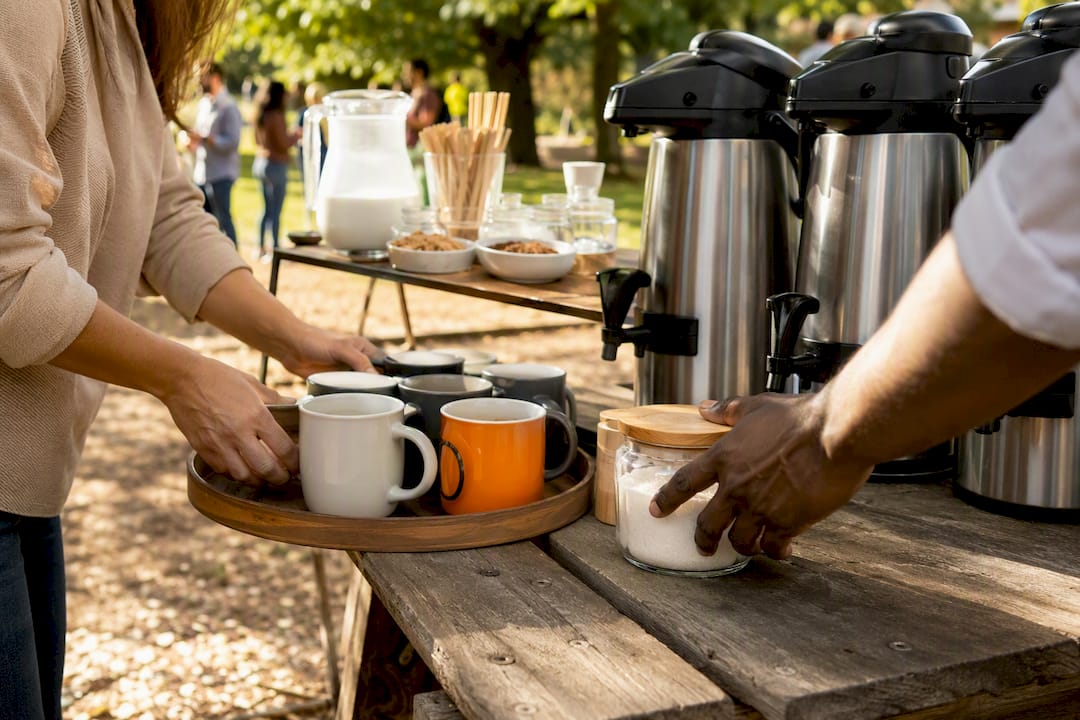
Self-serve coffee bar works for casual events under 75 guests where speed matters more than customization. Set up urns, a grinder for whole bean orders, and pre-made condiment stations so guests pour their own. No staffing required beyond a runner to refill.
Staffed espresso station is the right call when you want lattes, cappuccinos, and other made-to-order drinks. Coffee caterers generally staff 1 barista per 50 to 75 guests for espresso-focused service, a ratio drawn from practical staffing models used across the coffee catering industry. Minimum bookings usually run two to three hours.
Mobile espresso cart adds a visual centerpiece and works well for weddings, brand activations, and any event where the coffee station doubles as a photo backdrop. Mobile carts create memorable guest engagement but need more setup time, water access, and power than a simple urn table.
Urn or box service is the fastest to deploy and cheapest per guest. One staff member can oversee urn service for 100 to 150 guests since there's no drink customization to manage.
- Under 50 guests, casual tone: self-serve bar
- 50 to 150 guests, want customization: staffed espresso station
- Wedding or branded event: mobile cart
- 200+ guests, tight budget: urn/box service with one attendant
Pro Tip: When budget is tight but you still want a premium touch, run urn service for the bulk of your guests and add one staffed espresso station near the entrance. Planners increasingly favor this hybrid model because it delivers speed and a little theater without doubling staffing costs.
Keep signage simple: one sign naming the drinks available, one sign flagging dairy-free and decaf options, and station placement away from the main flow of foot traffic so lines don't block hallways or exits. For a full setup walkthrough, see how to organize impactful coffee events.
What Should Be On a Coffee Menu for an Event?
Every solid coffee catering menu rests on four categories: hot coffee, cold coffee, decaf, and non-coffee alternatives. Skip any one of them and you'll field complaints.
Hot drinks start with drip coffee, which stays hot in airpots or thermal carafes for hours with minimal attention. Espresso-based drinks (lattes, cappuccinos, Americanos) need a trained barista and run 60 to 90 seconds per drink. Pour-over is a nice touch for smaller, slower events but doesn't scale past about 30 guests without a second station.
Cold drinks should include cold brew, which needs to steep 12 to 24 hours ahead of time, so order it early. Iced coffee (hot-brewed, chilled over ice) is a faster backup if cold brew runs out. Nitro coffee, served from a keg with a stout-style tap, adds a premium touch but requires rental equipment most caterers don't stock as standard.
Decaf and non-coffee options deserve their own labeled airpot or station rather than a shared pump. Guests avoiding caffeine shouldn't have to ask.
- Drip coffee: always include, regular and decaf
- Espresso drinks: staffed station required
- Cold brew: order 12 to 24 hours ahead
- Nitro: rental keg system, premium events only
- Matcha and chai: powder or concentrate, no barista skill required
- Hot chocolate: crowd favorite at brunch and winter events
A useful pacing tool for staffed stations is the 15-15-15 rule: budget roughly 15 seconds to pull the shot, 15 seconds to steam milk, and 15 seconds to pour and garnish for a standard espresso drink. That's the baseline a trained barista hits under normal conditions; specialty drinks with extra syrup or layering add another 20 to 30% to that time, which is exactly why drip and urn service still matter at high-volume events. Drip service doesn't follow this rule at all since it's poured, not brewed to order, which is what makes it the faster option when guest count climbs past 150.
Coffee Station Equipment and Setup Checklist
Whether you're renting gear or handing this list to a caterer, everything below needs to be accounted for before doors open.
Equipment:
- Drip brewer or urns (10 to 100 cup capacity depending on guest count)
- Espresso machine and grinder, if staffing a bar
- Cold brew keg or dispenser with tap
- Thermal carafes for overflow and backup
- Access to power (110V minimum) and a water source
Consumables:
- Hot cups and lids, iced cups and dome lids, sleeves for hot cups
- Stirrers, napkins, straws
- Whole milk, oat milk, almond milk, and half and half
- Flavored syrups and sugar-free syrup option
- Sugar, raw sugar, sugar substitute packets
- Garnishes: cinnamon, cocoa powder, whipped cream
Logistics:
- Waste and recycling bins near the station, not just at the exits
- Ice at 1 pound per guest for cold drinks, per Hire Space's event drinks guide
- Backup carafes in case the primary brewer fails
- Signage for dairy-free, decaf, and alcohol-free options
| Setup Option | Typical Cost Range | Best For |
|---|---|---|
| DIY gear rental | Lower cost, self-managed | Small events, self-serve bars |
| Staffed cart or station | Higher cost, fully managed | Weddings, corporate events, 75+ guests |
| Hybrid (urn + one barista) | Mid-range | Mixed budget and experience goals |
Pro Tip: Order specialty syrups and alternative milks at least a week ahead. Seasonal syrups like peppermint and pumpkin spice sell out at suppliers fast in November and December.
How Much Coffee Do You Need for Your Event?
The math is simpler than it looks once you have the ratio: 1.5 to 2 cups per guest for a two-hour event, climbing to 2.5 cups for events running four hours or more, per Colada Kulture's coffee catering guide. Here's how that translates into real orders.
- 50 guests, 2-hour event: 75 to 100 cups needed. That's roughly 1.5 to 2 pounds of ground coffee for drip, plus 1 to 2 half-gallons of oat milk and 3 to 4 boxes of filters.
- 100 guests, 3-hour event: 175 to 220 cups. Order 3 to 4 pounds of coffee, 3 to 4 half-gallons of non-dairy milk, and add a second airpot to avoid refill gaps.
- 200 guests, all-day event (5+ hours): 500+ cups across the day. Plan for 8 to 10 pounds of coffee, 6 to 8 half-gallons of alternative milk, and a staffed espresso station to handle demand spikes at mid-morning and after lunch.
| Guest Count | Event Length | Cups Needed | Coffee (approx.) |
|---|---|---|---|
| 50 | 2 hours | 75–100 | 1.5–2 lbs |
| 100 | 3 hours | 175–220 | 3–4 lbs |
| 200 | 5+ hours | 500+ | 8–10 lbs |
For cost-per-person, add three line items: ingredient cost, staffing (if using a barista), and equipment rental amortized over the event. A servings-per-guest breakdown helps you fine-tune these numbers before you place a final order. Order specialty ingredients at least a week out; standard drip and milk can usually be sourced with two to three days' notice.
Food Pairings That Make Your Coffee Bar Feel Complete
Pastries and coffee are an obvious pairing, but which pastry goes with which drink actually matters. Croissants and morning breads pair naturally with drip coffee at breakfast events. Biscotti and shortbread hold up well against espresso drinks, since they're sturdy enough to dip without falling apart. Fruit-forward items like berry tarts or citrus bars cut nicely against the bitterness of cold brew.
- Breakfast events: croissants, muffins, breakfast breads
- Espresso stations: biscotti, shortbread, small chocolate squares
- Cold brew bars: fruit tarts, citrus-based desserts
- Brunch menus: mini pastries plus a fruit platter for lighter appetites
Present pairings on shared platters with small labeled cards calling out common allergens (nuts, dairy, gluten) so guests don't have to ask staff one by one. For more seasonal pairing inspiration beyond coffee, Wild Foodz's festive meal offerings guide has useful ideas for coordinating a full spread around a themed event.
Skip individually wrapped creamers where you can. Bulk dispensers for milk and syrup, compostable napkins, and paper stirrers cut down on single-use plastic without adding cost.
How to Make Alcohol-Free Options Feel Special
Non-drinkers shouldn't get an afterthought station tucked in the corner. PCMA's guidance on serving non-alcoholic beverages recommends offering at least two to three elevated alcohol-free options and serving them in the same glassware and at the same visibility as everything else on the menu.
Brief your staff on three things: greet every guest the same way regardless of what they're ordering, mention the alcohol-free highlights unprompted, and pour spirit-free drinks into the same style of glass you'd use for a cocktail. A latte in a paper cup next to a cocktail in stemware sends a message, even an unintentional one.
- Offer at least 2 to 3 elevated alcohol-free drinks, not just black coffee
- Place the alcohol-free station at the same visibility level as any bar
- Use matching glassware, garnishes, and branded stirrers across all drink types
- Give the signature spirit-free drink its own name on the menu card
Pro Tip: Julia Momose and other beverage industry professionals recommend batching a non-alcoholic base ahead of time, the same way you'd batch a cocktail mixer. It cuts wait time and keeps quality consistent across dozens of pours.
Small touches like a cinnamon stick garnish or a house-branded stirrer cost almost nothing but change how a drink reads to the guest holding it.
How Third Space Coffee Plans a Corporate Reception
When Third Space Coffee books a 75-guest corporate reception, the planning starts with bean selection. Medium roasts work best for drip and espresso combined, since they hold up in both black coffee and milk-based drinks without one profile overwhelming the other.
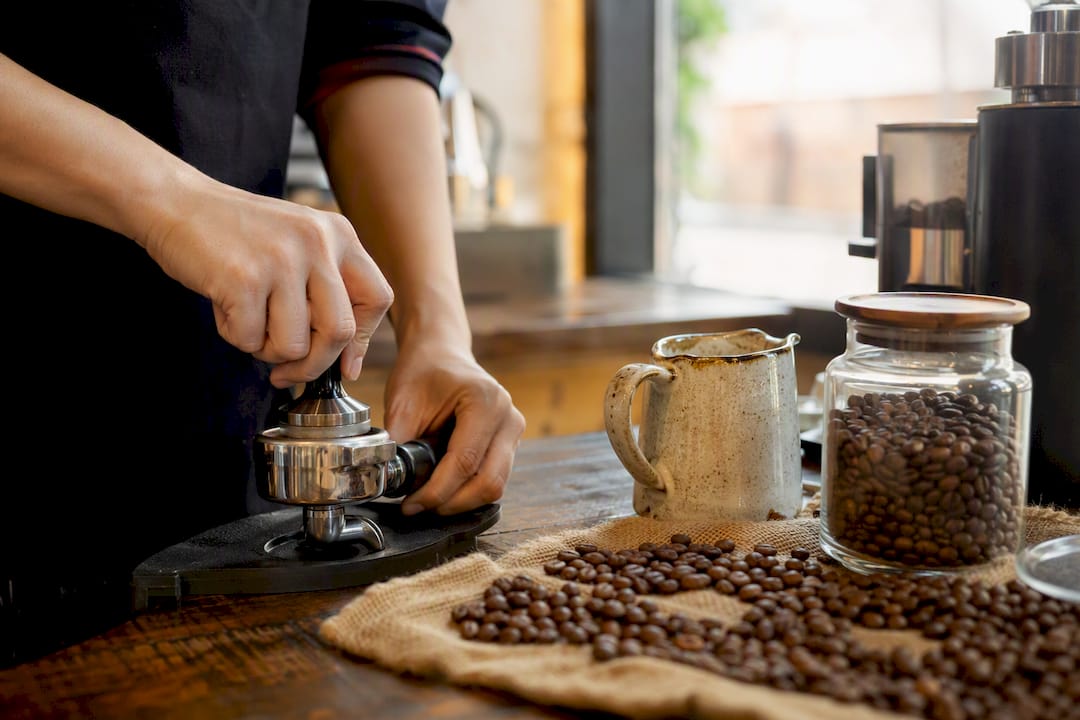
Staffing for that guest count typically means one barista running a staffed espresso station, backed by a drip urn for overflow during the rush right after doors open. That mirrors the 1-barista-per-50-to-75-guest ratio common across the coffee catering industry.
A typical order summary for that event includes:
- Whole bean order sized for 75 guests plus a 15% buffer for waste and testing
- One staffed espresso station, one self-serve drip urn as backup
- Oat and almond milk stocked at double the standard ratio for corporate crowds
- One seasonal specialty drink featured on the menu card
Minimums apply for onsite staffed events, so booking two to three weeks ahead gives enough lead time to lock in beans, staff, and equipment. Planners who want the exact steps can walk through Third Space Coffee's local booking checklist before reaching out.
Handling Dietary Restrictions and Allergies
Coffee itself is naturally allergen-free, but nearly everything added to it isn't. Dairy, tree nuts (in some syrups and creamers), and gluten (in pastry pairings) are the three most common concerns you'll field at any event.
Make non-dairy milk the default option on the table, not something guests have to request. Oat, almond, and coconut milk each behave differently in espresso, so keep at least two options available since some guests have nut allergies that rule out almond milk specifically.
Label syrups clearly, since flavored syrups sometimes contain traces of nuts or dairy stabilizers depending on the brand. If you're sourcing syrups from a specialty supplier, ask for an ingredient sheet ahead of the event rather than guessing.
- Stock oat milk as the default non-dairy option; add almond or coconut as a second choice
- Label all syrups and creamers with common allergens
- Offer at least one syrup-free, dairy-free drink option (plain drip or black cold brew)
- Keep pastry pairings labeled for gluten and nut content
- Train staff to answer allergen questions directly rather than guessing
A single laminated allergen card at the station saves your staff from repeating the same answer fifty times and gives guests confidence to order without asking twice.
Sustainable Coffee Service Options Worth Considering
Coffee stations generate a surprising amount of waste fast: cups, stirrers, syrup bottles, and creamer cups pile up within the first hour of any event. A few swaps cut that volume without changing the guest experience.
Bulk dispensers for milk and syrup replace dozens of small single-use creamer cups and syrup packets. Compostable or recyclable cups and stirrers are widely available now and cost only slightly more than standard plastic. Reusable glassware for a smaller event (under 50 guests) eliminates cup waste entirely if you have dishwashing access on site.
- Use bulk milk and syrup dispensers instead of single-serve creamers
- Choose compostable cups, lids, and stirrers over standard plastic
- Source whole bean coffee from a local roaster to cut transportation footprint
- Set up a labeled compost bin next to the trash bin, not instead of it
- Consider reusable glassware for smaller, indoor events
Whole bean coffee roasted locally and in small batches also tends to generate less packaging waste than bulk pre-ground shipments from large distributors, since local roasters typically pack to order rather than warehousing months of stock.
What I Tell Every Client Before Their Event
The biggest mistake planners make isn't picking the wrong menu. It's underestimating how much the coffee station becomes a social hub. Guests linger there, chat there, and take photos there, so if it looks like an afterthought table with a coffee pot and paper cups, that impression sticks.
My advice is always the same: pick one thing to make memorable, whether that's a seasonal specialty drink, a garnish detail, or matching glassware for the alcohol-free options. You don't need five upgrades. You need one done well. Local seasonal flavors, like a lavender honey latte in spring or a spiced cider cold brew in fall, give guests something to talk about that a generic vanilla latte never will.
Presentation isn't decoration. It's the difference between a coffee station guests walk past and one they photograph.
Book Your Event Coffee Service With Third Space Coffee
Third Space Coffee is the direct route to a coffee menu that's planned, staffed, and roasted locally instead of pieced together from a rental catalog and a big-box coffee order. As a Colorado Springs specialty roaster, we offer staffed espresso carts, whole bean orders sized to your guest count, and event space rental for gatherings up to 150 guests, all from one team that already knows the staffing ratios and servings math covered above.
Requesting a quote takes one conversation. Have your guest count, preferred menu (Basic, Premium, or Spirit-Free), and service style ready, and we'll build out staffing, bean quantities, and equipment needs around those numbers. Browse our specialty drinks lineup to see what a staffed station can include, or check whole bean coffee options if you're planning a self-serve urn setup instead. Reach out through Thirdspacecoffee to check event dates and get a quote started this week.