
TL;DR:
- Early organization, permitting, and vendor contracts are essential to ensure a smooth coffee event in Colorado Springs.
- Designing a well-paced experience with engaging activities and thoughtful hospitality creates lasting guest memories.
- Effective marketing, community engagement, and feedback collection foster growth and long-term success.
Planning a coffee event feels exciting right up until the moment you realize you have a venue to book, permits to pull, vendors to coordinate, and a guest experience to design all at once. Without a clear process, those moving pieces can spiral into last-minute chaos. This guide walks you through every stage of organizing a successful, community-driven coffee gathering in Colorado Springs, from your first checklist item to post-event feedback. Whether you're hosting an intimate tasting or a neighborhood festival, you'll finish this guide knowing exactly what to do next.
Table of Contents
- Planning your coffee event: Essentials and requirements
- Designing the event: Flow, activities, and guest experience
- Marketing and promoting your coffee event
- Troubleshooting and ensuring success: Common pitfalls and solutions
- Lessons learned from local coffee events: What really works
- Host your next coffee event with Third Space Coffee
- Frequently asked questions
Key Takeaways
| Point | Details |
|---|---|
| Preparation is critical | Proper planning and a clear checklist prevent stress and last-minute problems. |
| Event flow matters | A well-structured timeline enhances the guest experience and overall success. |
| Sustainability adds value | Eco-friendly practices can boost community support and attendee satisfaction. |
| Feedback drives improvement | Gather feedback after your event to make each gathering better than the last. |
Planning your coffee event: Essentials and requirements
With your motivation to create a meaningful gathering, let's dive into the preparation checklist every organizer should tackle before anything else.
Getting organized early is the single biggest factor that separates smooth events from stressful ones. Before you announce a date or post a single flyer, you need to lock in the foundational elements that every successful coffee event depends on.
Your core planning checklist:
- Venue: Choose a space that fits your expected headcount, has adequate ventilation for coffee aromas, and allows food service. Exploring community event venues that already have coffee infrastructure in place will save you significant setup time and cost.
- Staff and volunteers: Larger events need teams with clear roles: an event director, an operations lead, vendor liaisons, and volunteers for registration, crowd flow, and cleanup. Assign these roles in writing before the event date.
- Vendor contracts: Every coffee roaster, equipment supplier, or food vendor attending your event should have a signed contract that covers pricing, arrival times, cancellation terms, and quality standards.
- Permits and insurance: Event permits, health department approvals, and general liability insurance are non-negotiable for events open to the public. Start this process at least six to eight weeks out.
- Promotion platforms: Decide early whether you'll use Eventbrite, Instagram, email newsletters, or all three to manage registrations and attendee communication.
- Coffee menu planning: A thoughtfully designed unique coffee menu is one of the strongest drivers of positive word-of-mouth after the event.
Sustainability is no longer optional for modern events. Local sourcing, no single-use cups, and composting for coffee grounds and food waste are now baseline expectations for community-conscious attendees. Seek out vendors who hold eco-certifications and ask them directly about their packaging practices. Using reusable tasting cups, offering a small deposit for cup returns, and setting up clearly labeled compost bins all signal that you take your community's values seriously.
| Planning category | Key action | Timing |
|---|---|---|
| Venue booking | Reserve space, confirm A/V and water access | 8 to 12 weeks out |
| Permits and insurance | Apply for event permits, get liability insurance | 6 to 8 weeks out |
| Vendor contracts | Sign agreements, confirm product delivery logistics | 4 to 6 weeks out |
| Sustainability setup | Source reusable cups, arrange compost collection | 2 to 4 weeks out |
| Staffing | Finalize volunteer roles and schedule a training day | 1 to 2 weeks out |
Pro Tip: Submit permit applications the moment you confirm your venue. City and county offices in Colorado Springs can take several weeks to process event permits, and health department approvals for food service add another layer. Starting early means you have time to resolve any unexpected requirements before they become emergencies.
Designing the event: Flow, activities, and guest experience
With your basics secured, it's time to shape the actual experience your guests will remember.
The best coffee events don't just serve great coffee; they guide attendees through a story. A well-paced program keeps energy high, prevents bottlenecks, and gives every guest moments of genuine discovery. Think of your event timeline as a narrative arc with a clear beginning, middle, and end.
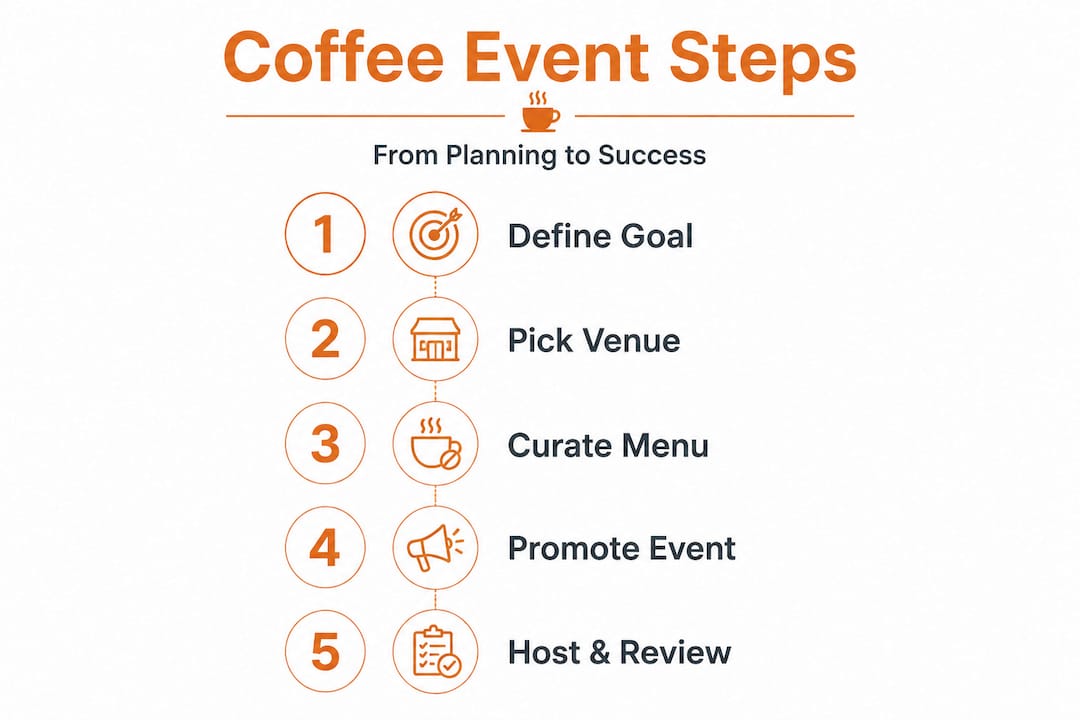
A step-by-step event flow for coffee tastings:
- Welcome and orientation (10 minutes): Greet guests at the door, hand out tasting sheets or digital guides, and give a brief overview of what to expect. This sets the tone and reduces confusion.
- Introduction to the featured coffees (10 minutes): A host or lead barista explains the origins, processing methods, and flavor profiles of each coffee being tasted. Keep it conversational, not lecture-style.
- Guided tasting rounds (5 minutes per coffee): Event flow timing of 60 to 90 minutes for tastings works best, with roughly 5 minutes dedicated to each individual coffee. Guests smell, sip, and record notes on their tasting sheets at their own pace within each window.
- Open discussion (15 to 20 minutes): Facilitate a group conversation using discussion prompts. Questions like "which coffee surprised you most?" or "what food would you pair with this one?" generate lively, memorable exchanges.
- Closing and community moment (10 minutes): Thank vendors and guests, share any upcoming events or community announcements, and allow time for guests to mingle over a final cup.
For activities beyond standard tasting, consider these formats. Blind tastings and themed coffees with discussion prompts create a sense of fairness and excitement because no one can rely on recognizing familiar labels. Hospitality details like warm greeting language, thoughtfully arranged seating, and small palate cleansers between coffees (plain water and a neutral cracker) elevate the experience from "coffee tasting" to genuine gathering. Review a solid coffee tasting guide to build your sensory vocabulary and confidently walk guests through aroma, body, acidity, and finish.
When building your menu, coffee pairing ideas add an extra dimension to the tasting experience and give attendees something concrete to take home and replicate.
| Event format | Best for | Typical size | Key benefit |
|---|---|---|---|
| Intimate tasting | Sensory focus and education | 10 to 30 guests | Deep discussion, personalized attention |
| Themed coffee session | Brand storytelling or seasonal events | 20 to 60 guests | Strong visual identity, shareability |
| Neighborhood coffee festival | Community building and vendor exposure | 100+ guests | Broad reach, multiple vendor showcases |
Pro Tip: Designate a hospitality lead whose only job is to watch the room, refill water, assist guests who look confused, and keep energy positive. This single role prevents the small friction points that guests always remember even when everything else goes well.
Marketing and promoting your coffee event
Once you've outlined the event experience, attracting attendees is your next mission.
Marketing a coffee event is not just about selling tickets. It's about building anticipation and making your target audience feel like missing it would be a real loss. A layered approach across multiple channels consistently outperforms any single tactic.
Proven promotion channels for coffee events:
- Social media: Instagram is the primary platform for Colorado Springs coffee culture. Post behind-the-scenes setup content, origin stories for featured beans, and short video previews of the venue. Stories and Reels generate strong organic reach without requiring a large ad budget.
- Email newsletters: If you have an existing list, send at least three emails: an initial announcement, a reminder with new details one week out, and a "last chance" message 24 to 48 hours before the event.
- Flyers and posters: Physical signage at local coffee shops, community boards, yoga studios, and bookstores still drives attendance in Colorado Springs. A well-designed flyer builds credibility and creates a sense of local presence.
- Eventbrite or similar platforms: Social media, emails, posters, and Eventbrite work best together. Eventbrite also handles ticket management, which simplifies your check-in process significantly.
Managing vendors as part of your marketing strategy matters more than most organizers realize. Each vendor you invite brings their own audience. Ask every vendor to promote the event to their followers with co-branded graphics you provide. Set quality standards in your vendor contracts so that what attendees see on social media matches what they experience in person.
After the event, send a short post-event survey asking three to five questions about the experience. Which coffee was a favorite? What would guests change? Would they attend again? Attendance growth, repeat events, and post-event feedback are the clearest indicators of community impact. The Glasgow Coffee Festival's record-breaking attendance demonstrates that consistent quality and strong community engagement compound over time, with each event building on the credibility of the last.
Stat to keep in mind: Events that actively collect and act on post-event feedback show measurably higher repeat attendance rates. Building this feedback loop into every event creates a cycle of continuous improvement that keeps your gatherings growing.
Reviewing the offerings at established coffee shop events in your area can also reveal promotional approaches that resonate with your target audience before you finalize your own marketing strategy.
Troubleshooting and ensuring success: Common pitfalls and solutions
With marketing set and logistics mapped out, anticipate challenges before the big day.
Every experienced event organizer will tell you the same thing: the problems that derail events are almost always predictable. The difference between a rookie and a seasoned planner is having written solutions ready before anything goes wrong.
Step-by-step guide to handling the most common event challenges:
- Weather contingency: Colorado Springs weather is notoriously unpredictable. For any outdoor or hybrid event, reserve a backup indoor space or budget for tent rentals. Publish a clear cancellation or postponement policy in every ticket confirmation email so guests are never left guessing.
- Crowd flow issues: Crowd flow, hygiene, and sustainability all require advance planning. Use floor signage to direct guests between tasting stations. Stagger arrival times for larger events using ticketed time slots, which prevents overwhelming a space at once.
- Hygiene and sensory integrity: Provide rinsing stations between tastings so guests can clean their palate. Sanitize all shared tasting tools between sessions. Implement a strict no-fragrance policy for staff so that cologne and perfume don't interfere with the delicate aroma profiles guests are trying to detect. Post the policy clearly on event communications.
- Equipment failures: Espresso machines, grinders, and brewing equipment should be tested the morning of the event. Always have backup brewing equipment or a manual method like a French press or Chemex available. Knowing your industry terms helps you communicate quickly and clearly with vendors if something needs to be fixed on the spot.
- Volunteer no-shows: Always recruit 20 to 30 percent more volunteers than you think you need. Brief your lead staff on how to absorb key roles if a volunteer doesn't arrive.
Critical reminder: Hygiene at coffee tasting events is not just about cleanliness. Shared tasting tools and communal spaces require sanitization protocols that protect every guest. When in doubt, over-prepare. One illness linked to your event can permanently damage your reputation in a close-knit community like Colorado Springs.
Pro Tip: Run a full event rehearsal with your core team one to two days before the actual event. Walk through every station, test every piece of equipment, and time each segment of the program. Teams that rehearse arrive on the day calm and confident rather than reactive.
Lessons learned from local coffee events: What really works
After covering the nuts and bolts, here is an honest perspective on what sets outstanding coffee events apart from average ones.
There is a temptation in event planning to focus entirely on logistics and lose sight of the human experience at the center of it all. The most common mistake we see is organizers treating a coffee event like a product demonstration when it is actually an opportunity to build a lasting community.
Small, intimate tastings carry a different kind of power than large festivals. They create space for genuine sensory focus, where a guest can actually close their eyes, concentrate on a single cup, and form a real opinion about what they're tasting. Small intimate tastings emphasize sensory precision while large festivals balance commerce and community, and both serve valuable but distinct purposes. Understanding which one aligns with your specific goals is more important than copying what a larger, more established event does.
Automation and digital tools are emerging as efficiency drivers for registration, check-in, and post-event surveys. These tools are worth using. But they are not substitutes for the moment a knowledgeable host looks a first-time attendee in the eye, explains the difference between a natural process and a washed process Ethiopian coffee, and watches that person's face light up with genuine curiosity. That moment cannot be automated, and it is what converts a first-time attendee into a lifelong community member.
The real measure of a coffee event's success is not what happens the day of. It's whether the people who came show up again the next time, bring a friend, and start calling themselves part of your community. Exploring advanced coffee tasting content and continuing to deepen your own knowledge as an organizer directly improves the quality of every conversation you facilitate at future events.
Host your next coffee event with Third Space Coffee
Ready to bring your coffee event vision to life? Here is how we can help you take the next step.
Third Space Coffee is built for exactly the kind of gathering you've been planning throughout this guide. Our Colorado Springs location offers bookable event space, in-house roasted specialty beans, and a team that genuinely loves helping organizers create memorable coffee experiences for their communities.

Whether you need a venue that already breathes coffee culture or want to source premium specialty drinks and freshly roasted whole bean coffee to feature at your next gathering, we have what you need. Pre-ordering through our convenient pickup service means you can lock in your event beverages without the day-of scramble. Reach out through our contact form, visit us during open hours, or follow us on Instagram to see what events look like when they happen right here at Third Space.
Frequently asked questions
What permits are needed for a coffee event in Colorado Springs?
Permits depend on venue size, food service, and whether alcohol will be served. Start by contacting the Colorado Springs city clerk and the El Paso County Health Department. Larger events require permits and designated team roles to manage compliance effectively.
How can I make my coffee event more eco-friendly?
Use locally sourced beans, ban single-use cups in favor of reusable ones, and set up a composting station for coffee grounds and food scraps. Local sourcing, no single-use cups, and composting are the three pillars of a genuinely sustainable coffee event.
What's the best way to organize coffee tastings for beginners?
Start with a clear introduction to each coffee's origin and flavor profile, then move into guided tasting rounds before opening the floor for discussion. An intro, per-coffee tasting, and discussion format keeps beginners engaged without overwhelming them.
How do I measure if my coffee event was successful?
Track your total attendance, compare it to your previous event if applicable, and send a post-event survey asking specific questions about the experience. Attendance growth, repeat events, and post-event feedback together give you the clearest picture of your event's real community impact.