
TL;DR:
- Social media is the main tool for coffee shops to attract new customers and build community loyalty. Posting authentic, consistent content on platforms like Instagram and TikTok increases foot traffic and engagement, especially through user-generated content and local targeting. Genuine behind-the-scenes moments and active community involvement are essential for establishing a welcoming online presence that reflects the shop's real personality.
Social media is the primary customer discovery tool for coffee shops, directly shaping whether someone walks through your door for the first time. Over 62% of consumers check a hospitality business's social profiles before visiting, and Instagram and TikTok influence more than 50% of American coffee shop customers' choices. The role of social media for coffee shops goes beyond posting pretty latte art. It builds the kind of community loyalty that turns first-time visitors into regulars. This article breaks down exactly how to make that happen, platform by platform and tactic by tactic.
How social media platforms uniquely benefit coffee shops
Every platform serves a different purpose. Using all of them the same way wastes your time and misses your audience.
Instagram is your digital storefront. It functions as a visual menu, a mood board, and a trust signal all at once. Stories and Reels showing drink preparation yield 2–5x more reach than static images. That reach advantage makes Reels the single highest-return format for most coffee shops on the platform.
TikTok rewards behind-the-scenes content. Short videos of espresso pulls, milk steaming, or a barista explaining a seasonal drink perform well because they feel unscripted. TikTok's algorithm also gives new accounts a fair shot at discovery, which matters for independent shops without a large following.
Here is how each platform fits into a practical social media marketing coffee strategy:
- Instagram: Visual menu, Reels for reach, Stories for daily updates and polls
- TikTok: Behind-the-scenes clips, barista features, trending audio to reach new audiences
- Facebook: Local event promotion, community group participation, and paid local ads targeting a 1–3 mile radius
- Pinterest: Aesthetic inspiration boards that drive long-term referral traffic to your website
- Google Business Profile: Not a social platform in the traditional sense, but it is where local search and reputation management happen. Keeping it updated with photos and responding to reviews directly affects how many people find you on Google Maps.
The most effective approach is to lead with Instagram and Google Business Profile, then add TikTok once you have a basic content rhythm in place. Facebook and Pinterest are worth maintaining but rarely need daily attention.
Why authentic content outperforms polished ads
Customers prefer real café moments over curated advertising. Authentic, natural café visuals consistently outperform highly produced ads, and the shift in consumer behavior is clear. People want to see the actual space, the actual staff, and the actual drinks they will order.
This matters because coffee shops sell an experience as much as coffee. Social media shortens the time from discovery to becoming a loyal regular, but only when the content reflects the real atmosphere. A staged, over-lit photo of a latte on a marble surface tells a customer nothing about whether your shop feels welcoming on a Tuesday morning.
The content types that build trust fastest include morning setup shots, barista introductions, customer moments captured with permission, and seasonal drink reveals filmed casually. None of these require a professional photographer. They require consistency. Cafes with consistent weekly posting report 20–30% higher rates of new customers mentioning "saw you on Instagram" compared to shops with sporadic posting habits. That number reflects a direct line between showing up online and foot traffic.
Pro Tip: Capture low-stakes content every single day, even if you only post three times a week. Morning light through the window, a quick clip of the grinder running, a photo of the chalkboard menu. Build a library so you always have something real to post.
Balancing educational posts like brewing tips with behind-the-scenes cultural content maximizes engagement and keeps followers coming back. A post explaining why you use a specific roast profile gets saved. Saves are the most valuable engagement metric because they signal that your content is genuinely useful, not just scroll-worthy.
Does user-generated content really drive more engagement?
User-generated content, commonly called UGC, is the most credible form of social proof a coffee shop can have. UGC is perceived as 50% more credible than brand advertising and drives a 50% increase in social media engagement. That credibility gap exists because customers trust other customers more than they trust brands.
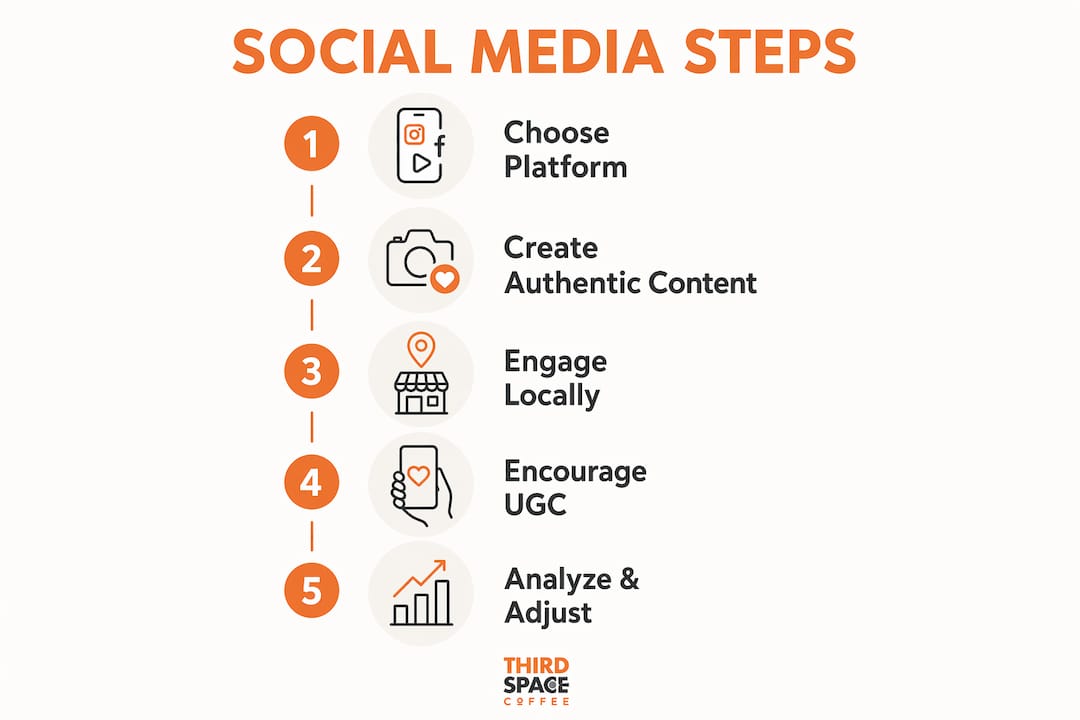
The mechanics of a UGC strategy are straightforward. Here is a four-step process that works for independent coffee shops:
- Create a reason to post. A photogenic drink, a unique mug, a seasonal special, or a well-lit corner of your shop gives customers something worth sharing. Thirdspacecoffee's in-house roasted whole bean coffees and specialty drinks are exactly the kind of product that earns organic posts.
- Make the ask visible. A small card on the table or a line on the receipt saying "Tag us @YourHandle for a chance to be featured" is enough. Most customers who enjoy their visit are happy to share if prompted.
- Repost consistently. When you reshare a customer's photo or video, you reward the behavior and signal to others that tagging you has value. This creates a self-reinforcing loop.
- Run a simple campaign. A monthly "best photo" feature or a seasonal hashtag challenge costs nothing and generates a steady stream of content you did not have to create yourself.
Shops that actively encourage tags and repost user content see faster organic growth than those relying solely on brand posts. The reason is reach. When a customer posts about your shop, their followers see it. That is free advertising to an audience that already trusts the person recommending you.
What local social media strategies actually drive foot traffic?
Local targeting is where the impact of social media for cafes becomes most measurable. Neighborhood-specific hashtags, local landmarks, and partnerships with nearby businesses boost visit likelihood within a 1–3 mile radius. That radius is your real customer base, and your content strategy should reflect it.
Here is a comparison of the tactics that drive the most local engagement versus those that look active but produce little foot traffic:
| Tactic | Local Impact | Why It Works |
|---|---|---|
| Neighborhood hashtags and geotags | High | Surfaces your content to people already nearby |
| Partnering with local businesses | High | Expands reach to a trusted adjacent audience |
| Posting during 7–9 AM decision window | High | Catches customers choosing where to get coffee |
| Generic trending hashtags (#coffee) | Low | Reaches a global audience with no local intent |
| Posting only finished product photos | Low | Misses the behind-the-scenes content that builds connection |
| Facebook Events for in-store happenings | Medium-High | Drives RSVPs and reminds local followers of your space |
Timing matters more than most shop owners realize. Early morning posts between 7 and 9 AM reach customers at the exact moment they are deciding where to get their first cup. A Reel posted at 6:45 AM showing your doors opening and the first espresso of the day is more effective than the same video posted at 2 PM.
Partnering with local businesses amplifies your reach without paid advertising. A Colorado Springs bakery, bookstore, or yoga studio sharing your content puts your shop in front of their loyal customers. For shops like Thirdspacecoffee, which also functions as an event space, this kind of local community engagement creates a natural content partnership that benefits both sides.
Pro Tip: Rotate your creative content weekly. If you run the same style of post for three weeks straight, your existing followers stop engaging. Mix a Reel, a static photo, a Story poll, and a customer repost across each week to keep the feed varied and the algorithm interested.
AI tools can help maintain a consistent content cadence when your team is stretched thin. They fill visual gaps and keep your digital presence aligned with your physical brand without requiring a 6 AM photoshoot every day.
Key takeaways
Social media for coffee shops works when it combines consistent authentic content, platform-specific tactics, and active local community engagement to convert online discovery into real foot traffic.
| Point | Details |
|---|---|
| Platform selection matters | Lead with Instagram and Google Business Profile, then add TikTok once a posting rhythm is established. |
| Consistency beats perfection | Cafes posting consistently report 20–30% more new customers citing social media as their discovery source. |
| UGC builds the most trust | User-generated content is 50% more credible than brand ads and drives 50% higher engagement. |
| Local targeting drives visits | Neighborhood hashtags, geotags, and local business partnerships reach the 1–3 mile audience most likely to walk in. |
| Saves signal real value | Educational and behind-the-scenes content earns saves, the metric that signals genuine audience usefulness. |
Social media should reflect your shop's real personality
Here is what I have seen trip up coffee shop owners more than anything else: they treat social media as a separate project instead of a natural extension of what already happens in their shop every day.
The best-performing café accounts I have studied are not the ones with the most polished photography. They are the ones where you can feel the actual vibe of the place through the screen. You see the same barista on Tuesday and Friday. You notice the shop gets afternoon light that makes the espresso glow. You start to feel like you know the place before you ever visit.
That kind of presence does not come from a content calendar alone. It comes from a genuine commitment to showing up, even when the shot is imperfect or the caption is short. Social media success for cafes relies on consistent presence that reflects real café culture, not staged perfection.
My honest advice: pick two platforms, post five times a week, and spend the first month just documenting what already happens in your shop. Do not try to create content. Capture it. Once you see what your audience responds to, then you build a strategy around that. Trying to build a strategy before you know what resonates is working backwards.
If you want to attract and keep loyal coffee enthusiasts, the social media work is never really done. But it gets easier once your digital presence starts to feel as natural as your morning routine.
— Tanya
Bring your social media story to life with Thirdspacecoffee
The most shareable content starts with a product worth sharing. Thirdspacecoffee roasts its whole bean coffees in-house in Colorado Springs, which means every cup has a story behind it. That story is exactly what social media content is made of.

Whether you are building content around a visually striking specialty drink or educating your audience with posts about single-origin whole bean coffee, Thirdspacecoffee gives you the raw material for posts that feel genuine because they are. Explore the full coffee lineup and find the products that tell your shop's story best.
FAQ
What is the role of social media for coffee shops?
Social media serves as the primary discovery and community-building tool for coffee shops, with over 62% of consumers checking social profiles before visiting. It converts online interest into foot traffic and repeat visits.
Which social media platform works best for coffee shop marketing?
Instagram is the most effective platform for coffee shop marketing because its visual format functions as a digital storefront. Reels showing drink preparation generate 2–5x more reach than static images.
How often should a coffee shop post on social media?
Consistent weekly posting is the minimum standard. Cafes that post regularly report 20–30% higher rates of new customers who discovered them through Instagram compared to shops that post sporadically.
How do coffee shops get customers to create content for them?
Place a visible prompt in-store, such as a table card or receipt note, asking customers to tag the shop. Reposting that content consistently rewards the behavior and encourages more customers to share.
What type of content gets the most engagement for cafes?
Educational posts like brewing tips and behind-the-scenes cultural content earn the most saves, which is the highest-value engagement metric. Saves signal that followers find the content genuinely useful and worth returning to.