
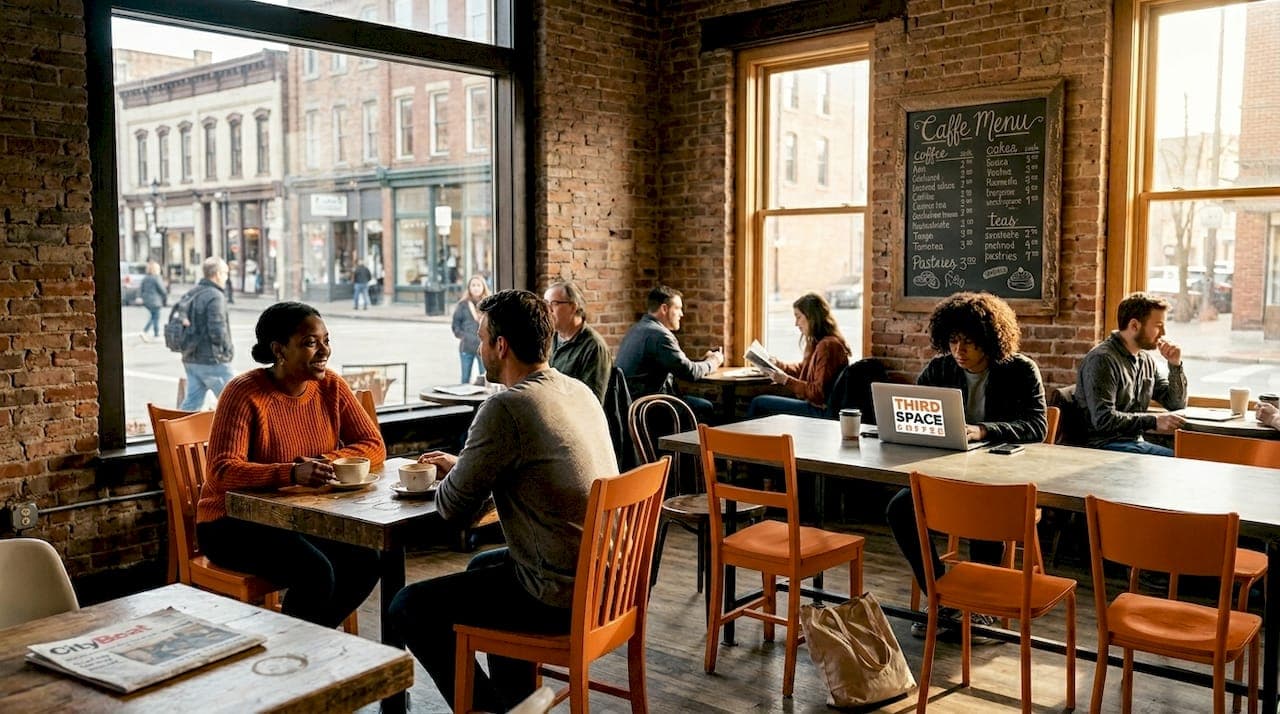
TL;DR:
- Community coffee spaces serve as social hubs called "third places" fostering conversation and inclusivity.
- These spaces build social capital, reduce loneliness, and promote wellbeing through regular, genuine interactions.
- Modern pressures threaten traditional third places, but authentic cafes like Third Space Coffee prioritize community over convenience.
Most people walk into a coffee shop, order their drink, and leave without a second thought. That's the misconception worth challenging right away. A great coffee shop is far more than a caffeine delivery system. For decades, certain cafes have quietly served as the social glue holding neighborhoods, cities, and communities together. If you're a coffee lover in Colorado Springs or someone who organizes events and gatherings, understanding what a community coffee space actually is, and why it matters, can completely change how you use these places and what you get out of them.
Table of Contents
- What defines a community coffee space?
- How community coffee spaces foster connection and wellbeing
- Nuances, challenges, and modern adaptations
- Practical ways to find or create a community coffee space in Colorado Springs
- Why third places matter more than ever in Colorado Springs
- Connect with Third Space Coffee for true community
- Frequently asked questions
Key Takeaways
| Point | Details |
|---|---|
| Community space meaning | A community coffee space is a social hub where conversation, rituals, and inclusivity drive connection. |
| Empirical benefits | Such spaces reduce loneliness, boost social capital, and support psychological wellbeing. |
| Modern challenges | Drive-thrus and technology threaten authentic community spaces, requiring adaptation and intention. |
| Colorado Springs action | Locals and organizers can prioritize lingering-friendly coffee shops and create meaningful gatherings. |
| Why third places endure | Despite shifts, true community coffee spaces remain critical to social life and personal wellbeing. |
What defines a community coffee space?
Not every coffee shop earns the title of "community coffee space." The distinction matters, and it starts with a concept called the "third place."
Sociologist Ray Oldenburg introduced this idea in 1989. A community coffee space refers to a coffee shop functioning) as a "third place," a social hub distinct from home (your first place) and work (your second place). The concept names something many people sense intuitively but rarely articulate. Home is personal. Work is transactional. The third place is where you belong without having to earn your seat.
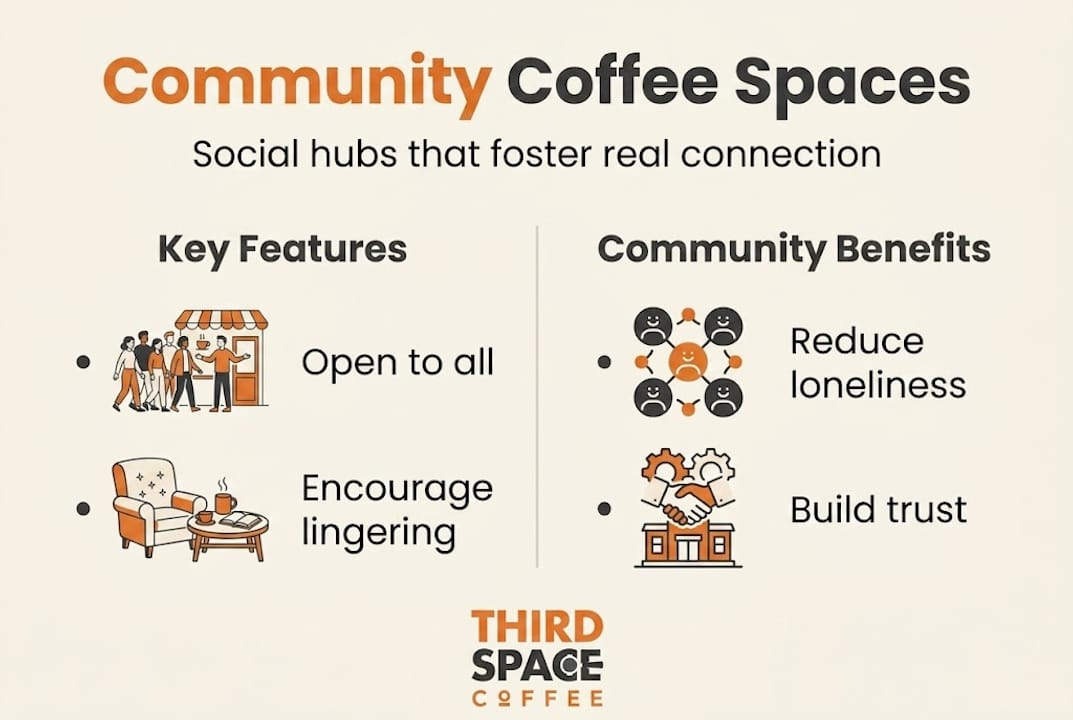
This is not just academic theory. It shapes the entire atmosphere, layout, and culture of a space. A true community coffee space is designed to invite you to stay, not hurry you out the door.
Key characteristics of a genuine third place include:
- Conversation as the main activity, not just caffeine consumption
- Accessibility, meaning low barriers to entry and affordable options
- Inclusivity that transcends class, race, and social status
- Regular rituals and events that build familiarity among regulars
- A balance between solitude, productivity, and socializing
- Informal gatherings that happen without formal invitation
Compare this to what most spaces offer:
| Feature | Home | Workplace | Chain Coffee Shop | Community Coffee Space |
|---|---|---|---|---|
| Open to all | No | No | Partially | Yes |
| Encourages lingering | Yes | No | Rarely | Yes |
| Fosters conversation | Privately | Professionally | No | Yes |
| Regular social rituals | Family only | Work meetings | No | Yes |
| Low cost barrier | No | No | Sometimes | Yes |
For coffee enthusiasts in Colorado Springs, this framework flips the question from "where do I get a good cup?" to "where do I actually belong?" Those are very different questions, and they lead to very different spaces.
Understanding specialty coffee origins deepens the experience further, because knowing what's in your cup connects you to a global story, which is exactly the kind of meaning a true community space amplifies.
How community coffee spaces foster connection and wellbeing
Understanding what a community coffee space is naturally leads to exploring how it actually benefits people and communities.
The benefits are not soft or sentimental. They are measurable. Community coffee spaces boost social capital, reduce loneliness and polarization, and are historically linked to the rise of democracy and civic life. English coffeehouses in the 17th century were nicknamed "penny universities" because for the price of a penny (the cost of admission and a drink), anyone could sit and absorb the conversations happening around them. Scientists, merchants, artists, and politicians shared the same tables. Ideas spread faster and farther because people gathered.
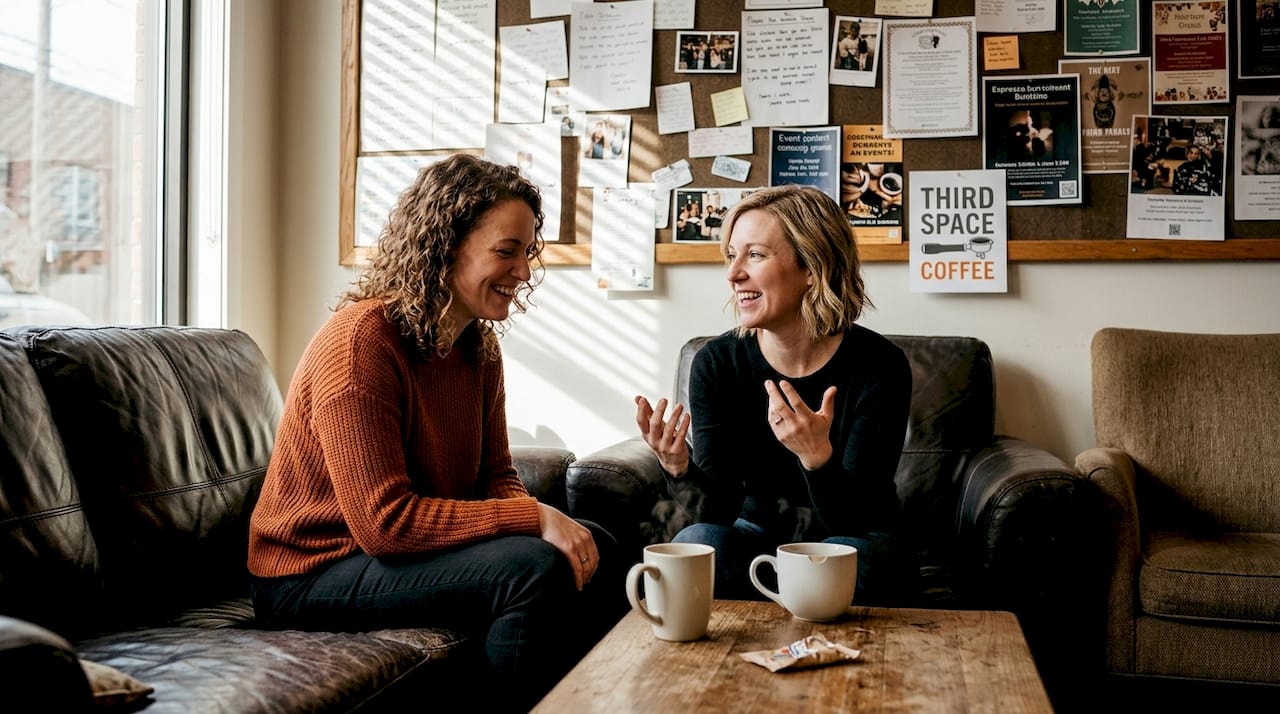
That historical precedent is not just interesting trivia. It illustrates something modern research confirms: face-to-face social environments dramatically shape how we think, how we trust others, and how connected we feel to our communities.
Here is how the benefits play out in practical terms:
-
Building social capital. Regular visits to the same space create weak ties, connections to people outside your immediate circle. Sociologists identify these as among the most valuable social links because they expose you to new ideas, opportunities, and perspectives.
-
Reducing loneliness. Loneliness has reached levels in American culture that researchers describe as an epidemic. A consistent third place gives people a predictable environment where they are recognized and welcomed.
-
Countering polarization. When people from different backgrounds share physical space regularly, the "other" becomes familiar. That familiarity erodes the kind of social distance that fuels division.
-
Supporting psychological wellbeing. Modern studies tie access to third places directly to lower anxiety levels and higher reported life satisfaction. The effect is strongest when people participate in regular rituals, not just one-off visits.
-
Inspiring creativity. The ambient noise of a coffee shop, the low hum of conversation, has been shown to hit a sweet spot for creative thinking, more stimulating than silence, less disruptive than loud environments.
For coffee enthusiast culture specifically, these benefits are amplified when the space curates genuine coffee experiences alongside the community atmosphere. The drink becomes part of the ritual.
Pro Tip: If you want to deepen your connection to a community coffee space, commit to one consistent visit per week at the same time. Regularity is the engine of familiarity, and familiarity is the foundation of real community.
Nuances, challenges, and modern adaptations
So, what happens when traditional community coffee spaces face modern pressures and changes?
Not every cafe qualifies, and it is worth being honest about that. Many coffee shops fail to meet the third place standard because of factors like high price points, minimal seating, drive-thru only layouts, or an atmosphere that actively discourages lingering. A coffee shop optimized for mobile orders and rapid turnover is a convenience business, not a community anchor. That is a legitimate choice, but it is a different thing entirely.
The pressures on traditional community coffee spaces have grown significantly:
- Mobile technology pulls attention inward. People in the same room stare at separate screens rather than talking to each other.
- Suburban sprawl separates people geographically, making walkable third places harder to access.
- The pandemic forced closures, broke social habits, and fragmented community routines in ways that many neighborhoods have not fully recovered from.
- Rising real estate costs threaten independent shops that anchor neighborhoods, often replacing them with drive-thrus or chains.
Some spaces have adapted through hybrid models, combining physical coffee shop environments with event programming, co-working setups, or rotating community activities. These coffee shop adaptations help maintain the third place function even as customer behavior shifts.
A parallel concept worth knowing is the "fourth place," digital spaces that blend online and offline community features. Social media groups, Discord servers, and online forums can supplement real-world connection, but they cannot replicate it. The fourth place lacks the sensory richness of physical presence, the warmth of a good cup in your hands, the sound of familiar laughter, the unscripted moments that define real community.
Hospitality technology has reshaped how coffee shops operate, from ordering systems to reservation tools. When used well, these tools reduce friction so staff can focus on what machines cannot replicate: human connection.
"The social spaces we build, or fail to build, shape who we become as communities. Convenience is not community." This truth sits at the heart of why supporting local roasters and locally owned coffee spaces is more than a purchasing decision. It is an investment in the kind of city you want to live in.
| Space type | Encourages lingering | Community rituals | Inclusivity | Physical presence |
|---|---|---|---|---|
| Traditional third place | Yes | Yes | Yes | Yes |
| Drive-thru chain | No | No | Partial | Minimal |
| Hybrid co-working cafe | Yes | Sometimes | Partial | Yes |
| Virtual fourth place | N/A | Sometimes | Yes | No |
The table above makes the trade-offs visible. A drive-thru gives you speed. A virtual space gives you reach. But neither gives you the irreplaceable texture of real community.
Practical ways to find or create a community coffee space in Colorado Springs
With these challenges and opportunities in mind, here is how you can actively participate in Colorado Springs' community coffee scene.
First, know what you are looking for. The best local coffee shops in Colorado Springs share a set of qualities: they encourage you to stay, they know their regulars, they host events or informal gatherings, and they invest in the quality of both the coffee and the conversation.
For coffee lovers, here is how to find and nurture your third place:
- Choose walkable spots over drive-thrus. Physical proximity matters. When a coffee shop is part of your daily route, community happens organically.
- Introduce yourself to the barista. This single act changes the dynamic entirely. You move from customer to regular, which opens the door to introductions, events, and real familiarity.
- Show up consistently. Pick a morning or afternoon slot and return weekly. Regularity is what builds community, not single visits.
- Engage with posted events. If a shop hosts tastings, open mics, or morning meetups, attend at least once. These rituals are the heartbeat of third place culture.
- Bring someone new. One of the best contributions you can make to a community coffee space is expanding its social network by introducing friends or colleagues to the space.
For event organizers, the coffee space offers serious advantages over traditional venues. It carries built-in atmosphere, familiar staff, good drinks, and often flexible seating arrangements. Here is how to make the most of it:
- Book early and communicate your vision. The best spaces book out quickly for private gatherings. Be specific about your group size, timing, and purpose.
- Design the event around conversation. Round table setups, open Q&A moments, and coffee-tasting segments all naturally encourage interaction.
- Leverage the space's existing community. If the shop has regulars, ask the owner if there is a way to open part of your event to them. Cross-pollination builds the best networks.
- Create a ritual your group will return to. Monthly coffee meetups or quarterly planning sessions at the same space build the kind of familiarity that deepens collaboration.
Pro Tip: If you are hosting an event, pair it with a coffee roasting experience or a guided tasting. People learn better when all their senses are engaged, and it gives attendees a shared story to talk about long after the event ends.
Why third places matter more than ever in Colorado Springs
Here is the perspective that most articles about coffee shops skip entirely: convenience is winning, and that should concern you.
Colorado Springs is growing. New neighborhoods, new chains, new drive-thrus appearing on every major corridor. The city is getting more options but not necessarily more community. Those are not the same thing. You can have a hundred coffee shops in a city and still have a loneliness problem if none of them function as genuine third places.
The conventional wisdom says people want speed and convenience above all else. And yes, sometimes they do. But what people report missing most after years of remote work and pandemic isolation is not a faster latte. It is belonging. It is the feeling of being known somewhere outside their own home.
Chains and drive-thrus are optimized for profit per square foot, which means they are structurally incentivized against lingering. You are welcome as long as you are buying. That is fine for a transaction, but it is the opposite of community. The values behind authentic third places run counter to that logic. They prioritize depth over throughput.
Here is the contrarian truth: digital connection has not replaced the third place. It has made the third place more important. The more fragmented and screen-mediated our social lives become, the more we hunger for a physical space where connection happens without performance, without an audience, without notifications pulling our attention away. A coffee shop that gets this right is not competing with the internet. It is the antidote to it.
For event organizers especially, this matters strategically. The events people remember most are not the ones with the best catering or the biggest venue. They are the ones where genuine conversation happened, where someone said something unexpected, where two people met who had no reason to meet. That alchemy only happens in spaces designed for it.
Colorado Springs has a real opportunity to build the kind of city where third places thrive. That starts with coffee lovers and event organizers choosing depth over convenience and showing up for spaces that earn that choice.
Connect with Third Space Coffee for true community
If you're ready to experience the community coffee space firsthand, here's where to start.
Third Space Coffee in Colorado Springs is built around the exact principles this article covers: genuine community, specialty coffee roasted in-house, and a space designed for more than a quick transaction. Whether you're a regular coffee lover looking for your place or an event organizer searching for a venue with real character, this is the kind of space worth investing in.

Browse the full lineup of specialty drinks crafted to match the quality of the experience, or explore whole bean coffee roasted right on-site for those who want to bring the ritual home. Whether you visit for a quiet morning, a community event, or a private gathering, Third Space Coffee is ready to be your third place in Colorado Springs.
Frequently asked questions
What makes a community coffee space different from a regular coffee shop?
Community coffee spaces emphasize conversation, inclusivity, rituals, and lingering over just serving drinks, while most regular coffee shops are designed primarily around beverage transactions and fast turnover.
How can event organizers use community coffee spaces for gatherings?
Event organizers can create routines, social rituals, and prep gatherings that foster inclusion by choosing lingering-friendly spots with event infrastructure, like Third Space Coffee, over conventional or chain venues.
Do coffee chains serve as community coffee spaces?
Most chains, especially those focused on drive-thru or mobile orders, lack the lingering and social aspects required for a true community space because their layouts and business models prioritize speed over connection.
Can coffee spaces help reduce loneliness?
Yes. Empirical studies show community coffee spaces boost social capital and reduce loneliness and polarization, particularly when people participate in regular rituals rather than one-time visits.
What are "fourth places" and how do they relate to coffee spaces?
Fourth places blend online and offline community features but lack the physical presence, beverage rituals, and face-to-face conversation that make coffee spaces uniquely effective for building real community.