
TL;DR:
- Third wave coffee emphasizes craft, transparency, and high-quality, single-origin beans.
- It has evolved through three waves, focusing from accessibility to craft and ethics.
- Supporting local roasters and asking questions enhances the third wave experience.
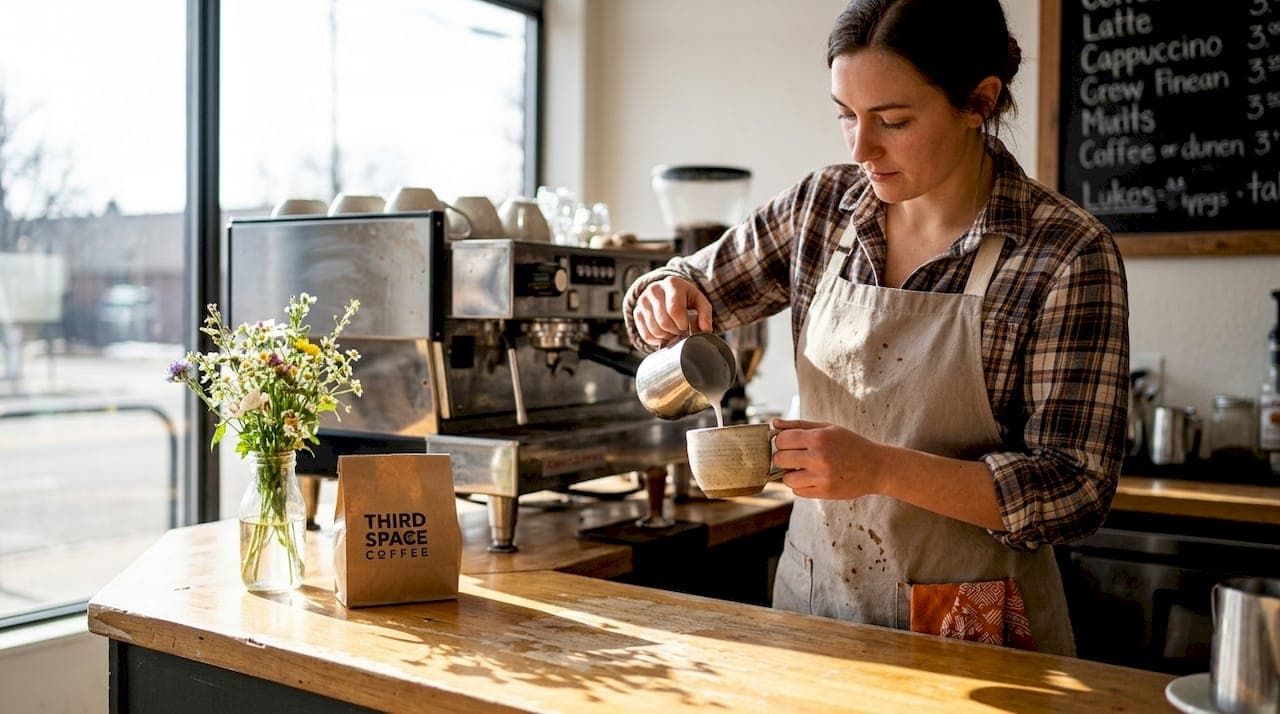
Is premium coffee just a fancy trend, or is something deeper going on? If you've walked into a specialty café and felt slightly lost between terms like "single origin," "direct trade," and "SCA score," you're not alone. Third wave coffee isn't just about taste. It's a cultural shift in how we grow, source, roast, and brew coffee. This guide breaks down what third wave coffee actually means, how it compares to what came before, where the debates live, and how you can experience it right here in Colorado Springs. By the end, you'll have a sharper lens for every cup you drink.
Table of Contents
- Understanding third wave coffee: from history to culture
- Comparing first, second, and third wave coffee movements
- Nuances and critiques: specialty coffee, terminology, and the 'waves' concept
- Third wave coffee in Colorado Springs: practical experience and recommendations
- Our take: why third wave coffee matters more than labels
- Experience third wave coffee in Colorado Springs
- Frequently asked questions
Key Takeaways
| Point | Details |
|---|---|
| Craft-driven coffee | Third wave coffee treats every cup as a craft beverage, focusing on quality and transparency. |
| Local impact matters | Colorado Springs enthusiasts can elevate their experience by supporting local specialty roasters and ethical sourcing. |
| Brewing precision | Artisanal methods like pour-over are central to extracting unique flavors from premium beans. |
| Beyond labels | Enjoying third wave coffee is about experience, not just terminology, embracing both tradition and innovation. |
Understanding third wave coffee: from history to culture
Third wave coffee is best understood as a movement, not a menu item. Third wave coffee is a cultural and commercial movement treating coffee as a craft beverage, emphasizing terroir, traceability, and artisanal brewing. The term was first used by Timothy J. Castle around 1999 and 2000, then popularized by roaster and writer Trish Rothgeb in 2003. NPR brought it to mainstream ears in 2005, and the phrase stuck.
At its core, the movement pushes back against coffee as a pure commodity. Instead of asking "how cheap can we make this?" third wave asks "how good can this actually get?" That shift changes everything: how farmers are paid, how beans are selected, how roasters approach heat curves, and how baristas extract flavor.
Specialty coffee, defined by the Specialty Coffee Association (SCA) as scoring 80 or higher on a 100-point cupping scale, forms the quality foundation of the third wave. But specialty coffee is the floor, not the ceiling. The third wave builds culture on top of that standard.
Here are the tangible principles you'll find in third wave spaces:
- Bean sourcing: Single-origin beans, often traceable to a specific farm or cooperative
- Roast style: Light to medium roasts that preserve the bean's natural flavor notes
- Farm stories: Transparency about who grew the coffee and under what conditions
- Direct trade: Relationships between roasters and farmers that often exceed fair trade minimums
- Brewing precision: Controlled variables like water temperature, grind size, and brew ratio
- Ethical premiums: Paying above market price to reward quality and sustainability
"Third wave coffee asks you to think about your cup the way a wine lover thinks about a vineyard. Origin, process, and craft all matter."
For Colorado Springs enthusiasts exploring this world, brushing up on coffee terminology before your next café visit can make a real difference. And if you're curious how this movement has shaped local culture, the story of Colorado Springs coffee enthusiasts is worth reading.
| Third wave principle | What it looks like in practice |
|---|---|
| Traceability | Farm name, region, and farmer on the bag |
| Direct trade | Roaster visits farms, pays above commodity price |
| Light roasting | Fruity, floral, or complex flavor notes preserved |
| Brewing precision | Pour-over, exact ratios, filtered water |
| Transparency | Cupping scores and processing method listed |
Comparing first, second, and third wave coffee movements
Breaking the coffee world into waves gives us a useful historical map. Each wave reflects how society related to coffee at that moment in time.
The first wave (roughly 1800s to mid-1900s) was all about access. Coffee became a household staple. First wave coffee was mass commodity, instant, and uniform dark roasts. Think canned grounds, percolators, and the idea that coffee is just caffeine delivery. Quality was secondary. Convenience was king.
The second wave arrived in the 1960s and exploded in the 1980s and 1990s. Chains like Starbucks brought café culture to the masses. Espresso drinks, flavored syrups, and branded blends became the norm. Coffee became an experience, but still a standardized one. You ordered a latte, not a specific bean.
The third wave started gaining momentum in the late 1990s and early 2000s. Here, the focus shifted to the bean itself: where it came from, who grew it, and how to best express its natural character.
Here's how the evolution played out chronologically:
- First wave: Coffee becomes affordable and widely available in homes
- Second wave: Café culture rises, espresso drinks become mainstream
- Third wave: Craft, transparency, and single-origin sourcing take center stage
- Emerging fourth wave: Science, sustainability, and inclusivity push the conversation further
| Feature | First wave | Second wave | Third wave |
|---|---|---|---|
| Sourcing | Commodity blends | Regional blends | Single origin, direct trade |
| Roast | Dark, uniform | Medium to dark | Light to medium |
| Consumer focus | Convenience | Experience | Craft and transparency |
| Brewing method | Percolator, instant | Espresso machines | Pour-over, Chemex, AeroPress |
| Price point | Low | Moderate | Premium |
"Each wave didn't replace the last. They layered on top of each other, and today you can find all three coexisting in the same city block."
For those of us who care about supporting local roasters over chain options, understanding these distinctions makes the choice feel more intentional. Digging into coffee origins also helps you appreciate why a Colombian washed process tastes so different from an Ethiopian natural.
Nuances and critiques: specialty coffee, terminology, and the 'waves' concept
Here's where things get interesting. The waves framework is useful, but it's not perfect. The waves concept is potentially outdated as the industry blends science, business, and inclusivity in ways that don't fit neatly into any single wave. Some experts argue the term "third wave" has become a marketing badge more than a meaningful descriptor.
A few things worth clarifying:
- Not all specialty coffee is third wave. A coffee can score 82 on the SCA scale and still be sold by a company with zero transparency about its sourcing.
- The waves concept is American-centric. Coffee cultures in Ethiopia, Japan, and Scandinavia have their own rich traditions that don't map cleanly onto this framework.
- "Third wave" can be gatekeeping. Some cafés use the label to justify high prices without delivering on the values of craft or ethics.
- The fourth wave is emerging. This loosely defined movement focuses on scientific precision (think fermentation research and AI-assisted roasting), radical inclusivity, and deep sustainability commitments.
- Terminology shifts fast. What counts as "specialty" or "craft" evolves as the industry matures.
Pro Tip: When you walk into a new café, ask two questions: "Where is this bean from?" and "Can you tell me about the farm or cooperative?" A third wave operation will answer both enthusiastically. Vague answers are a signal.
Familiarity with industry terms helps you cut through marketing noise. And when you're ready to put theory into practice, a solid tasting specialty coffee approach will sharpen your palate fast.
The bottom line: the waves concept gave us a shared vocabulary. That vocabulary is now evolving. Don't let the labels distract you from what actually matters: quality, ethics, and a great cup.
Third wave coffee in Colorado Springs: practical experience and recommendations
Colorado Springs sits at about 6,035 feet above sea level. That altitude affects water boiling points and extraction behavior in ways most brewing guides don't account for. Here's how to apply third wave principles in your actual environment.
When choosing a local roaster, look for SCA 80+ single-origin beans, direct trade Ethiopians or Colombians for floral and nutty profiles, and clear farm sourcing on the bag. These markers separate genuine third wave roasters from those borrowing the aesthetic without the substance.
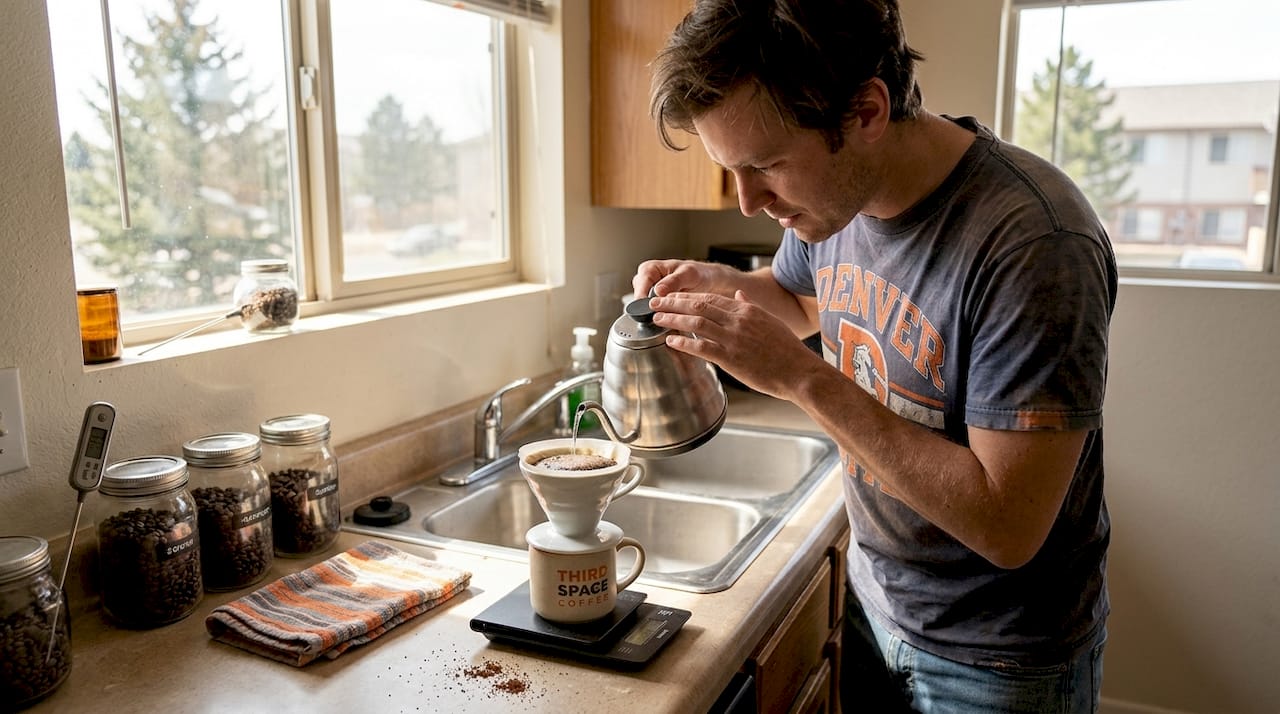
For brewing at home, pour-over methods are your best tools. Flat-bottom drippers like the Kalita reduce channeling in hard water areas like Colorado, and lighter roasts reveal processing nuances that darker roasts mask. Aim for a 19 to 22% extraction yield if you're using a refractometer.
Practical tips for brewing in Colorado Springs:
- Filter your water. Colorado Springs tap water is moderately hard, which can mute delicate floral notes in lighter roasts.
- Lower your brew temperature slightly. Water boils around 202°F at altitude. Adjust your kettle target to 196 to 200°F for lighter roasts.
- Use freshly roasted beans. Look for a roast date within the last two to four weeks. Avoid bags with only a "best by" date.
- Grind just before brewing. A burr grinder makes a measurable difference in extraction consistency.
- Start with Ethiopian or Colombian single-origins. These origins tend to showcase the clearest flavor distinction between processing methods.
Pro Tip: Buy your beans in smaller quantities more frequently. A 250g bag used within two weeks will outperform a 1kg bag sitting on your shelf for a month, every single time.
For exploring local options, the local tasting guide is a great starting point. You can also check out resources on finding local roasters to build your shortlist. When you're ready to stock up at home, whole bean coffee roasted in-house is worth exploring.
Our take: why third wave coffee matters more than labels
We've been in this space long enough to know that the label "third wave" can become its own trap. Cafés that lead with the terminology sometimes forget to lead with the values. And enthusiasts who chase the vocabulary sometimes miss the actual experience.
Here's what we've learned: the movement matters because it changed how farmers are treated, how roasters think about craft, and how drinkers relate to their cup. That's real progress. But the label itself? It's just a shortcut.
The most meaningful thing you can do as a coffee lover in Colorado Springs is to support roasters and cafés that demonstrate the values, not just the vocabulary. Buy from people who can tell you the farmer's name. Attend a cupping event. Ask questions. The third wave's best contribution isn't a brewing method or a roast profile. It's a culture of curiosity.
Gatekeeping has no place here. Whether you're new to specialty coffee or you've been dialing in pour-overs for years, the invitation is the same. Engage with local coffee support and explore what local coffee culture looks like when it's at its best.
Experience third wave coffee in Colorado Springs
Ready to put all of this into practice? Third Space Coffee is where the theory meets your actual morning cup. We roast our beans in-house, source with intention, and build our menu around the same principles this article covers.

Explore our specialty drinks for a hands-on taste of what third wave brewing looks like when done well. If you prefer to brew at home, our whole bean coffee lineup gives you freshly roasted options with clear sourcing. And for a no-fuss daily option, our drip coffee brings quality without complexity. Order online for easy front-of-store pickup and start your third wave journey today.
Frequently asked questions
How is third wave coffee different from specialty coffee?
Third wave coffee is a broader cultural movement emphasizing transparency and craft, while specialty coffee refers specifically to beans scoring 80 or higher on the SCA's 100-point cupping scale. You can have specialty coffee without the third wave ethos, but not the other way around.
What brewing methods are preferred in third wave coffee?
Pour-over brewing methods like the V60 and Kalita are favored for their ability to highlight a bean's natural flavor with precision. The Kalita's flat-bottom design is especially forgiving for beginners working with hard water.
What beans should I look for in Colorado Springs cafes?
Seek single-origin beans with SCA 80+ scores and direct trade sourcing, especially Ethiopian or Colombian varieties. These origins tend to offer the most distinct and traceable flavor profiles.
Is the 'waves' concept still relevant in 2026?
Some experts argue the waves framework is becoming outdated as coffee culture now blends scientific precision, ethical sourcing, and inclusivity in ways that don't fit neatly into one wave. It's still a useful teaching tool, but not the whole story.
How can I support the third wave movement locally?
Buy from local specialty roasters who emphasize SCA 80+ single-origin beans and ethical sourcing practices. Attending local cuppings and asking questions about bean origin are simple but powerful ways to engage.