
TL;DR:
- A third space is a voluntary gathering place beyond home and work that fosters informal, regular interactions. Such spaces build community health, social trust, and civic participation through shared conversation and diverse encounters. Supporting or creating third spaces involves consistent presence and fostering welcoming environments in both physical and digital settings.
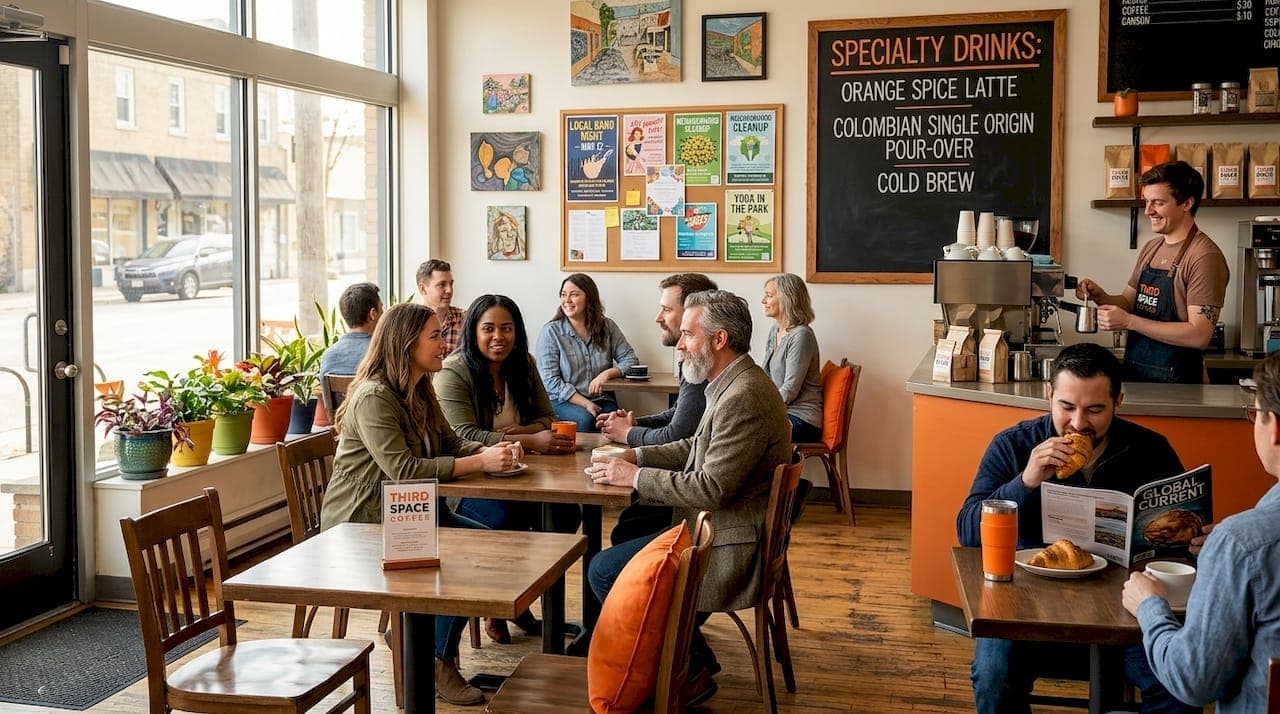
Most people assume a third space is just a coffee shop or a bar. That framing misses almost everything that makes these places matter. A third space is any setting beyond your home and your workplace where you gather informally, regularly, and by choice. The concept, rooted in sociology, explains why informal public gathering spots shape community health in ways that parks and recreation centers alone cannot. This guide breaks down the definition of third space, what makes one work, the many forms they take, and how you can find or help build one in your own community.
Table of Contents
- Key takeaways
- What is a third space, really?
- Examples of third spaces you may already know
- Why third spaces matter for your community
- How to find or create a third space
- Common misconceptions about third spaces
- My take on why we keep undervaluing these spaces
- Experience a real third space in Colorado Springs
- FAQ
Key takeaways
| Point | Details |
|---|---|
| Beyond home and work | Third spaces are the informal, voluntary gathering spots that make up a third category of daily life. |
| Behavior matters most | Regular visits and repeated conversation build the sense of belonging that defines a true third space. |
| Many forms qualify | Parks, libraries, barbershops, block parties, and online forums all count, not just coffee shops. |
| Tied to real well-being | Proximity and frequency of visits to third spaces are linked to social capital and physical activity. |
| Anyone can act | You can support existing third spaces or help create new ones by showing up consistently and welcoming others. |
What is a third space, really?
The term comes from sociologist Ray Oldenburg, who introduced the concept in his 1989 book The Great Good Place. Oldenburg observed that healthy communities need three distinct environments: home (the first place), work (the second place), and a third category he called the third place, first defined as an informal, voluntary, and conversation-centered gathering spot. The corner tavern, the neighborhood barber, the local diner. These were his original examples, and they shared something specific.
Oldenburg identified eight characteristics that separate a true third place from just any public venue:
- Neutral ground: Nobody is required to be there. Everyone chooses to show up.
- Social leveling: Status markers like job titles and income fade. People meet as equals.
- Conversation as the main activity: Talk, not transactions or entertainment, is the point.
- Accessibility and accommodation: Easy to get to and open to most people most of the time.
- Regulars: A core group of familiar faces who set the tone and welcome newcomers.
- Low profile: Unpretentious and comfortable, not fancy or exclusive.
- Playful mood: Wit and good humor are common. The atmosphere is light.
- A home away from home: Visitors feel a sense of belonging, not just a sense of being served.
"The third place is a setting beyond home and work where regular, voluntary, informal, and anticipated gatherings of individuals occur." — Ray Oldenburg
Pro Tip: When you walk into a place and a regular introduces you to someone else without being asked, you are almost certainly in a third space.
The definition of third space has evolved since Oldenburg wrote it. Researchers and city planners now use the term to describe any setting where free encounters with others happen naturally, including temporary and digital formats. The core idea remains: it is not about the building. It is about what the building makes possible.
Examples of third spaces you may already know
Physical spaces still make up the most recognizable category. Parks, public libraries, barbershops, community centers, coffee shops, and places of worship all qualify when they meet Oldenburg's criteria. What they share is that people show up voluntarily and return often enough to recognize each other.
But the range goes much further than that. Here is how different formats compare:
| Format | Examples | What makes it work |
|---|---|---|
| Permanent physical | Coffee shops, libraries, parks, barbershops | Consistent location, familiar faces, open access |
| Temporary or pop-up | Block parties, farmers markets, community festivals | Repeated events build ongoing relationships |
| Digital or virtual | Online forums, neighborhood apps, Discord communities | Removes geographic barriers, enables niche interests |
| Hybrid | Bookstore clubs, community gardens with programming | Combines physical presence with organized touchpoints |
A few points worth noting about this range:
- Temporary spaces like block parties qualify as third spaces when they happen on a regular schedule and draw the same people back repeatedly.
- Digital third spaces extend the concept to people who cannot access physical venues due to mobility, geography, or time constraints.
- A gym class, a trivia night, or a running club can function as a third space if informal conversation and repeated presence are built into the experience.
The variety matters because communities are not uniform. A rural town and a dense urban neighborhood need different third space formats to serve different people. What stays consistent is the function: helping people encounter each other informally and regularly, outside the roles they play at home or at work.
Why third spaces matter for your community
The importance of third space goes well beyond having a pleasant place to kill an hour. Research consistently links access to these settings with stronger social fabric and better individual health outcomes.
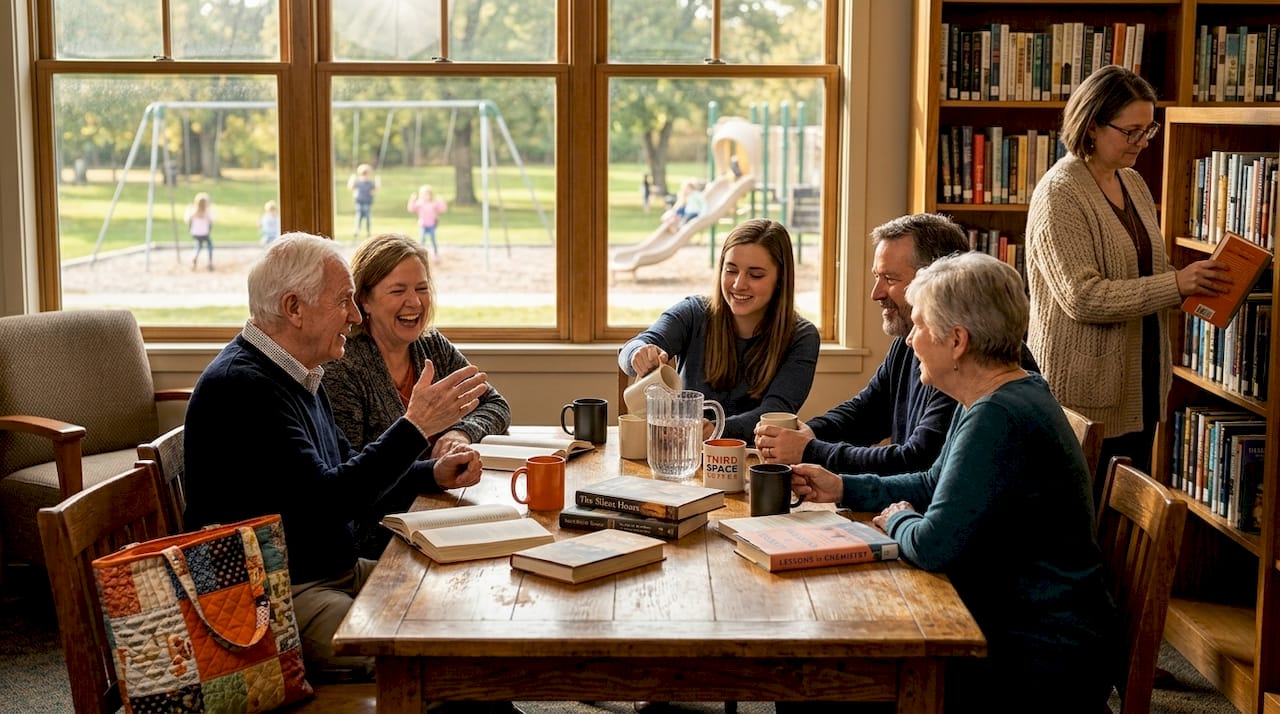
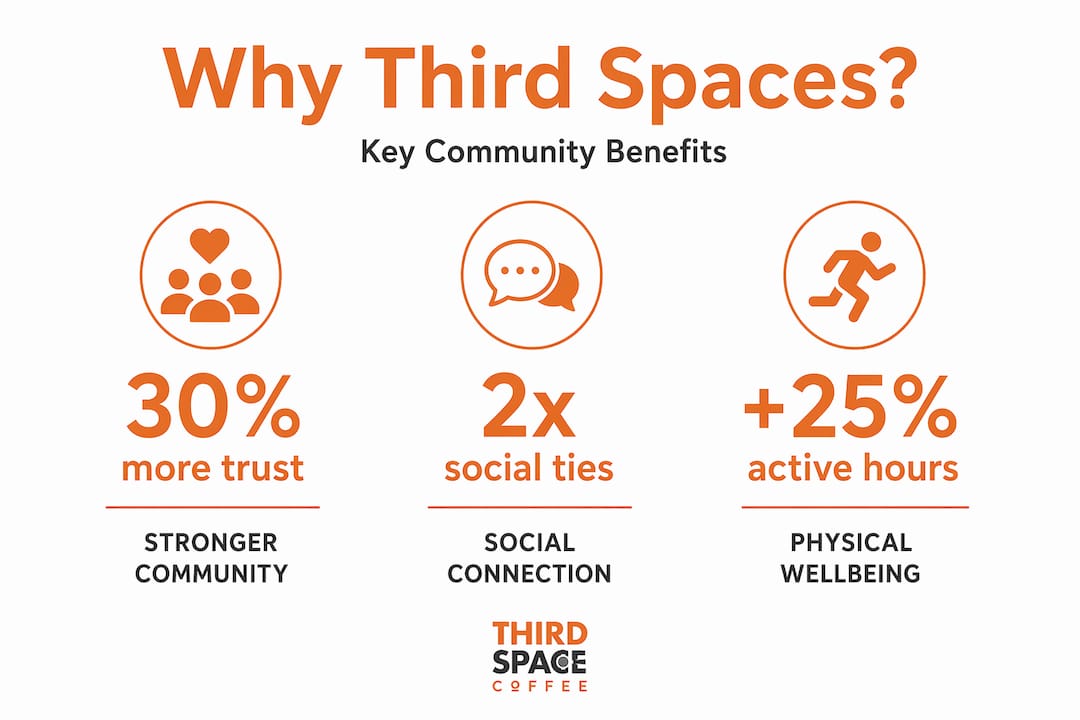
Proximity and frequency of visits to third places associate positively with social capital, the web of trust and relationships that allows communities to function. When you visit the same coffee shop three times a week, you start to know your neighbors. That familiarity translates into the kind of trust that helps people look out for each other.
Third places also do something that intentional community events often cannot. They create social friction with diverse perspectives. When you sit at a shared table or wait in the same line as someone whose life looks very different from yours, you get exposure to different worldviews without anyone having to set up a panel discussion. That informal exposure builds empathy and reduces the echo chamber effect that structured social circles tend to create.
"Third places anchor community life where conversation is the primary activity and social leveling occurs." — Project for Public Spaces
The physical health angle is also real and often overlooked. Access to third places is linked to higher leisure-time physical activity, particularly among older adults, largely because walkable, welcoming destinations give people a reason to leave the house. You walk somewhere. You stay awhile. You walk back. That loop adds up.
From a civic standpoint, third spaces as social infrastructure strengthen local democracy. They are where neighbors talk through issues before those issues ever reach a city council meeting. They are where coalitions form casually. Their absence is not neutral. Communities without strong third places tend to have lower civic participation and weaker social trust.
Pro Tip: You do not have to host a community event to contribute. Simply becoming a regular somewhere and making a point to introduce people you know to people you meet there is one of the most practical things you can do.
How to find or create a third space
Spotting a true third space is easier once you know what to look for. Ask yourself three questions about any place you visit:
- Do people here come back regularly, and do they recognize each other?
- Does informal conversation happen without any structured program prompting it?
- Are people from different backgrounds present and visibly comfortable?
If the answer to all three is yes, you have found a genuine third space. If only the first is true, you may be looking at a loyalty habit rather than a community hub.
Finding one is the easy part. Supporting it takes a little more intention.
How to support a third space
Show up consistently. Third places run on regulars. Your repeated presence is not passive. It contributes to the atmosphere that makes newcomers feel welcome. Regulars who maintain a welcoming social atmosphere are the single biggest predictor of a third space's longevity.
Spend money there when you can. Many physical third spaces, especially independent coffee shops and bookstores, operate on thin margins. Buying something, even something small, keeps the lights on.
Introduce people. If you know two regulars who would genuinely enjoy each other, make the introduction. That moment of connection is the entire point of the space.
How to help create one
If your neighborhood lacks a strong third space, you do not need a budget or a formal organization to start one. A few practical starting points:
- Propose a recurring informal meetup at an existing venue, such as a weekly coffee hour at your library or a monthly evening at a local park.
- Work with local businesses to identify community spaces that could expand their social function through simple changes like shared seating or extended hours.
- Partner with neighborhood organizations or platforms like TRIBYOU that are designed to help communities build these kinds of connective spaces.
One real challenge: gentrification. Rising rents push out the independent venues that naturally become third places. Third places are vulnerable to displacement in exactly the neighborhoods where they are most needed. If you care about this issue, advocating for small business support and community land use policies is part of the work.
Common misconceptions about third spaces
A third space is not simply any place where socializing happens. The distinction matters more than it sounds.
An entertainment venue where you watch a performance is not a third space. You are there as an audience, not as a participant in informal conversation. A bar where you go with the same three friends every Friday is also not a third space, at least not in the full sense, because you are not encountering people outside your usual circles. You are just relocating your first-place social life.
A few other distinctions worth understanding:
- A restaurant you visit once is not a third space. Regularity and familiarity are non-negotiable.
- A coworking space blurs the line because work still defines your reason for being there.
- A private club is not a third space if entry requires exclusion of others by income or membership.
"Not every outing location qualifies as a third place. Key criteria include informal interaction and encountering diverse others beyond usual domains." — Boston University
Third spaces have also evolved in ways Oldenburg did not anticipate. Online communities can absolutely serve the function when they provide voluntary, repeated, informal interaction among a stable group of people. The format is different. The social mechanics are the same.
The biggest misconception is treating third spaces as optional extras, nice-to-have amenities for people with leisure time. They are not. They are the infrastructure through which democratic participation, cross-cultural empathy, and community resilience actually get built.
My take on why we keep undervaluing these spaces
I have spent years watching communities try to engineer connection through events, programs, and formal initiatives. Most of it works only at the margins. What I have come to believe is that the real social glue is laid down in the unplanned moments. The conversation that starts because two people are waiting for the same thing. The relationship that grows because you keep showing up to the same place at the same time.
We have a tendency to treat third spaces as recreational. That framing undersells them completely. In my experience, the coffee shop that doubles as a meeting room for a neighborhood association, the library branch where elderly residents spend their mornings, the barbershop where local politics get argued out honestly. These are not amenities. They are the working tissue of civic life.
What frustrates me is that urban planners and policy makers often treat third space in urban design as an afterthought, something to add once the transit and housing boxes are checked. The research tells a different story. Social capital, physical activity, and democratic participation all trace back to whether people have accessible, welcoming places to gather informally. That is not a soft outcome. That is a public health outcome.
My honest advice: stop waiting for someone to create a third space for you. Pick a place, show up regularly, and start introducing people. The infrastructure is often already there. It just needs the behavior.
— Tanya
Experience a real third space in Colorado Springs

If you want to understand what a well-functioning third space actually feels like, the best way is to walk into one. Thirdspacecoffee in Colorado Springs was built around exactly this idea. It is a place where community coffee spaces become the backdrop for real neighborhood connection, not just a place to grab a cup and leave.
Beyond the daily coffee experience, Thirdspacecoffee offers a bookable event space for gatherings, meetings, and private parties, making it a versatile venue for both social and professional connection. Their whole bean coffee is roasted in-house in Colorado Springs, so you can bring a piece of that third-space feeling home. Whether you are looking to host your next community meetup or simply want a welcoming spot to become a regular, Thirdspacecoffee makes it easy to show up, stay a while, and meet someone new.
FAQ
What is the definition of third space?
A third space is an informal, voluntary gathering place that exists outside your home (first place) and workplace (second place). Key features include regular attendance, open access, and conversation as the primary activity.
What are some examples of third spaces?
Common examples include coffee shops, public libraries, parks, barbershops, and community centers. Temporary formats like farmers markets and digital formats like neighborhood forums also qualify.
Why is a third space important for communities?
Third spaces build social capital and trust, expose people to diverse perspectives, and are linked to higher physical activity and stronger civic participation. They function as informal infrastructure for community health and democratic life.
Can a digital space count as a third space?
Yes. Online forums, neighborhood apps, and virtual communities qualify as third spaces when they involve repeated, voluntary, informal interaction among a consistent group of people, regardless of physical location.
How do I know if a place is a true third space?
Look for three things: people return regularly and recognize each other, informal conversation happens without a structured program driving it, and people from different backgrounds are present and comfortable.