
TL;DR:
- Fresh coffee delivery ensures beans are roasted and shipped within days to preserve peak freshness and flavor. This roast-to-order model provides a significant quality advantage over supermarket coffee, which often loses its aromatic oils and CO2, resulting in dull flavors. Choosing a service with clear roast dates and flexible subscriptions helps you enjoy consistently fresh and flavorful coffee at home.
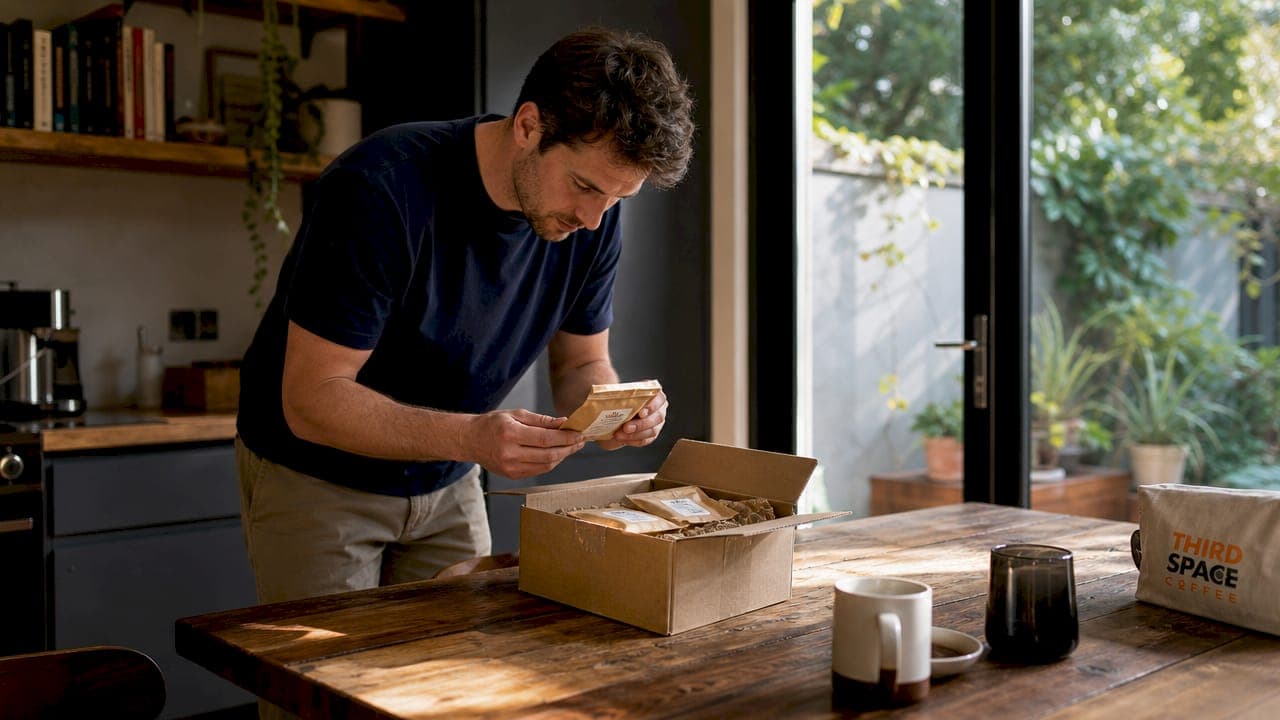
Fresh coffee delivery is the practice of roasting coffee beans and shipping them directly to your door within days of roasting, preserving the peak flavor and aroma that store-bought coffee simply cannot match. Services like Bean Box and Trade Coffee have built entire businesses around this concept, and the difference in your cup is immediate and obvious. Supermarket coffee often sits in warehouses and on shelves for months before you buy it. Fresh delivery closes that gap entirely, giving you beans at their best right when you need them.
What is fresh coffee delivery and how does it work?
Fresh coffee delivery, also called roast-to-order delivery, is a fulfillment model where roasters only roast your beans after you place an order. Roast-to-order means roasting coffee only after an order is placed to guarantee freshness, contrasting with inventory-based retail coffee that loses flavor sitting on shelves. That single difference changes everything about the quality you receive.
Here is the process from start to finish:
- You place an order. The roaster receives it and schedules your batch.
- Beans are roasted fresh. Small-batch roasting is standard. Volume is kept low to maintain quality control.
- Beans rest briefly. Freshly roasted coffee releases CO2 in a process called degassing. The degassing period of 4–21 days after roasting allows flavor to develop fully, and shipping within or near this window maintains optimal taste.
- Beans ship fast. Professional roast-to-order services ship within 24–48 hours of roasting, ensuring customers receive fresh beans instead of weeks-old stock common in supermarkets.
- You brew at peak flavor. The peak flavor window for fresh-roasted coffee is typically 3–21 days after roasting, during which quality is highest before aromatic compounds dissipate.
The roast date printed on the bag is your most important quality signal. A bag labeled with a roast date two weeks ago is still excellent. A bag with no roast date at all is a red flag.
Pro Tip: Always check the roast date on any bag you order. If a service does not print roast dates on packaging, choose a different service.
Why does fresh coffee taste better than store-bought?
Fresh delivery coffee tastes better because of chemistry, not marketing. Coffee beans contain hundreds of volatile oils and aromatic compounds that create the flavors you taste in your cup. Those compounds begin breaking down the moment roasting ends. Stale coffee is not just less flavorful. It is chemically different from fresh coffee.
Supermarket coffee loses its edge in several specific ways:
- Volatile oil loss. The oils responsible for bright, complex flavor evaporate quickly when beans are exposed to air and time. Grocery store beans roasted months before purchase have lost most of these oils entirely.
- CO2 depletion. Freshly roasted beans release CO2, which protects flavor during brewing. Stale beans have no CO2 left, producing flat, lifeless extraction.
- Oxidation. Oxygen reacts with coffee compounds and produces off-flavors. Vacuum sealing slows this, but it does not stop it indefinitely.
- Aroma collapse. The smell of fresh coffee is a direct indicator of flavor potential. Stale coffee smells dull because the aromatic compounds are gone.
A common misconception is that grinding fresh or using a better brewer compensates for stale beans. It does not. No brewing device can restore flavor lost from old coffee. Freshness defined by roast date is critical, making roast date labeling the only reliable quality indicator.
"Fresh coffee delivery solves the problem of stale grocery store coffee by delivering beans with volatile oils intact." — Northside Coffee
The peak flavor window of 3–21 days post-roast is the target zone for every cup. Fresh delivery services are specifically designed to put beans in your hands inside that window. Retail coffee almost never does.
How do you choose the best fresh coffee delivery service?
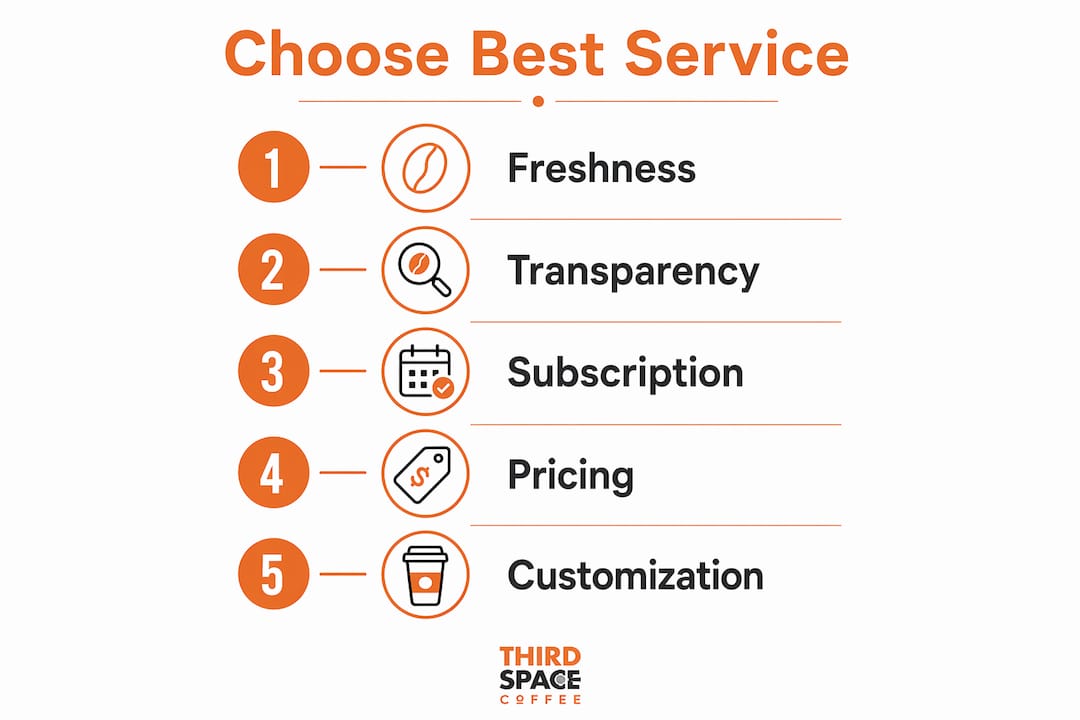
Choosing among the best coffee delivery services comes down to five factors: freshness transparency, subscription flexibility, variety, customization, and price. Not every service excels at all five, so knowing your priorities helps narrow the field quickly.
Subscription types: curated vs. single-origin
Curated roaster's choice subscriptions are ideal for exploring diverse small-batch roasters, while single-origin subscriptions appeal to those interested in specific region flavors and sustainability. If you want to discover new coffees every month, a curated plan works well. If you have a favorite region like Ethiopia or Colombia and want to go deep on those flavors, single-origin is the better fit.
Pricing and shipping
Coffee subscription costs generally range from $15.75 to $25.00 per 12-ounce bag, with many services offering free shipping on recurring orders. That price range reflects specialty-grade beans with verified roast dates. Budget options below $12 per bag almost always mean older stock or lower-grade beans.
Customization and flexibility
| Feature | What to Look For | Why It Matters |
|---|---|---|
| Grind size options | Whole bean, coarse, medium, fine | Matches your specific brewing method |
| Roast profile | Light, medium, dark | Controls flavor intensity and acidity |
| Delivery frequency | Weekly, bi-weekly, monthly | Prevents stale buildup or running out |
| Pause or skip | Available without penalty | Accommodates travel and schedule changes |
| Roast date on bag | Printed clearly | Confirms beans are genuinely fresh |
High-end coffee subscriptions provide flexible delivery frequency options, customization of grind size, and the ability to pause or skip deliveries. That flexibility is not a luxury. It is what prevents you from ending up with three bags of stale coffee because life got busy.
Pro Tip: Order whole beans whenever possible and grind just before brewing. Pre-ground coffee loses flavor significantly faster than whole beans, even when delivered fresh.
How to get the most from your home coffee delivery
Receiving fresh beans is only half the equation. How you store and use them determines whether you actually taste the difference. These practices protect your investment and keep every cup at its best.
- Store in an airtight container. Transfer beans from the delivery bag into an airtight, opaque container immediately if the bag does not have a resealable valve. Oxygen and light are the two fastest ways to degrade freshness. For more detail on protecting flavor after delivery, the coffee freshness tips from Thirdspacecoffee cover the key storage methods clearly.
- Keep beans at room temperature. Refrigerators introduce moisture, which damages coffee. Freezing is only appropriate for long-term storage of unopened bags, not for daily use.
- Match grind size to your brewer. A French press needs coarse grounds. An espresso machine needs fine. Using the wrong grind wastes even the freshest beans by producing under-extracted or over-extracted results.
- Time your deliveries to your consumption rate. Subscription scheduling helps customers match delivery cadence to consumption, preventing stale coffee accumulation. If you drink one 12-ounce bag every two weeks, set your delivery to bi-weekly.
- Experiment with origins and roasts. Fresh delivery gives you access to single-origin coffees from Ethiopia, Guatemala, Kenya, and dozens of other regions. Rotating through origins is one of the fastest ways to develop your palate and find what you genuinely love.
Understanding why peak flavor matters in fresh beans helps you make smarter decisions about when to brew and how to store what you receive.
Key takeaways
Fresh coffee delivery puts roast-to-order beans in your hands within the 3–21 day peak flavor window, delivering quality that retail coffee cannot replicate regardless of brewing method.
| Point | Details |
|---|---|
| Roast-to-order is the standard | Top services roast only after your order is placed, shipping within 24–48 hours of roasting. |
| Peak flavor window is narrow | Beans taste best 3–21 days after roasting; fresh delivery is designed to hit that window. |
| Roast date beats best-by date | Always check the roast date on the bag. No roast date means no freshness guarantee. |
| Subscription flexibility matters | Pause, skip, and frequency controls prevent stale buildup and match your actual consumption. |
| Storage protects your investment | Airtight containers at room temperature preserve volatile oils after delivery. |
Why fresh delivery changed how i think about coffee
I used to think the difference between fresh and store-bought coffee was mostly hype. Then I ordered a bag of freshly roasted Ethiopian Yirgacheffe from a roast-to-order service and brewed it on day five post-roast. The brightness, the floral notes, the clean finish. It was not subtle. It was a completely different experience from anything I had brewed with grocery store beans.
What surprised me most was not the flavor. It was how much I had been settling. I had been buying the same supermarket brand for years, assuming my grinder or my technique was the limiting factor. Fresh delivery exposed the truth: the beans were the problem the whole time.
The subscription model also changed my relationship with convenience. I used to make emergency coffee runs when I ran out. Now I set my delivery cadence once and forget it. The beans arrive before I run out, they are always fresh, and I spend zero mental energy on restocking. That is a real quality-of-life improvement, not a small one.
My one honest caution: not every service that claims "fresh" actually delivers on it. Some roast in large batches and hold inventory. The only way to verify freshness is a printed roast date on the bag. If a service cannot tell you when your beans were roasted, they are not a fresh delivery service. They are just a delivery service.
— Tanya
Get fresh coffee delivered from Thirdspacecoffee
Thirdspacecoffee roasts specialty coffee in-house in Colorado Springs, which means your beans go from roaster to your hands without sitting in a warehouse. The quality difference is built into the process.
If you are ready to experience what fresh-roasted coffee actually tastes like, start with Thirdspacecoffee's whole bean coffee selection. Every bag is roasted in small batches with a clear roast date so you always know exactly what you are getting. For something ready to drink, the specialty drinks menu brings that same freshness standard to every cup. Local pickup is available for Colorado Springs customers who want their coffee fast, and online ordering makes it easy to stock up from anywhere.
FAQ
What is fresh coffee delivery exactly?
Fresh coffee delivery is a service that ships coffee beans directly to your door within days of roasting, preserving peak flavor and aroma. It uses a roast-to-order model, meaning beans are roasted only after your order is placed.
How long does fresh-roasted coffee stay at peak quality?
The peak flavor window for fresh-roasted coffee is 3–21 days after roasting. Brewing within that window gives you the best possible flavor from any given batch.
Is a fresh coffee subscription worth the cost?
Yes, for most coffee drinkers. Subscription costs typically range from $15.75 to $25.00 per 12-ounce bag, and the flavor improvement over supermarket coffee is significant enough to justify the price difference.
What should i look for on a coffee delivery bag?
Look for a printed roast date, not just a best-by date. Roast date is the key freshness indicator, and any quality service will print it clearly on every bag.
Can i customize a fresh coffee subscription?
Most quality services offer customization including grind size, roast profile, and delivery frequency. Look for services that also allow you to pause or skip deliveries without penalties, so your schedule stays flexible.