
TL;DR:
- Coffee quality depends on origin, processing, roasting, and freshness, not just roasting alone.
- Industry standards like SCA scores and the presence of defects determine the coffee's sensory and aesthetic quality.
- Hosting community tastings with fresh, defect-free beans enhances engagement and appreciation of high-quality coffee.
A single stale bean can unravel an entire brew. That's not an exaggeration. Coffee quality is shaped by dozens of decisions made long before water meets grounds, and each one either builds toward something extraordinary or quietly destroys it. For Colorado Springs coffee lovers who appreciate the difference between a flat, lifeless cup and one that sings with brightness and complexity, understanding what drives quality is genuinely life-changing. And for anyone thinking about hosting a coffee-centered gathering, these details are what separate a forgettable event from one people talk about for weeks.
Table of Contents
- What determines coffee quality from farm to cup?
- Industry standards: How coffee is graded and what defects mean
- Freshness and processing: Why these factors make or break your cup
- Taste, liking, and health: Quality's wider impact
- Why quality matters most for Colorado Springs coffee enthusiasts
- Experience high-quality coffee at Third Space Coffee
- Frequently asked questions
Key Takeaways
| Point | Details |
|---|---|
| Quality is multifactorial | Coffee quality comes from origin, processing, roast, freshness, and storage, all contributing to taste and experience. |
| Defects dramatically impact flavor | Even minor defects or staleness degrade unique flavors and mask coffee’s true potential. |
| Industry standards matter | SCA grading, roast dates, and defect counts help ensure a high-quality cup for enthusiasts and event hosts. |
| Health and enjoyment | High-quality coffee offers better health benefits and is typically more enjoyable, making quality critical for community events. |
What determines coffee quality from farm to cup?
With the big picture in mind, let's explore what actually makes a coffee qualify as "high quality."
Most people think coffee quality is mostly about roasting. Roasting matters, yes, but it's one link in a much longer chain. As quality research shows, coffee quality is a chain of factors from origin to brewing, where each stage preserves or degrades potential flavor and sensory attributes. Every decision upstream either adds potential to the cup or chips away at it.
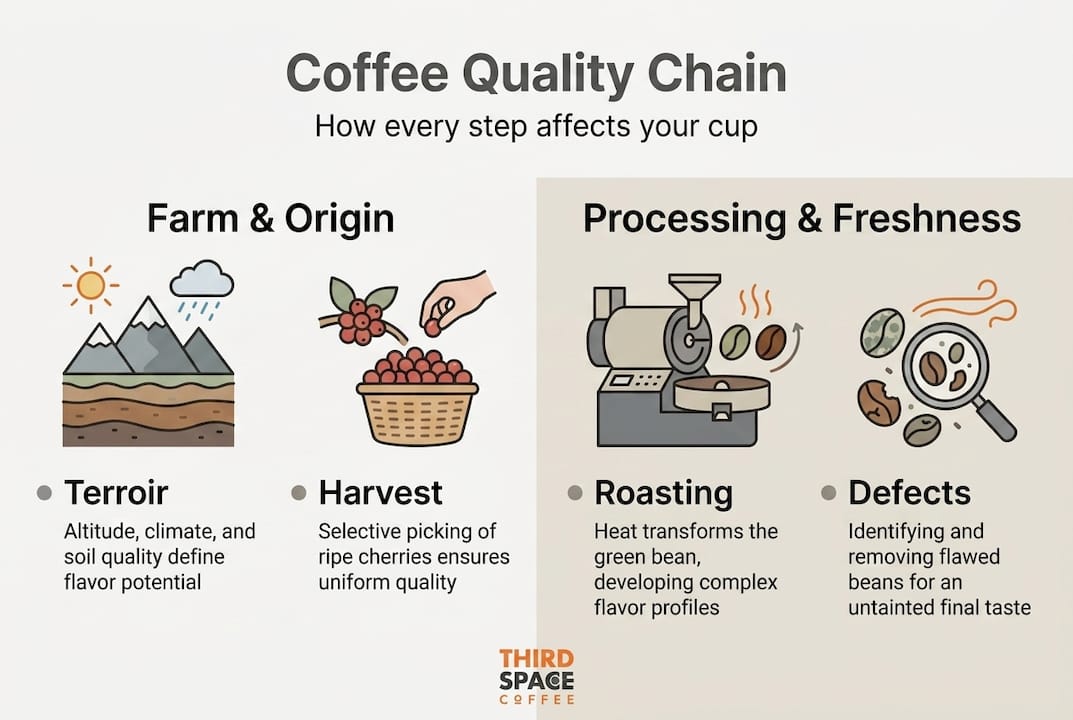
Let's start at the beginning: origin and terroir. Terroir refers to the environmental conditions where a coffee plant grows, including altitude, soil chemistry, rainfall patterns, and temperature swings. A coffee grown at high altitude in Ethiopia develops slower, denser beans with more complex sugars. Those sugars translate directly into sweetness and nuance in your cup. Exploring coffee origins decoded helps you understand how geography shapes flavor before a single decision is made by any human hand.
After harvest, processing is the next critical stage. How the fruit is removed from the coffee seed introduces enormous flavor variation. Washed coffees tend to be cleaner and brighter. Naturally dried coffees carry fruity, wine-like sweetness. Each approach locks in specific flavor compounds that no amount of expert roasting can add back if they weren't preserved from the start.
Then comes roasting. A great roaster reads the bean's potential and develops it without burning away delicate volatile aromatics. Roast too light and starches don't fully convert. Roast too dark and you've masked everything interesting behind carbon.
Here's a quick comparison of how different stages impact your cup:
| Stage | Impact level | What goes wrong when mishandled |
|---|---|---|
| Origin and growing conditions | Very high | Underdeveloped flavor, flat sweetness |
| Processing method | High | Ferment faults, inconsistency |
| Roasting | High | Baked, underdeveloped, or burnt notes |
| Freshness and storage | Critical | Stale, flat, oxidized, musty |
| Brewing | Moderate | Over or under extraction |
A few key variables every coffee enthusiast should track:
- Roast date, not just the "best by" date, which is often misleading
- Processing method listed on the bag
- Origin and altitude of the growing region
- Storage conditions after opening (airtight, cool, away from light)
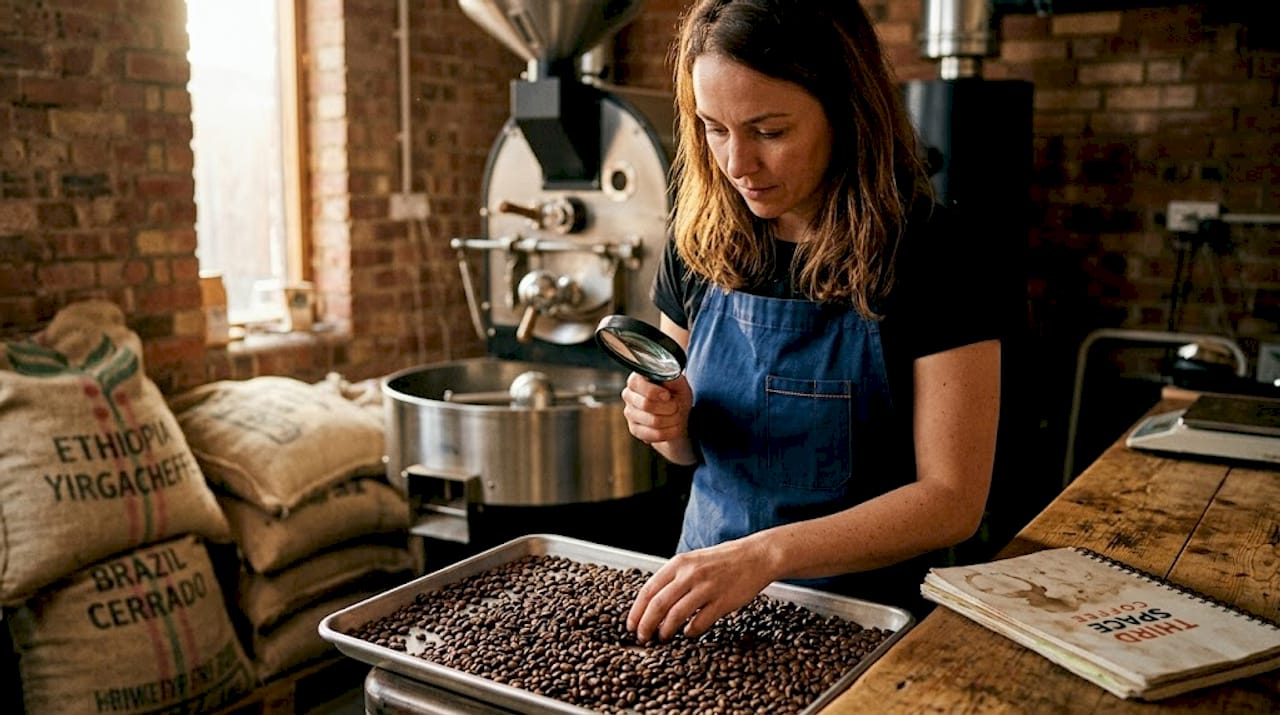
Defects are another issue entirely. A defective bean, whether it's insect-damaged, fermented incorrectly, or dried unevenly, introduces off-flavors that contaminate the entire batch. Getting familiar with industry coffee terms makes it much easier to spot these issues when you're reading a bag or ordering from a specialty roaster.
Industry standards: How coffee is graded and what defects mean
After understanding the quality chain, it's essential to see how the industry defines and measures quality.
The Specialty Coffee Association (SCA) created a standardized grading system that gives roasters, buyers, and cafes a shared language for quality. The SCA cupping protocol benchmarks quality on a 100-point scale, with 80 or above required for specialty status. Evaluators assess fragrance, flavor, aftertaste, acidity, body, balance, and cleanliness, among other attributes.
Here's what those score ranges mean in practice:
| Score range | Classification | What it means for the drinker |
|---|---|---|
| 90 to 100 | Outstanding | Rare, complex, memorable |
| 85 to 89 | Excellent | Distinctive origin character |
| 80 to 84 | Specialty | Clean, well-developed, enjoyable |
| Below 80 | Commercial grade | Acceptable but not distinctive |
Defects fall into two categories: primary and secondary.
-
Primary defects include full black beans, full sour beans, and large stones. These are the most damaging because they directly introduce intense negative flavors. A single full sour bean in a batch can make the entire cup taste vinegary. As quality philosophy research confirms, defects like full black or sour beans introduce off-flavors such as burnt, vinegary, or musty notes, and coffee must first meet functional standards before achieving aesthetic excellence.
-
Secondary defects include partial black beans, parchment, and hull pieces. These cause subtler but still noticeable problems like muddiness or inconsistent extraction.
What this means for hospitality venues and event planners is practical and important. When curating a menu for a gathering, knowing the SCA score of a coffee helps you communicate its value to guests. A coffee scoring in the 85 to 89 range is genuinely impressive, and explaining that to guests creates a richer experience. You're not just serving coffee; you're sharing a story backed by measurable quality.
Understanding how defects affect drip coffee sensory effects is especially relevant when planning large events where drip is the primary brewing method. And if you're building a menu with multiple offerings, learning how origins and roast levels interact in coffee blends gives you creative flexibility without sacrificing consistency.
"High-quality coffee must first meet functional standards before achieving aesthetic excellence." This is the most practical filter for anyone choosing coffee for events or personal enjoyment.
Freshness and processing: Why these factors make or break your cup
The next key element is freshness, so let's see why timing and processing matter more than most people realize.
Here's a fact that surprises a lot of people: coffee has a peak flavor window. It's not indefinite, and it's shorter than most grocery store bags suggest. The peak flavor window is 5 to 21 days post-roast, driven by degassing, oxidation, and the loss of volatile aromatic compounds. Stale coffee loses aroma, clarity, and balance in ways that no brewing technique can recover.
Right after roasting, beans release CO2 in a process called degassing. During this window, flavors are intense but unbalanced. Around day five, most beans settle into their peak, where sweetness, acidity, and body all align. By day twenty-one or so, oxidation starts winning, and the coffee tastes flat, papery, or faintly stale.
This is why roast dates matter far more than "best by" dates. A bag with a "best by" date twelve months out tells you almost nothing useful. A bag with a roast date lets you calculate exactly where you are in that flavor window.
Processing methods introduce another layer of flavor control. Processing methods shape flavor in predictable ways:
- Washed processing strips the fruit before drying, producing clean, bright, high-clarity cups where origin and roast shine clearly
- Natural processing dries the whole cherry intact, allowing fruit sugars to absorb into the bean, adding sweetness and a wine-like body
- Honey processing removes the skin but leaves some mucilage (the sticky fruit layer) on the bean during drying, creating a balanced result between washed clarity and natural sweetness
Fermentation is where things get nuanced. Controlled fermentation during processing allows producers to develop specific flavor compounds. Uncontrolled fermentation introduces harsh, fermented, or vinegary off-flavors that lower quality fast.
Pro Tip: When hosting a coffee event, display the roast date and processing method on a small card near each coffee station. Guests find this detail fascinating, and it sparks conversations about why one coffee tastes so different from another, without requiring anyone to have expert knowledge.
A good way to understand freshness in your own routine is to explore a coffee roasting guide that walks through how roast profiles interact with processing and storage. The more you understand about what happens between harvest and your cup, the easier it is to choose and use coffee well.
Taste, liking, and health: Quality's wider impact
Finally, quality's impact goes beyond flavor, extending to health and community enjoyment in ways that matter to everyday drinkers and event hosts alike.
Here's a counter-intuitive insight about price: higher-priced coffee is liked more, and black coffee is consistently preferred among regular drinkers, with four to five cups per day representing optimal enjoyment patterns. Organic coffee may carry around 27% more polyphenols than conventional options, but that does not automatically mean better taste. Quality is its own metric, not a simple function of what you paid.
What this means practically is that you can find genuinely excellent coffees at accessible price points if you know what to look for. Roast date, processing method, origin, and SCA score are your real guides, not the price tag on the shelf.
On the health side, the picture gets interesting. Quality preserves bioactives like chlorogenic acids (CGAs) and antioxidants that are linked to numerous health benefits. Poor quality, especially beans with mold or fermentation defects, carries risks including mycotoxins, which are toxic compounds produced by fungi that can develop on improperly dried or stored beans.
Here's what that means for your daily cup:
- Fresh, defect-free specialty coffee delivers more of the beneficial compounds research connects to health outcomes
- Stale coffee loses much of its antioxidant activity even before it tastes noticeably bad
- Low-grade commercial coffee with visible defects may contain traces of mycotoxins, especially from origins with poor drying infrastructure
Community tastings are one of the best tools for turning these abstract facts into lived experience. A guided tasting where guests try a defect-laden commercial coffee alongside a fresh specialty coffee reveals the difference in a way that no amount of reading can match. Check out a coffee tasting guide built specifically for Colorado Springs enthusiasts to see how to structure this kind of experience.
Pro Tip: When organizing a community tasting, include one commercial grade coffee as a reference point alongside two specialty coffees. The contrast makes quality tangible and gives guests a sensory anchor they'll remember every time they choose coffee afterward.
Supporting local roasters in Colorado Springs also connects the health and taste benefits directly to your community. When you buy from a roaster who roasts in small batches and prints the roast date clearly, you're not just getting better coffee. You're supporting a sourcing and roasting practice that genuinely prioritizes the factors that matter.
Why quality matters most for Colorado Springs coffee enthusiasts
Here's an insider view that most articles on coffee quality skip entirely: the community dimension is not a bonus feature of quality coffee. It is the experience.
Conventional wisdom treats freshness and defect-free beans as technical concerns for professionals. In practice, these are the factors that determine whether a coffee event lands or fizzles. A stale batch at a gathering creates a flat, forgettable experience even if everything else is executed well. Guests don't always know why they're not enjoying it, but they feel it.
We've seen this firsthand in Colorado Springs. When events feature coffee with clear roast dates, interesting origins, and a host who can speak briefly to the processing method, something shifts in the room. People lean in. They ask questions. They compare notes. Coffee becomes a shared language rather than background fuel.
The most underutilized tool for building this kind of engagement is an SCA-style cupping session. You don't need certified evaluators. You need fresh coffee, clean water, consistent brewing, and a willingness to slow down and pay attention. Walking guests through fragrance, flavor, acidity, and body using a Colorado Springs tasting guide gives everyone a framework that makes complexity approachable.
Quality isn't a gatekeeping concept reserved for experts. It's a set of practical factors that anyone can learn to recognize and appreciate, and sharing that knowledge with your community is exactly what a great coffee event should do.
Experience high-quality coffee at Third Space Coffee
Ready to put these insights into practice? Discover your next great coffee experience right here in Colorado Springs.
At Third Space Coffee, we roast our whole bean coffees in-house and prioritize freshness in every batch. Whether you're looking to explore individual origins, sample something carefully crafted, or plan a community tasting event, we have what you need.

Browse our specialty drinks menu to taste the results of quality sourcing and thoughtful roasting. Stock up on our whole bean coffee to bring the freshness home, or explore our drip coffee selection for accessible everyday quality. And if you're ready to host a gathering that puts great coffee at the center, our event space is designed exactly for that kind of meaningful connection.
Frequently asked questions
How can I tell if my coffee is high quality?
Check the roast date, look for defect-free beans, and seek out coffees with SCA scores above 80, which evaluate fragrance, flavor, aftertaste, acidity, body, balance, and cleanliness. Ask your roaster directly about the processing method and origin.
Does paying more guarantee better coffee?
Not automatically. Higher-priced coffee is liked more on average, but real quality comes down to freshness and defect-free beans rather than price alone.
Why does freshness matter so much?
Coffee's peak flavor window runs 5 to 21 days after roasting. After that, oxidation breaks down volatile aromatics and the cup loses aroma, clarity, and balance quickly.
Can I host a tasting event to learn about coffee quality?
Absolutely. Community cupping sessions introduce guests to grading, defects, and flavor profiles through hands-on tasting, making the learning interactive and memorable rather than abstract.