
TL;DR:
- Sustainable coffee is grown and traded following practices that protect ecosystems, support farmers, and ensure long-term economic viability. Its core pillars are environmental responsibility, social equity, and economic viability, all of which must work together for true sustainability. Certification labels and direct trade relationships help identify responsible sourcing, but transparency about farm origins and pricing remains essential for trustworthy sustainability.
Sustainable coffee is coffee grown, sourced, and traded through practices that protect ecosystems, support farmer livelihoods, and maintain economic viability over time. The industry recognizes this through three formal pillars: environmental responsibility, social equity, and economic viability. Leading certifications like Rainforest Alliance, Fair Trade, Smithsonian Bird Friendly, and Regenerative Organic Certified exist specifically to verify these pillars at the farm level. Understanding what makes coffee sustainable helps you spend your money on cups that actually improve the world, not just claim to.
What is sustainable coffee and why does it matter?
Sustainable coffee is defined as a holistic production system designed to mitigate deforestation, pollution, and climate risks while keeping farmers economically stable. That definition matters because coffee is one of the most traded agricultural commodities on earth. The decisions made at every point in the supply chain, from soil preparation to your morning brew, carry real environmental and human consequences.
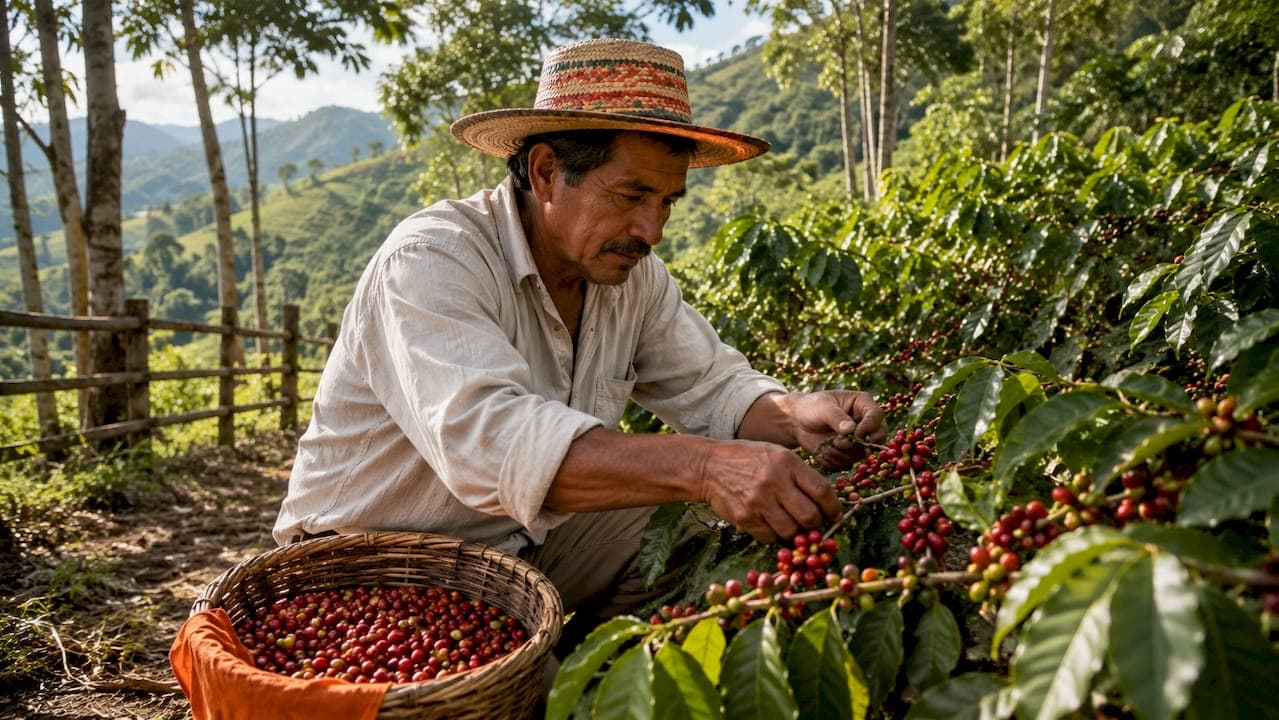
Coffee farming covers millions of acres across tropical regions in Latin America, Africa, and Southeast Asia. Many of those regions sit inside critical biodiversity zones. When farming practices strip tree cover, deplete soil, or underpay workers, the damage compounds across generations. Sustainable coffee sourcing addresses those risks at the source, not after the fact.
The concept is not new, but its urgency has grown sharply. Climate change is shrinking viable coffee-growing regions. Farmers who lack economic stability cannot invest in the soil health or crop diversity that would protect their yields. Sustainability, in this context, is not a marketing badge. It is a structural response to a real supply chain threat.
What are the three core pillars of sustainable coffee?
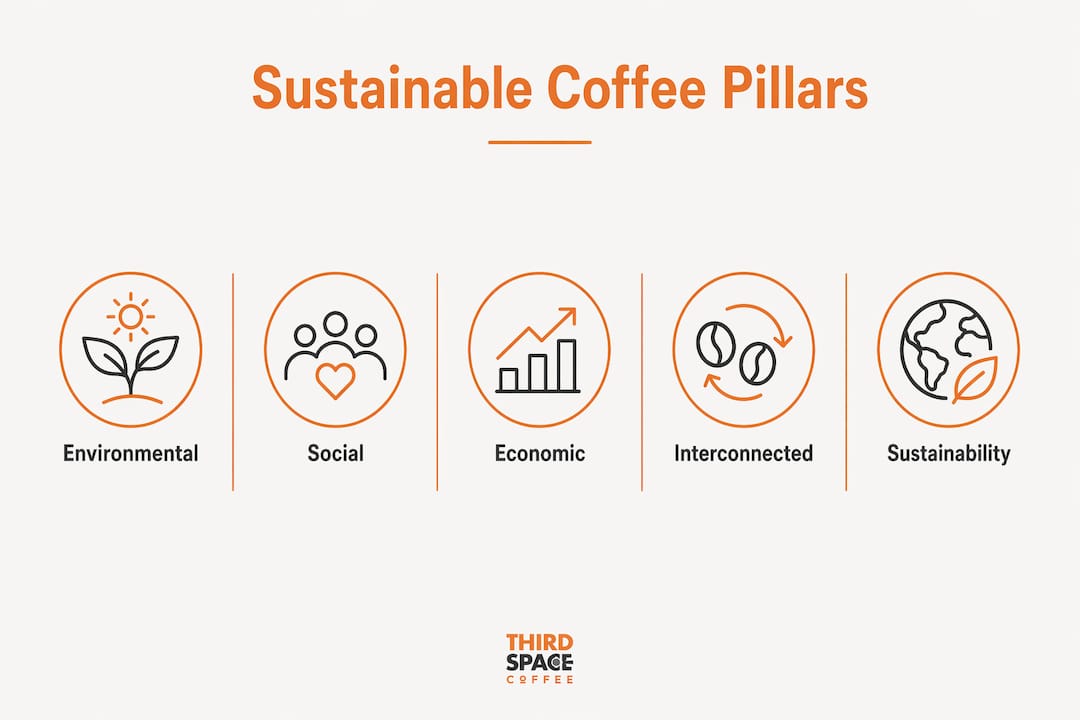
Every credible sustainability framework for coffee rests on three interconnected pillars. None of them works in isolation.
Environmental Responsibility
This pillar covers how farming affects the land, water, and wildlife around it. Key practices include:
- Protecting native tree cover and biodiversity corridors
- Managing water use to prevent stream contamination from processing waste
- Avoiding synthetic pesticides and fertilizers that degrade soil biology
- Sequestering carbon through shade canopy and agroforestry systems
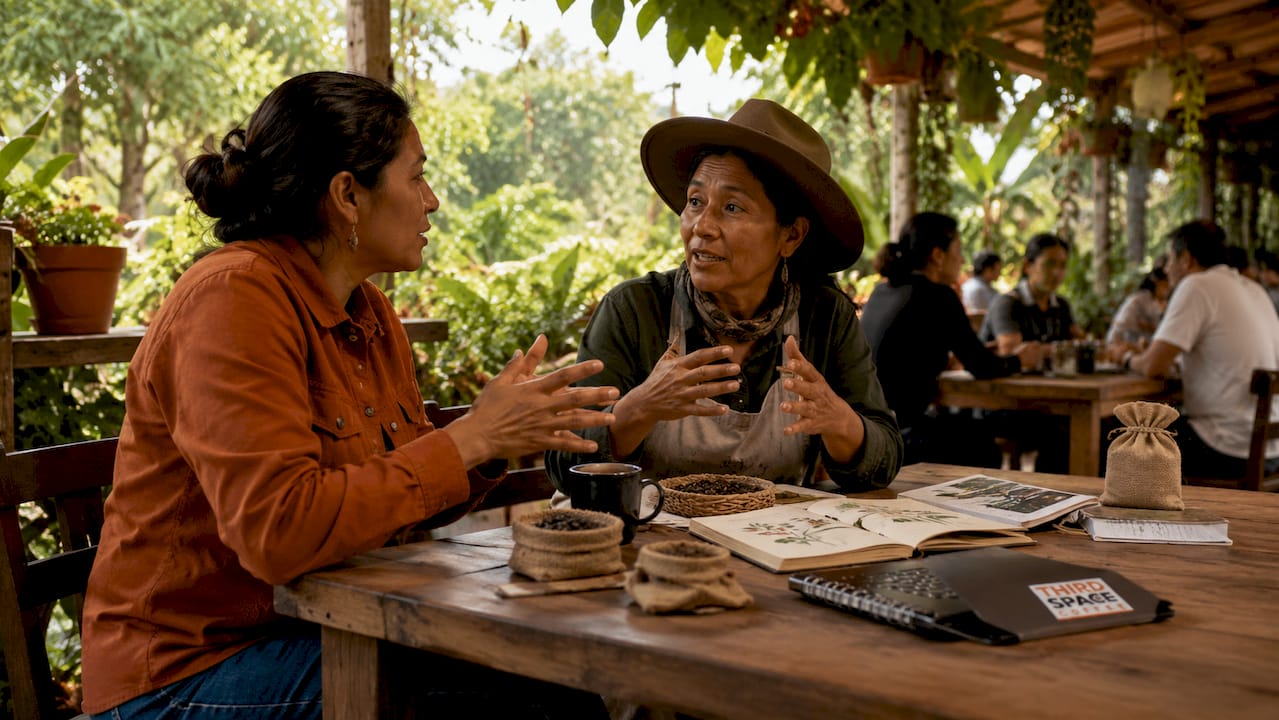
Agroforestry integrates native trees with coffee plants, supporting pollination, soil health, and climate resilience across developing countries. That is not a minor benefit. It means a single well-managed farm can function as a working ecosystem rather than a monoculture.
Social Equity
This pillar addresses the people who grow and harvest coffee. Fair wages, safe working conditions, access to healthcare, and community investment all fall here. Coffee farming is labor-intensive, and the workers at the bottom of the supply chain have historically absorbed the most risk for the least reward.
Economic Viability
Farmers need prices that cover their true cost of production. When commodity prices drop below that threshold, farmers cut corners on quality and environmental care. Long-term sustainability requires pricing structures that reward good practices rather than punish them.
Pro Tip: When evaluating a coffee brand's sustainability claims, look for evidence of all three pillars. A brand that talks only about organic certification but says nothing about farmer wages is showing you half the picture.
These pillars reinforce each other. A farmer paid fairly can afford to maintain shade trees. Healthy soil produces better-tasting coffee. Better coffee commands higher prices. The system is designed to be self-reinforcing when all three elements are present.
How do you identify truly sustainable coffee?
Certifications are the most visible signal, but they are not all equal. Here is how the major labels compare:
| Certification | Primary Focus | Key Strength | Limitation |
|---|---|---|---|
| USDA Organic | No synthetic inputs | Soil and ecosystem protection | Does not address farmer wages |
| Fair Trade | Farmer pricing | Minimum price guarantees | Cooperative model excludes some small farms |
| Rainforest Alliance | Environmental and social standards | Broad supply chain coverage | Allows partial certification |
| Smithsonian Bird Friendly | Shade-grown biodiversity | Strictest habitat standards | Limited to shade-grown farms |
| Regenerative Organic Certified | Soil restoration and social fairness | Highest combined standard | Newest, fewer certified farms |
About 1.7 million tons of coffee carry Rainforest Alliance certification worldwide as of 2026. That scale shows the certification has real market reach, but it also means the label covers a wide range of farm types and practices.
Certifications have real value, but they also have gaps. Organic certification says nothing about how workers are paid. Fair Trade certification does not require shade-grown farming. No single label covers every pillar completely.
Beyond Labels: Direct Trade and Traceability
Direct trade is a relationship-based sourcing approach without a formal certification body. Roasters who practice it buy directly from specific farms, often paying well above Fair Trade base prices. Farmers in direct trade relationships may earn 3–4 times more than Fair Trade minimums. That premium creates real incentive for quality and environmental care.
Traceability goes hand in hand with direct trade. A roaster who can tell you the specific farm, region, harvest date, and price paid for a coffee is demonstrating transparency that no label can fully replicate. Seasoned coffee professionals treat farm-level traceability as a stronger credibility signal than generic certification alone.
- Look for roasters who publish sourcing stories with farm names and locations
- Ask whether the brand can tell you what the farmer was paid
- Check if the brand revisits the same farms year after year, which signals a real relationship
Pro Tip: Search a roaster's website for the words "farm" and "price paid." If neither appears, the sourcing story is probably marketing, not transparency.
What are the best sustainable coffee farming practices?
The most forward-looking farms are moving beyond harm reduction toward active restoration. Regenerative agriculture is the current gold standard, using cover cropping, intercropping, and reduced tillage to rebuild soil health and biodiversity rather than simply preserving what remains.
Here is how key practices compare in their environmental impact:
| Practice | Environmental Benefit | Climate Benefit | Quality Impact |
|---|---|---|---|
| Shade-grown farming | High biodiversity support | Carbon sequestration | Slower ripening, more complex flavor |
| Agroforestry | Soil health, pollinator support | Forest protection | Improved bean density |
| Cover cropping | Erosion prevention, soil biology | Carbon storage in soil | Consistent nutrient availability |
| Reduced tillage | Soil structure preservation | Reduced carbon release | Long-term yield stability |
| Intercropping | Pest management, diversity | Reduced chemical inputs | Flavor complexity from varied soil |
Shade-grown coffee is worth understanding in detail. When coffee grows under a canopy of native trees, it ripens more slowly. That slower development allows the bean to accumulate more sugars and aromatic compounds. The result is a more complex cup. Sustainability and quality are not in tension here. They point in the same direction.
Regenerative practices also carry regulatory weight. The EU Deforestation-Free Regulation, which took effect in late 2025, requires that coffee imported into the European Union be traceable to deforestation-free land. Farms using agroforestry and regenerative methods are better positioned to meet that standard than conventional monoculture operations.
Sustainability extends beyond the farm to roasting and brewing. Energy-efficient roasters, well-maintained espresso machines, and reduced water waste all contribute to a lower lifecycle carbon footprint. Most consumers focus on farming, but the full picture includes every step from seed to cup.
Is sustainable coffee the same as specialty coffee?
These two categories overlap, but they are not the same thing. Sustainable and specialty coffee differ in their primary focus: specialty coffee is defined by cup quality and scoring, while sustainable coffee addresses systemic environmental and social impacts.
The Specialty Coffee Association defines specialty coffee as beans scoring 80 points or above on a 100-point quality scale. That score reflects flavor, aroma, acidity, and body. It says nothing about how the farm treats its workers or manages its water supply.
Key distinctions:
- Specialty coffee can be grown on a conventional farm with no environmental protections
- Sustainable coffee can include lower-scoring beans from farms with excellent environmental and social practices
- The best coffees often qualify as both, since quality and sustainability reinforce each other
- Understanding the difference helps you ask better questions when you buy
For consumers, the practical takeaway is this: a specialty label tells you the coffee tastes exceptional. A sustainability certification or transparent sourcing story tells you the coffee was produced responsibly. You want both, and they are increasingly available together from ethical coffee brands that treat sourcing as a craft, not a checkbox.
Learning more about coffee bean origin deepens your ability to evaluate both dimensions at once.
Key takeaways
Sustainable coffee requires all three pillars, environmental responsibility, social equity, and economic viability, to function as a genuine system rather than a marketing claim.
| Point | Details |
|---|---|
| Three pillars define sustainability | Environmental, social, and economic factors must all be present for coffee to be truly sustainable. |
| Certifications have real limits | No single label covers every pillar; combine certifications with sourcing transparency for a full picture. |
| Direct trade often outperforms labels | Farmers in direct trade relationships may earn 3–4 times more than Fair Trade base prices. |
| Regenerative farming raises the bar | Practices like shade-growing and cover cropping restore ecosystems and improve cup quality simultaneously. |
| Specialty and sustainable are not synonyms | Specialty scores cup quality; sustainability addresses environmental and social impact across the supply chain. |
Why sustainable coffee is no longer optional
I have spent years tasting coffees from farms across three continents, and the pattern is consistent: the most memorable cups almost always come from farms where the farmer had the resources to care. That is not a coincidence. When a grower earns a fair price, they invest in their land. Healthy land produces better fruit. Better fruit produces better coffee. The quality argument for sustainability is as strong as the ethical one.
What concerns me most right now is the gap between certification and reality. I have seen brands stack four logos on a bag and still be unable to tell you the name of the farm or what the picker was paid that season. Labels are a starting point, not a finish line. The brands worth trusting are the ones who treat sourcing transparency as a point of pride, not a compliance exercise.
Sustainable sourcing has moved from a niche preference to a strategic necessity for roasters managing climate risk and consumer expectations. That shift is real, and it is accelerating. The coffee regions most at risk from climate change are the same ones producing the most distinctive and sought-after beans. Protecting those regions is not altruism. It is supply chain intelligence.
My advice to any coffee drinker: ask one question before you buy. Can the brand tell you where this coffee came from and what the farmer was paid? If the answer is yes, you are probably in good hands. If the answer is a logo and a vague story about "partner farms," keep looking.
— Tanya
Taste the difference that sourcing makes
Thirdspacecoffee roasts its whole bean coffees in-house in Colorado Springs, sourcing with an eye toward transparency and quality that goes beyond the label. Every bag reflects a commitment to knowing where the coffee came from and why that origin matters.

If you want to put sustainable principles into practice in your own cup, start with whole bean coffee roasted fresh and sourced with intention. Or stop by and try one of the specialty drinks crafted from the same thoughtfully sourced beans. At Thirdspacecoffee, the sourcing story is part of what you taste.
FAQ
What makes coffee officially sustainable?
Coffee is considered sustainable when it meets standards across environmental responsibility, social equity, and economic viability for farmers. Certifications like Rainforest Alliance, Fair Trade, and Regenerative Organic Certified provide third-party verification of these standards.
Which sustainable coffee certification is the strictest?
Smithsonian Bird Friendly carries the strictest habitat standards for shade-grown farming, while Regenerative Organic Certified sets the highest combined bar for soil health and social fairness. No single certification covers every sustainability dimension equally.
Is direct trade better than fair trade certification?
Direct trade often delivers higher farmer premiums, with some farmers earning 3–4 times the Fair Trade base price. The trade-off is that direct trade has no formal oversight body, so its value depends entirely on the roaster's transparency and commitment.
Does sustainable coffee taste different?
Shade-grown and regeneratively farmed coffees often produce more complex flavor profiles because slower ripening allows beans to develop more sugars and aromatic compounds. Quality and sustainability reinforce each other at the farm level.
How do i choose sustainable coffee at the store?
Look for certifications as a starting point, then check whether the brand publishes specific farm names, regions, and pricing information. Brands that share sourcing transparency alongside their certifications are the most credible choices.