
TL;DR:
- Understanding coffee origin and processing enhances intentional bean selection and brewing confidence.
- Arabica offers nuanced, sweeter flavors, while Robusta provides boldness and higher caffeine content.
- Locally roasted beans ensure freshness, significantly impacting flavor regardless of bean type choice.
Walk into any specialty coffee shop in Colorado Springs and you'll face a wall of choices: single-origin Arabica from Ethiopia, a bold Robusta espresso blend, maybe even something rare and exotic you've never heard of. Picking the wrong bag can mean a week of disappointing cups. But here's the thing: once you understand what separates one bean type from another, every purchase becomes intentional. This guide breaks down the four main types of coffee beans, their flavor profiles, caffeine levels, and ideal brewing uses, so you can stop guessing and start brewing with real confidence.
Table of Contents
- Understanding what makes coffee beans unique
- Arabica: The favorite of specialty coffee
- Robusta: Bold, powerful, and resilient
- Exploring Liberica and Excelsa: Rare but remarkable
- Comparing coffee bean types: Flavor, caffeine, and best use
- What most guides miss about choosing coffee beans
- Discover and taste the best beans locally
- Frequently asked questions
Key Takeaways
| Point | Details |
|---|---|
| Arabica leads specialty coffee | Arabica beans offer nuanced flavors and lower caffeine, making them a favorite for quality-focused coffee. |
| Robusta packs a punch | Robusta's higher caffeine and bold taste are ideal for espresso blends and those who prefer stronger coffee. |
| Liberica and Excelsa are unique | These rare beans provide distinct flavor experiences and are worth trying for adventurous coffee drinkers. |
| Freshness is essential | No matter the bean type, freshly roasted coffee makes the biggest impact on your cup. |
| Local options matter | Exploring local Colorado Springs roasters connects you with premium beans and community expertise. |
Understanding what makes coffee beans unique
Before you can choose the right bean, you need to speak the language. Several factors shape what ends up in your cup, and knowing them changes how you shop, brew, and taste.
Origin refers to the country or region where the coffee was grown. Ethiopia produces bright, floral beans. Colombia is known for balanced, caramel sweetness. Guatemala tends toward chocolatey depth. Altitude matters too. Beans grown at higher elevations develop more slowly, which concentrates sugars and creates more complex flavors. Processing method describes how the fruit is removed from the seed after harvest. Washed (wet) processing produces cleaner, brighter flavors, while natural (dry) processing adds fruity, wine-like notes.
Caffeine content varies significantly by species. Arabica and Robusta differ in caffeine levels, growing conditions, and flavor intensity, making species selection a real decision, not just a label. If you want to get fluent in the vocabulary before diving deeper, start with these essential coffee terms that every enthusiast should know.
Here are the core factors that shape your cup:
- Species: Arabica, Robusta, Liberica, or Excelsa
- Growing altitude: Higher elevation generally means more complexity
- Processing method: Washed, natural, or honey processed
- Roast level: Light roasts preserve origin character; dark roasts emphasize body
- Freshness: Beans lose volatile aromatics quickly after roasting
Pro Tip: Buy beans roasted within the last two weeks whenever possible. Fresh roasting unlocks flavor nuances that stale beans simply cannot deliver, no matter how good the origin.
Arabica: The favorite of specialty coffee
With these criteria in mind, let's meet the world's most popular coffee bean. Arabica (Coffea arabica) is the gold standard for specialty coffee, and for good reason.
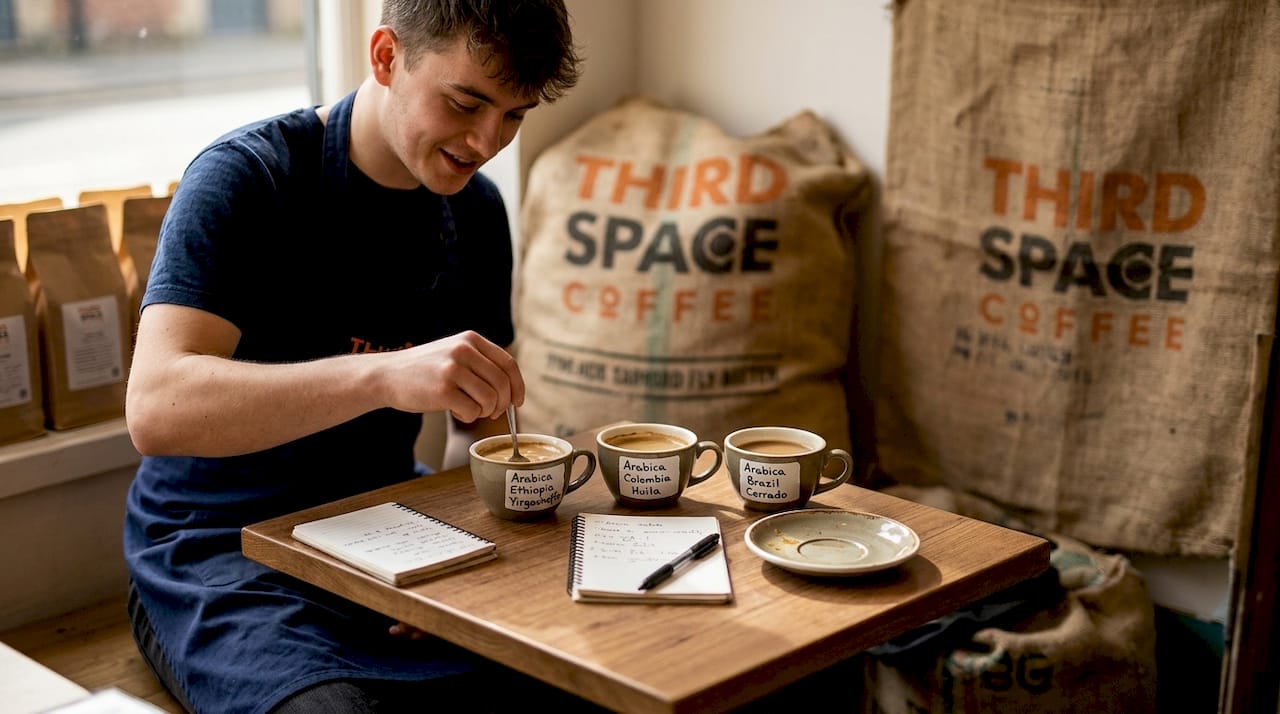
Arabica accounts for 60 to 70% of global production, prized for smooth, nuanced flavors with lower caffeine (1.2 to 1.5%) and grown at high altitudes between 800 and 2100 meters. That slower growth at elevation is exactly what creates the layered sweetness and acidity that coffee lovers chase.
Flavor-wise, Arabica can range from bright citrus and jasmine florals to stone fruit, brown sugar, and dark chocolate, depending on origin and roast. It has a natural, mild acidity that feels lively rather than harsh. It's the bean behind most specialty menus, including the whole bean Arabica options you'll find at quality local roasters.
"Arabica is the bean of choice for quality-focused coffee shops because its complexity rewards careful roasting and precise brewing. When sourced well and roasted fresh, it tells a story about where it came from."
Pros of Arabica:
- Complex, nuanced flavor with natural sweetness
- Lower caffeine for those sensitive to stimulants
- Exceptional range across coffee origins worldwide
- Ideal for pour-over, drip, and light espresso
Cons of Arabica:
- More expensive due to difficult growing conditions
- Delicate and susceptible to disease and climate shifts
- Can taste flat or sour if brewed incorrectly
In Colorado Springs, the trend toward single-origin Arabicas has grown steadily. Enthusiasts here want to taste the terroir, the specific character of a place, in their cup. That curiosity is exactly what drives great coffee culture.
Robusta: Bold, powerful, and resilient
If Arabica is light and nuanced, Robusta brings the power. Coffea canephora, commonly called Robusta, is a completely different experience from the first sip.
Robusta accounts for 30 to 40% of global production, with higher caffeine (2.2 to 2.7%), bold and bitter flavors, and a resilient nature that allows it to grow at lower altitudes. That extra caffeine is one reason it tastes more intense. The higher chlorogenic acid content also contributes to its characteristic bitterness and earthy, sometimes woody or rubbery notes.
So where does Robusta shine? Espresso. Its natural oils produce a thick, persistent crema that Arabica alone struggles to match. Many Italian-style espresso blends lean heavily on Robusta for exactly that reason. If you want to understand how roast level transforms Robusta's intensity, this coffee roasting guide is worth reading before you experiment.
When Robusta works best:
- Espresso blends that need strong crema and body
- Budget-conscious brewing without sacrificing caffeine kick
- Cold brew where bold flavors hold up against ice and dilution
- Blending with Arabica for balance (see coffee blends explained)
Robusta by the numbers:
- Nearly double the caffeine of Arabica
- Grown at altitudes from sea level to 800 meters
- Dominant in Vietnam, Uganda, and Indonesia
For Colorado Springs enthusiasts who want a punchier morning brew, a well-sourced Robusta blend can be a revelation. The key is finding one that's been roasted with care, because cheap Robusta tastes harsh, while quality Robusta tastes bold and satisfying.
Exploring Liberica and Excelsa: Rare but remarkable
While Arabica and Robusta dominate the market, two other types intrigue adventurous drinkers. Liberica and Excelsa together make up a tiny fraction of global supply, but they offer flavor experiences you simply cannot find anywhere else.
Global production for 2025 to 2026 is forecast at around 178 million bags total, with Arabica at roughly 102 million and Robusta at 76 million. That leaves Liberica and Excelsa sharing a sliver of the remainder, which explains why most coffee drinkers have never tasted either.
Liberica (Coffea liberica) grows primarily in the Philippines, Malaysia, and West Africa. Its beans are large and irregularly shaped. The flavor is polarizing: smoky, floral, and woody with a full body that some describe as uniquely funky. It's not subtle. Either you love it or you don't.
Excelsa (now classified as a variety of Liberica) grows mainly in Southeast Asia and parts of Africa. It delivers a tart, fruity complexity with a dark, roasty backbone. It's often used in blends to add intrigue and depth.
Reasons to experiment with these rare beans:
- Pure curiosity and the joy of tasting something genuinely different
- They appear in specialty blends designed to surprise experienced palates
- Rare tasting events at local roasters sometimes feature limited batches
- Expanding your palate makes you a sharper taster across all coffees
Pro Tip: Ask your local Colorado Springs roaster directly if they've sourced any Liberica or Excelsa recently. Small roasters sometimes get access to micro-lots that never make it to the menu board.
Comparing coffee bean types: Flavor, caffeine, and best use
Now that you know the main options, see how they stack up directly. Arabica and Robusta share the majority of global production, with Liberica and Excelsa as niche options for the curious and adventurous.
| Bean type | Flavor profile | Caffeine | Growing region | Best use |
|---|---|---|---|---|
| Arabica | Sweet, fruity, floral, mild acidity | 1.2 to 1.5% | Ethiopia, Colombia, Guatemala | Pour-over, drip, light espresso |
| Robusta | Bold, bitter, earthy, woody | 2.2 to 2.7% | Vietnam, Uganda, Indonesia | Espresso blends, cold brew |
| Liberica | Smoky, floral, woody, full body | ~1.5% | Philippines, Malaysia | Specialty blending, tasting |
| Excelsa | Tart, fruity, dark, complex | ~1.0% | Southeast Asia, Africa | Blending, specialty cups |
Use this coffee tasting guide to sharpen your palate as you work through different types.
How to choose the right bean for your palate:
- Start with flavor preference. Do you want sweet and nuanced or bold and intense? That answer alone points you toward Arabica or Robusta.
- Consider your brewing method. Espresso machines favor Robusta blends. Pour-over and drip setups reward Arabica's complexity.
- Think about caffeine sensitivity. If you're sensitive to caffeine, Arabica is the clear choice.
- Check local availability. Colorado Springs roasters who roast in-house give you the freshest options, which matters more than most people realize.
- Experiment one variable at a time. Change the bean type, keep everything else the same, and taste the difference clearly.
What most guides miss about choosing coffee beans
Here's the uncomfortable truth: most coffee education stops at the species level, as if knowing "Arabica" is enough to guarantee a great cup. It isn't. We've tasted disappointing Arabica and genuinely impressive Robusta blends, and the difference almost always comes down to two things: freshness and the roaster's craft.
A bag of single-origin Ethiopian Arabica that was roasted six weeks ago will taste flat and papery. A well-roasted Robusta blend from a local roaster, pulled fresh that week, will outperform it every time. That's not an opinion. It's what happens when volatile aromatic compounds break down after roasting.
Colorado Springs has a real advantage here. When you buy from a local roaster who roasts in-house, you're getting beans at peak flavor, often within days of the roast date. You also get to ask questions, learn about the sourcing, and build a relationship with the people behind your coffee. That connection is something no online retailer can replicate. Understanding what defines a coffee enthusiast goes beyond knowing bean names. It means caring about the whole chain from farm to cup, and choosing local when it matters most.
Discover and taste the best beans locally
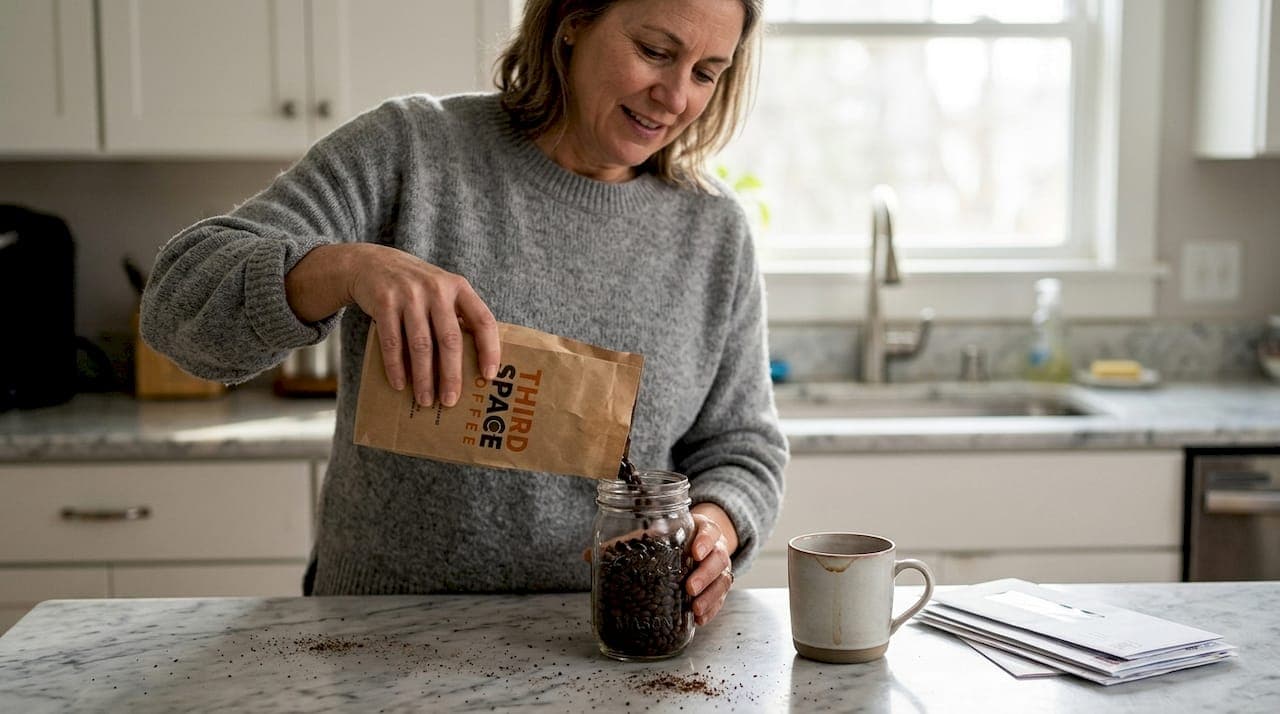
Ready to take your coffee knowledge from theory to delicious reality? At Third Space Coffee in Colorado Springs, we roast our beans in-house so every bag you take home is as fresh as it gets.

Explore our selection of Whole Bean Coffee to compare Arabica profiles side by side, or try our Espresso Blend Bag to experience how Arabica and Robusta work together in a balanced, crema-rich blend. If you'd rather let us do the brewing, our Specialty Drinks menu puts these beans in the hands of people who know exactly how to coax the best out of them. Stop in, order online for pickup, and taste the difference freshness makes.
Frequently asked questions
What is the main difference between Arabica and Robusta beans?
Arabica and Robusta differ significantly in flavor and caffeine: Arabica is smoother and sweeter with lower caffeine, while Robusta beans are more bitter and contain nearly double the caffeine of Arabica.
Are Liberica and Excelsa beans available in Colorado Springs?
Liberica and Excelsa are niche beans with limited market share, but they can occasionally be found at specialty roasters in Colorado Springs or in limited seasonal batches.
Which type of coffee bean is best for espresso?
Many cafes use blends of Arabica and Robusta for espresso because Robusta builds crema and adds intensity, while Arabica contributes sweetness and complexity to balance the shot.
Does coffee bean origin matter as much as bean type?
Both origin and variety shape your cup, but origin, processing, and roasting all affect flavor, and freshness from a local roaster can make an even bigger difference than the species alone.
Recommended
- Whole Bean Coffee | Third Space Coffee Colorado Springs, CO
- Coffee blends explained: how to choose the perfect cup
- Essential industry terms every coffee enthusiast should know
- Coffee roasting guide: elevate your home brews like a pro
- Πλεονεκτήματα συσκευών καφέ για επαγγελματίες - ΞΥΔΑΣ ΕΥΡΑΓΟΡΑ - Οι καλύτεροι στην αγορά. Μεγάλες προσφορές στις Ηλεκτρικές Συσκευές