

TL;DR:
- Arabica beans make up 60–70% of global coffee and are favored for their complex flavor and aroma. Their higher sugar and lipid content, along with grown altitude and processing methods, create unique taste profiles and health benefits. Higher costs result from delicate cultivation and selective harvesting, emphasizing quality and transparency.
Arabica beans are defined as the seeds of Coffea arabica, the species that accounts for 60–70% of global coffee production and sets the standard for specialty coffee worldwide. Coffee enthusiasts choose Arabica for its sweeter, more complex flavor profile, lower caffeine content, and the nuanced aroma that no other species reliably delivers. If you have ever wondered why choose arabica beans over anything else in the bag, the answer starts with chemistry, grows through cultivation, and ends in the cup. Thirdspacecoffee roasts Arabica in-house in Colorado Springs, and the difference is immediately obvious to anyone who tastes it.
Why choose arabica beans for flavor and aroma?
Arabica's flavor advantage comes directly from its chemical composition. The beans carry higher sugar and lipid content than any other commercial coffee species. That chemistry produces the sweetness and smooth mouthfeel that define a well-made Arabica cup.
The arabica bean flavor profile spans a wide range of notes, including fruit, floral, chocolate, and nuts. No single Arabica tastes the same as another because origin, altitude, and processing each shift the balance of those notes. A washed Ethiopian Arabica leans bright and floral. A natural-processed Brazilian Arabica reads as chocolate and dried fruit.
Altitude is the hidden driver of this complexity. Arabica grown at high elevations matures more slowly in cooler climates, giving the bean more time to develop sugars and aromatic compounds. That slow maturation is why single-origin Arabica from places like Ethiopia, Colombia, or Guatemala tastes so layered compared to lower-grown varieties.
Post-harvest processing adds another layer. Washed processing strips the fruit before drying, producing clean, bright cups with clear acidity. Natural processing dries the whole cherry, letting fruit sugars ferment into the bean and creating wilder, fruitier flavors. Both methods work beautifully with Arabica because the bean's underlying complexity gives the processor something real to work with.
Key sensory qualities that set Arabica apart:
- Sweetness: Higher sugar content creates a natural sweetness without added ingredients.
- Acidity: Bright, wine-like acidity that adds liveliness rather than harshness.
- Aroma: Floral and fruity top notes that open up as the cup cools.
- Body: Medium to full mouthfeel driven by higher lipid content.
- Complexity: Flavor shifts from first sip to finish, rewarding slow drinking.
Pro Tip: Buy Arabica by roast date, not by bag design. Flavor complexity peaks in the first two to four weeks after roasting and fades quickly after that.
How do the health benefits of Arabica coffee compare?
Arabica coffee is rich in chlorogenic acids, a class of antioxidants linked to reduced inflammation and improved metabolic function. These compounds survive light and medium roasting better than they survive dark roasting, which is one more reason roast level matters beyond flavor.

Moderate consumption of 3–4 cups per day correlates with a 19–30% reduced risk of cardiovascular and neurodegenerative diseases. That range reflects epidemiological research across large populations, not a single study. The implication is clear: regular, moderate Arabica consumption fits a health-conscious lifestyle.
Arabica's lower caffeine concentration also makes it easier on the digestive system than higher-caffeine alternatives. Caffeine at high doses irritates the stomach lining and can trigger acid reflux. Arabica's 1.2–1.5% caffeine content sits well below the 2.2–2.7% found in Robusta, which means fewer gastrointestinal complaints for sensitive drinkers.
Health benefits associated with regular Arabica consumption:
- Antioxidant support: Chlorogenic acids reduce oxidative stress at the cellular level.
- Heart health: Epidemiological data links moderate intake to lower cardiovascular risk.
- Brain function: Caffeine and polyphenols together support alertness and may reduce neurodegenerative risk.
- Digestive comfort: Lower caffeine reduces acid and irritation compared to high-caffeine varieties.
- Metabolic support: Chlorogenic acids influence glucose metabolism and insulin sensitivity.
The cognitive benefits deserve a specific note. Caffeine in moderate amounts improves working memory and reaction time. Arabica delivers that benefit without the jitteriness that comes from higher-caffeine options, making it the practical choice for daily use.
Why does Arabica coffee cost more than other beans?
Arabica costs roughly twice as much as Robusta at the commodity level, and specialty-grade Arabica can run five to ten times higher. That price gap reflects real agricultural costs, not marketing.
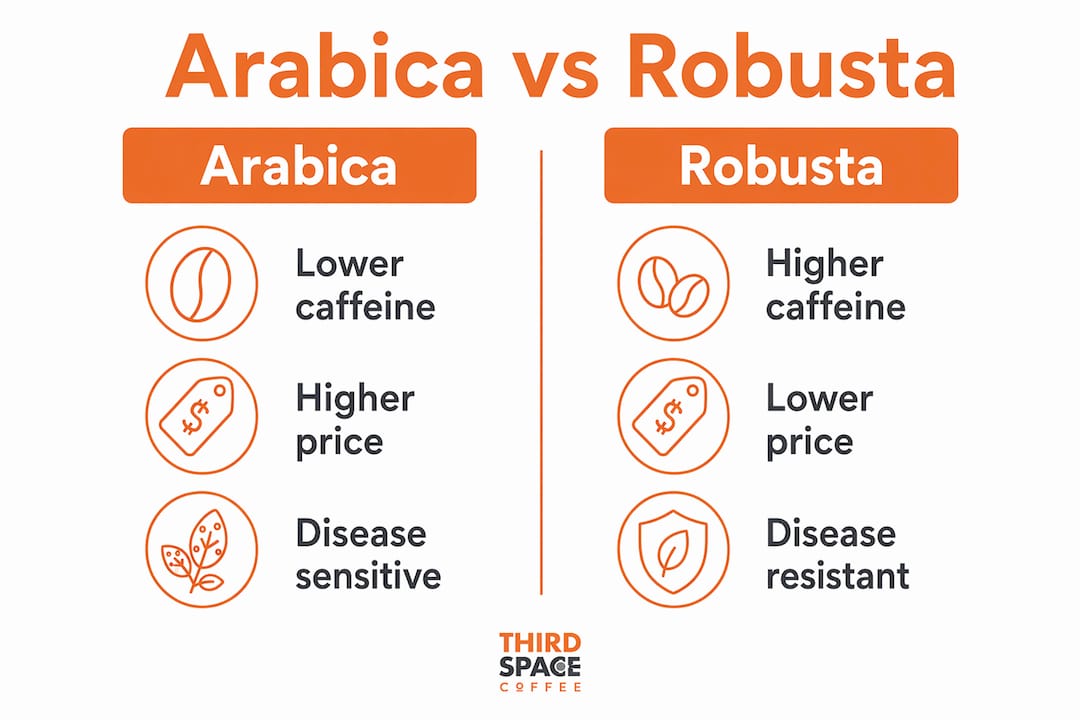
Arabica plants are more disease-prone and climate-sensitive than Robusta. They require higher elevations, specific temperature ranges, and careful pest management. Farmers harvest Arabica cherries by hand, selecting only ripe fruit in multiple passes through the same tree. That selective picking costs labor and time.
Lower yields compound the cost. An Arabica plant produces less fruit per acre than a Robusta plant grown under similar conditions. Farmers absorb that yield gap through higher prices, which is why cheap Arabica is almost always a sign of compromised quality somewhere in the chain.
| Factor | Arabica | Robusta |
|---|---|---|
| Caffeine content | 1.2–1.5% | 2.2–2.7% |
| Relative price | Higher (up to 2x commodity; 5–10x specialty) | Lower |
| Harvest method | Selective hand-picking | Strip or machine harvesting |
| Climate sensitivity | High | Low |
| Flavor complexity | High | Moderate |
The "100% Arabica" label on a bag tells you the species. It does not tell you the roast quality or freshness, which are the factors that actually determine what ends up in your cup. A stale, over-roasted Arabica will taste worse than a fresh, well-roasted blend. Species is the starting point. Everything after harvest determines the finish.
Pro Tip: Look for a roast date on the bag, not just an expiration date. A roast date within the past three weeks is the single best freshness indicator available to you at the point of purchase.
How should you brew Arabica beans for the best results?
Brewing Arabica well requires matching your roast level to your brewing method. Light and medium roasts highlight origin clarity and brightness best in pour-over methods like Chemex or V60. Those methods use slower extraction and paper filters that strip oils, letting the bean's acidity and floral notes come forward cleanly.
Medium roasts also work well for espresso. The pressure extraction in espresso pulls body and sweetness from Arabica without the bitterness that a dark roast would introduce. Dark roasts flatten Arabica's complexity and push the cup toward generic roast flavor rather than origin character.
Follow these steps to get the most from your Arabica beans:
- Check the roast date. Use beans roasted within the past two to four weeks for peak flavor.
- Grind fresh. Grind immediately before brewing. Pre-ground Arabica loses volatile aromatics within minutes of grinding.
- Match grind size to method. Coarse for French press, medium for drip, fine for espresso. Wrong grind size causes under- or over-extraction regardless of bean quality.
- Use filtered water at the right temperature. Water between 195°F and 205°F extracts Arabica's full flavor range. Boiling water (212°F) scorches the grounds and adds bitterness.
- Store beans correctly. Keep Arabica in an airtight, opaque container away from heat and light. Avoid the freezer unless you are storing beans for more than a month.
Freshness and proper sealed packaging protect the volatile compounds that give Arabica its aroma. Once those compounds oxidize, no brewing technique recovers them. Buying whole beans and grinding at home is the most reliable way to preserve what the roaster worked to create.
For a deeper look at how origin shapes what you taste, the guide on coffee bean origin explains how geography, soil, and altitude combine to define a bean's character before it ever reaches a roaster.
Arabica also pairs naturally with food-forward experiences. Premium coffee has become a central part of local cuisine and hospitality culture, where the quality of the cup reflects the quality of the overall experience. Choosing Arabica in that context is not just a flavor decision. It signals care.
Key Takeaways
Arabica beans deliver superior flavor, meaningful health benefits, and a price premium that reflects genuine agricultural cost, making them the best coffee bean choice for enthusiasts who prioritize quality over convenience.
| Point | Details |
|---|---|
| Flavor complexity | Higher sugar and lipid content produce sweeter, more nuanced cups than any other commercial species. |
| Health advantages | Moderate daily intake links to reduced cardiovascular and neurodegenerative risk, with lower GI irritation. |
| Price reflects real cost | Selective harvesting, lower yields, and climate sensitivity drive Arabica's higher price at every grade. |
| Labels are not enough | "100% Arabica" indicates species only; roast date, freshness, and processing determine actual cup quality. |
| Brew method matters | Match roast level to brewing method: light and medium roasts perform best in pour-over and espresso. |
Arabica will always reward the curious drinker
I have tasted a lot of coffee over the years, and the one thing that consistently surprises newcomers is how much variation exists within Arabica alone. People expect one flavor. They get dozens.
The mistake I see most often is treating the "100% Arabica" label as the finish line. It is the starting line. A bag of stale, dark-roasted Arabica from a warehouse shelf will disappoint every time, while a freshly roasted medium-roast Arabica from a transparent specialty roaster will change how you think about coffee entirely. The species matters. The sourcing and roasting matter more.
What excites me about Arabica in 2026 is the growing number of roasters who publish full traceability: farm name, processing method, harvest date, and cupping score. That transparency gives you real information to make a real choice. When you see that level of detail, you know the roaster respects the bean and respects you.
My honest advice: stop buying coffee by brand recognition and start buying by roast date and origin transparency. Arabica's complexity is a promise. A good roaster keeps it.
— Tanya
Thirdspacecoffee brings fresh Arabica to Colorado Springs
Thirdspacecoffee roasts its Arabica whole beans in-house, which means you get coffee at peak freshness rather than beans that sat in a warehouse for months. Every roast is timed to the week, not the quarter.

Whether you want to brew at home or taste what well-sourced Arabica can do in a skilled barista's hands, Thirdspacecoffee has both covered. The specialty drinks menu showcases what fresh Arabica tastes like when roast level and brewing method are matched correctly. For home brewers, the whole bean selection gives you freshly roasted Arabica ready to grind and brew on your schedule. Stop in, order online, or pick up curbside at the Colorado Springs location.
FAQ
What percentage of global coffee is Arabica?
Arabica accounts for 60–70% of global coffee production. It is the dominant species in specialty coffee markets worldwide.
Is Arabica lower in caffeine than Robusta?
Arabica contains 1.2–1.5% caffeine, compared to 2.2–2.7% in Robusta. That lower level makes Arabica smoother and easier on the stomach for most drinkers.
Does "100% Arabica" on a bag guarantee quality?
No. The label confirms the species but says nothing about roast freshness, processing quality, or origin. Always check for a roast date and origin information to assess actual quality.
What brewing method works best for Arabica?
Pour-over methods like V60 or Chemex highlight Arabica's clarity and origin notes best. Medium roasts also perform well as espresso, balancing sweetness and body without bitterness.
Why does Arabica cost more than other coffee beans?
Arabica requires selective hand-harvesting, grows at higher altitudes with greater climate sensitivity, and produces lower yields per plant than Robusta. Those agricultural factors drive its higher price at every market level.