
TL;DR:
- Roasting transforms green coffee beans, unlocking their flavor potential through chemical reactions.
- Roast level influences coffee flavor, acidity, body, and aroma, ranging from light to dark.
- Mindful tasting and experimentation enhance appreciation of different roasts and origins.
Most coffee drinkers assume the flavor is locked inside the bean from the moment it's harvested. It isn't. The roasting process is where a coffee truly comes alive, turning a pale, grassy green seed into something that smells, tastes, and feels like the beverage you love. Roasting is a precise, skillful process that determines acidity, body, sweetness, and aroma — and no two roasters approach it the same way. Whether you're just starting to explore specialty coffee or you've been chasing a perfect pour-over for years, understanding how roasting works will permanently change how you taste every single cup.
Table of Contents
- Understanding green coffee: The starting point
- The science of roasting: Chemical changes and phases
- Light vs. dark roast: How roast level shapes flavor
- From bean to brew: Practical steps to appreciate roasted coffee
- Why most coffee lovers overlook the key to personal flavor discovery
- Taste the difference: Savor expertly roasted coffee
- Frequently asked questions
Key Takeaways
| Point | Details |
|---|---|
| Roasting unlocks flavor | The roasting process is what transforms green beans into the aromatic, flavorful coffee you love. |
| Roast level matters | Light, medium, and dark roasts each offer unique taste profiles to suit different preferences. |
| Bean selection is crucial | Starting with high-quality green beans is key to producing exceptional roasted coffee. |
| Experiment to find your favorite | Trying different roasts and origins helps you discover what flavors best suit your personal palate. |
Understanding green coffee: The starting point
With the importance of roasting clear, let's examine what actually enters the roaster: green coffee. Green coffee beans are simply coffee seeds that haven't been roasted yet. They're dense, hard, and pale greenish-gray in color. They don't smell like coffee at all. Instead, they carry earthy, grassy, or even slightly vegetal notes. At this stage, the bean holds all of its raw potential, but none of the flavors you'd recognize in your morning cup.
What makes green coffee so fascinating is how much variety exists before any heat is applied. A bean from Ethiopia's Yirgacheffe region, grown at 2,000 meters above sea level, arrives with entirely different chemical compounds than a bean from Colombia's Huila region at a lower altitude. These differences in origin, altitude, and processing method shape what the roaster has to work with. Higher altitudes generally slow bean development, which leads to denser seeds with more complex sugars and acids. Those compounds are the raw ingredients that roasting transforms into the flavors in your cup.
Key factors that define green coffee quality:
- Origin: The country and growing region where the bean was cultivated
- Altitude: Higher elevation usually means denser beans with more nuanced flavor potential
- Varietal: The coffee plant variety, such as Bourbon, Typica, or Gesha, each with distinct flavor tendencies
- Processing method: Whether the coffee is washed, natural, or honey-processed changes the sugars and fruit compounds in the bean
The processing method in particular is often overlooked by newer coffee enthusiasts. A naturally processed bean, where the whole fruit dries around the seed, often carries pronounced fruit-forward sweetness. A washed bean, where the fruit is removed before drying, tends to taste cleaner and brighter. Understanding these coffee industry terms gives you a much stronger vocabulary for what you're tasting.
"The bean you start with is the ceiling of what you can achieve. No roasting technique — no matter how skillful — creates flavor that isn't already latent in the green coffee."
When sourcing beans, quality-focused roasters evaluate moisture content, defect rates, and density alongside origin notes. The sourcing criteria for specialty roasters reflect just how much careful curation goes into selecting beans before they ever touch a roaster drum. Bean selection isn't a side step — it is the foundation of every great cup.
The science of roasting: Chemical changes and phases
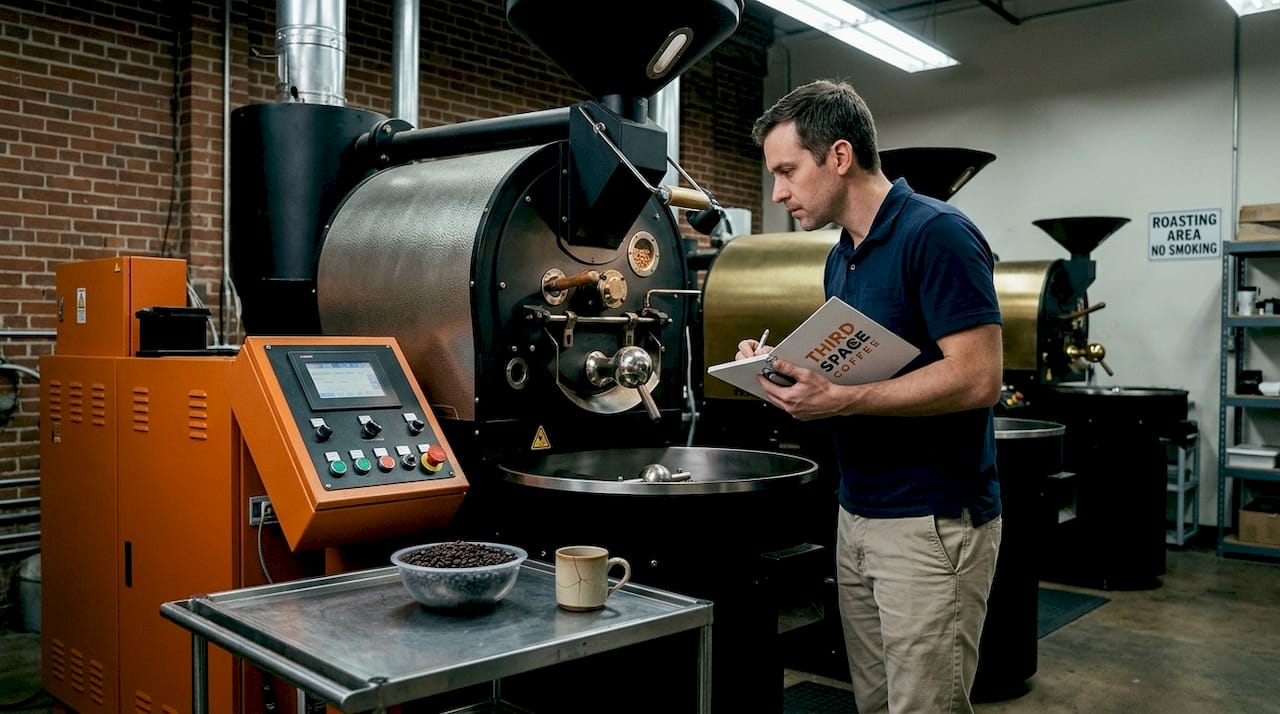
Once you understand the importance of bean choice, you're ready to explore the science behind roasting itself. What happens inside a roaster is nothing short of remarkable. Heat triggers a cascade of chemical reactions that convert hundreds of raw compounds into the aromatic, flavorful substances you taste in brewed coffee.
The four main stages of roasting are:
- Drying phase: Green beans contain significant moisture, often 8 to 12 percent. The first stage of roasting drives out this water. Beans appear yellowish during this phase and begin to smell faintly like toast or fresh bread.
- Browning and Maillard reaction: As temperatures rise, amino acids and reducing sugars react in what's called the Maillard reaction, creating hundreds of new flavor and aroma compounds. This is where coffee starts smelling like coffee.
- First crack: At around 385 to 400 degrees Fahrenheit, beans expand rapidly and release a cracking sound, similar to popcorn. This marks the beginning of what roasters call the development phase.
- Development phase: After first crack, the roaster controls how much longer the beans stay in heat. This window determines roast level, flavor clarity, and balance. Ending the roast here produces a lighter roast. Continuing further develops richer, darker notes.
Sugar caramelization also plays a critical role. As temperatures climb, the sugars inside the bean caramelize, producing that characteristic sweetness in many well-roasted coffees. Push the roast too far and those sugars burn, producing the bitter, smoky notes common in very dark roasts.
| Roasting phase | Temperature range (°F) | Key changes |
|---|---|---|
| Drying | 300 to 340 | Moisture expelled, bean yellows |
| Maillard/browning | 340 to 380 | Aroma development, color shifts brown |
| First crack | 385 to 400 | Bean expands, audible crack |
| Development | 400 to 450+ | Flavor locked in, roast level determined |
Time and temperature work together. A roast that moves too quickly through development risks underdeveloped, grassy flavors. One that lingers too long risks baking the bean and flattening its complexity. This is why following a solid coffee roasting guide matters whether you're roasting professionally or experimenting at home. The margin for greatness is genuinely narrow, which is what makes skilled roasting so impressive.
A single roast batch can take anywhere from 8 to 15 minutes from start to finish. Those minutes contain an enormous number of decisions that shape every sensory detail of the final cup.
Light vs. dark roast: How roast level shapes flavor
With the chemistry in mind, it's time to discover the real impact of roast level on what you taste. This is where most coffee conversations get oversimplified. People often assume dark roast means strong coffee. It doesn't. Roast level affects flavor complexity, acidity, body, and aroma — not just intensity.
Light roast coffees are pulled from the roaster shortly after first crack ends. They retain more of the bean's original character, which means more origin-driven flavors. You'll find bright acidity, floral notes, berry, citrus, and delicate sweetness. Light roasts are often the choice for pour-overs and filter brewing methods because their clarity of flavor shines in those brewing styles.
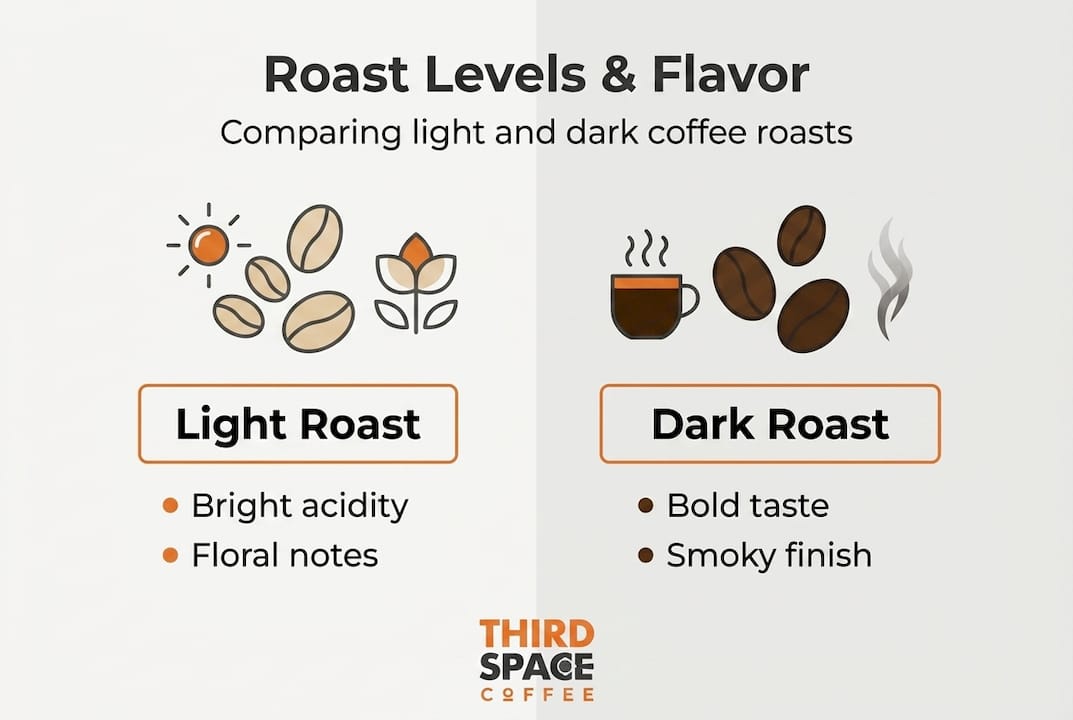
Dark roast coffees continue past first crack into a second crack phase, where the bean structure begins to break down more fully. Flavors shift toward chocolate, caramel, roasted nuts, and smoky or bitter notes. Body becomes heavier and more syrupy. Acidity drops significantly. Dark roasts are popular for espresso and milk-based drinks because their bold flavors cut through steamed milk without disappearing.
| Characteristic | Light roast | Medium roast | Dark roast |
|---|---|---|---|
| Acidity | High | Moderate | Low |
| Body | Light | Medium | Full |
| Sweetness | Bright, fruity | Balanced | Caramel, bitter |
| Common notes | Floral, citrus, berry | Chocolate, nuts, stone fruit | Smoke, dark chocolate, molasses |
| Best brew method | Pour-over, Chemex | Drip, Aeropress | Espresso, French press |
The way coffee origins interact with roast level is one of the most interesting dynamics in specialty coffee. A naturally processed Ethiopian bean taken to a dark roast will taste very different from the same bean at a light roast. Roast level either amplifies origin character or masks it, depending on how far the roast goes. Many specialty coffee professionals prefer lighter roasts precisely because they let the bean's natural story come through clearly.
When you're first exploring roast preferences, consider thinking beyond "I like bold coffee." Bold can mean many things. Instead, pay attention to choosing coffee blends that match your preferred flavor profile, whether that's fruity and bright, rich and smooth, or deep and roasted.
Roast characteristics to look for on packaging:
- Tasting notes listed on the bag (cherry, caramel, walnut — these indicate origin and roast influence)
- Roast level labeling (light, medium, medium-dark, dark)
- Roast date (always look for this — freshness matters enormously)
- Processing method (washed, natural, honey)
Pro Tip: Try the same origin coffee in two different roast levels side by side. Brew both as simple drip coffee using identical ratios and water temperature. The difference in flavor will show you exactly what roasting does to a bean's character better than any description can.
From bean to brew: Practical steps to appreciate roasted coffee
Understanding roast levels sets the stage for hands-on exploration and real appreciation. Reading about roasting can only take you so far. The real growth as a coffee enthusiast happens when you slow down and taste with intention.
How to taste roasted coffee like a professional:
- Smell the dry grounds first. Before adding water, take a moment to inhale the dry coffee grounds. This gives you a preview of the roast level and any dominant aroma notes. A light roast might smell delicately floral; a dark roast might hit you with chocolate or smoke.
- Brew it simply. To isolate roast character, use a method that doesn't obscure flavors with pressure or immersion extremes. A clean pour-over or a simple drip brew lets the coffee speak plainly.
- Taste without additives first. At least for the first sip, skip the milk and sugar. You want to taste the coffee itself. Even if you typically drink it with cream, tasting it black for a moment gives you a reference point.
- Identify the four sensory pillars: Acidity (does it feel bright or flat?), body (is it light and watery or thick and coating?), sweetness (subtle or pronounced?), and aftertaste (what lingers after you swallow?).
- Write it down. Keep a simple coffee journal. Note the roast level, origin, brew method, and what you tasted. Over time, patterns emerge about what you genuinely enjoy, not just what sounds impressive.
- Let it cool slightly. Coffee reveals more flavor as it cools from scalding hot to a comfortable drinking temperature. Many notes, especially fruit and floral ones, are easier to detect at around 140 to 160 degrees Fahrenheit.
The coffee tasting tips that professionals use are actually accessible to anyone. You don't need formal training to notice the difference between a bright Ethiopian light roast and a heavy, smoky Sumatra dark roast. You just need to slow down and pay attention.
Pro Tip: Look for local cupping sessions, which are structured coffee tastings where multiple coffees are brewed and sampled side by side. Many specialty shops host these regularly, and they accelerate your palate development faster than solo tasting at home.
Building appreciation through mindful tasting is a practice, not a destination. Every cup is an opportunity to notice something new. Even your morning routine cup can become a small moment of discovery if you approach it with curiosity.
Why most coffee lovers overlook the key to personal flavor discovery
After exploring the steps and science of the coffee roasting process, consider this broader view. Most enthusiasts spend a lot of energy trying to find "the best" coffee, the right origin, the perfect roast, the expert-approved bag. But that framing creates a fixed destination instead of an ongoing journey.
The truth is, your palate changes. What tasted too acidic two years ago might now taste beautifully bright. A dark roast you once loved might start feeling flat once you've experienced the complexity of a well-sourced light roast. This isn't inconsistency. It's growth. Being a coffee enthusiast means staying curious enough to revisit your assumptions regularly.
The most rewarding thing you can do is ignore the hierarchy of "serious" coffee drinking and simply experiment. Buy a bag that sounds nothing like what you usually drink. Brew it the same way. Taste it without expectations. You'll likely be surprised. Real flavor discovery happens not when you master the "right" answer but when you stop looking for one and start enjoying the exploration itself.
Taste the difference: Savor expertly roasted coffee
Ready to put your new appreciation into action? Discover exceptional coffees and roasts tailored to your evolving palate.
At Third Space Coffee in Colorado Springs, every coffee we serve starts with deliberate sourcing and ends with in-house roasting that brings out the best of each bean. You can shop whole bean coffee to explore different roast levels at home, or step in and experience our range of specialty drinks crafted to showcase what thoughtful roasting can do for flavor. If you want a straightforward daily cup, our freshly roasted drip coffee is always brewed from beans roasted right here in-house.

Whether you're chasing bright fruit notes or a deep, rich body, we've got a roast profile ready to meet your taste. Come in and taste the difference that intentional roasting makes.
Frequently asked questions
What is the purpose of roasting coffee beans?
Roasting transforms green coffee beans by developing flavors, aromas, and the signature brown color essential for great-tasting coffee. The full breakdown of this process is covered in the roasting guide here.
How does roast level affect the taste of coffee?
Light roasts retain more of the bean's original character, while dark roasts offer a bolder, roasted flavor with less acidity. Understanding roast and origin interactions helps you choose what suits your taste.
Can I roast coffee beans at home?
Yes, home roasting is possible with simple equipment, allowing you to tailor the roast profile to your taste. A practical home coffee roasting primer can help you get started with confidence.
Is freshness important for roasted coffee?
Freshly roasted coffee delivers the best aromas and flavors, so coffee is best enjoyed within a few weeks of roasting. Buying in smaller quantities more frequently is the easiest way to keep your coffee at peak freshness.