 how-to
Coffee Shop Etiquette for Remote Workers
Table of Contents
- Understanding Coffee Shop Etiquette for Remote Workers
- How Long Is It Acceptable to Work in a Coffee Shop
- Coffee Shop Laptop Etiquette and Workspace Respect
- Power Outlet Usage and Connectivity Considerations
- Purchasing Items and Supporting the Business
- How to Find Remote Work Friendly Cafes
- Respecting Staff and House Rules
- Workspace Hygiene and Cleanup Responsibility
- Frequently Asked Questions
Last Updated: August 19, 2026
Understanding Coffee Shop Etiquette for Remote Workers
Coffee shop etiquette for remote workers isn't just about being polite, it's about creating a sustainable arrangement where you can work productively while respecting the business model that keeps the cafe running. The tension is real: you need a reliable workspace, but the cafe needs table turnover and paying customers who buy more than one coffee every few hours.
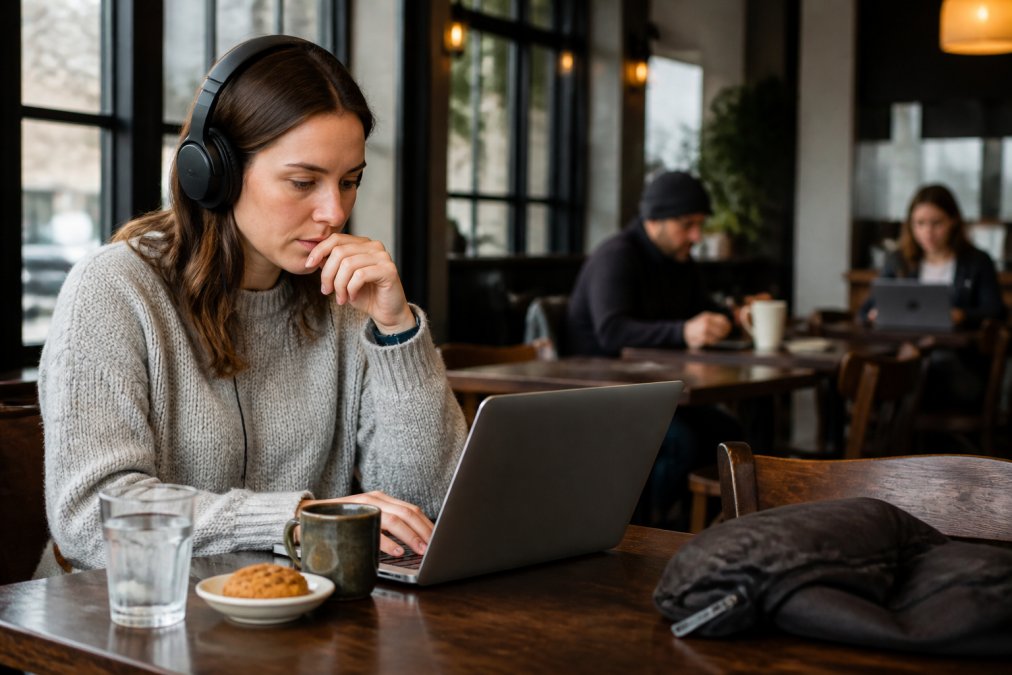
Remote workers and cafes have a symbiotic relationship that only works when both sides understand the unwritten rules. A cafe benefits from steady foot traffic and ambient energy; you benefit from a change of scenery, reliable Wi-Fi, and social proof. That relationship breaks down fast when remote workers treat the space like a free office.
Third Space Coffee has seen this dynamic firsthand. The difference between remote workers who become valued regulars and those who overstay their welcome comes down to specific behaviors. This guide breaks down what those behaviors are, how to avoid common mistakes, and how to maintain a productive relationship with a coffee shop that actually wants you there.
How Long Is It Acceptable to Work in a Coffee Shop
The acceptable duration depends on the cafe's traffic patterns. A reasonable baseline is two to three hours during off-peak times, compressing significantly during peak hours.
Peak hours, typically 8 AM to 10 AM and 12 PM to 1 PM, are when cafes make most of their revenue. Working through peak periods without ordering anything drains table availability. If you're working during peak hours, expect pressure to leave after 60-90 minutes. That's not rudeness; it's survival.
Off-peak times, mid-morning, mid-afternoon, or early evening, are when remote workers add value. You can reasonably work 3-4 hours during these windows without imposing.
The real variable is spending. A single coffee doesn't justify four hours of table space. A coffee plus a pastry, or coffee plus lunch, shifts the economics. The unspoken contract: your spending should be proportional to your time. Two hours warrants one purchase; four hours requires two purchases minimum.
Coffee Shop Laptop Etiquette and Workspace Respect
Managing Your Physical Footprint
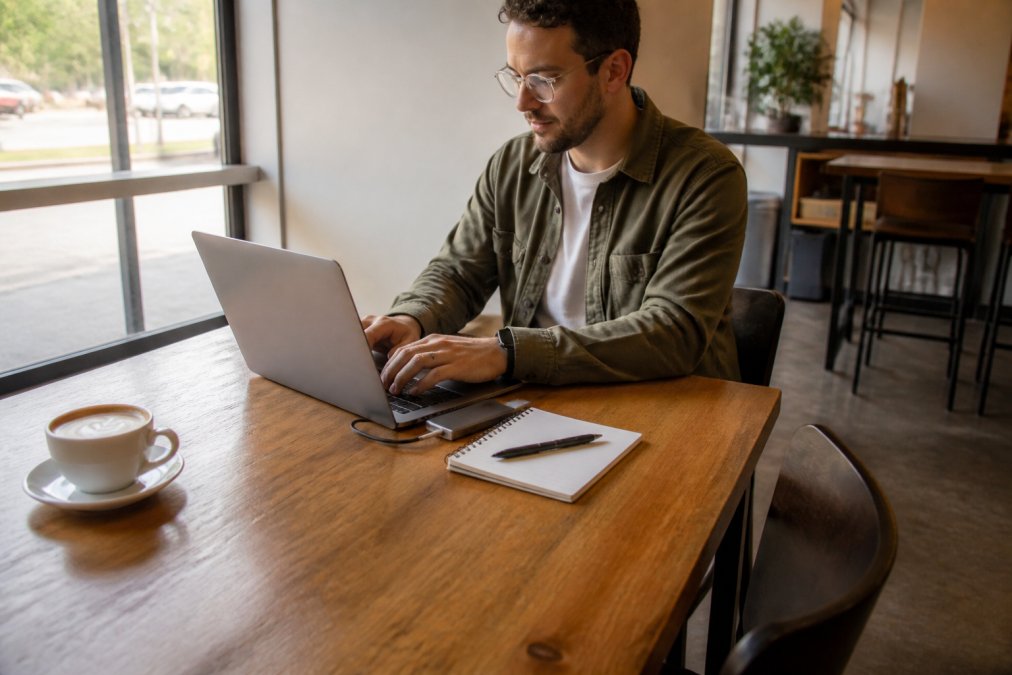
Your laptop footprint matters. A 13-inch laptop on a small two-person table takes up 30-40% of available surface area. Add a notebook, phone, and coffee cup, and you've monopolized the entire table.
Leave room for others. Position your laptop to one side and keep materials compact, one notebook instead of three, one pen instead of several. Route your power cable along the table edge, not across the middle where it becomes a tripping hazard.

Typing noise matters in quiet cafes. Use a quieter keyboard; mechanical keyboards that clack loudly are a common complaint. If you're on multiple video calls throughout the day, a coffee shop isn't the right workspace.
Battery life signals workspace respect. A laptop with decent battery lets you work two-hour stretches without tethering yourself to outlets, leaving them available for others.
Handling Noise and Audio
Speakerphone calls violate coffee shop etiquette. Use earbuds or headphones instead. Music through your laptop speakers is similarly prohibited, use headphones if you want background music.
Mute Slack notifications, email pings, and message alerts. Every beep is a micro-distraction for everyone around you. A considerate remote worker is nearly silent: typing quietly, listening through headphones, communicating through text rather than voice.
Video Calls and Meeting Restrictions
Video calls in a coffee shop are almost always a bad idea. Your microphone picks up cafe noise, distracting people on your call. Your speakers broadcast the call to everyone nearby. Video conferencing demands more bandwidth than most cafe Wi-Fi reliably provides, and confidential conversations shouldn't happen in public spaces.
The only exception is a brief, low-stakes call using headphones in a quiet corner during off-peak hours. If you need to take video calls regularly, find a coworking space or work from home.
Power Outlet Usage and Connectivity Considerations
Power outlets are a shared resource, not a personal charging station. Don't claim an outlet for your entire stay. If your laptop has sufficient battery, use it and let someone else charge. If you need to charge, do so strategically for 30-45 minutes, then unplug and move away.
Don't charge multiple devices simultaneously. Prioritize your laptop; your phone can wait until you get home. Keep cables organized and unplug after charging.
Wi-Fi is reliable for email, messaging, and document editing in most cafes, but not for large file uploads, video streaming, or bandwidth-intensive applications. Test the cafe's connection before committing to work there regularly. If your work depends on high-speed internet, a coffee shop may not be suitable.
Purchasing Items and Supporting the Business
A single coffee doesn't justify a four-hour workday. The cafe's revenue from that coffee is maybe $2-3 after costs; the table space, utilities, and Wi-Fi cost more over four hours.
The sustainable model is purchasing something every 60-90 minutes you spend there. A coffee and pastry in the morning, light lunch at midday, an afternoon beverage, these add up to meaningful revenue and make your presence profitable rather than parasitic.
Tipping 15-20% for counter orders builds goodwill with staff. They'll remember you, prioritize your orders, and be more forgiving if you occasionally need to stay longer. Baristas see dozens of customers daily. Those who order, tip, make eye contact, and say thank you are remembered fondly. Those who treat the cafe like a free office create resentment that translates to less welcoming service.
How to Find Remote Work Friendly Cafes
Not all cafes suit remote work. Look for specific signals.
Wi-Fi availability is the first signal. A cafe that advertises Wi-Fi on its website is signaling it welcomes people who need connectivity.
Power outlets are the second signal. Look for outlets at tables or along walls. A cafe that invested in accessible outlets expects remote workers.
Seating variety is the third signal. A mix of small tables, communal tables, and bar seating indicates the cafe is designed for different use cases.
Noise level matters. Visit during off-peak hours and assess ambient noise. Some cafes prioritize conversation; others prioritize quiet. Match your focus style to the cafe's vibe.
Third Space Coffee offers reliable Wi-Fi, accessible power outlets, and mixed seating options, making it a welcoming place for people working for a few hours. Staff attitude is the final signal. Baristas who make eye contact, remember regulars, and seem genuinely welcoming work in cafes that value community.
Respecting Staff and House Rules
The barista is not your personal vending machine. They're doing a job harder than it looks. Greeting them when you arrive, making eye contact, and saying thank you signals you see them as a person, not a service provider.
House rules exist for operational reasons. If a cafe has a "no laptops after 5 PM" rule or "maximum two-hour stay during peak hours" policy, follow them without complaint. They're how the cafe manages space to stay profitable and welcoming.
Clean up after yourself. If you spill coffee, wipe it immediately. If you leave crumbs, brush them off. Push your chair in and leave the space looking untouched. The barista shouldn't clean up after you.
Be aware of the cafe's rhythm during busy times. If a line forms at the counter and you're at a two-person table, that's a signal to wrap up or order something else and stay out of the way.
Don't leave your laptop unattended. Don't discuss confidential information loudly. Don't leave sensitive documents on the table. You're in a public space and responsible for protecting your own information.
Workspace Hygiene and Cleanup Responsibility
The table should be cleaner when you leave than when you arrived. Clear crumbs from pastries, wipe spills, throw away debris. A quick scan takes 30 seconds and prevents barista cleanup.
If you're sick, work from home. Pack everything up when you leave, don't leave notebooks, pens, or chargers behind. Don't download massive files or stream video that consumes bandwidth.
The relationship between remote workers and cafes works best when both sides understand the space is shared and temporary. You're borrowing a table and chair, not renting an office.
Finding the right coffee shop for remote work is about understanding the economics of the business, respecting the people who work there, and contributing meaningfully to the space. Third Space Coffee represents what this relationship can look like when both sides commit to it, a community-oriented space where remote workers and cafe customers coexist productively. Start by visiting during off-peak hours, ordering consistently, and respecting the unwritten rules. Cafes that welcome you aren't doing it out of charity; they're doing it because you've proven yourself a considerate customer who understands that productive workspace is built on mutual respect.
Frequently Asked Questions
What is the cafe etiquette for remote workers?
Remote worker cafe etiquette centers on respecting shared space and supporting the business. Purchase items regularly, limit your stay to 2-4 hours during off-peak times, keep noise minimal, avoid video calls, manage your laptop footprint, and ask about house rules. Treat the space as a privilege, not a right. Clean up after yourself, respect table turnover during busy periods, and tip baristas for their hospitality. The goal is being an invisible guest who enhances, not disrupts, the cafe environment.
How long is it acceptable to work in a coffee shop?
Most cafes consider 2-4 hours reasonable during slower periods like mid-morning or early afternoon. During peak hours (8-9 AM and noon-1 PM), limit yourself to 1-2 hours. Always check house rules first, as policies vary. If you're a regular, staff may be more flexible. The key is reading the room: if tables are full and customers are waiting, wrap up. Purchasing multiple items over your stay signals commitment and makes longer sessions more acceptable.
Is it rude to work in a coffee shop without buying anything?
Yes, working in a coffee shop without purchasing anything is considered disrespectful. You're occupying table space that generates revenue through sales. Buy at least one item when you arrive, and consider additional purchases if you stay 3+ hours. This supports the barista, keeps the business viable, and acknowledges that the cafe is providing you infrastructure and ambiance. Regular customers who buy multiple items earn more goodwill and flexibility with time limits.
Should you take video calls while working in a coffee shop?
No, avoid video calls in cafes unless absolutely necessary and the shop is nearly empty. Video calls disrupt other customers, expose your work to the public, create privacy concerns, and strain the wifi. If a call is urgent, step outside or find a private meeting space. Many cafes have meeting rooms available for rent specifically for this purpose. Ask staff about their video call policy before assuming it's permitted, as noise and distraction rules vary by location.
This article was written using GrandRanker