 how-to
How Long Roasted Coffee Stays Fresh: Storage Guide
Table of Contents
- The Peak Freshness Window for Roasted Coffee
- Whole Bean vs. Ground Coffee: Shelf Life Comparison
- The Best Way to Store Coffee Beans
- Understanding the Coffee Degassing Process
- Freezing vs. Refrigerating: What Actually Works
- Signs of Stale Coffee Beans and How to Troubleshoot
- Roast Profile Impact on Freshness and Flavor
- Long-Term Preservation and Sustainability
- Frequently Asked Questions
Last Updated: August 15, 2026
The Peak Freshness Window for Roasted Coffee
Most roasted coffee reaches peak flavor between 5 and 30 days after the roast date, with whole beans maintaining quality longer than pre-ground options. This is when the coffee's volatile aromatic compounds are most expressive. The roast date matters more than the best-by date printed on the bag. At Third Space Coffee, we mark every bag with the roast date so customers can track exactly where their beans are in their flavor journey.
The first few days after roasting, beans are still degassing (releasing carbon dioxide), which can create slightly muted flavor. By day 5 to 7, the coffee hits its stride, degassing has calmed but aromatic compounds remain vibrant. After about 30 days, oxidation begins to noticeably degrade the flavor profile. The acidity softens, the body flattens, and bright, complex notes fade. A 45-day-old bean can still make a decent cup, but it won't deliver the sensory experience of a fresher one.
Whole Bean vs. Ground Coffee: Shelf Life Comparison
Whole beans stay fresh significantly longer than ground coffee because they have less surface area exposed to oxygen. A whole bean's protective skin slows oxidation; ground coffee, with its exponentially larger surface area, oxidizes rapidly once exposed to air.
Whole beans typically maintain peak flavor for 3 to 4 weeks when stored properly in an airtight container. Ground coffee begins noticeably degrading within 30 minutes of grinding, when volatile compounds start escaping into the air. For practical purposes, ground coffee is best used within 1 week of grinding, though it remains acceptable for up to 2 weeks if sealed tightly.
This is why coffee enthusiasts grind beans immediately before brewing. A shot of espresso pulled from beans ground 10 minutes prior versus beans ground 2 days prior will taste markedly different, the fresh-ground version has more brightness, complexity, and fuller body. If you buy pre-ground coffee, the roast date is even more critical. Whole beans from the same roast date will still be in decent shape. This is one reason why Third Space Coffee recommends customers purchase whole beans and invest in a burr grinder.
| Storage Type | Peak Freshness Window | Acceptable Use Window | Key Limitation |
|---|---|---|---|
| Whole beans (sealed) | 5-30 days | Up to 45 days | Oxidation after 30 days |
| Ground coffee (sealed) | 1-7 days | Up to 14 days | Rapid oxidation from increased surface area |
| Whole beans (open bag) | 5-14 days | Up to 21 days | Moisture and light exposure accelerate staleness |
| Ground coffee (open bag) | Same day | 3-5 days | Volatile compounds escape immediately |
The Best Way to Store Coffee Beans
The best way to store coffee beans requires controlling four variables: air exposure, light, temperature, and moisture.
Airtight Containers and One-Way Valves
An airtight container is non-negotiable. Oxygen drives oxidation, which degrades flavor compounds. The ideal container is opaque and airtight, which is why many specialty roasters package beans in bags with one-way valves.
A one-way valve lets carbon dioxide escape from the beans without letting oxygen back in. During the first week after roasting, beans release significant CO2 through degassing. Without a valve, pressure builds inside a sealed container, forcing you to open it periodically and let oxygen in. A one-way valve solves this elegantly.
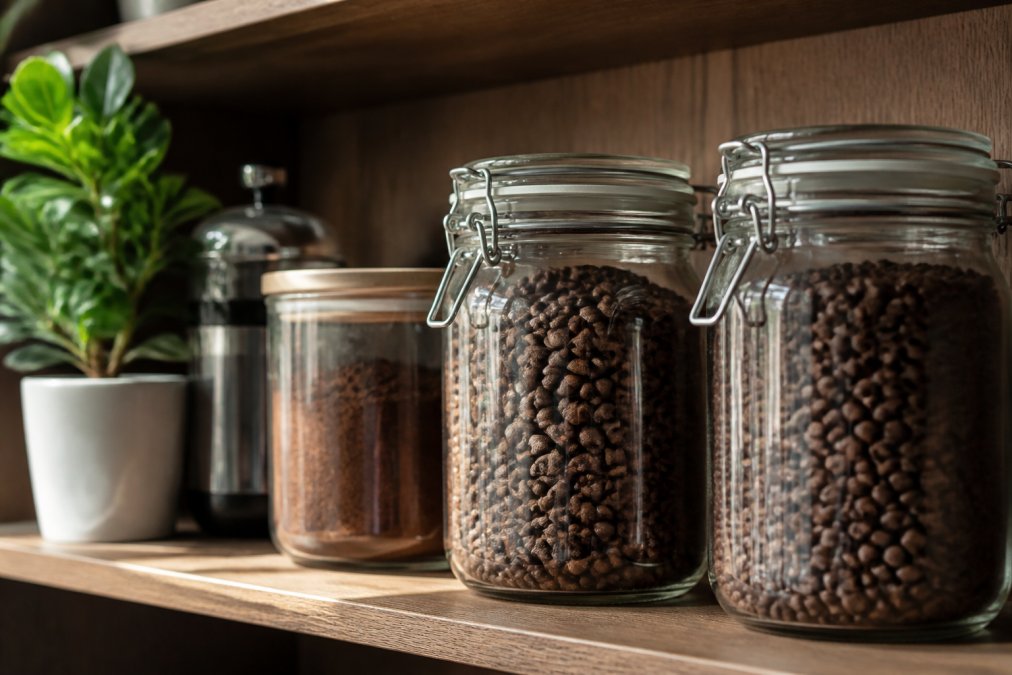
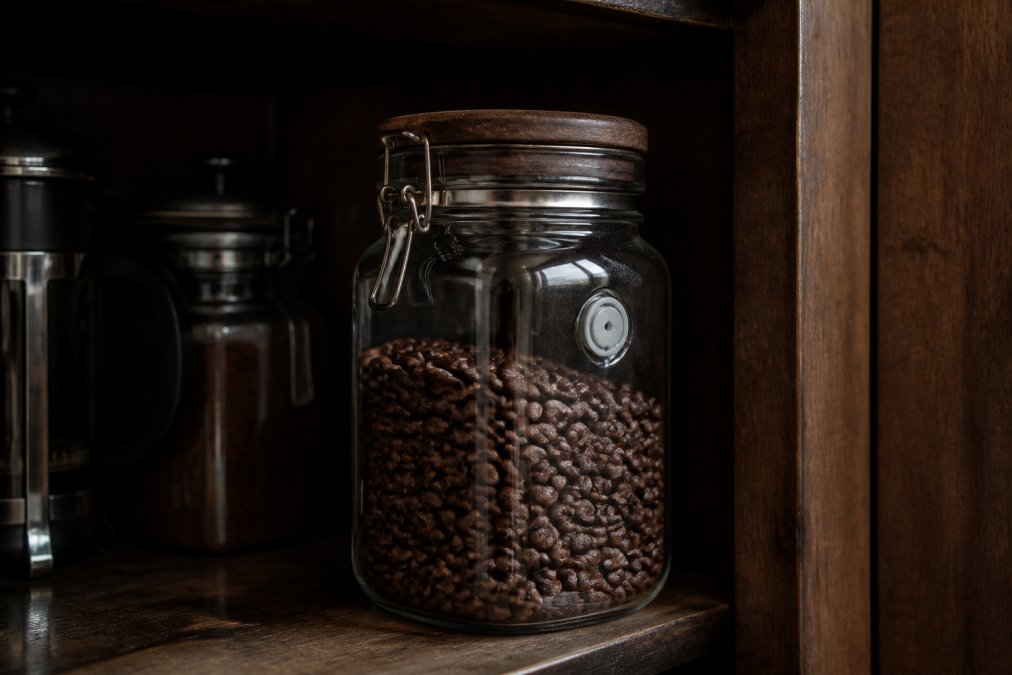
For home storage, transfer beans to an airtight container with an opaque exterior. Glass jars with rubber seals work well. Avoid clear containers, which allow light penetration. Avoid containers previously used for other foods, coffee absorbs odors and flavors from its environment.
Temperature, Light, and Moisture Control
Store beans at room temperature, ideally between 60 and 75 degrees Fahrenheit. Avoid the freezer for everyday storage and the refrigerator as well; temperature fluctuations and moisture accelerate staleness.
Light exposure degrades coffee flavor through a process similar to oxidation. UV light breaks down aromatic compounds, making coffee taste flat and bitter. Store your container in a cabinet or pantry, away from direct sunlight.
Moisture is the third enemy. Coffee is hygroscopic, meaning it absorbs moisture from the air. High humidity causes beans to absorb water, which dilutes flavor and can promote mold growth. Keep beans away from the sink, dishwasher, and anywhere with steam. If you live in a humid climate, consider storing beans in an airtight container with a small silica gel packet.
The combination of airtight storage, stable room temperature, and darkness creates the optimal environment for roasted coffee to maintain its flavor profile.
Understanding the Coffee Degassing Process
Degassing is the process by which roasted coffee beans release carbon dioxide after roasting. During roasting, heat causes chemical reactions that produce CO2 inside the bean. Once roasting stops and beans cool, they begin releasing this gas. The first 24 to 48 hours after roasting, degassing is most intense. By day 5, the process has slowed considerably. By day 14, most CO2 has escaped, though trace amounts continue for weeks.
This matters because CO2 affects how water interacts with coffee during brewing. Excess CO2 can interfere with water penetration and extraction, which is why many coffee professionals recommend waiting 5 to 7 days before brewing beans from a fresh roast.
The rate of degassing varies by roast profile. A light roast degasses more slowly than a dark roast because the beans are less damaged by heat. A dark roast, roasted longer and at higher temperatures, degasses more rapidly. This is one reason why dark roasts can be brewed sooner after roasting.
Understanding degassing also explains why espresso machines sometimes produce excessive crema from very fresh beans. The CO2 is still being released and gets trapped in the water, creating larger bubbles. As beans age and degassing completes, the crema becomes thinner and more stable.
Freezing vs. Refrigerating: What Actually Works
Freezing roasted coffee is a legitimate long-term storage strategy, but it requires proper technique. Refrigerating coffee is generally a mistake.
Refrigerating beans is problematic because of temperature fluctuations and humidity. Every time you open the refrigerator, warm air enters, and when you close it, the temperature drops again. This cycle causes condensation on the beans, introducing moisture that accelerates oxidation. Additionally, refrigerators contain odors from other foods, and coffee absorbs these flavors easily.
Freezing is different. If you freeze beans in an airtight, moisture-proof container (a vacuum-sealed bag or freezer-safe airtight container), they can be preserved for several months with minimal flavor loss. The cold slows oxidation dramatically.
The practical approach: freeze beans in small portions. If you have a 2-pound bag, divide it into four half-pound portions, seal each individually, and freeze them. When you want to use a portion, remove it from the freezer and let it come to room temperature in its sealed container before opening. This prevents condensation from forming on the beans.
Don't repeatedly freeze and thaw the same batch; each cycle introduces moisture and causes flavor degradation. For most people, proper room-temperature storage in an airtight container is simpler and produces better results than freezing.
Signs of Stale Coffee Beans and How to Troubleshoot
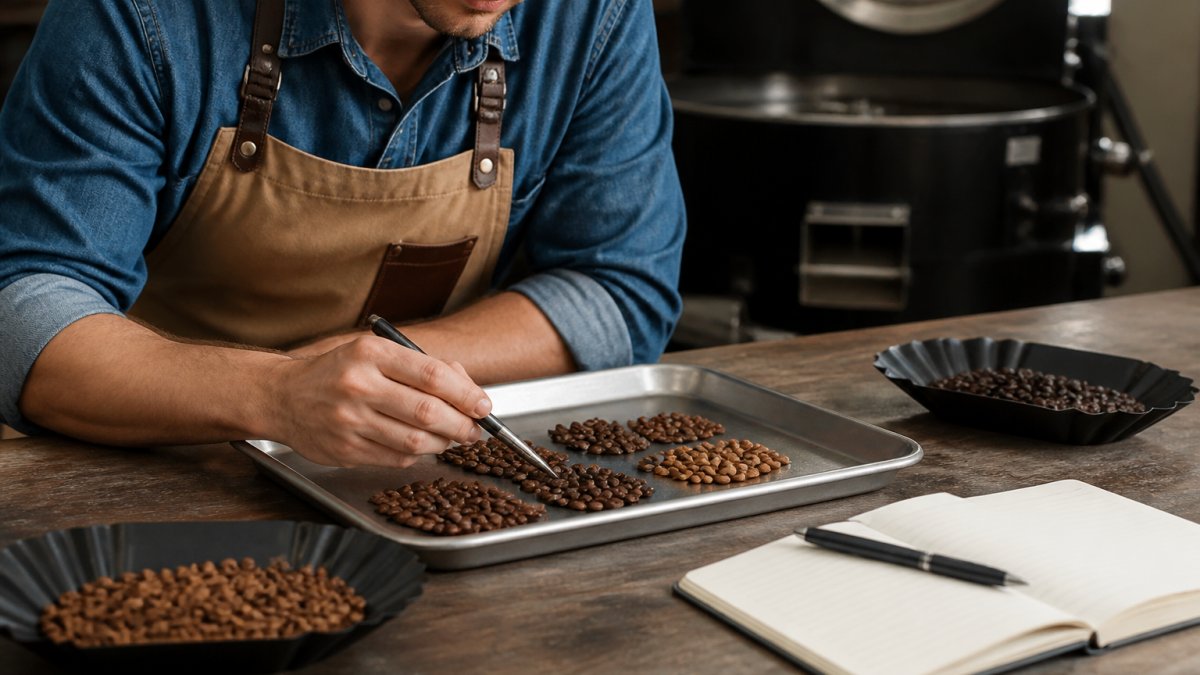
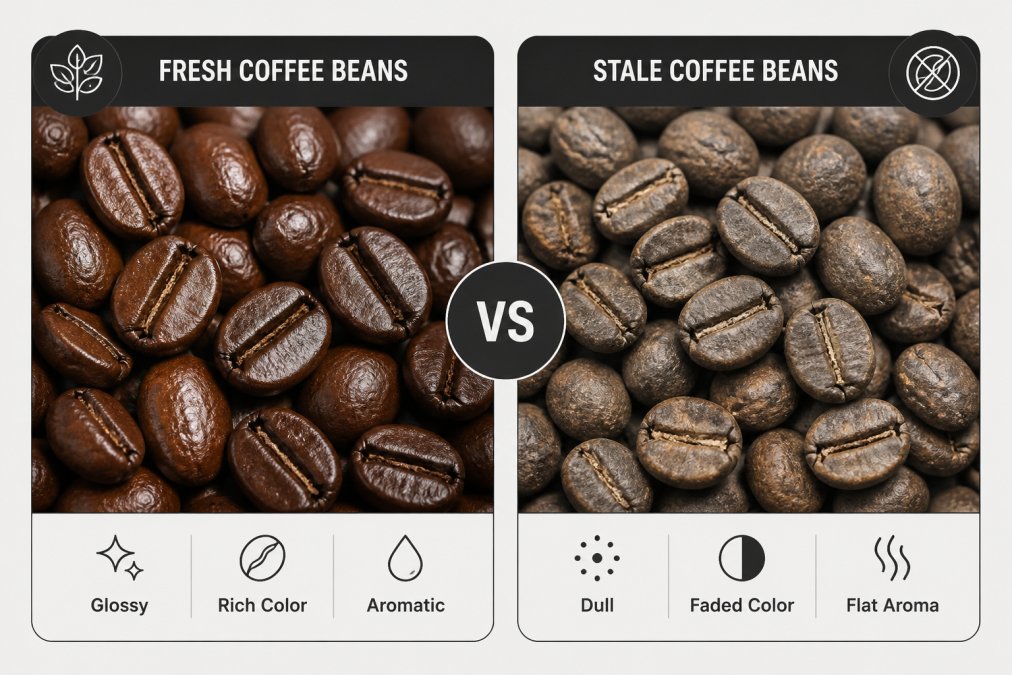
Stale coffee beans show clear visual and sensory signs. Fresh roasted beans have a vibrant, oily sheen and rich brown color. Stale beans look dull and faded, with a grayish or ashy cast, reflecting oxidation of the surface oils and degradation of color compounds.
Aroma is the second indicator. Open a bag of fresh beans and you'll smell immediate, vibrant coffee aroma, bright, complex, sometimes fruity or floral depending on origin. Stale beans smell flat, muted, or musty. When you grind stale beans, the smell doesn't improve; it stays muted. Fresh beans release a burst of aroma the moment you grind them.
Taste is the final confirmation. Stale coffee tastes flat, thin-bodied, and unpleasantly bitter. The acidity and complexity are gone. If your morning cup tastes noticeably worse than usual despite using the same brewing method and ratio, your beans are likely stale.
To troubleshoot, check the roast date first. If it's been more than 30 days, staleness is expected. If it's been less than 30 days but the beans look and smell stale, check your storage conditions. Have you been keeping them in a clear container near a window? In the fridge? Near the stove? Move your beans to a dark, cool cabinet in an airtight container. If you're buying pre-ground coffee and it tastes stale within a week, the issue is likely that the coffee was ground well before you bought it. Whole beans are your solution.
Roast Profile Impact on Freshness and Flavor
Different roast profiles age at different rates, directly affecting how long roasted coffee stays fresh and tastes good.
Light roasts have a shorter peak freshness window but maintain complexity longer into their aging process. A light roast might peak at days 7 to 14, then gradually decline but still taste interesting at day 30. Light roasts also retain more acidity, which can become sharp or sour if beans get too old.
Medium roasts hit their peak around days 10 to 20 and remain pleasant through day 35 or so. They're the sweet spot for most drinkers, balancing complexity with stability as they age.
Dark roasts peak quickly, often by day 5 to 7, because extended roasting time has already driven off some delicate flavor compounds. By day 30, dark roasts often taste noticeably flat and one-dimensional. This is why specialty dark roasts are best consumed within 2 to 3 weeks of roasting. At Third Space Coffee, we note the roast profile on every bag so customers can time their consumption accordingly.
Long-Term Preservation and Sustainability
For those who want to preserve roasted coffee beyond the typical 4 to 6 week window, freezing is the most practical method. However, buying fresh, using it within the peak window, and avoiding waste is more sustainable than buying large quantities and freezing them.
If you do freeze beans, use airtight, reusable containers rather than disposable vacuum-seal bags. Silicone or glass containers with rubber seals can be used indefinitely. Some customers bring their own containers to refill with freshly roasted beans, eliminating packaging waste while ensuring maximum freshness.
Another sustainability consideration: buy from local roasters who roast frequently in small batches. This guarantees fresher beans because the roaster isn't sitting on old inventory. Supporting local roasters also reduces the carbon footprint of shipping and storage.
The best approach to freshness and sustainability is simple: buy fresh beans in quantities you'll use within 3 to 4 weeks, store them properly, and grind just before brewing. This maximizes flavor, minimizes waste, and supports roasters who prioritize quality over volume.
How long roasted coffee stays fresh comes down to storage, roast date, and roast profile. A well-stored bag of whole beans peaks within 5 to 30 days of roasting and remains acceptable for up to 45 days. Ground coffee degrades faster and should be used within a week of grinding. At Third Space Coffee, we roast in small batches and mark every bag with the roast date so you know exactly how fresh your coffee is. Stop by to pick up beans roasted this week, and you'll taste the difference that true freshness makes in your morning cup.
Frequently Asked Questions
Is coffee roasted 4 months ago still good?
Coffee roasted four months ago is past its peak freshness window but may still be drinkable depending on storage conditions. The optimal window is 2-4 weeks after roasting for maximum aroma and flavor profile. After four months, expect noticeably flatter taste, reduced acidity, and diminished body. If stored in an airtight container away from light, heat, and moisture, it will be safer to drink than if stored improperly, but flavor quality will have declined significantly.
How can you tell if coffee beans have gone stale?
Stale coffee beans show several telltale signs: a dull, matte appearance instead of the glossy sheen of fresh beans, lack of aroma when the bag is opened, and a flat or bitter taste when brewed. Fresh beans release volatile compounds that create complexity; stale beans lose these. You may also notice the beans appear faded in color. Grinding stale beans produces less aromatic dust compared to fresh beans, another indicator of oxidation and flavor loss.
Does freezing coffee beans extend their shelf life?
Freezing can extend shelf life by slowing oxidation, but it introduces new problems. Condensation forms when frozen beans warm to room temperature, introducing moisture that degrades flavor. Freezing is only effective if beans are sealed in a vacuum-sealed bag before freezing and thawed minimally. For most coffee drinkers, proper room-temperature storage in an airtight container is more practical and produces better results than freezing, which risks freezer burn and flavor loss.
What's the difference between degassing and staleness?
Degassing is a natural, beneficial process where carbon dioxide released during roasting escapes from beans over 24-72 hours after roasting. This is why freshly roasted coffee tastes better after a short rest. Staleness, by contrast, is oxidation, the breakdown of flavor compounds over weeks and months due to exposure to oxygen, light, heat, and moisture. Degassing is temporary and necessary; staleness is permanent degradation. Understanding this helps you know when coffee is ready to brew versus when it's past its prime.
This article was written using GrandRanker