 how-to
How to Choose a Coffee Roast Profile: A Practical Guide
Last Updated: November 4, 2026
Quick Summary
Choose a coffee roast profile by matching it to the bean and your brewing method, not to a roast color you like. Dense, high-altitude beans can take more heat and a longer roast, while delicate varieties often suit a light profile. Light roasts usually suit pour-over, and medium to dark roasts usually suit espresso.
- Judge a profile by the roast curve and rate of rise, not by color alone.
- Light roasts usually stop shortly after first crack and bring out bright acidity.
- Dense, high-altitude beans hold more moisture and usually need a longer roast.
- Pour-over usually suits a light to medium roast, while espresso usually suits a medium to dark roast.
- Change one variable at a time and keep a roast log to find what works.
Table of Contents
- What a Roast Profile Actually Controls
- Light vs Medium vs Dark Roast Flavor Profiles
- How Bean Density, Altitude and Varietal Shape Your Choice
- Best Coffee Roast for Espresso and Pour-Over Brewing
- Reading a Coffee Roast Profile Chart
- Troubleshooting Roast Profile Mismatches at Home
- Choosing Your Next Bag of Beans at Third Space Coffee
- Frequently Asked Questions
What a Roast Profile Actually Controls
A coffee roast profile is the plan that tells a roaster how heat, time and airflow change a green coffee bean from start to finish. Pick the right profile and you bring out the sweetness, acidity and body you want. Pick the wrong one and the coffee tastes flat, sour or burnt.
Most home roasters focus on color. That is a mistake. Color is the result of the profile, not the control. The real levers are heat input, the timing of key moments and how long the bean develops after the crack.
Roast curve, rate of rise and development time
The roast curve is the line on a chart that tracks bean temperature over time. It shows you what happened, and it lets you repeat or change a batch on purpose.
Three terms matter most:
- Charge temperature: the drum or chamber temperature when you add the beans
- Rate of rise (RoR): how fast the bean temperature climbs, usually measured in degrees per minute
- Development time: the stretch between first crack and the drop, when sugars caramelize and flavor forms
A steady, slower rate of rise through development usually gives a cleaner, sweeter cup. A rush of heat often tastes thin and grassy. Short development time keeps the coffee bright. Longer development adds body and sweetness but can flatten the fruit.
Watch out: Dropping the beans too early can leave the cup sour, while waiting too long can make it taste like ash.
Light vs Medium vs Dark Roast Flavor Profiles
Roast level is the simplest way to describe a profile, so it is a good starting point. Each level brings out different traits.
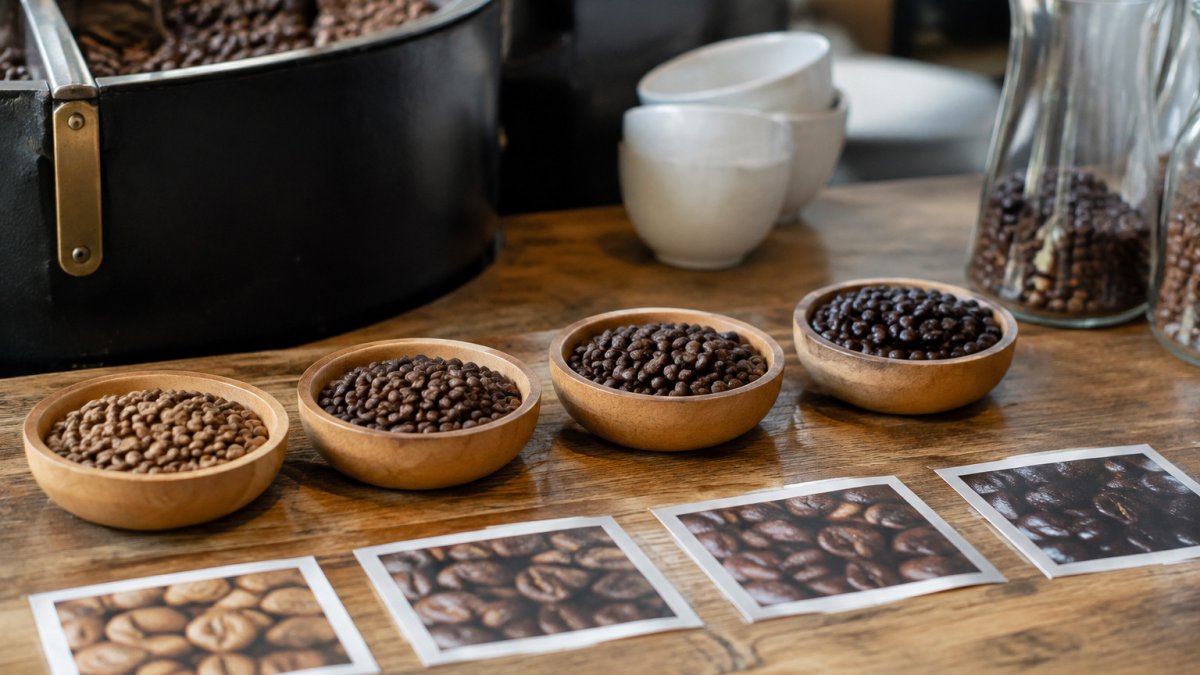
- Light roast: Bright acidity, floral and fruity notes, lighter body. Best for single-origin coffees you want to taste as they grew.
- Medium roast: Balanced acidity, caramel and chocolate notes, medium body. A safe choice for most drip brewers and everyday coffee.
- Dark roast: Low acidity, bittersweet or smoky notes, heavy body. Good for milk drinks, but it can hide origin flavor.
Light roasts usually stop shortly after first crack. Medium roasts go a bit further. Dark roasts push past second crack. The more you develop the bean, the more the roast flavor covers the bean's own character.
The three roast levels bring out different traits, so the table below sums up what each one tastes like and when it fits best.
| Roast level | Best for | Key flavor trait |
|---|---|---|
| Light roast | Single-origin coffees you want to taste as they grew | Bright acidity, floral and fruity notes |
| Medium roast | Most drip brewers and everyday coffee | Balanced acidity, caramel and chocolate notes |
| Dark roast | Milk drinks | Low acidity, bittersweet or smoky notes |
How Bean Density, Altitude and Varietal Shape Your Choice
Two beans roasted the same way can taste very different. Density, altitude and variety are the main reasons.
Dense beans grown at high altitude hold more moisture and take heat more slowly. They usually need a higher charge temperature and a longer roast to develop fully.
Varietal also matters. Delicate heirloom varieties often reward a light profile that keeps their floral notes. Hardier, heavier-bodied beans can handle a medium or darker roast without tasting burnt.
A practical rule: check the green bean's density and origin notes first, then pick a profile that suits them.
Best Coffee Roast for Espresso and Pour-Over Brewing
The best roast depends on how you brew, not only on your taste.
For pour-over, a light to medium roast usually wins. Pour-over shows off clarity and acidity, and it brews a clean cup with a thin, even body.
For espresso, a medium to dark roast is the traditional choice. The high pressure and fine grind pull out a lot of flavor quickly, so a denser, more developed bean keeps the shot from tasting sour.
If you are unsure which bag suits your brewer, the roaster's notes on the bag are the fastest guide.
Reading a Coffee Roast Profile Chart
A roast profile chart looks intimidating at first. It is really just a set of lines to read against a shared clock: bean temperature, rate of rise and the timing of key events. Once you know what each line represents, you can compare two batches and explain why they taste different.
The axes and the lines
Most roasting software plots time on the horizontal axis and temperature on the vertical axis. The main line is bean temperature, sometimes called BT, measured by a probe in the drum or in the bean mass.
Start with the marked moments. Note when you charged the beans, when turning point occurred (the brief dip in bean temperature right after charge as the cold beans absorb heat), when first crack began, when development started and when you dropped the beans. Those markers are the skeleton of the profile. Everything else is the shape of the heat between them.
What the slope tells you
Then look at the slope of the bean temperature line. A steep climb means fast heat. A flatter line means slower, gentler development.
When you compare two charts, look for the differences rather than the absolute numbers. A faster rise in the first minutes often explains a grassy or thin cup. A long, flat stretch before first crack often explains a baked, dull cup. A longer development phase after first crack often explains extra sweetness or body.
A worked comparison
Suppose batch A reaches first crack at 9 minutes and drops at 10:30, while batch B reaches first crack at 9 minutes and drops at 12:00. Batch A has about 90 seconds of development; batch B has about 3 minutes. If batch A tastes sour and batch B tastes sweeter but flatter, the chart already tells you the lever to move: extend development slightly on the next batch A, or shorten it on the next batch B. Change one variable at a time so the chart and the cup stay connected.
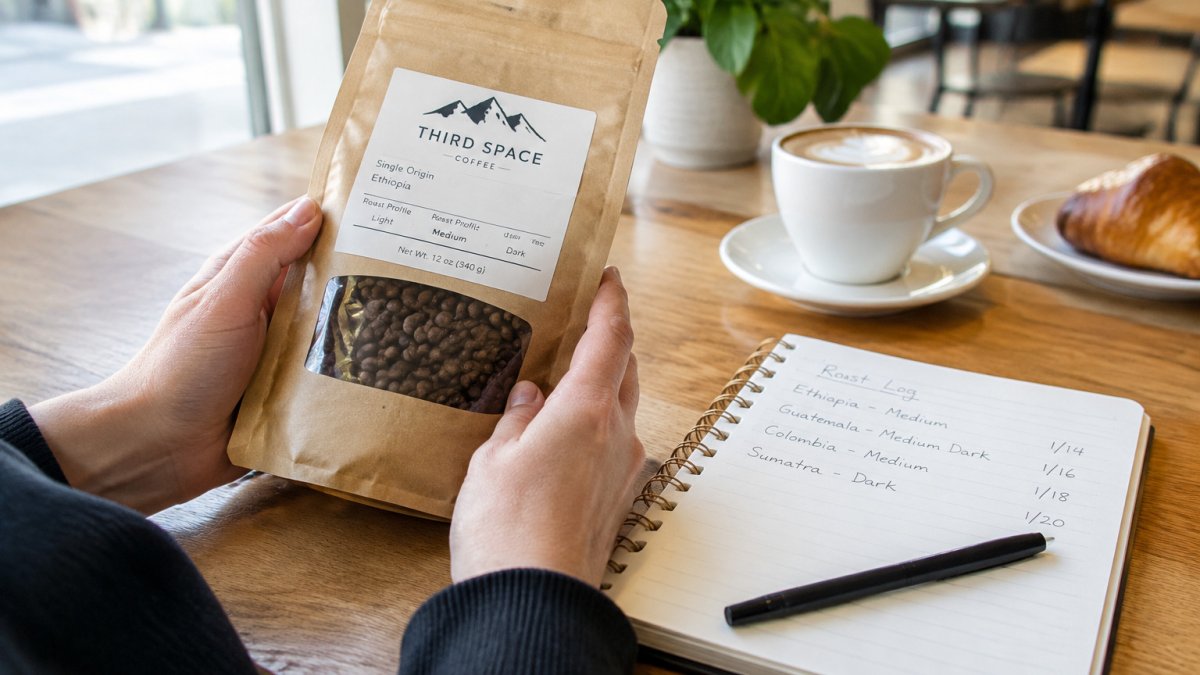
!Close-up of hands holding a bag of freshly roasted coffee beans beside a notepad with a handwritten roast log in a bright cafe setting
Keep a simple roast log next to your chart. Write down the charge temperature, the turning point, the first-crack time, the drop time and one line of taste notes. Over a dozen batches, you will see patterns that no guide can give you, and your chart becomes a record you can actually roast from.
Troubleshooting Roast Profile Mismatches at Home
Most home roasting problems come from a mismatch between the profile and the bean, and most guides stop at the theory. This section is the part competitors tend to skip: a diagnostic path for the two failures home roasters hit most often, baked and underdeveloped coffee, plus the other common mismatches and how to isolate them.
Diagnose before you change anything
Taste first, then read the chart, then change one variable. A useful order is: identify the dominant defect in the cup, find the moment in the profile that most likely caused it, and adjust only that moment on the next batch. Changing several things at once makes it impossible to know what helped.
Baked coffee: flat, dull, papery
Baked coffee tastes flat and dull, sometimes papery or like cardboard, with little sweetness and a hollow finish. The usual cause is a long, slow stretch through the middle of the roast, often with a low charge temperature or a rate of rise that sags and then has to be pushed back up.
Watch out: raising the charge temperature to fix a baked batch can scorch the outside of the bean before the inside catches up, so adjust the middle of the roast rather than the start.
Underdeveloped coffee: sour, grassy, vegetal
Underdeveloped coffee tastes sour, grassy or vegetal, with a sharp acidity that feels unfinished rather than bright. The usual cause is a roast that ended too soon after first crack, or a rate of rise so fast early on that the inside of the bean never caught up with the outside.
A common pattern is to extend development time after first crack in small steps, 15 to 30 seconds at a time, and taste after each batch. If the sourness fades and sweetness appears, you are moving in the right direction. If the cup turns flat, you have crossed into baked territory and should back off.
The other common mismatches
- Uneven color: Beans are not moving enough in the roaster, or the batch is too big for the drum. Reduce the batch size and check that the beans tumble rather than sit.
- Burnt or ashy taste: Heat was too high late in the roast. Lower the heat after first crack and let the rate of rise decline instead of climbing.
- Scorched or tipped beans: Charge temperature was too high for the bean's density. Dense, high-altitude beans tolerate more heat; softer beans need a gentler start.
- Roast tastes different each time: Inconsistent charge temperature or timing. Use your log to standardize one variable at a time, starting with charge temperature.
Keep a failure log
Write down the defect you tasted, the moment in the profile you suspect and the single change you made. After a handful of batches you will have a personal map of which lever fixes which defect on your roaster, which is more useful than any generic chart.
Choosing Your Next Bag of Beans at Third Space Coffee
If you want to skip the trial and error, buying roasted beans is the simplest path. At Third Space Coffee, we roast in-house, which is part of what makes our coffee distinctive.
Pick a light roast if you brew pour-over and want bright, fruity flavors. Pick a medium or espresso blend if you drink milk drinks or want a rich, sweet cup. Either way, bring your roast log and questions in. We are happy to talk through what you are tasting.
Frequently Asked Questions
What are the different roast profiles for coffee?
Roast profiles are usually grouped into light, medium and dark, with several sub-levels in between such as light-medium and full city. Light roasts stop shortly after first crack and keep more origin character, with brighter acidity and floral or fruity notes. Medium roasts develop more sweetness and body, while dark roasts go past second crack and emphasize roast flavors like chocolate, smoke and bittersweet notes. When you shop, look for the roaster's stated roast level and tasting notes, then compare them with the brew method you plan to use.
Does a darker roast mean stronger coffee?
Not necessarily. Darker roasts taste bolder and more bitter, which many people perceive as strength, but the caffeine content and actual concentration depend on the dose of coffee and the brewing ratio. Roasting also reduces bean density and can alter solubility, so the same weight of dark roast may extract differently than light roast. If you want a stronger cup, adjust your dose and brew time rather than relying on roast color alone.
What is the best roast profile for pour-over versus espresso brewing?
Pour-over brewing tends to highlight the clarity and acidity of lighter roasts, which is why many brewers choose light or light-medium coffees with bright, fruity notes. Espresso often works well with medium or medium-dark roasts, which produce a sweeter, heavier-bodied shot that holds up well when milk is added. The best choice depends on your flavor preference, so start with a medium roast for espresso and a light roast for pour-over, then adjust from there.
How can I identify my preferred roast profile when shopping for beans?
Start by noting which flavors you enjoy in coffees you already like. Bright, acidic and floral cups usually point toward light roasts, while chocolate, caramel and nutty cups point toward medium roasts, and smoky or bittersweet cups point toward dark roasts. Read tasting notes on the bag, ask the roaster about the roast level, and buy small bags so you can compare several profiles side by side.