 how-to
7 Pour-Over Coffee Extraction Fixes That Transform Your Brew
Last Updated: October 25, 2026
Quick Summary
Pour-over coffee extraction is the process of dissolving desirable flavors and compounds from your grounds into hot water. Most coffee professionals target an extraction yield between 18-22 percent, which delivers the balanced flavor that separates a great pour-over from a mediocre one. Improve pour-over coffee extraction by adjusting your grind size, water temperature between 195-205°F, brew time of 3-4 minutes, and coffee-to-water ratio starting at 1:16.
- Target an extraction yield between 18-22 percent for balanced flavor.
- Start with a 1:16 coffee-to-water ratio by weight, such as 25 grams of coffee with 400 grams of water.
- Use water temperature between 195-205°F, with light roasts at 195-198°F and dark roasts at 202-205°F.
- Aim for a total brew time of 3-4 minutes including bloom, main pour, and drawdown.
- Use the one-variable method: change only one adjustment per brew, taste, and decide before making another change.
Table of Contents
- Understanding Pour-Over Coffee Extraction
- Adjust Your Pour-Over Coffee Ratio for Better Results
- Get Your Pour-Over Coffee Grind Size Right
- Master Water Temperature and Its Effect on Extraction
- Control Your Pour-Over Coffee Brew Time
- Why Does Pour-Over Coffee Taste Sour and How to Fix It
- Dial In Your Extraction with a One-Variable Method
- Start Brewing Better Pour-Over Coffee Today
- Frequently Asked Questions
Understanding Pour-Over Coffee Extraction
Pour-over coffee extraction is the process of dissolving desirable flavors and compounds from your grounds into hot water.
Hot water contacts the coffee bed and soluble compounds begin dissolving immediately.
The sweet spot sits in the middle. Most coffee professionals target an extraction yield between 18-22 percent.
Once you grasp how water, time, and grind size work together, you can diagnose problems systematically.
Adjust Your Pour-Over Coffee Ratio for Better Results
Your pour-over coffee ratio is the weight of coffee grounds to the weight of water. Get this wrong and no other adjustment will save your brew.
The standard starting ratio is 1:16, one part coffee to sixteen parts water by weight, such as 25 grams of coffee with 400 grams of water.
Start here and adjust based on what you taste:
- Weak, watery brew: Try 1:15 ratio (use slightly more coffee)
- Too strong, bitter: Try 1:17 ratio (use slightly more water)
- Just right: Stay at 1:16 and focus on other variables
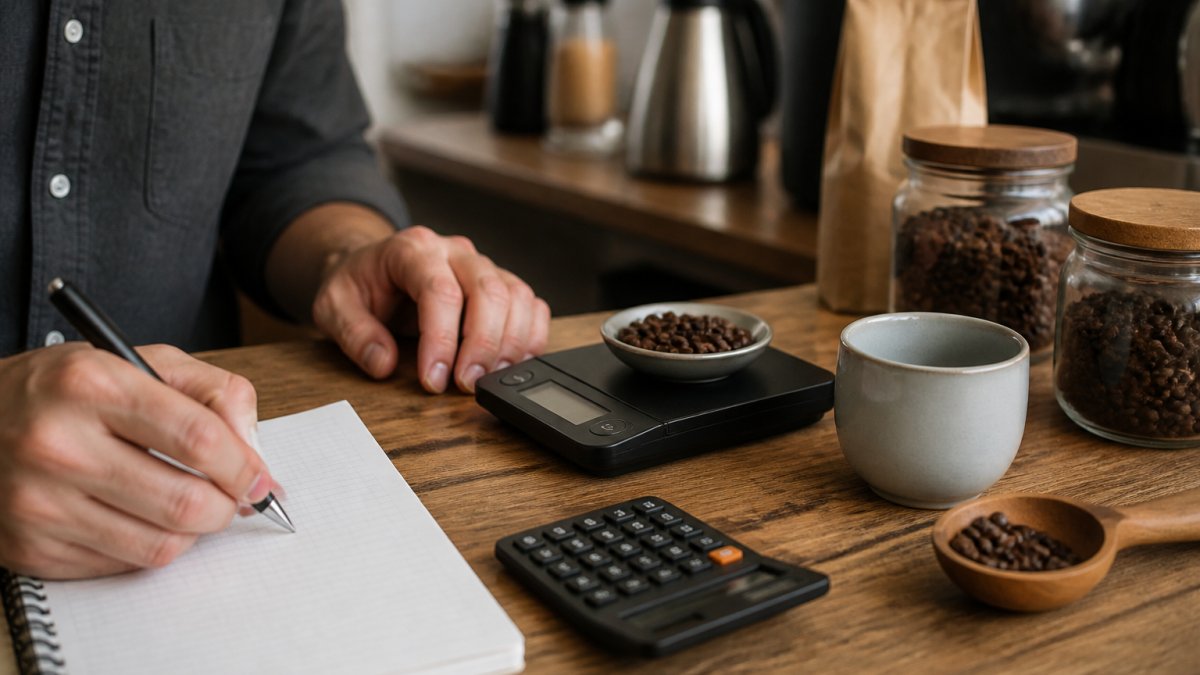
A kitchen scale is essential. Eyeballing ratios leads to inconsistency. Scales cost under thirty dollars and eliminate guesswork.
Get Your Pour-Over Coffee Grind Size Right
Grind size is the single most powerful extraction lever you control, but "medium-fine, like sand" is a starting point, not a diagnosis. To improve extraction, understand what your grinder puts into the bed, not just average particle size, but the spread around it.
Why particle distribution matters more than grind setting
Every grinder produces a range of particle sizes. A wide distribution means small grounds extract fast while large ones extract slowly, a cup that tastes sour and bitter at once, under- and over-extracted in the same sip.
Two categories of particles drive most pour-over problems:
- Fines: Very small particles, roughly dust to powder size. They extract quickly and can migrate downward through the bed, clogging the filter pores and slowing drawdown. A burst of fines is a common cause of a brew that stalls in the final minute.
- Boulders: Oversized particles that water passes over before they fully extract. They leave behind sour, vegetal, or hollow flavors even when the rest of the bed is dialed in.
A burr grinder narrows the distribution. A blade grinder produces a wide spread of dust and chunks, which is why blade-ground coffee is so hard to dial in, you're fighting the grinder, not the recipe.
Reading your bed for grinder vs. recipe problems
Before changing your grind setting, look at the spent bed after drawdown. It tells you which problem you actually have.
- Bed is flat and even, but the cup is sour: Likely a recipe issue (grind too coarse, water too cool, or contact time too short). Adjust the recipe.
- Bed has a crater, a divot, or a ring of untouched grounds: Likely channeling, water found a path of least resistance instead of flowing evenly through the bed. This is often a pouring or bed-prep problem, not a grind problem.
- Bed is muddy, drawdown stalls, and the surface is slick: Likely too many fines or too fine a grind. The filter is clogging.
Signs of channeling and how to correct it
Channeling is water carving a narrow path through the bed rather than percolating evenly, leaving most of the bed under-extracted while the channel over-extracts. The cup tastes hollow, sharp, and thin.
Common causes and corrections:
- Pouring too aggressively in one spot: Pour in a slow spiral from the center outward, keeping the water level stable. Avoid dumping water directly onto the filter wall.
- Bed not leveled after the bloom: Give the dripper a gentle swirl or a single soft tap after the bloom to flatten the bed. A level bed resists channeling.
- Grind too fine for the filter: If the bed clogs and water pools on top, back the grind off one step coarser before changing anything else.
Distinguishing grinder issues from recipe issues
Brew the same coffee twice at the same setting, changing nothing. If the cups taste noticeably different, your grinder or pouring is inconsistent.
If the grinder is the problem, the fix is usually equipment, not technique. If it's fine, move to the one-variable method below and adjust the recipe systematically.
For detailed guidance on adjusting your grind, check out our guide on how to adjust coffee grind size for better flavor.
Master Water Temperature and Its Effect on Extraction
The ideal pour-over coffee water temperature sits between 195-205 degrees Fahrenheit.
Here's how temperature affects flavor:
- Below 195°F: Extraction is too slow. Your coffee tastes sour and weak.
- 195-205°F: Extraction is balanced. Flavors are clean and complete.
- Above 205°F: Extraction is too fast. Your coffee tastes bitter and burnt.
Most electric kettles have temperature settings; invest in one. Guessing with a boiling kettle leads to inconsistent results.
Water cools as it sits in your dripper: pour 205°F water and it reaches the bed slightly cooler, which helps prevent over-extraction.
Roast level matters too. Light roasts extract faster than dark roasts.
For more on optimizing your water temperature, explore our article on the best water temperature for brewing coffee.
Control Your Pour-Over Coffee Brew Time
Brew time is how long water stays in contact with your grounds from start to finish.
Target a total brew time of 3-4 minutes for most pour-over drippers. This includes the bloom phase and all pours.
Break down your brew time like this:
- Bloom: 30-45 seconds (wet grounds, let CO2 escape)
- Main pour: 2-3 minutes (add remaining water gradually)
- Drawdown: 30-60 seconds (water drips through the bed)
If your brew finishes in under 3 minutes, your grind is too coarse or your pour is too fast. Slow down or grind finer. If it takes longer than 4 minutes, your grind is too fine or your pour is too slow. Grind coarser or pour faster.
Consistency matters most: small brew-time variations create noticeable flavor shifts.
Watch out: interrupting the pour to adjust flow rate mid-brew risks uneven extraction. Plan your pour pattern before you start, commit to it, and adjust next time.
Why Does Pour-Over Coffee Taste Sour and How to Fix It
Sour coffee is under-extracted: water didn't stay in contact with the grounds long enough to pull out the sweet compounds and body that balance the acids. But sourness is only one of four common taste faults, use the diagnostic map below to match taste to adjustment.
The taste-to-adjustment diagnostic map
| What you taste | What it usually means | First adjustment to try |
|---|---|---|
| Sour, sharp, thin | Under-extracted | Grind finer, or extend contact time |
| Bitter, harsh, dry finish | Over-extracted | Grind coarser, or shorten contact time |
| Hollow, empty, watery | Uneven extraction or too weak a ratio | Check bed for channeling; tighten ratio |
| Astringent, drying, puckering | Over-extraction of tannins or too-hot water | Lower water temperature; coarsen grind slightly |
Work down the map one row at a time. Change only the first adjustment listed, brew again, and re-taste. If the fault moves toward the next row, you overshot, back off half a step.
Fixing sourness specifically
Sourness signals extraction stopped before the sweet compounds dissolved, acids dissolve first, sweetness and body later. Fix it by increasing extraction:
- Grind finer, slows water flow and increases contact time.
- Pour slower, gives water more time in contact with the bed.
- Use hotter water, speeds extraction within the 195-205°F range.
Start with one change. Brew the same coffee next day with that single adjustment, taste, and keep it only if the cup improved; otherwise revert and try the next adjustment.
Fixing bitterness and astringency
Bitterness and astringency are the opposite fault: over-extraction. The corrections mirror the sourness fixes in reverse, grind coarser, pour faster, drop water temperature a few degrees, or shorten total brew time. Astringency specifically often traces to water that is too hot or a grind that is too fine for the filter, so check temperature and drawdown time first.
Fixing a hollow or watery cup
A hollow cup is the trickiest fault because it can come from two different causes: uneven extraction (channeling) or simply too little coffee for the water. Check the spent bed first. If it is uneven or cratered, correct your pouring pattern and bed prep. If the bed is flat and even, tighten your ratio one step (for example, from 1:16 to 1:15) and re-brew.
A repeatable one-variable workflow
- Brew a baseline at 1:16, medium-fine grind, 200°F water, and a 3:30 total time.
- Taste and name the fault using the diagnostic map above.
- Change one variable, the first adjustment listed for that fault.
- Brew and taste again. Note whether the fault improved, worsened, or shifted.
- Keep or revert. Lock in the change only if the cup improved.
- Repeat until the cup is balanced, then record the final settings.
Keep a brewing journal with settings and tasting notes. After about ten brews, patterns emerge and you will see which adjustments move the needle most for your dripper and grinder. That record is what turns guesswork into a repeatable recipe.
For help choosing the right beans to dial in with, learn how to choose the best coffee for pour over brewing.
Dial In Your Extraction with a One-Variable Method
The one-variable method is how professionals dial in their pour-over coffee extraction: change one thing, brew, taste, decide.
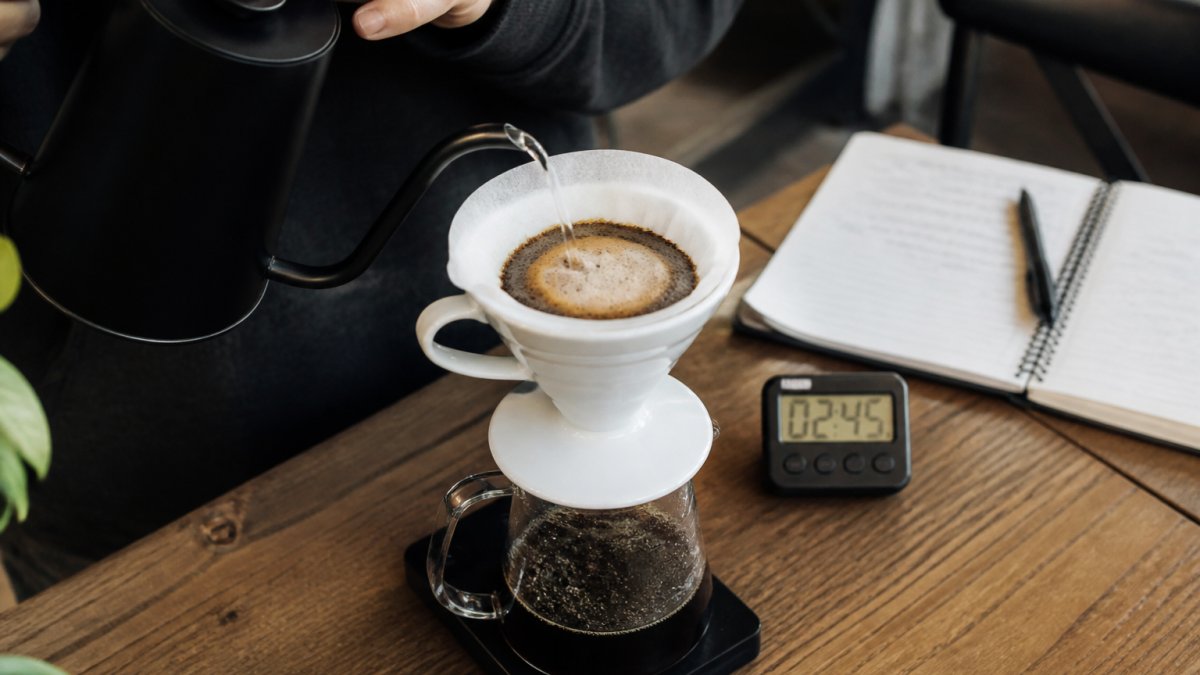
Here's the workflow:
- Start with a baseline brew using standard settings (1:16 ratio, medium-fine grind, 200°F water, 3:30 brew time)
- Taste it honestly. Is it sour? Bitter? Balanced?
- Identify the problem. Sour means under-extraction. Bitter means over-extraction.
- Change one variable. If sour, grind finer. If bitter, grind coarser.
- Brew and taste again. Note what changed.
- Repeat until balanced. Once you hit the sweet spot, lock in those settings.
Extraction is predictable: change one variable and you see a clear result, learn how your dripper responds, and build intuition.
Third Space Coffee customers often ask how our in-house roasted beans taste so consistent.
For help choosing the right beans to dial in with, learn how to choose the best coffee for pour over brewing.
Start Brewing Better Pour-Over Coffee Today
Improving your pour-over coffee extraction doesn't require expensive equipment or years of practice. It requires understanding the variables and adjusting them systematically.
Start with your ratio. Lock it in with a scale. Then dial in your grind size.
The one-variable method removes the guesswork: change one thing, taste the result, decide. Over a few weeks, you'll be able to dial in any coffee to exactly how you like it.
At Third Space Coffee, we're here to support your brewing journey with high-quality, locally roasted beans that reward careful technique. When you're ready to practice these extraction principles with beans that are fresh and flavorful, explore our pour-over equipment and freshly roasted coffee options.
Frequently Asked Questions
What coffee-to-water ratio should I use for pour-over coffee?
Start with a 1:16 ratio (1 gram of coffee to 16 grams of water). This is the industry standard for balanced extraction. If your coffee tastes weak or watery, move to 1:15. If it tastes bitter or harsh, try 1:17. Weigh your coffee and water on a kitchen scale for consistency, this removes guesswork and makes it easy to repeat your best brews.
Why does my pour-over coffee taste sour?
Sour coffee signals under-extraction: your water didn't pull enough flavor from the grounds. This happens when your grind is too coarse, water is too cool, or brew time is too short. Try grinding finer, increasing water temperature to 195-205°F, or pouring more slowly to extend contact time. Make one change at a time so you know which fix worked.
How long should a pour-over brew take?
Total brew time typically ranges from 2.5 to 4 minutes, depending on your dripper, grind size, and pouring technique. A slower brew (closer to 4 minutes) with a finer grind extracts more flavor. A faster brew (2.5 minutes) with a coarser grind tastes lighter. Time your brew with a simple kitchen timer to spot patterns and adjust consistently.
What grind size should I use for pour-over coffee?
Medium grind is the starting point for most drippers. It should feel like sand, not powder or chunks. If your brew tastes sour, go finer. If it tastes bitter, go coarser. Grinder consistency matters more than the grind size itself, burr grinders produce uniform particles that extract evenly, while blade grinders create uneven sizes that lead to inconsistent flavor.
The difference between average pour-over coffee and exceptional pour-over coffee is extraction. Master these variables, and every cup improves. Your morning brew becomes something worth savoring.