 how-to
How to Choose the Best Coffee for Pour Over Brewing
Table of Contents
- Start With Freshness: Why Roast Dates Beat Brand Names
- Light Roast vs Dark Roast for Pour Over: Which Profile Fits Your Cup
- Single Origin vs Blends: Matching Bean Character to Pour Over Coffee
- The Best Grind Size for Pour Over: Why Consistency Decides Everything
- Pour Over Coffee Water to Coffee Ratio: The Numbers That Matter
- Washed vs Natural Process: How Processing Changes Your Pour Over Coffee
- Troubleshooting Flavor Defects and Water Chemistry
- Conclusion: Build Your Pour Over Starting Point
- Frequently Asked Questions
Last Updated: September 21, 2026
Start With Freshness: Why Roast Dates Beat Brand Names
Learning how to choose the best coffee for pour over brewing starts with a single number: the roast date stamped on the bag. Freshness is the most reliable quality signal you have, and it matters more than any logo or price tag.
What Degassing Actually Does
Right after roasting, coffee beans are full of carbon dioxide trapped in their porous cell structure. Over the next days and weeks, that CO2 slowly escapes, a process called degassing. The gas matters because it actively repels water. Brew a bean too soon after roast and the CO2 pushes water away from the grounds, so your pour over tastes flat, thin, and oddly sharp no matter how good your technique is.
At the same time, oxygen is doing the opposite kind of damage. Once the CO2 has mostly escaped, the oils on the bean surface begin to oxidize, producing cardboard, stale bread, and papery notes.
How to Test for Your Bean's Peak Window
The 4-to-14-day range is a starting point, not a rule. You can find the exact peak for any bag with a simple bloom test:
- Weigh out your normal dose and pour a small amount of hot water just to saturate the grounds.
- Watch the bloom. A fresh bean will swell and bubble aggressively as CO2 escapes.
- Note the size and duration of the bloom. A big, foamy, long-lasting bloom means the bean is still gassy. A small, quiet bloom means it is close to or past peak.
- Brew the same bean every two days and note when the cup tastes sweetest and most complex. That is your peak window for that bag.
Why 'Best By' Dates Tell You Nothing
A common mistake is grabbing whatever bag looks newest on the shelf. "Best by" dates are set by the roaster for stock rotation and often land six to twelve months after roasting, long past the point where the coffee tastes like anything interesting. Look for the roast date, not the best-by date. If a bag has no roast date at all, that is a signal the roaster is not prioritizing freshness.
Storage: The Other Half of Freshness
A fresh roast date only helps if you store the beans well. The enemies are oxygen, heat, light, and moisture. Keep beans in an opaque, airtight container at room temperature, away from the stove and the window. Do not refrigerate, the temperature swings and moisture are worse than room temperature. Freezing works if you do it right: portion beans into single-use bags, squeeze out the air, and freeze.
Light Roast vs Dark Roast for Pour Over: Which Profile Fits Your Cup
Light roast coffee suits pour over brewing best for most drinkers. The method's paper filter and gentle extraction preserve the bright acidity, floral aromas, and fruit notes that darker roasting burns away.
| Roast Level | Flavor Profile | Best For | Extraction Challenge |
|---|---|---|---|
| Light roast | Bright, floral, fruity, high acidity | Highlighting origin character | Needs finer grind, hotter water |
| Medium-light roast | Balanced sweetness, mild acidity | Everyday pour over | Forgiving, easy to dial in |
| Dark roast | Chocolate, caramel, low acidity, heavier body | Drinkers who dislike acidity | Bitter fast if water is too hot |
Single Origin vs Blends: Matching Bean Character to Pour Over Coffee
Single origin beans show off one farm, region, or lot, while blends combine beans for consistency and balance. Neither is objectively better, but they serve different goals.
The Best Grind Size for Pour Over: Why Consistency Decides Everything
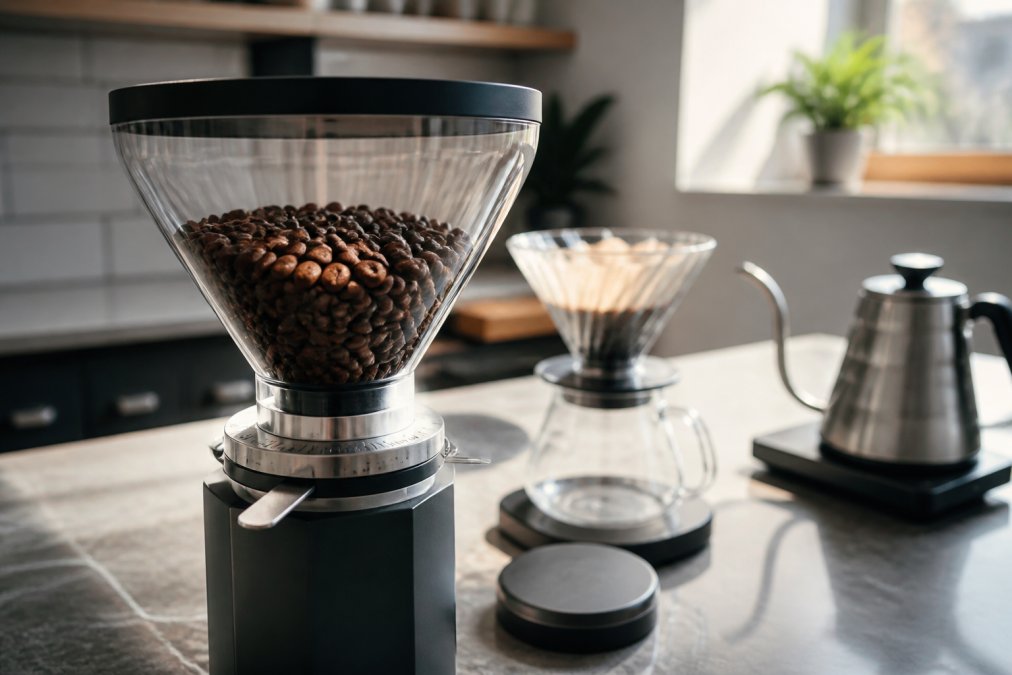
The best grind size for pour over is medium, roughly the texture of table salt. That range lets water pass through the coffee bed in two to four minutes, which is the sweet spot for even extraction.
Pour Over Coffee Water to Coffee Ratio: The Numbers That Matter
The standard pour over coffee water to coffee ratio is 1:16, meaning one gram of coffee to sixteen grams of water. For a single 12-ounce cup, that's about 22 grams of coffee and 350 grams of water.
Washed vs Natural Process: How Processing Changes Your Pour Over Coffee
Processing method shapes flavor before roasting even begins. Washed process coffees are depulped and rinsed clean, producing clarity, crisp acidity, and a clean cup. Natural process coffees dry inside the fruit, soaking up sugars that turn into fruity, wine-like, complex flavors.
Troubleshooting Flavor Defects and Water Chemistry
Most pour over problems are not the beans. They are extraction or water. Before you blame a bag, run a diagnostic in this order: taste, then check time, then check water. Changing two variables at once tells you nothing.
The Four Defects and What They Actually Mean
| What you taste | What it usually means | First fix | Second fix |
|---|---|---|---|
| Sour, sharp, salty, thin | Under-extracted | Grind finer (one notch) | Raise water temp 3-5°F |
| Bitter, dry, ashy, hollow | Over-extracted | Grind coarser (one notch) | Lower water temp 3-5°F |
| Weak but not sour | Too little coffee or too much water | Tighten ratio toward 1:15 | Check your scale |
| Muddy, muted, no clarity | Water chemistry or stalled bed | Test water | Check filter rinse and pour technique |
A useful rule: if the cup is sour and bitter at the same time, your grind is inconsistent, not your recipe. That is a grinder problem, not a bean problem.
Why Water Chemistry Decides Clarity
Coffee is roughly 98 percent water, so the minerals in your water are doing as much work as your grinder. Two numbers matter most for pour over:
- Hardness (calcium and magnesium): Magnesium binds to coffee compounds and pulls fruity, bright acids into the cup. Too little hardness and the coffee tastes flat and lifeless. Too much and you mute acidity and scale your kettle.
- Alkalinity (bicarbonate buffer): Alkalinity neutralizes the acids in coffee. High-alkalinity water makes even a bright Ethiopian washed bean taste dull and chalky. This is the single most common reason a coffee tastes great at a cafe and flat at home.
Matching Water to Roast Profile
Water chemistry is not one-size-fits-all. It interacts with roast level:
- Light roasts are dense and acidic. They benefit from slightly higher hardness (magnesium in particular) and lower alkalinity so the fruit and floral notes survive.
- Dark roasts are already low in acidity and highly soluble. High-alkalinity water can flatten them into an ashy, one-note cup. Softer, lower-alkalinity water keeps them from turning bitter.
- Natural process beans carry heavy fermented sugars. If your water is very hard, those sugars read as muddy rather than fruity. A softer profile cleans them up.
The One-Variable Rule
Pick one change per brew. Grind first, because it has the largest effect on extraction. If grind alone cannot fix a sour cup, adjust temperature. Only touch water chemistry after grind and temperature are dialed in, otherwise you will chase a moving target and never learn what your beans actually taste like.
Conclusion: Build Your Pour Over Starting Point
Every bag of beans asks the same question: does this cup taste like what you wanted? Start with a fresh roast date, pick a light or medium-light profile, and match single origin or blend to how you actually drink coffee. Then lock in your medium grind, your 1:16 ratio, and your water temperature. Adjust one variable at a time.
Frequently Asked Questions
What type of coffee is best for pour over?
Light to medium-light roasts work best for pour over because they preserve the floral, fruity, and bright notes that the brewing method highlights. Look for single-origin beans with a roast date within two to four weeks. Washed process beans deliver the cleanest cup, while natural process beans add fruity complexity. Avoid very dark, oily roasts, which can taste bitter and clog paper filters.
Why is grind size critical when choosing coffee for pour over?
Grind size controls how fast water moves through the coffee bed, which directly affects extraction. Medium-fine grounds, similar to table salt, work for most pour over drippers. Too fine and the bed clogs, producing bitter, over-extracted coffee. Too coarse and water rushes through, leaving a sour, weak cup. A burr grinder gives you consistent particle size, which matters more than any single setting recommendation.
What is the 15-15-15 coffee rule?
The 15-15-15 rule refers to a common pour over ratio: 15 grams of coffee to 15 times that weight in water, brewed for roughly 15 minutes total. In practice, most home brewers use a 1:15 to 1:17 ratio and finish in two to four minutes. The rule is a starting point, not a strict formula. Adjust the ratio and timing to match your grinder, dripper, and taste preferences.
Are single-origin beans better for pour over than blends?
Single-origin beans let you taste the specific character of one region, which suits pour over's goal of clarity and nuance. Blends offer consistency and balance, and some are designed specifically for filter brewing. For learning how origin, altitude, and processing affect flavor, start with single origins. Once you know what you like, a well-built blend can deliver a reliable everyday cup.
Choosing great pour over coffee comes down to freshness, roast level, and a technique you can repeat. Third Space Coffee offers in-house roasted beans, a welcoming space to taste them, and flexible meeting room rentals for teams and private events. Stop by, grab a bag roasted this week, and let our team help you dial in your first cup.