 how-to
How to Choose the Best Coffee Brewing Method as a Beginner
Last Updated: November 5, 2026
Quick Summary
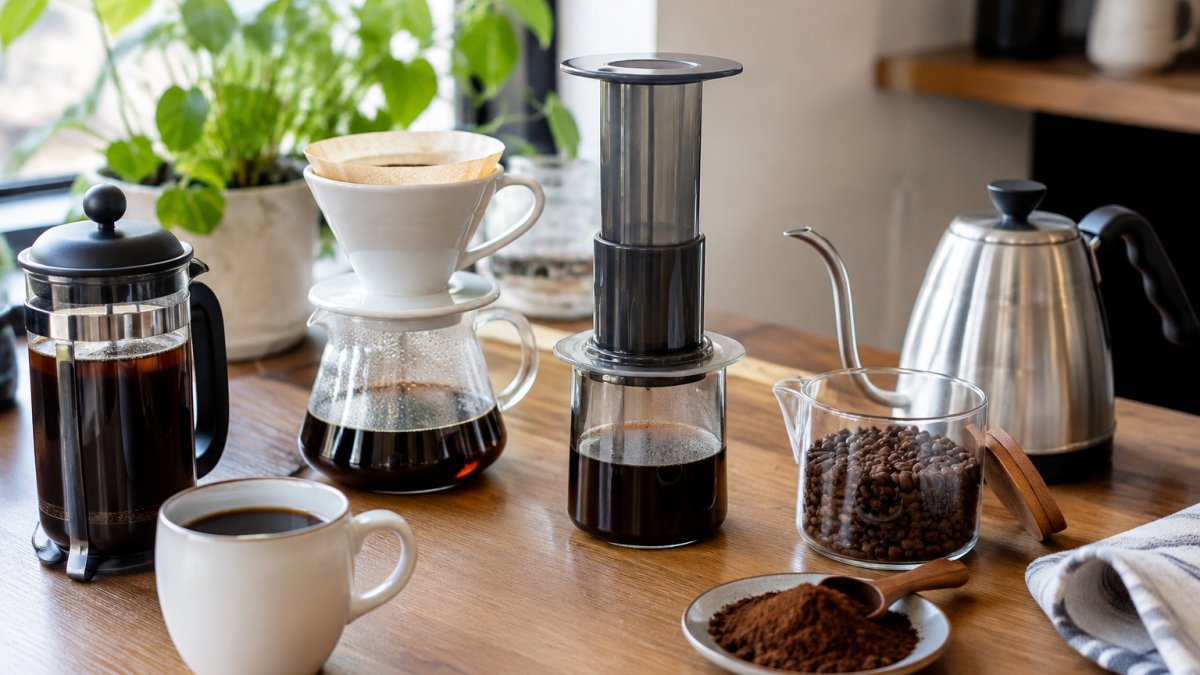
The best coffee brewing methods for beginners are pour-over, French press, AeroPress and automatic drip. Choose by serving size, cleanup time, total setup cost and how much precision you want. Pour-over suits hands-on learners, while automatic drip suits busy households.
- Pick by serving size first: single-cup brewers suit one drinker, drip machines suit two or more.
- French press and automatic drip are the least fussy, requiring little attention during brewing.
- The brewer is often not the biggest cost; a grinder, scale and kettle can exceed its price.
- Start with a 1:15 to 1:17 coffee-to-water ratio and change one variable per brew.
- Pour-over first cup: 20 grams of medium-fine coffee and 320 grams of water at 200°F.
Table of Contents
- How to Pick the Right Coffee Brewing Method Before You Buy Anything
- The 4 Best Coffee Brewing Methods for Beginners
- Coffee Brewing Methods Chart: Equipment, Time and Flavor Side by Side
- Pour-Over Coffee for Beginners: A Step-by-Step First Cup
- Getting the Coffee-to-Water Ratio Right for Any Method
- Your Starter Setup and Next Brew This Week
- Frequently Asked Questions
How to Pick the Right Coffee Brewing Method Before You Buy Anything
Most beginner guides tell you to pick based on time, budget, and flavor, then leave you to guess the rest. Learn how to choose the best coffee for pour-over before you buy beans for your brewer. A better approach is to score each method against the things that actually decide whether you will still be brewing in a month: startup cost, ongoing cost, counter space, cleanup time, serving size, and how much precision the method demands. Use the framework below to narrow the field before you spend anything.
Start with serving size. If you drink one cup a day, a single-cup method like an AeroPress or a small pour-over cone keeps every cup fresh. If two or more people in your household drink coffee at the same time, an automatic drip machine or a larger French press saves you from brewing twice. Buying a single-cup brewer for a two-person household is one of the most common beginner regrets.
Then weigh effort and cleanup. French press and automatic drip are the least fussy: load, wait, done. Pour-over asks for a steady hand and a few minutes of attention. AeroPress is fast but requires you to press and rinse the plunger. Cleanup ranges from a quick rinse (AeroPress, pour-over after you toss the filter) to scooping wet grounds out of a carafe (French press) to washing a full pot and filter basket (drip).
Budget for the whole setup, not just the brewer. The brewer is rarely the biggest cost. A burr grinder, a scale, and a kettle that lets you control the pour often cost more than the brewing device itself. A French press is usually the cheapest brewer, but you still need a grinder and a way to heat water. An automatic drip machine costs more up front but may include a grinder and a thermal carafe. Price out the full kit before you compare brewers.
Consider how much precision you want. Pour-over rewards measurement and technique, so it is a good fit if you enjoy tuning variables. French press and automatic drip are more forgiving of small mistakes. AeroPress sits in the middle: simple recipe, but small changes in grind and steep time shift the cup noticeably.
Account for space and mobility. A French press, AeroPress, and pour-over cone all fit in a cabinet or on a small counter. A drip machine takes up more room and needs an outlet. If counter space is tight or you want to brew while traveling, the compact options win.
Use this quick scoring guide to compare your top two candidates:
- One cup, fast, low cleanup: AeroPress or a single-cup pour-over.
- Two or more cups at once, hands-off: automatic drip.
- Full-bodied coffee, minimal gear: French press.
- Hands-on learning, bright flavor: pour-over.
Watch out: Do not buy an expensive grinder before you have brewed with a basic method a few times. Consistent grind size and water just off the boil often matter more to beginners than upgrading equipment.
If you are still torn, pick the method that matches your busiest morning, not your most ambitious one. A brewer you will actually use at 6 a.m. beats a brewer that impresses you on a slow Sunday.
The 4 Best Coffee Brewing Methods for Beginners
These four methods cover most beginner needs, and each one includes a dependable first-cup recipe so you can start brewing the day your gear arrives. The recipes below assume a burr grinder or fresh pre-ground coffee, a scale, and water just off the boil, around 200°F. If you do not have a scale yet, start with the volume approximations and move to weighing as soon as you can; weight is the single biggest upgrade to consistency.
Pour-over: clean, bright, and hands-on
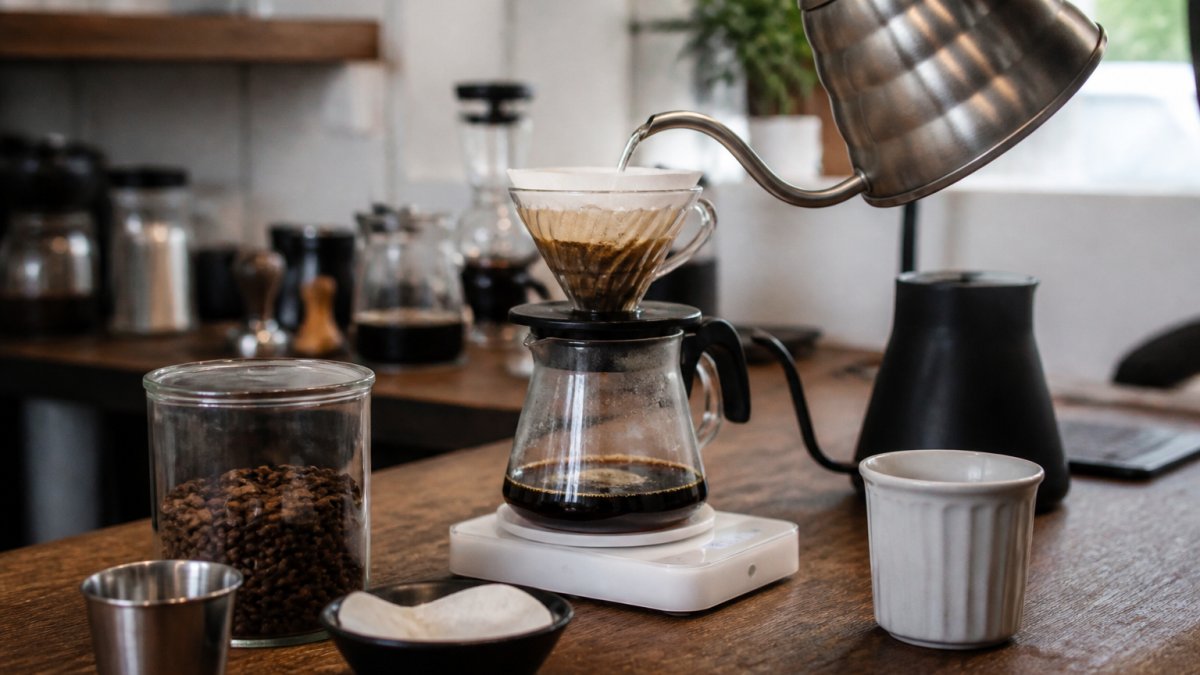
Pour-over uses a cone-shaped dripper, a paper filter, and a steady pour of hot water. It highlights subtle flavors and teaches you how grind and pour affect the cup.
First-cup recipe: 20 grams of medium-fine coffee (about the texture of table salt), 320 grams of water at 200°F. Rinse the paper filter with hot water, add the grounds, and pour 40 grams of water to bloom for 30 seconds. Browse our pour-over setups to get the gear you need for this recipe. Then pour the remaining 280 grams in slow circles over about three minutes. Total brew time should land near 3 to 4 minutes.
If it tastes wrong: sour or thin means grind finer or slow the pour; bitter or dry means grind coarser or use slightly cooler water. Most practitioners find that changing one variable at a time is the fastest way to dial in.
French press: full-bodied with almost no gear
A French press needs only the press, coarse-ground coffee, and hot water. The metal filter lets more oils and fine particles through, which is why the cup tastes heavier.
First-cup recipe: 30 grams of coarse coffee (like sea salt) and 500 grams of water at 200°F. Add coffee, pour all the water, stir once, and steep for 4 minutes. Press the plunger slowly and pour immediately so the coffee does not keep extracting.
If it tastes wrong: muddy or bitter means grind coarser or steep for 3.5 minutes; weak means add a few grams of coffee. Do not leave the brewed coffee sitting on the grounds, or it will turn bitter.
AeroPress: one cup, fast cleanup
An AeroPress makes one smooth, concentrated cup in about two minutes and cleans up in seconds. It is best for single cups and travel.
First-cup recipe: 15 grams of medium-fine coffee and 220 grams of water at 200°F. Use the standard orientation, rinse the paper filter, add coffee and water, stir gently, and steep for 1 minute 30 seconds. Press slowly for about 30 seconds.
If it tastes wrong: sour means grind finer or steep longer; bitter means grind coarser or shorten the steep. Because the recipe is small, a one-gram change in dose is noticeable, so weigh carefully.
Automatic drip: the convenience option
An automatic drip maker brews a full pot with the press of a button. Flavor is usually less refined than pour-over, but it is consistent once the machine is set up.
First-cup recipe: follow the machine's basket capacity, but use a starting ratio of 1 gram of coffee to 16 grams of water. For a 40-ounce (about 1,180-gram) pot, that is roughly 74 grams of medium coffee. Use a paper filter for easier cleanup and a cleaner cup, and preheat the carafe with hot water so the coffee stays warm longer.
If it tastes wrong: weak means add coffee or grind finer; bitter means grind coarser or descale the machine. A common pattern is that drip machines brew too cool, so check that your model reaches near 200°F.
Watch out: Do not change grind, dose, and water temperature all at once. Change one variable per brew so you can tell what actually improved the cup.
Coffee Brewing Methods Chart: Equipment, Time and Flavor Side by Side
Use this table to compare the four methods at a glance.
| Method | Equipment Needed | Typical Brew Time | Flavor Profile | Best For |
|---|---|---|---|---|
| Pour-over | Dripper, paper filter, kettle | 3-4 minutes | Clean, bright | Hands-on learners |
| French press | Press pot, kettle | About 4 minutes steep | Full-bodied, heavy | Simple setups |
| AeroPress | AeroPress, filters, kettle | About 2 minutes | Smooth, concentrated | Single cups |
| Automatic drip | Drip machine | 5-10 minutes | Balanced, consistent | Convenience |
Pour-Over Coffee for Beginners: A Step-by-Step First Cup
Pour-over is the method most beginners want to try first, so here is a simple recipe for your first cup.
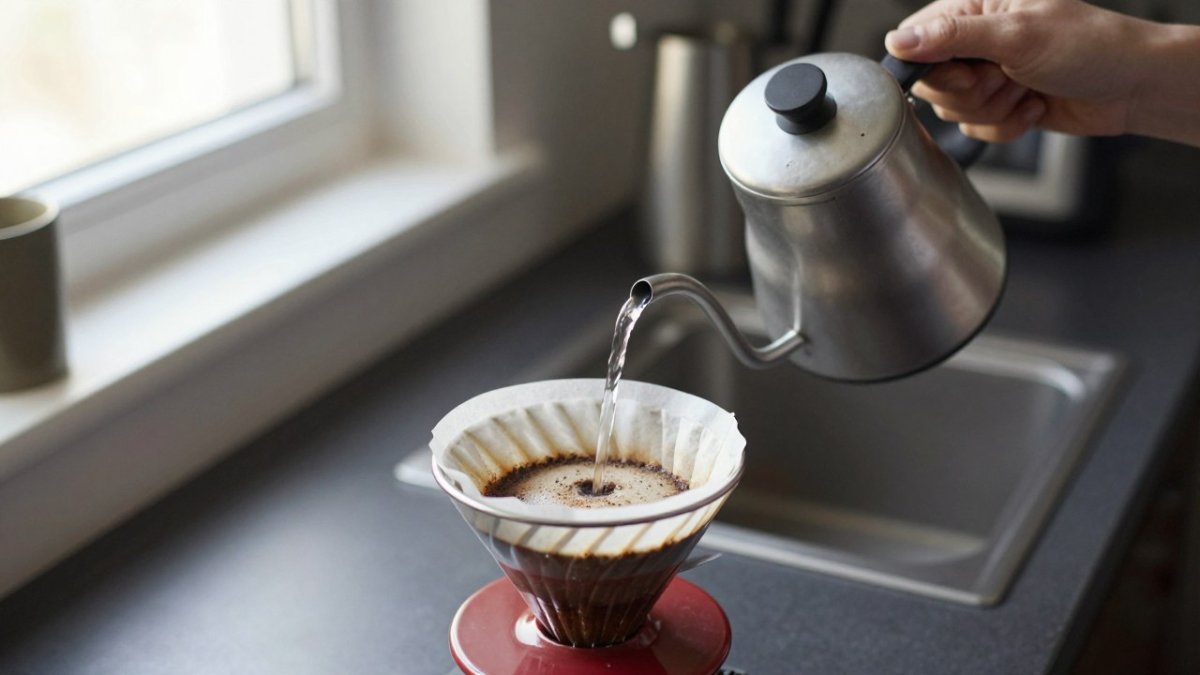
- Heat your water. Bring water to just under a boil, around 200°F.
- Rinse the filter. Place a paper filter in the dripper and pour hot water through it. This removes paper taste and warms the cup.
- Add your grounds. Use about 20 grams of medium-fine coffee. Level the bed gently.
- Bloom the coffee. Pour about 40 grams of water over the grounds and wait 30 seconds. The coffee will puff up as it releases gas.
- Pour in circles. Slowly add the rest of the water, about 320 grams, over roughly three minutes. Keep the pour steady.
- Let it drain. Once the water has passed through, remove the dripper and enjoy.
Expected result: A clean cup with bright, fruity notes. If it tastes sour, grind finer. If it tastes bitter, grind coarser. Troubleshoot more extraction problems if your first pour-over is still off.
Getting the Coffee-to-Water Ratio Right for Any Method
Coffee-to-water ratio controls strength. A common starting point for most methods is 1:15 to 1:17, meaning one gram of coffee for every 15 to 17 grams of water. For a single pour-over, that is about 20 grams of coffee and 320 grams of water.
Adjust from there. If your coffee tastes weak, use slightly more grounds. If it tastes harsh, use a little less or grind a bit coarser. See how grind size affects flavor to fine-tune your dose and ratio together. Keep a note of what you change so you can repeat good brews.
Your Starter Setup and Next Brew This Week
You do not need a full cart of gear to begin. For most beginners, a basic setup covers everything:
- A kettle that lets you control the pour
- A simple dripper or French press
- A scale for measuring coffee and water
- A burr grinder, or fresh pre-ground coffee from a local roaster
- A consistent grinder, which you can pick from our guide to manual grinders for home brewing
Choose one method and brew it three times this week. Change one variable each time, such as grind size or water temperature. You will learn more from that than from buying new gear. When you're ready for better beans, Third Space Coffee roasts its own coffee in-house. For current bags and recommendations, visit Third Space Coffee's website or ask the team in person.
Frequently Asked Questions
What are the four best coffee brewing methods for beginners?
The four methods most beginners start with are pour-over, French press, AeroPress and automatic drip. Pour-over rewards attention and gives a clean, bright cup. French press needs no paper filters and produces a heavier body. AeroPress makes one cup quickly and cleans up in seconds. Automatic drip is the most convenient because it runs on a timer. Pick based on how much time you have each morning and how much hands-on work you want to do.
Which coffee brewing method is easiest for beginners?
Automatic drip is the easiest because it needs only water, coffee and a button press. The main skill is measuring coffee correctly and using a consistent grind. AeroPress is a close second for people who want a simple process with forgiving results. Both reduce the number of decisions you make, so you can focus on getting the grind and ratio right before moving on to more hands-on methods.
What is the difference between pour-over and French press coffee?
Pour-over uses a paper filter, so it removes most oils and sediment, producing a lighter, cleaner cup with more distinct flavors. French press uses a metal mesh filter, which lets oils and fine particles through, giving a heavier, fuller body. Pour-over takes more attention to pour speed and water flow. French press is more forgiving and requires less technique, but leaves a fine sediment at the bottom of the cup.
What equipment do you need to brew coffee at home?
At minimum you need a grinder, a scale, a way to heat water and a brewing device for your chosen method. A burr grinder gives more consistent grind size than a blade grinder, which matters more than almost any other upgrade. A kitchen scale helps you hit a consistent coffee-to-water ratio. Whole beans stay fresher than pre-ground coffee. Costs vary widely by brand and model, so check current prices directly with the retailer before buying.