 listicle
Private Event Space Rental Price List: What to Expect
Table of Contents
- Private Event Space Rental Price List Overview
- Event Venue Rental Cost Breakdown: What Factors Drive Pricing
- What Is Included in Event Venue Rental Fees
- How to Plan a Small Bridal Shower Party on a Budget
- Comparing Pricing Models: Flat Fee vs. Hourly Rates
- Third Space Coffee: Affordable Private Event Space Option
- Conclusion
- Frequently Asked Questions
Last Updated: August 24, 2026
Private Event Space Rental Price List Overview
Finding the right private event space means understanding what you're actually paying for. Rental prices vary dramatically based on capacity, location, amenities, and duration. This guide from Third Space Coffee breaks down the real costs behind event venue rentals.
Most venues advertise a base rental fee, then hit you with service charges, equipment fees, catering minimums, and damage deposits that weren't mentioned upfront. Understanding what's included separates smart bookings from costly mistakes.
Below, we'll walk through the factors that drive pricing, compare hourly versus daily rates, identify hidden costs, and show you how to budget strategically for your gathering.
Event Venue Rental Cost Breakdown: What Factors Drive Pricing
Venue Size and Guest Capacity
The most obvious pricing driver is guest capacity. Small meeting rooms for 10-20 people typically start at $35-$81 per hour (bls.gov). Spaces accommodating 30-50 guests run $550-$1,000 for a full event. Larger venues handling 100+ guests can cost $2,000 or more, especially with catering and bar service included.
Square footage affects operational costs directly. A 4,000+ square foot venue costs more to maintain than a 1,000 square foot room, but larger spaces offer better value per person, splitting a $1,500 rental across 100 guests ($15/person) beats splitting a $400 rental across 10 guests ($40/person).
Location and Peak Season Timing
Downtown locations with easy parking and transit access command premium rates. Venues in secondary neighborhoods typically cost 20-30% less.
Peak season (weekends, May through September, and holidays) multiplies costs (the American Dental Association). An event space renting for $550 on Wednesday might cost $800+ on Saturday. Holiday weekends can add another 30-50% to the base fee.
Booking during off-peak times (weekday mornings, January through April, or Sunday afternoons) yields significant savings. The same venue available for $800 on Friday might be $550 on Tuesday.
Hourly vs. Daily Rental Rates
Hourly rates work for short meetings; daily rates (typically 4-12 hour blocks) suit events requiring setup and breakdown time.
Hourly venues charge $35-$150+ per hour. A 3-hour event costs $105-$450 at the low end. Daily packages typically range from $550 for smaller gatherings to $2,000+ for larger private events, usually including 4-8 hours of access plus setup and breakdown time.
For events lasting 4+ hours, daily rates typically offer better value than hourly pricing.
What Is Included in Event Venue Rental Fees
Standard Amenities and Equipment
Full-service venues like Third Space Coffee include more in their base rental. Third Space Coffee offers flexible meeting room rental options to the community. Professional meeting spaces like Regus include Wi-Fi, display screens, whiteboards, and flip charts in their hourly rate. Social event venues typically provide tables, chairs, basic lighting, and restroom access.
The real differentiator is what you can bring in. Some venues allow outside catering; others require their in-house caterer. Some permit outside beverages; others mandate they provide all drinks. These restrictions directly impact your total spend.
Hidden Charges and Additional Costs
Service fees add 18-22% gratuity on top of the rental (nra.org). Facility fees cover trash disposal, setup/breakdown labor, and security, adding $100-$300. Equipment surcharges for sound systems, projectors, or dance floors can add $50-$200+ each.
Catering minimums are especially costly. A $550 rental might require $1,000 minimum food and beverage spending, making your actual commitment $1,550.
Damage deposits typically run $200-$500, refundable if the space is returned in good condition. Cancellation policies vary widely, canceling with 14 days notice might forfeit 50% of your fee; canceling within 7 days might forfeit everything.
How to Plan a Small Bridal Shower Party on a Budget
Choosing the Right Venue Size
The biggest budget mistake is renting a space larger than you need. For a small bridal shower (20-50 guests), you want 500-1,500 square feet, enough for seating areas, a gift table, and mingling space. This keeps you in the $550-$900 rental range for a 4-6 hour event, versus $1,500+ for oversized venues.
Intimate venues designed for smaller gatherings often offer better value. Third Space Coffee's flexible layout means you can rent just the portion you need rather than committing to the entire space, paying less while maintaining an intimate atmosphere.

Consider off-peak timing aggressively. A Tuesday afternoon bridal shower might cost 30-40% less than a Saturday.
Negotiating Terms and Avoiding Surprise Fees
Most venues have flexibility if you ask. Base rental fees are sometimes negotiable, especially for off-peak dates or longer lead times (booking 2+ months in advance often unlocks discounts).
Get everything in writing. Request an itemized quote listing:
- Base rental fee
- Setup/breakdown time included
- Service fees and gratuities
- Equipment charges
- Catering minimums (if any)
- Damage deposit amount and refund conditions
- Cancellation policy with specific dates and refund percentages
- What's included (tables, chairs, linens, bar setup)
- Restrictions on outside food/beverages
Clarify whether your rental includes 4 hours of space access or 4 hours of event time plus setup and breakdown. Ask about package deals, bundling catering or bar service sometimes costs less than renting à la carte. Negotiate the damage deposit; you might reduce it to $150 if you're willing to sign a detailed condition report documenting the space before and after your event.
Comparing Pricing Models: Flat Fee vs. Hourly Rates
Flat-fee venues charge one price for a defined time block, typically 4-6 hours. This works if your event duration is predictable. You pay $550 and get the space from 6 PM to 10 PM.
Hourly venues charge per 60-minute block with no minimum. Regus charges $35/hour, favoring short meetings but becoming expensive for all-day events. A 6-hour event costs $210 at $35/hour; an 8-hour event costs $280.
The breakeven point depends on the venue. If a venue charges $550 flat fee for 4 hours ($137.50/hour), an hourly venue at $81/hour becomes more expensive after 6.8 hours. For events under 5 hours, hourly rates often win. For events 6+ hours, flat fees usually win. event management services pricing.
| Pricing Model | Best For | Cost Range | Flexibility |
|---|---|---|---|
| Flat Fee (4-6 hours) | Predictable-duration events | $550-$1,500 | Fixed time window, penalties for overages |
| Hourly Rate | Short meetings, flexible timing | $35-$150/hour | Pay only for time used, no penalties |
| All-Inclusive Package | Full-service events with catering | $2,000-$5,000+ | Fixed price, includes setup and bar service |
| Hybrid (flat fee + hourly overages) | Events with uncertain duration | $550-$1,000 base + $50-$100/hour | Fixed base, pay for extras |
Third Space Coffee: Affordable Private Event Space Option
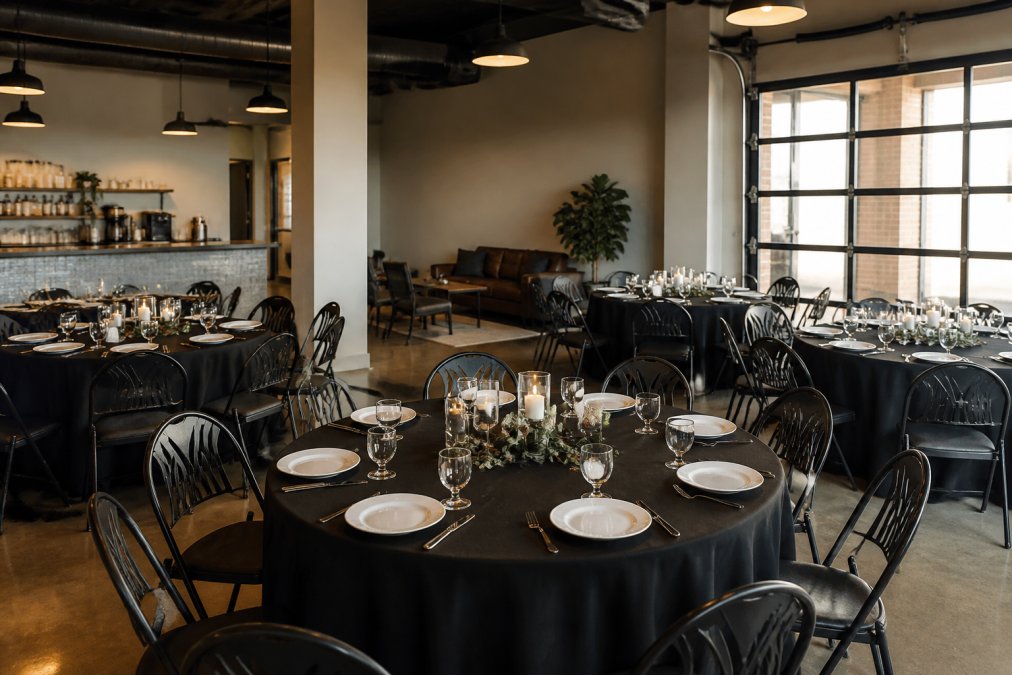
Third Space Coffee solves a specific problem: you want an affordable venue that doesn't feel corporate or sterile. The versatile space in Colorado Springs accommodates up to 150 guests indoors and 21 on the patio, with flexible layouts for bridal showers, team meetings, and social gatherings.
Third Space Coffee offers flexible meeting room rental options to the community. The space is available for after-hours events (6:30 PM weekdays, 5:30 PM Sundays).
Third Space Coffee genuinely differs in catering flexibility. Most venues force you to use their kitchen or ban outside food. Third Space allows outside catering for food, so you can work with a caterer of your choice. Beverages must come from Third Space, a reasonable trade-off supporting their core business.

The venue's living room-style areas and indoor-outdoor charm appeal to people planning intimate gatherings. For small to medium bridal showers (30-75 guests), you're looking at the base fee plus catering costs for food (your choice of vendor) and beverages (Third Space provides). There's no surprise service fee or equipment surcharge, the transparent pricing model is refreshing compared to venues hiding costs in fine print.
The main limitation is timing. If you need a daytime event, Third Space's after-hours availability might not work. For evening events or weekday gatherings, it's an excellent value.
Conclusion
Planning a private event space rental doesn't require overspending on a venue larger or more expensive than you need. The real cost comes down to understanding what's included, anticipating hidden fees, and matching space size to your actual guest count.
For intimate gatherings like bridal showers, Third Space Coffee delivers exceptional value. The space accommodates your group without wasting money on unused square footage, and the welcoming atmosphere transforms a simple rental into a memorable gathering. Get started with Third Space Coffee and discover how an affordable venue can actually exceed your expectations.
=== FAQ ANSWERS (audit these too, same rules) ===
[1] Q: What is the average hourly rate for a small private event space? A: Hourly rates for small private event spaces typically range from $35 to $100+ per hour, depending on location, amenities, and venue type. Professional meeting rooms often start around $35 per hour, while unique or premium spaces may command higher rates. Third Space Coffee offers event packages. Always confirm what's included in the hourly rate, as some venues charge additional fees for setup, technology, or catering services.
[2] Q: What hidden fees should I look for in an event space rental contract? A: Common hidden charges include setup and breakdown fees, technology surcharges for AV equipment or sound systems, parking fees, cleaning and damage deposits, service charges for staff, and gratuity requirements. Some venues impose minimum spending requirements for food and beverages, while others charge extra for outside catering. Carefully review the rental agreement to identify what's included in the base fee versus what costs extra. Ask about cancellation policies and whether deposits are refundable, as these can significantly impact your total event budget.
[3] Q: Is it cheaper to rent a venue on weekdays versus weekends? A: Yes, weekday rentals are typically less expensive than weekend bookings. Many venues offer off-peak pricing for Monday through Friday events, sometimes at 20-40% lower rates than weekend slots. Peak season (spring and summer) also commands higher prices regardless of day. If your event is flexible on timing, choosing a weekday during off-peak months can substantially reduce your venue rental cost. However, confirm availability and whether the venue's hours of operation suit your event timeline, as some spaces limit weekday bookings to after-hours only.
[4] Q: Does a private event space rental price list usually include catering? A: It depends on the venue and pricing model. Some venues include a catering credit or basic beverages in the rental fee, while others require you to purchase food and drinks separately through their in-house caterer. Many spaces allow outside catering but may impose restrictions or require licensed vendors. Third Space Coffee allows outside food vendors. Always clarify what food and beverage options are available, whether catering is mandatory, and whether the venue charges service fees or has minimum spending requirements.
[5] Q: What factors typically influence private event space rental prices? A: Key pricing factors include venue size and guest capacity, location and local market demand, day of the week and season, duration of rental (hourly vs. daily), included amenities (tables, chairs, AV equipment), parking availability, and required staffing. Unique or premium venues with distinctive character command higher rates. Additional services like event coordination, security, or specialized equipment also increase costs. Understanding these variables helps you budget accurately and negotiate better terms with venue operators.
Frequently Asked Questions
Q: What is the average hourly rate for a small private event space?
A: Hourly rates for small private event spaces typically range from $35 to $100+ per hour, depending on location, amenities, and venue type. Professional meeting rooms often start around $35 per hour, while unique or premium spaces may command higher rates. Third Space Coffee offers event packages. Always confirm what's included in the hourly rate, as some venues charge additional fees for setup, technology, or catering services.
Q: What hidden fees should I look for in an event space rental contract?
A: Common hidden charges include setup and breakdown fees, technology surcharges for AV equipment or sound systems, parking fees, cleaning and damage deposits, service charges for staff, and gratuity requirements. Some venues impose minimum spending requirements for food and beverages, while others charge extra for outside catering. Carefully review the rental agreement to identify what's included in the base fee versus what costs extra. Ask about cancellation policies and whether deposits are refundable, as these can significantly impact your total event budget.
Q: Is it cheaper to rent a venue on weekdays versus weekends?
A: Yes, weekday rentals are typically less expensive than weekend bookings. Many venues offer off-peak pricing for Monday through Friday events, sometimes at 20-40% lower rates than weekend slots. Peak season (spring and summer) also commands higher prices regardless of day. If your event is flexible on timing, choosing a weekday during off-peak months can substantially reduce your venue rental cost. However, confirm availability and whether the venue's hours of operation suit your event timeline, as some spaces limit weekday bookings to after-hours only.
Q: Does a private event space rental price list usually include catering?
A: It depends on the venue and pricing model. Some venues include a catering credit or basic beverages in the rental fee, while others require you to purchase food and drinks separately through their in-house caterer. Many spaces allow outside catering but may impose restrictions or require licensed vendors. Third Space Coffee allows outside food vendors. Always clarify what food and beverage options are available, whether catering is mandatory, and whether the venue charges service fees or has minimum spending requirements.
Q: What factors typically influence private event space rental prices?
A: Key pricing factors include venue size and guest capacity, location and local market demand, day of the week and season, duration of rental (hourly vs. daily), included amenities (tables, chairs, AV equipment), parking availability, and required staffing. Unique or premium venues with distinctive character command higher rates. Additional services like event coordination, security, or specialized equipment also increase costs. Understanding these variables helps you budget accurately and negotiate better terms with venue operators.
This article was written using GrandRanker