 listicle
10 Ways to Support Local Coffee Roasters (2026 Guide)
Table of Contents
- Why Your Coffee Purchases Matter More Than You Think
- 1. Buy Directly From the Roastery or Neighborhood Café
- 2. Start a Coffee Subscription to Get Fresh Beans Delivered
- 3. Buy Gift Cards for Friends, Family, and Coworkers
- 4. Choose the Best Coffee Beans for Home Brewing
- 5. Leave Positive Reviews and Spread the Word Online
- 6. Engage With Your Roaster on Social Media
- 7. Bring Local Coffee to Your Office or Team Meetings
- Frequently Asked Questions
Last Updated: September 7, 2026
Why Your Coffee Purchases Matter More Than You Think
Every bag of coffee you buy is a vote for the kind of business you want in your neighborhood. Choosing beans from a local roaster directly funds a small business, supports local jobs, and keeps money circulating in your community. This guide from Third Space Coffee, an in-house roasting café in Colorado Springs, outlines 10 practical ways to support local coffee roasters.
Below are specific actions you can take today, each paired with the reason it matters to the roaster and the broader local economy.
1. Buy Directly From the Roastery or Neighborhood Café
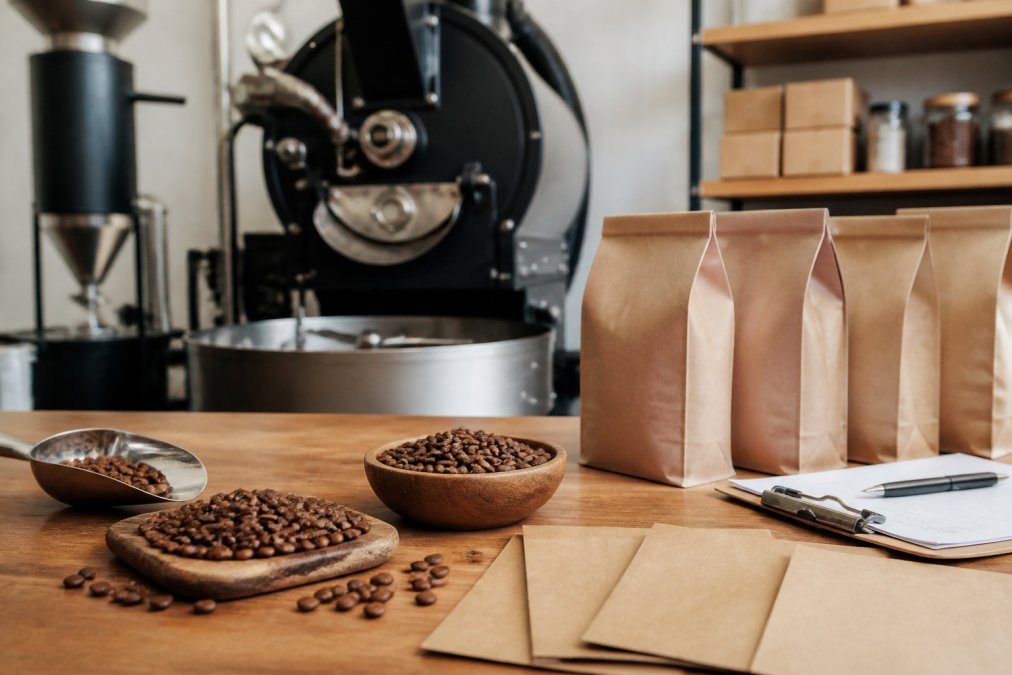
The most straightforward way to support local coffee roasters is to purchase beans straight from the source. Buying directly cuts out the middleman, so a larger share of the price goes back into the roasting business. Buying from a café that roasts in-house also lets you talk to people who know when the beans were roasted and can answer questions about the roast profile.
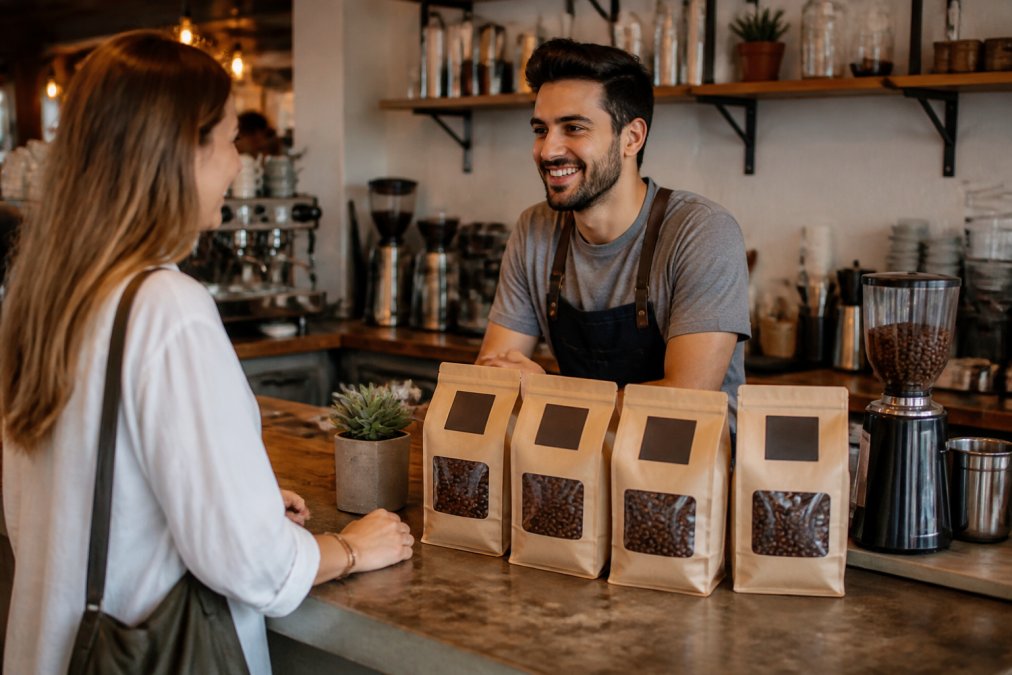
Some cafés serve beans from a regional distributor, which is fine, but buying from a roastery that roasts on-site connects you directly to the craft. Smelling the beans and seeing the equipment builds a relationship no online order can replicate.
2. Start a Coffee Subscription to Get Fresh Beans Delivered
A coffee subscription is one of the most reliable ways to support local coffee roasters because it provides predictable, recurring revenue. Many small roasters operate on thin margins, and knowing they have a set number of subscribers allows them to buy green beans in advance and plan their roasting schedule.
The benefits of a subscription extend beyond the roaster. You get beans delivered at the peak of freshness, typically within days of the roast date, which is impossible to guarantee with grocery store stock. Services like Trade Coffee's subscription platform connect you with hundreds of independent roasters, but the most direct option is often a subscription offered by your own neighborhood roaster. Check their website or ask at the counter; many roasters offer a simple subscription for a bag every two weeks or monthly.
3. Buy Gift Cards for Friends, Family, and Coworkers
Gift cards provide immediate cash flow to a small business. Unlike a physical product, a gift card is paid for upfront, giving the roaster money to cover rent or payroll before the recipient walks through the door. It is one of the highest-impact gestures you can make, especially during slower months.
Gift cards also introduce new customers to the roaster. When you give a gift card to a coworker who usually buys from a chain, you are handing them a reason to try something different. Many roasters use platforms like Square's gift card program to offer both digital and physical options, making it easy to send one in minutes. For a birthday, a thank-you, or a holiday, a gift card to a local roaster is a gift that supports a small business and encourages the recipient to explore specialty coffee.
4. Choose the Best Coffee Beans for Home Brewing
The deeper support move is learning to brew them well enough that you never want to go back to mass-market coffee. Mastering home brewing with fresh, locally roasted beans transforms you from a casual buyer into a loyal customer who understands why those beans cost more, and why they are worth it.
Why Roast Profiles Matter More Than Brand Names
Mass-market beans are typically roasted dark and fast to create a uniform, bitter flavor that masks defects. Local roasters often roast in small batches to highlight origin characteristics. Understanding the roast profile on the bag helps you choose beans that match your palate and brewing method.
- Light roasts retain more of the bean's origin flavors, think floral, fruity, or tea-like notes. They shine in pour-over or AeroPress brewing, where the cleaner cup lets those delicate flavors come through.
- Medium roasts balance origin character with caramelized sugars from the roasting process. This is the most versatile range, working well in drip coffee makers and French presses.
- Dark roasts emphasize the roasting process itself, producing bold, smoky, or chocolatey flavors. These stand up well to milk and sweeteners, making them a solid choice for espresso-based drinks at home.
When you buy from a local roaster, ask about the roast profile and recommended brewing method. Most roasters cup their own beans and can tell you how the flavor develops as the coffee cools, a conversation you will never have in a grocery store aisle.
The Grinder Is the Difference Maker
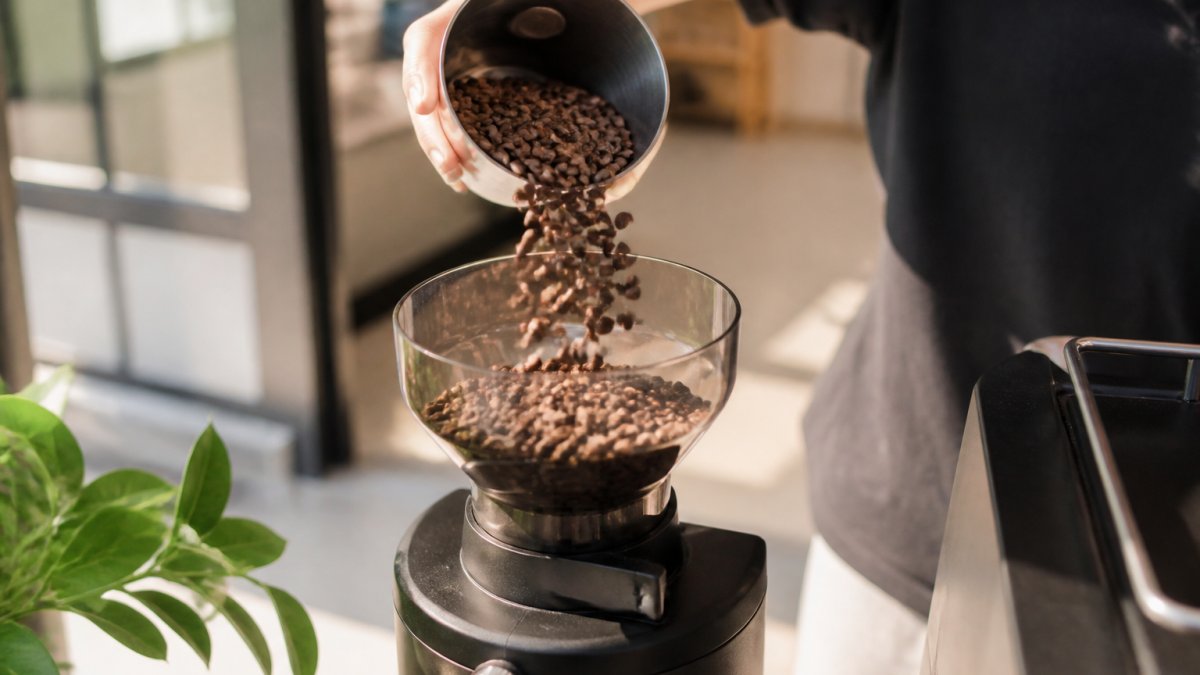
Pre-ground coffee begins losing its volatile aromatic compounds within minutes. Whole beans, stored properly, stay fresh for weeks. If you are serious about getting the most from local beans, a burr grinder is the single most impactful upgrade you can make.
A blade grinder chops beans unevenly, producing fine dust and coarse chunks that extract at different rates, resulting in a muddled, bitter cup. A burr grinder crushes beans between two abrasive surfaces for uniform particles, meaning even extraction and cleaner flavor. Entry-level burr grinders offer excellent results.
Match your grind size to your brewer:
| Brewing Method | Grind Size | Extraction Time |
|---|---|---|
| French press | Coarse (like sea salt) | 4 minutes |
| Pour-over (V60, Chemex) | Medium-fine (like table salt) | 2.5-3.5 minutes |
| Drip machine | Medium (like sand) | 5-6 minutes |
| AeroPress | Fine (like powdered sugar) | 1-2 minutes |
| Espresso | Very fine (like flour) | 25-30 seconds |
The Water Ratio That Changes Everything
The Specialty Coffee Association recommends a 1:16 ratio, 1 gram of coffee to 16 grams of water. For a standard 12-ounce mug, that is roughly 21 grams of coffee (about 3 tablespoons) to 340 grams of water. Most home brewers use too little coffee, producing weak, sour results that make even the best local beans taste mediocre.
A simple digital kitchen scale eliminates the guesswork. Weigh your beans before grinding, then weigh your water as you pour. Once you dial in the ratio, you will taste the difference immediately, and understand why the $18 bag of local beans outperforms the $8 bag of grocery store coffee.
Store Beans Like They Are Fresh, Because They Are
Local roasters print roast dates on their bags for a reason. Coffee is at its peak between 4 and 14 days after roasting, when the beans have degassed enough to brew cleanly but have not yet begun to stale. Buy in quantities you will use within two to three weeks, and store beans in an airtight, opaque container at room temperature.
The Support Angle Nobody Talks About
When you learn to brew local beans well, you become an advocate. You will notice the difference between a properly extracted pour-over and a bitter diner cup, bring your own beans to a friend's house, and stop treating coffee as a commodity. That shift in perspective is exactly what keeps local roasters in business.
Every bag you brew at home is a repeat purchase that does not require a trip to the café. That recurring demand allows roasters to plan green bean purchases, maintain their roasting schedule, and keep staff employed. Home brewing is not a substitute for visiting the café, it is a complement that deepens your relationship with the product and the people who make it.
5. Leave Positive Reviews and Spread the Word Online
Online reviews are the digital storefront for most small businesses. Many customers discover a new roaster by searching for "coffee roasters near me" on Google Maps, and the businesses with the most positive reviews get the visibility. Leaving a detailed review after a good experience is a free, five-minute action that has a lasting impact on a roaster's ability to attract new customers.
A good review is specific. Mention the drink you ordered, the friendliness of the staff, or the quality of the beans you took home. A review that describes the tasting notes of a pour-over or the comfort of the seating area gives potential customers a reason to choose that roaster over a competitor. The same applies to word of mouth: when someone asks where to get good coffee, name your local roaster and explain why they are worth the trip.
6. Engage With Your Roaster on Social Media
Social media engagement is a low-effort way to support local coffee roasters that many people overlook. When you like, comment on, or share a roaster's post, you tell the platform's algorithm that their content is valuable. That signal increases the roaster's organic reach, meaning their posts show up in more feeds without them paying for advertising.
Engagement also builds a sense of community. Roasters often use Instagram and Facebook to announce new bean arrivals, upcoming events, or behind-the-scenes looks at the roasting process. Commenting on these posts starts a conversation and makes the roaster feel seen. Tagging a friend in a post about a new seasonal blend is a small act that can bring a new customer through the door. It costs nothing but time, and it keeps the roaster connected to the people who matter most.
7. Bring Local Coffee to Your Office or Team Meetings
Corporate coffee programs are one of the most underused channels for supporting local roasters, and one of the highest-impact moves you can make. A single office account can generate more recurring revenue for a roaster than dozens of individual retail customers. Here is the practical playbook.
Why Offices Are a Blind Spot for Local Roasters
Most offices default to national distributors because a sales rep handles everything: the machine, the beans, the filters, the maintenance. The coffee is mediocre, but nobody gets fired for choosing a familiar brand. The problem is that this spending leaves your community entirely, every pound bypasses local roasters, local jobs, and the local tax base.
Many local roasters have invested in commercial-grade equipment, wholesale pricing, and delivery logistics that make them viable partners for offices of any size. The barrier is not capability, it is awareness. Office managers simply do not know that local roasters offer these services.
How to Make the Case to Your Office Manager
Frame this as a quality and culture upgrade, not a charity decision. Coffee is one of the most visible perks in any workplace. When employees walk into a kitchen that smells of fresh-roasted coffee and see a bag with a local roaster's logo and a roast date, it signals that the company pays attention to details.
Here is a template for the conversation:
- Calculate your current spend. Look at what the office spends on coffee supplies each month. Include beans, filters, creamer, and any equipment rental fees. Most offices have a budget for coffee supplies.
- Request a quote from a local roaster. Ask for their wholesale per-pound price, delivery minimums, and whether they provide equipment. Many roasters offer a free trial batch so your team can taste the difference before committing.
- Propose a pilot program. Suggest a 30-day trial with a local roaster. If the team prefers the local coffee, and they almost always do, the switch becomes an easy decision.
What to Ask a Local Roaster Before You Commit
Not every roaster is set up for office accounts, so ask the right questions upfront:
- Do you offer wholesale pricing for offices? Most roasters offer wholesale pricing, but pricing varies based on volume and delivery frequency.
- What is your minimum order? Some roasters require a minimum of 5 pounds per order; others are flexible for smaller offices.
- Do you provide equipment? Some roasters will loan or lease a commercial grinder and brewer as part of a recurring order. Others expect you to use your existing equipment.
- Can you accommodate different roast profiles? If your team has varied preferences, ask about offering two roasts, perhaps a medium for drip and a dark for espresso drinkers.
- What is your delivery schedule? Weekly or bi-weekly delivery is standard. Ask about the lead time and whether they can accommodate rush orders for special events.
The Meeting Room Upgrade
Beyond the daily office supply, consider local coffee for your next client meeting or team offsite. A catered service from a local roaster, complete with fresh pastries from a neighboring bakery, elevates the experience in a way that a box of chain coffee cannot match. Many roasters offer meeting room rental and event spaces for staff luncheons or client presentations; contact the roaster directly for a quote.
The Ripple Effect of One Office Account
When your office switches to a local roaster, the impact extends far beyond the break room. The roaster gains predictable, recurring revenue that helps them plan purchases of green beans, often sourced directly from farmers. They can justify hiring another roaster or barista, invest in better equipment, and become a more visible presence in the local business community.
A Note on Logistics
Switching office coffee suppliers is easier than most people assume. Local roasters are accustomed to working with businesses and can typically match the convenience of national distributors: scheduled deliveries, invoicing, and responsive customer service. The main difference is that when you call a local roaster, you talk to someone who actually roasts the coffee, not a call center representative reading from a script.
Frequently Asked Questions
Why is it important to buy coffee from local roasters?
Buying from local coffee roasters keeps more money in your community and supports small business owners. Local roasters typically buy beans in small batches, which means the coffee sits on shelves for less time and reaches you fresher. That freshness translates to better flavor in your cup. Your purchase also supports local jobs and helps sustain the neighborhood café culture that makes your area unique.
What are the benefits of a coffee subscription from a local roaster?
A coffee subscription from a local roaster guarantees a steady supply of beans roasted within days of shipping, so you always brew at peak freshness. Subscriptions also give roasters predictable income, which helps them plan purchases and invest in better equipment. Many roasters offer subscriber perks like discounts, first access to limited releases, or free local delivery. It is a convenient way to make supporting local coffee roasters part of your routine.
How does buying local coffee impact the environment?
Local coffee roasters typically source beans in smaller shipments, which can reduce the carbon footprint of transportation compared to mass-market brands shipping huge volumes. When you buy beans from a local roaster, you also skip the extra packaging and warehousing that comes with national distribution. Many local roasters use compostable bags and support ethical sourcing practices, so your purchase often aligns with more sustainable supply chains.
What is the difference between locally roasted and mass-produced coffee?
The main difference is freshness. Mass-produced coffee can sit in warehouses and on store shelves for months before you buy it, losing aroma and flavor along the way. Local roasters typically roast in small batches and sell within days or weeks of the roast date, which is printed on the bag. That freshness changes how the coffee tastes: brighter, sweeter, and more complex. Local roasting also means you can talk directly with the people who roasted your beans.
How can I find the best coffee beans for home brewing from a local roaster?
Start by asking your local roaster for a recommendation based on your brewing method. Pour-over and drip drinkers often prefer light to medium roasts, while espresso and French press fans may enjoy darker roasts. Tell the roaster what flavors you like, such as chocolatey, fruity, or nutty. Buy whole beans and grind them just before brewing. Check the roast date on the bag and aim to use the beans within two to four weeks for the best results.