
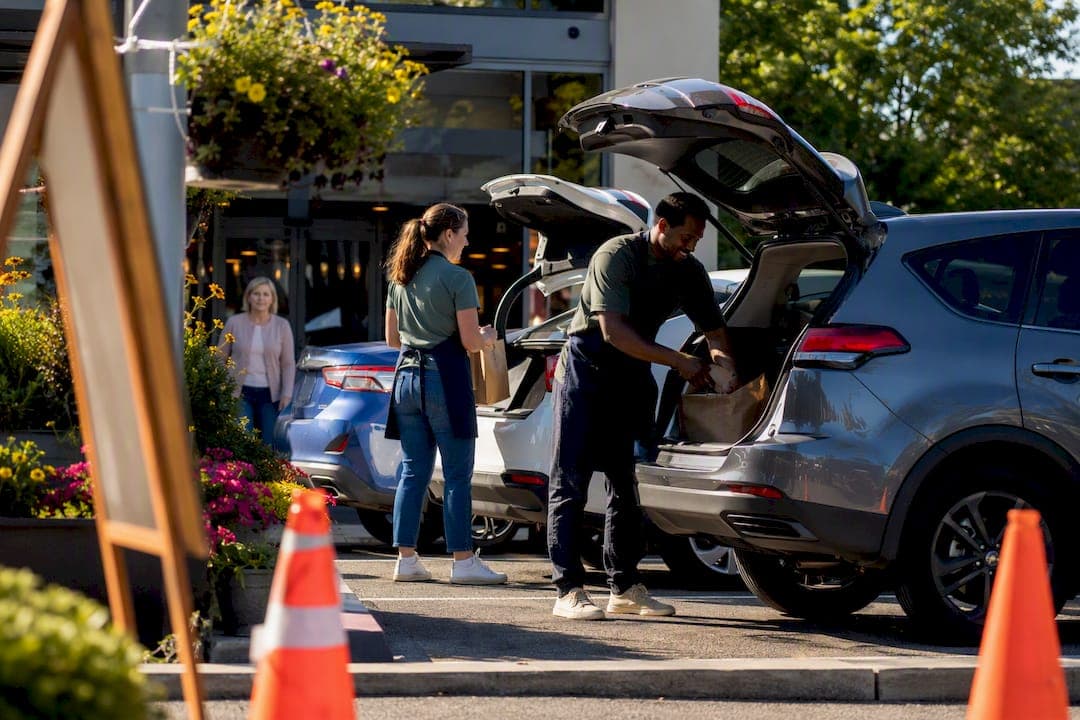
Stay in your car, check in the way the store told you to, and be ready to accept your order without holding up the line behind you. That's curbside pickup etiquette in one sentence. Have your order number handy, thank whoever brings it out, tip if you're able, and if you need help lifting something heavy or have an accessibility need, say so when you check in rather than waving someone down from your window.
TL;DR:
- Parking only in marked pickup spots and arriving within your scheduled window prevents delays and reduces congestion for other customers and staff.
- Giving clear check-in details, such as order number, vehicle info, and spot number, minimizes search time and speeds up the pickup process.
- Tipping is optional but appreciated for heavy, complex, or effortful pickups, typically ranging from 10% to 20%, especially in bad weather.
- Confirming your identity and items before driving away avoids confusion and ensures all orders are correct and complete.
- Special needs or large orders should be communicated in advance to allow staff to prepare appropriately and facilitate smoother service.
Table of Contents
- Quick Do's and Don'ts for Curbside Pickup
- How Curbside Pickup Actually Works, Step by Step
- Should You Tip for Curbside Pickup?
- Where to Park and How Long to Wait
- The Handoff: What to Expect and What to Check
- Special Situations: Heavy Orders, Accessibility, Kids, and Pets
- How Thirdspacecoffee Handles Curbside Pickup
- Why Small Courtesies Make Curbside Pickup Work Better for Everyone
- Order Ahead and Pick Up Out Front at Thirdspacecoffee
- Sources
Quick Do's and Don'ts for Curbside Pickup
Most curbside mishaps come down to a handful of avoidable habits. Here's the shortlist worth keeping on your dashboard, mentally or literally.
Do:
- Park only in marked pickup spots, not regular parking or fire lanes.
- Check in the moment you arrive, whether that's an app tap, a text reply, or a phone call.
- Keep your order number visible and your phone nearby in case staff need to reach you.
- Roll your window down or pop your trunk before staff walk over, so there's no fumbling.
- Glance through your bags before you pull away.
- Say thank you. It costs nothing and it's noticed more than you'd think.
Don't:
- Sit in a designated pickup spot if you're not actually collecting an order. Someone else needs it.
- Block the drive lane while you dig through your purse for your phone.
- Rush the employee walking toward your car. They're moving as fast as the queue allows.
- Assume a tip is required. It's a nice gesture, not a toll booth.
These rules sound obvious written out, but they're exactly the ones that break down during a lunch rush or a Saturday grocery run when ten cars are circling the same four spots. A store's pickup spot enforcement exists precisely because one driver treating a marked stall as a free parking space creates a domino effect. The next customer can't find a spot, staff can't locate the right car, and everyone's wait gets longer. The fix isn't complicated. It's just consistency.
How Curbside Pickup Actually Works, Step by Step
Curbside pickup follows a pattern that's remarkably consistent across grocery stores, coffee shops, and restaurants, even when the apps look different. Understanding the sequence removes almost all the guesswork.
- You place your order online or through an app and pick a pickup window.
- You get a ready notification, usually a push alert or text, telling you the order is packed and waiting.
- You drive to the store and pull into a spot marked for pickup, not general parking.
- You check in, which is the step most people rush or skip entirely.
- Staff match your check-in to your order and bring it out to your vehicle.
The check-in step is where etiquette and efficiency overlap the most. Businesses typically offer three or four ways to do it: an "I'm here" button in the app, a text reply to a confirmation message, a phone call to the front desk, or pre-entered vehicle details submitted when you placed the order. According to Shopify's retail guide, clear check-in procedures directly reduce the time staff spend searching a lot for the right customer.
Whatever method you use, give three things: your order number, your parking spot number if the lot has them, and your car's color or make. If you're driving a borrowed car, a rental, or anything that doesn't match what you entered originally, mention that too. Some pickup systems also ask for a license plate, which sounds excessive until you've watched an employee squint at fifteen identical gray SUVs trying to guess which one ordered the rotisserie chicken. A well-designed pickup flow, the kind Thirdspacecoffee has documented for its own front-of-store service, leans on exactly this combination: a ready alert, an easy check-in, and vehicle details collected ahead of time so nobody's guessing.
Should You Tip for Curbside Pickup?
Tipping for curbside pickup is appreciated but not required in the way it is for a server who's refilled your water glass four times. Most checkout flows now include an optional tip screen, and general tipping guidance treats curbside as a lighter-touch version of table service, not an equivalent.
That said, there are moments when tipping tips from "nice gesture" to "clearly earned." Bad weather is one. If someone's walking your groceries out in freezing rain or ninety-degree heat, that's effort beyond the baseline. Complex or bulky orders are another. So is any situation where staff went out of their way, like carrying a case of water to your trunk or double-checking a substitution you flagged in the notes.
Suggested tipping ranges:
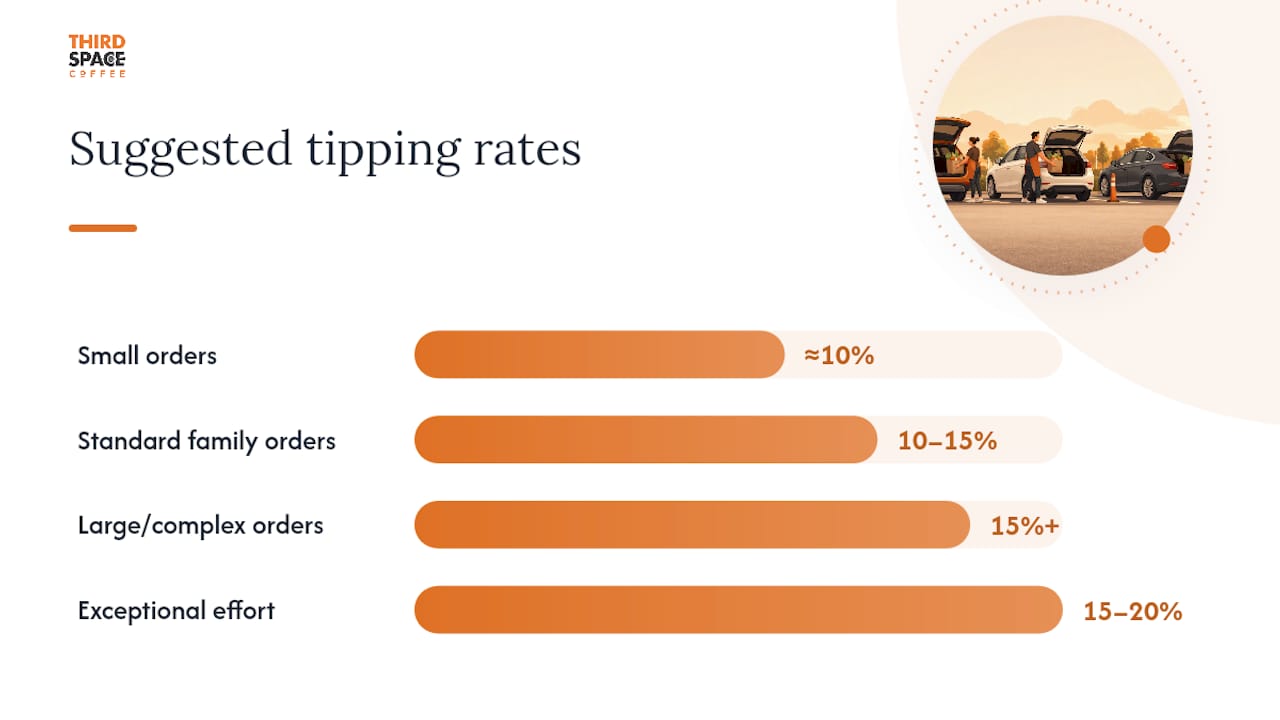
- Small, simple orders: $2 to $3, or about 10%
- Standard family grocery orders: 10% to 15%
- Large or complex orders: 15% or more
- Exceptional effort, bad weather, or heavy lifting: 15% to 20%
By 2026, expert guidance on curbside service has converged around this same tiered approach. Small orders get a small nod. Bigger asks earn a bigger one.
If you choose not to tip, that's fine. Tipping stays discretionary. Just don't let a "no" turn into silence. A genuine thank you goes a long way even when your wallet doesn't come out.
Where to Park and How Long to Wait
Designated curbside spots exist for a reason: they're the only stalls staff are watching. Park anywhere else and you become invisible to the system, even if you checked in correctly. If a lot doesn't have marked spots, follow whatever instructions came with your order confirmation. Some stores direct you to a specific number, others just say "front of store."
Timing matters almost as much as location. Arriving inside your scheduled pickup window keeps the flow moving. Show up twenty minutes early and you're either sitting in a spot someone else needs or forcing staff to scramble on an order that isn't ready yet.
A few timing habits worth building:
- Aim to arrive within, or slightly after, your confirmed window rather than well ahead of it.
- If you're running late, call or text the store instead of assuming your spot will just wait for you.
- If you arrive early and the order isn't ready, let staff know you're there rather than expecting them to notice your car.
- Keep the check-in details accurate. A wrong spot number sends an employee walking the wrong direction, which adds minutes you'll feel personally once you're the one waiting.
None of this requires military precision. It just requires treating the pickup window as a real appointment rather than a loose suggestion. The rules most people overlook tend to center on exactly this: showing up roughly on time, in the right spot, having already told the store you're there. Skip any one of those three and the whole system slows down, not just for you but for the three cars behind you.
The Handoff: What to Expect and What to Check
Curbside pickup was built as a contactless service. You stay in the car, staff bring the order out, and the whole exchange happens without you ever stepping onto the curb. Here's the sequence and what falls on you at each step.
- Staff confirm your identity, usually by matching your name or order number against what you gave at check-in.
- They bring the order to your trunk or window, or in some cases hand it directly to you if you've stepped out.
- You do a quick check: item counts match, nothing's crushed or leaking, and any special requests (extra hot sauce, no onions, oat milk instead of regular) actually got fulfilled.
- You flag anything wrong immediately, while staff are still standing there.
Before staff even walk over, have your window down or trunk popped. Fumbling with a stuck trunk latch while an employee waits in the cold isn't a great look, and it slows down everyone queued behind you. If the store requests ID or a payment card for verification, have it within reach rather than digging through a glove compartment.
Pro Tip: Do your order check before you pull out of the spot, not after you've merged onto the road. A missing item is a two-minute fix at the curb and a wasted round trip once you're home.
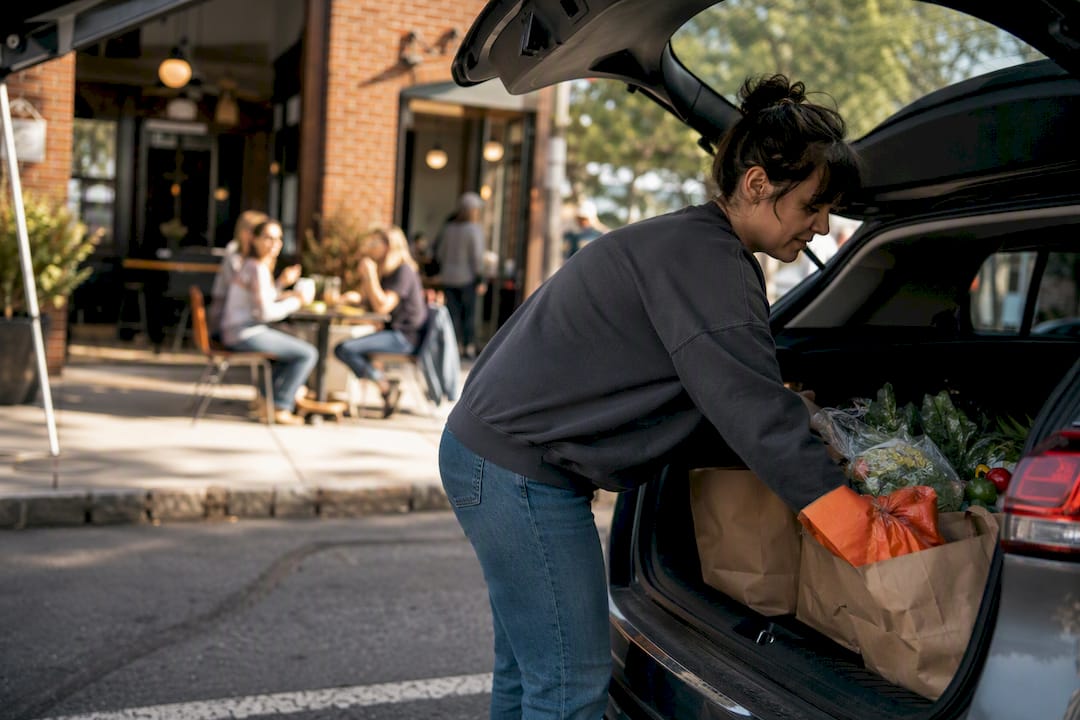
If something's off, whether it's a missing item or a cold coffee that should've been hot, say it right there. Driving away and calling later almost never gets resolved as cleanly, and it puts staff in the position of trying to fix a problem they can no longer see.
Special Situations: Heavy Orders, Accessibility, Kids, and Pets
The "stay in your car" rule isn't absolute, and good curbside etiquette accounts for that. Getting out makes sense when staff ask for a hand, when an order is too heavy or bulky for one person to manage from the trunk, or when you have an accessibility need that changes how the handoff should work.
- If you're expecting a large order, a catering pickup, or anything unusually heavy, mention it when you order or call ahead so staff can plan for extra hands.
- Note accessibility needs at check-in rather than mid handoff. It gives staff time to bring a cart, adjust where they park the order, or meet you at a more workable spot.
- If you've got kids or pets in the car, keep them buckled or secured through the handoff. If you need to unbuckle a child to help load groceries, tell staff first so they can pause instead of setting bags down mid motion.
- If you do step out to help, stay out of the drive lane and out of staff's path back to the store. The goal is faster service, not two people improvising traffic control in a parking lot.
None of this breaks the contactless model. It just recognizes that some orders and some customers need a slightly different version of it.
How Thirdspacecoffee Handles Curbside Pickup
Thirdspacecoffee's front-of-store pickup follows the same logic laid out above, because it's built around the same goal: get the right order to the right car with the least amount of friction possible.
When you order ahead, the confirmation tells you exactly how to check in, whether that's a text reply or a quick call to the shop. Customers are asked to park in the marked spots out front and stay in the vehicle. Staff bring the order directly to the car for a contactless handoff, the same way most grocery and retail pickup systems operate. The only time staff might ask for a hand is with an unusually large order, like a big batch of whole bean bags for an office or event.
Tipping is optional and never expected as a condition of service, but it's genuinely appreciated, especially on a slammed Saturday morning when the shop is running a dozen pickups at once. The whole setup exists to cut down on the guessing game: clear instructions up front, a fast check-in, and a short walk from door to trunk. It's a small operation running the same principles a much bigger retailer would, just with fewer cars and better coffee.
Why Small Courtesies Make Curbside Pickup Work Better for Everyone
Curbside pickup runs on a kind of unspoken cooperation that most people never think about until it breaks down. A precise check-in, a moment of patience, a driver who pulls forward instead of blocking the lane while double checking a receipt. These aren't dramatic gestures. They're small, and that's exactly why they matter so much in aggregate.
I think the most underrated habit here is simply giving accurate information the first time. Staff running curbside shifts are often juggling six or eight orders at once, and every mismatched detail (wrong spot number, wrong car color) costs them a trip back inside to double check. A thank you costs nothing and does more for morale than most customers realize, especially on a day when the lot is full and the orders are stacking up.
None of this is complicated. It's just the difference between treating pickup staff as part of a transaction and treating them as people doing a genuinely fast-paced job in hospitality. Adopt the habits, and the whole system runs better, not just for you, but for the next car in line.
— Tanya
Order Ahead and Pick Up Out Front at Thirdspacecoffee
If everything above sounds like a lot to remember, here's the shortcut: order ahead from Thirdspacecoffee and select front-of-store pickup at checkout. You'll get clear instructions on how to check in, a marked spot to park in, and a staff member who brings your order straight to your car.

Craving something specific? Order a specialty drink for pickup on your way to work, or grab a bag of whole bean coffee to stock up without stepping inside. Either way, the process stays the same: place your order, check in when you arrive, and let us bring it out to you. Head to Thirdspacecoffee to see what's on the menu today and get your pickup window set.
Sources
- How Much to Tip
- The Ultimate Guide to Curbside Pickup
- How Does Curbside Pickup Work? A 2026 Expert Guide
- 10 Rules About Curbside Pickup Most People Don’t Know