
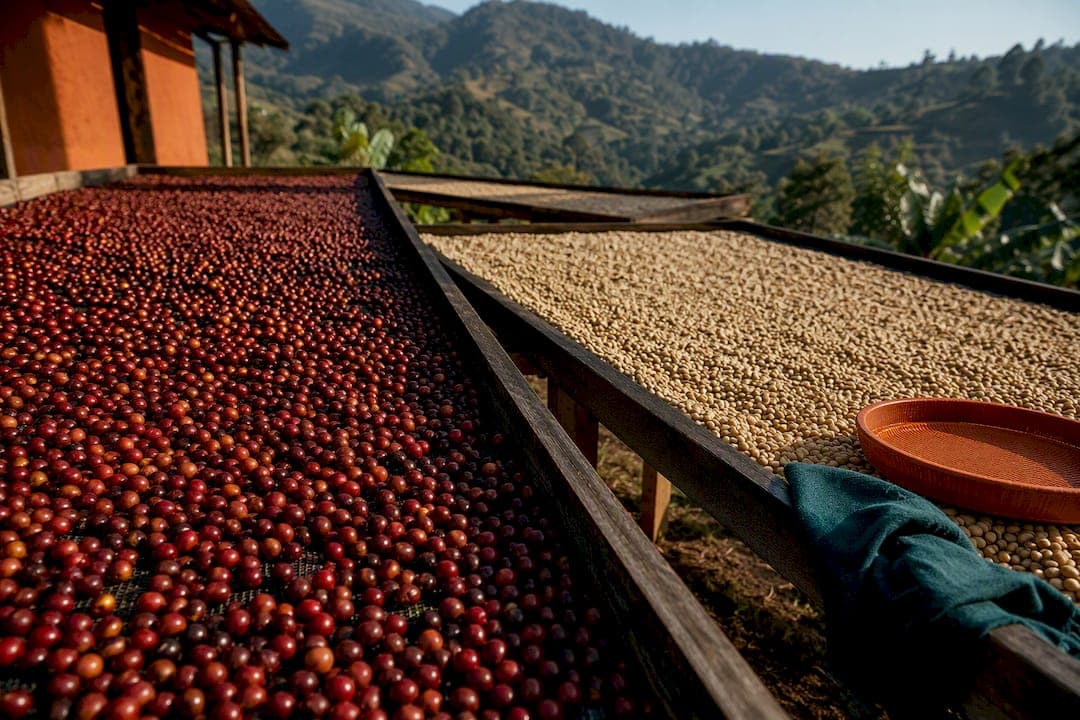
Washed coffee tastes clean, bright, and lets the growing region show through; natural coffee tastes like fruit steeped into syrup, with more body and less predictability from bag to bag. Reach for washed when you're brewing pour-over and want clarity, and natural when you want a punchy, fruit-driven cup or a base for milk drinks. Try both from the same origin and roast level before deciding which one you actually prefer.
TL;DR:
- Washed coffee generally offers cleaner, brighter flavor with higher acidity and lighter body compared to natural coffee, which is fruitier and thicker.
- Natural processing involves drying whole cherries, resulting in more variability and a stronger fruit character, but also increasing defect risk if drying is not carefully managed.
- The flavor profile of the same origin can differ dramatically between the two methods, with washed emphasizing terroir and natural adding an additional fruit layer.
- Brewing techniques should be adjusted: washed coffee benefits from pour-over and espresso with precise extraction, while natural suits immersion methods and milk drinks.
- Natural coffees tend to have a shorter shelf life for flavor, as residual sugars react more quickly to oxygen, unlike washed beans that stay fresh longer when stored properly.
Table of Contents
- Washed vs Natural Coffee Processing: The Wet Method Explained
- Natural (Dry) Process: How Fruit Contact Shapes the Bean
- Flavor Differences: Clarity, Acidity, Body, and Sweetness
- Brewing Washed vs Natural Coffee for Better Results
- Water Use, Defect Risk, and Sustainability Trade-Offs
- How to Choose Between Washed and Natural Coffee
- Honey Process: The Middle Ground Between Washed and Natural
- Where Washed and Natural Processing Actually Came From
- Does Processing Change How Long Coffee Beans Stay Fresh?
- Why Farmers Choose Washed or Natural Processing
- What This Roaster Actually Recommends
- Try Washed and Natural Side by Side at Third Space Coffee
- Sources
Washed vs Natural Coffee Processing: The Wet Method Explained
Washed processing, sometimes called wet processing, strips the fruit away from the seed before drying even starts. That single choice, removing the fruit early, is the whole reason washed coffee tastes the way it does.
Here's what happens on the farm and at the mill:
- Ripe cherries get depulped by machine within hours of picking, removing the outer skin and most of the fruit.
- The beans still carry a sticky layer called mucilage, so they go into fermentation tanks (or dry ferment) for roughly 12 to 48 hours, depending on climate and mill preference.
- Fermentation breaks down the remaining mucilage, which is then rinsed off with clean water.
- Washed beans dry on raised beds or patios until moisture content drops to around 10 to 12%, usually over one to two weeks.
Fermentation length is the variable mills obsess over. Too short, and sticky residue survives and causes uneven drying. Too long, and the beans pick up sour, boozy notes nobody wants. Farms with reliable water access and mill infrastructure tend to favor this method because it gives them tighter control over consistency, which matters when a co-op is trying to sell into the specialty market.
Natural (Dry) Process: How Fruit Contact Shapes the Bean
Natural processing skips the pulping step entirely. Whole cherries go straight to drying, fruit, skin, seed, and all, which means the bean spends days or weeks marinating in its own sugars.
The basic sequence looks like this:
- Ripe cherries are spread thin on raised beds or patios, never in tall piles that trap moisture.
- Workers turn the cherries multiple times a day, sometimes hourly during peak sun, to prevent mold and encourage even drying.
- Drying stretches anywhere from three to six weeks, far longer than washed processing, since the whole fruit has to lose moisture, not just a thin mucilage layer.
- Once dried, the brittle fruit husk is hulled away, revealing the seed underneath.
As the fruit dries, sugars and acids migrate from the pulp into the bean itself, and low-level fermentation happens inside the intact cherry rather than in a tank. That's the mechanism behind the syrupy sweetness and berry-like intensity naturals are known for. This method also depends heavily on climate: regions with long dry seasons and strong, consistent sun (parts of Ethiopia and Brazil, for example) can pull it off reliably, while wetter climates risk mold before drying finishes.
Flavor Differences: Clarity, Acidity, Body, and Sweetness
Put a washed and a natural coffee from the same farm side by side, and you'd swear they came from different countries. Side-by-side comparisons consistently show washed coffees land cleaner and more origin-forward, while naturals come across fruitier with heavier body and more variation from lot to lot.
Here's how the two stack up across the traits that matter most when you're tasting:
- Clarity: Washed coffees taste transparent, you get distinct notes (citrus, florals, black tea) without a fruit haze over everything. Naturals taste more blended, like the flavors melt into one another.
- Acidity: Washed usually carries brighter, sharper acidity, think lemon or green apple. Natural acidity tends toward lower and rounder, more like ripe stone fruit than citrus.
- Body: Naturals almost always feel heavier and syrupier in the mouth. Washed coffees feel lighter, closer to tea than juice.
- Sweetness: Naturals often taste sweeter upfront because of that fruit-sugar migration during drying. Washed sweetness shows up more subtly, more like caramelized sugar than fresh berries.
A washed Ethiopian Yirgacheffe typically shows jasmine, lemon, and bergamot, crisp and floral. A natural from the same region can taste like blueberry compote or strawberry jam, with a thick, almost chewy mouthfeel. Same soil, same altitude, same variety, wildly different cup.
Why does the same origin diverge so much? Terroir sets the ceiling on flavor potential, but processing decides which part of that potential actually reaches your cup. Washed processing acts like a filter, letting the bean's own chemistry (shaped by soil, altitude, variety) speak clearly. Natural processing adds a second flavor layer entirely, the fruit itself, on top of whatever the bean would have tasted like on its own. That's also why natural-processed lots vary more from bag to bag: drying conditions change year to year, and fruit contact time is harder to standardize than a fermentation tank with a timer.
Brewing Washed vs Natural Coffee for Better Results
Processing method should change how you brew, not just what you buy.
- Washed coffee, pour-over and drip: Use a medium grind, water around 200 to 205°F, and a ratio near 1:16 (coffee to water). Washed beans extract cleanly and evenly, so you can push extraction a bit further without hitting bitterness, that's part of why washed coffees are generally easier to dial in for espresso too.
- Washed coffee, espresso: Stick to a tighter recipe, roughly 1:2 ratio, 25 to 30 seconds, since washed beans have more predictable dissolved solids and respond consistently to small grind adjustments.
- Natural coffee, immersion methods: French press and AeroPress flatter naturals. Go slightly coarser than you would for washed and drop water temperature 2 to 3 degrees. This tames the fruit sweetness so it doesn't tip into mush.
- Natural coffee, milk drinks: The heavier body and dense sugars hold up well against milk, making naturals a solid espresso base for lattes if you want fruit to peek through the dairy.
Pro Tip: Buy the same origin and roast level in both processes, brew them side by side using identical grind and ratio, and taste them within minutes of each other. Isolating processing as the only variable is the fastest way to actually learn your own preference instead of guessing from tasting notes on a bag.
Water Use, Defect Risk, and Sustainability Trade-Offs
Washed processing drinks a lot of water. Industry figures commonly cited put washed processing at a high level of water use per kilogram of coffee, a number worth treating as a general benchmark rather than a fixed rule, since mill efficiency and recycling systems vary widely. Naturals use little to no water at the processing stage, which is a real environmental advantage on paper.
But the picture isn't that simple:
- Washed mills that treat and recycle wastewater responsibly can offset much of that water cost; mills that dump untreated pulp water into streams create pollution naturals never risk.
- Naturals carry a higher defect risk if drying goes wrong. Industry sources note that natural processing is more vulnerable to defects when drying isn't tightly managed, including mold growth and over-fermented, vinegary flavors.
- Farm location shapes which method makes sense at all. Dry, sunny climates make naturals feasible; farms without reliable dry stretches often have no real choice but to wash.
Neither process wins outright on sustainability. It depends on what the mill does with its wastewater and how carefully it manages drying.
How to Choose Between Washed and Natural Coffee
Match the process to what you're actually trying to taste or brew, not just what sounds interesting on the bag.
- Start with your goal. Want clarity and to taste the growing region? Buy washed. Want bold fruit and heavier body, especially for milk drinks or French press? Buy natural.
- Keep roast level constant when comparing. A dark roast will mute both process's distinct traits, so buy light-to-medium roasts if you're trying to taste processing differences clearly.
- Read the tasting notes on the bag. Washed bags usually list florals, citrus, or tea-like descriptors. Natural bags lean toward berry, wine, or tropical fruit language.
- Match the process to your brew method using the guidance above, pour-over and espresso for washed, immersion and milk drinks for natural.
- Buy a sampler if you're unsure. Two small bags, same origin, different process, teaches you more than any tasting-notes description ever will.
Watch for red flags: vague labeling that just says "coffee" with no process mentioned, or tasting notes that contradict the process (a "natural" bag promising only clean citrus notes, for instance). Roasters who know their sourcing will always tell you exactly how a lot was processed.
Honey Process: The Middle Ground Between Washed and Natural
Honey processing splits the difference. Instead of fully removing the mucilage (washed) or leaving the whole fruit on (natural), mills strip the skin but leave varying amounts of sticky mucilage on the bean during drying. That partial mucilage layer builds sweetness while keeping more acidity than a full natural, landing somewhere between the two flavor profiles.
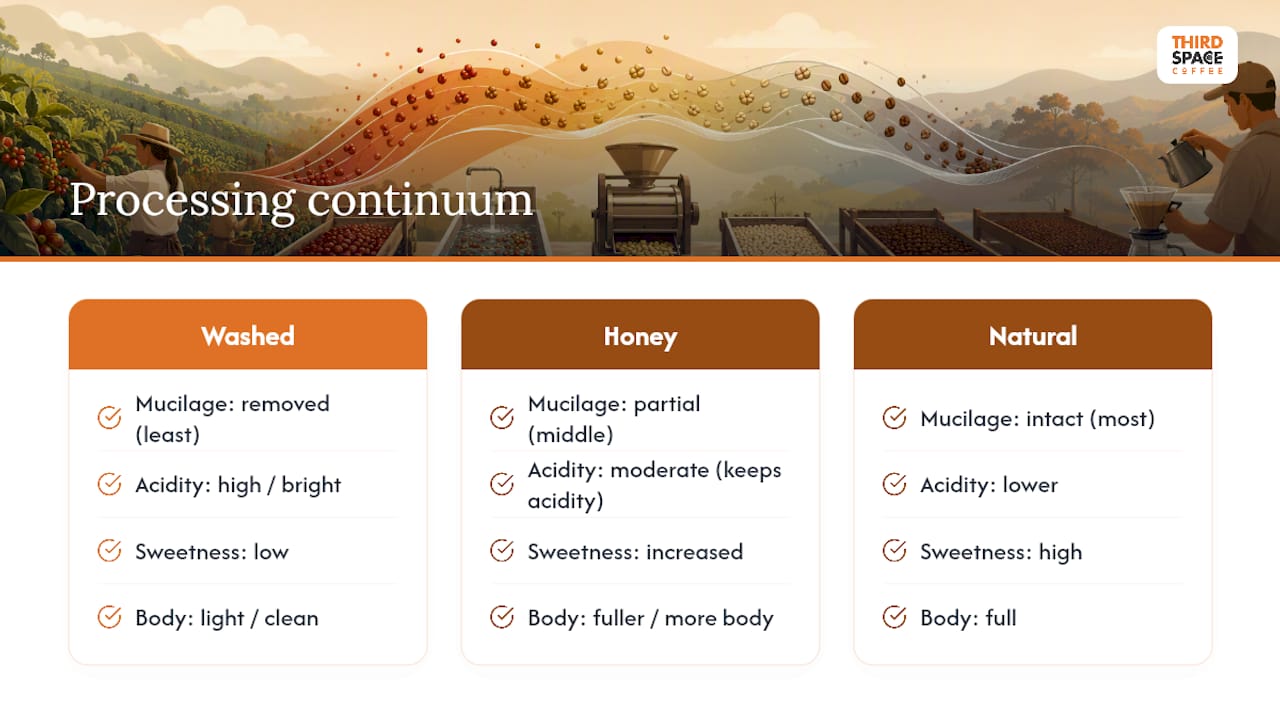
You'll often see honey coffees labeled by color, yellow, red, or black honey, based roughly on how much mucilage stayed on during drying and how long the drying process ran. Yellow honey keeps the least mucilage and dries fastest, tasting closest to washed with a touch more sweetness. Black honey keeps the most, dries longest, and tastes closer to a natural but with more structure and less fruit chaos.
For home brewers who like the acidity of washed but want more body and sweetness, honey process is worth seeking out specifically. It's also a good bridge coffee if you're trying to figure out where your preferences actually sit between the two extremes, rather than committing to a full bag of either style before you know.
Where Washed and Natural Processing Actually Came From
Natural processing came first, simply because it required no equipment. Ethiopia has dried whole coffee cherries in the sun for centuries; it's the original method, born of necessity in regions without reliable water access or milling infrastructure.
Washed processing developed later as a response to consistency problems. Dutch and French colonial coffee operations in the Americas and Southeast Asia, particularly in the 1700s and 1800s, pushed wet processing because it produced more uniform, exportable beans that fetched higher prices in European markets. Central America and Colombia built entire coffee economies around washed processing, and the infrastructure (mills, water systems, drying patios) still shapes those regions today.
Ethiopia and parts of Yemen never fully abandoned natural processing, partly because it's cultural and partly because water scarcity in some growing regions makes washing impractical. Brazil's flat terrain and long dry season made large-scale natural processing efficient there too, which is why Brazilian coffee shows up so often in blends built for body and sweetness rather than acidity.
Does Processing Change How Long Coffee Beans Stay Fresh?
Processing affects shelf life more than most home brewers realize. Naturally processed beans carry more residual sugars and oils from that extended fruit contact, and those compounds are more reactive to oxygen. That means natural coffees can lose their peak fruit character a bit faster after roasting than washed coffees do.
Washed beans, with less residual sugar and a cleaner surface, tend to hold their flavor profile a little longer in that first month after roasting. Neither difference is dramatic if you're storing beans properly, an airtight container away from light and heat, but it does mean naturals reward drinking sooner rather than later if you want the fruit character at its brightest.
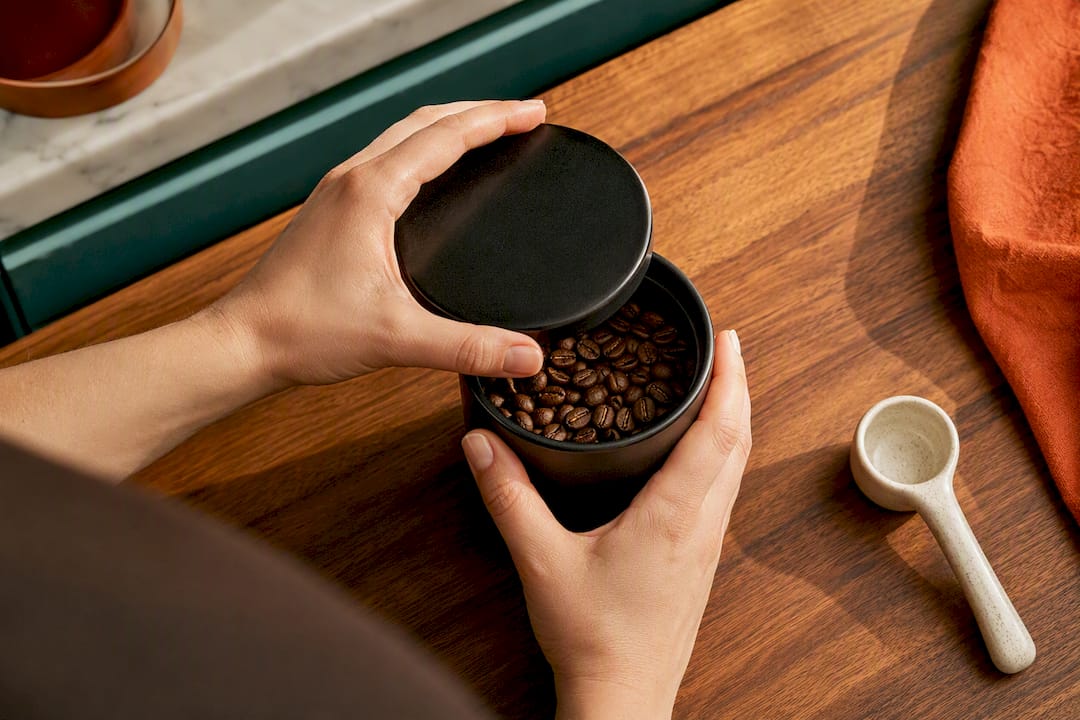
Whole bean storage matters more than the processing method either way. Buying whole bean coffee and grinding right before brewing preserves aromatics far better than pre-ground coffee regardless of how the cherries were processed, since ground coffee's increased surface area accelerates staling within days.
Why Farmers Choose Washed or Natural Processing
The choice often comes down to money and infrastructure, not just tradition. Washed processing requires capital: fermentation tanks, water access, drying beds, and depulping equipment. Farms or co-ops that can afford that setup get access to specialty buyers willing to pay premiums for consistency, since washed lots are easier to grade and cup reliably.
Natural processing costs less upfront since it needs no water system or pulping machinery, which makes it accessible to smaller farms with limited capital. But it demands more labor during drying, someone has to turn those cherries constantly for weeks, and it carries higher risk. A poorly timed rainstorm can ruin an entire natural lot, while washed beans that reach the drying stage are already past their riskiest window.
Some farms process both ways depending on the season and buyer demand, since specialty roasters increasingly pay premiums for well-executed naturals, not just washed lots. That shift has actually improved natural processing quality across many origins over the past decade, as farmers gained the incentive to invest in proper drying infrastructure instead of treating naturals as a lower-effort fallback.
What This Roaster Actually Recommends
Roasting both processes in-house means tasting the difference on the cupping table constantly, and it never gets old. The clearest way to learn your own preference isn't reading tasting notes, it's buying a same-origin, same-roast pair of washed and natural beans and brewing them back to back the same morning. Pay attention to which one you keep reaching for after the sample runs out. That answer tells you more than any flavor wheel.
— Tanya
Try Washed and Natural Side by Side at Third Space Coffee
Reading about the difference only gets you so far, tasting it side by side is what actually locks it in. Thirdspacecoffee roasts both washed and natural lots in-house, so you're getting beans that were processed with the same care and roasted recently rather than sitting on a shelf for months.

Pick up a bag of whole bean coffee in each process and run your own comparison at home, or skip the brewing and order a drip coffee or one of the specialty drinks in-store to taste the difference without any equipment at all. Stop by Thirdspacecoffee's Colorado Springs location, ask what's currently on the shelf from each process, and start your own comparison today.
Sources
- Washed vs natural processing: Why specialty coffee shouldn't have a favourite - Perfect Daily Grind
- Washed vs Natural Processing - Side-by-Side Coffee Comparison | CoffeeTrove
- Washed vs Natural Coffee Roasting Guide