

TL;DR:
- Water accounts for over 98% of brewed coffee and directly influences its flavor through mineral composition. Adjusting water mineral levels, especially alkalinity and calcium, improves extraction, flavor balance, and equipment longevity. Using properly filtered or blended water within recommended ranges enhances brewing quality for all methods.
Water quality is the single most important variable in brewing great coffee. Water makes up more than 98% of your brewed cup, which means its mineral composition shapes every flavor you taste. Water is not a neutral carrier. It acts as an active solvent, pulling flavor compounds from ground coffee, and its chemistry determines whether those compounds extract in the right balance. The role of water quality in coffee is so significant that 2026 industry standards from the Specialty Coffee Association now define exact mineral targets for optimal brewing. Getting your water right matters more than upgrading your grinder.
What role does water quality play in coffee flavor?
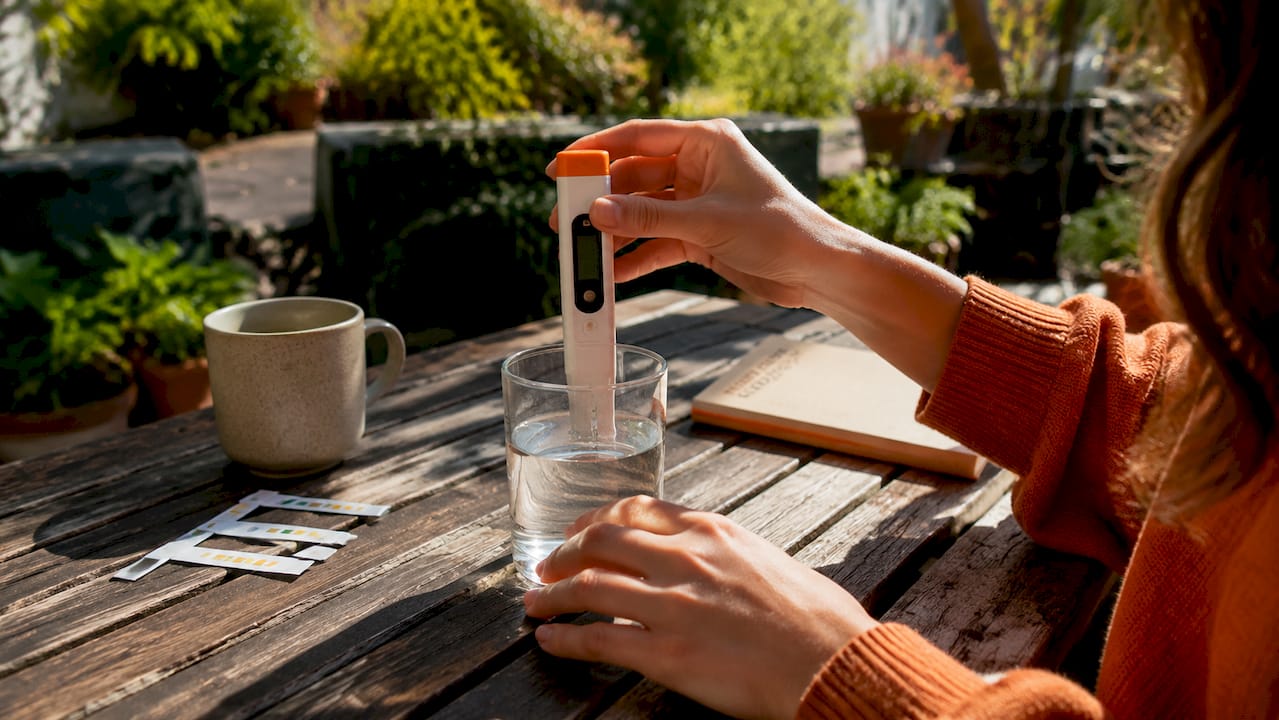
Water chemistry controls coffee extraction at a fundamental level. Minerals like calcium and magnesium influence how efficiently flavor compounds dissolve from coffee grounds, and they shape the mouthfeel and sweetness in your final cup. Think of water minerals the way you think of salt in cooking. They amplify the natural flavors already present in the bean rather than adding something foreign.
Bicarbonate, which chemists measure as alkalinity, acts as a buffer. It neutralizes the natural acids in coffee. Too much bicarbonate and your coffee tastes flat and dull. Too little and the acidity becomes sharp and aggressive. Alkalinity imbalance is one of the most common reasons a well-roasted coffee still tastes off in the cup.
Chloride and sulfates also play distinct roles. Chloride rounds out flavor and adds a sense of fullness. Sulfates, at higher concentrations, push bitterness and can bring out floral notes. The ratio between these two ions shifts the entire character of a brew. A chloride-forward water profile suits balanced, sweet espresso. A sulfate-forward profile suits bright, aromatic pour-overs.
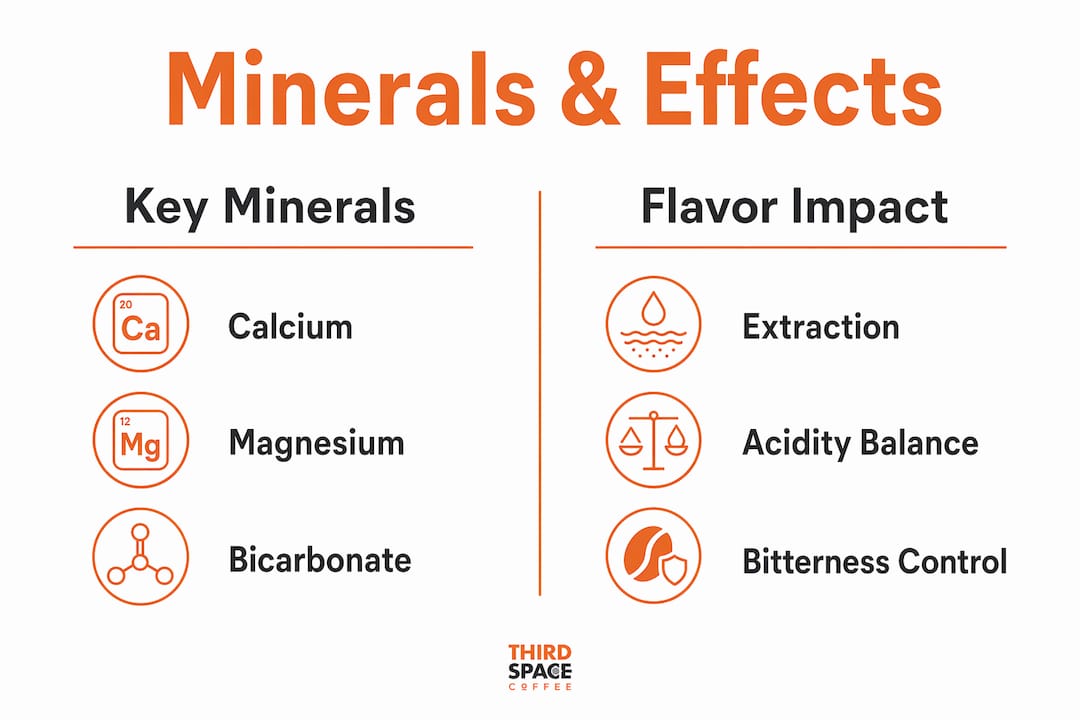
Key minerals and their effects at a glance
- Calcium: Drives extraction efficiency and contributes to body and mouthfeel
- Magnesium: Enhances sweetness and helps pull delicate aromatic compounds from the grounds
- Bicarbonate: Buffers acidity; high levels flatten coffee, low levels make it taste sour
- Chloride: Adds roundness and balance to the flavor profile
- Sulfates: Increase perceived bitterness and can sharpen floral or dry notes
Pro Tip: If your coffee tastes consistently flat regardless of the roast or brew method, check your water's alkalinity first. High bicarbonate is the most overlooked cause of dull coffee.
What is the ideal water chemistry for specialty coffee?
The Specialty Coffee Association defines clear targets for brewing water. Optimal water for specialty coffee sits at 75–150 ppm Total Dissolved Solids, with a maximum of 250 ppm. TDS measures the total concentration of dissolved minerals. Higher TDS is not automatically better. The composition of those dissolved solids matters far more than the number alone.
Hardness and alkalinity are more critical than TDS alone for extraction quality and flavor balance. Calcium hardness should fall between 50–175 ppm as CaCO3. Alkalinity should sit between 40–75 ppm as CaCO3. pH should stay in the 6.5–7.5 range. Chlorine must be at zero. Even low levels of chlorine create off aromas and a bitter aftertaste that no amount of quality beans can overcome.
| Parameter | Target Range | Why It Matters |
|---|---|---|
| Total Dissolved Solids (TDS) | 75–150 ppm (max 250 ppm) | Controls overall extraction strength and mineral balance |
| Calcium hardness | 50–175 ppm as CaCO3 | Drives extraction efficiency and body |
| Alkalinity | 40–75 ppm as CaCO3 | Buffers acidity for balanced flavor |
| pH | 6.5–7.5 | Keeps extraction chemistry stable |
| Chlorine | 0 mg/L | Eliminates off flavors and bitter aromas |
These numbers give you a target, not a rigid formula. A water profile at 80 ppm TDS with balanced calcium and low alkalinity will produce a cleaner, brighter cup than a 200 ppm water with high bicarbonate. Understanding the parameters lets you read coffee flavor as feedback from your water, not just your beans.
Pro Tip: Buy an inexpensive TDS meter and alkalinity test strips online. Testing your tap water takes five minutes and tells you exactly where to start making adjustments.
How does water hardness affect coffee taste and equipment?
Water that falls outside the ideal mineral range produces predictable and consistent problems. Soft water below 50 ppm TDS results in thin, sour, under-extracted coffee. Without enough minerals, water cannot pull the full range of flavor compounds from the grounds. The result is a weak, acidic cup that feels hollow.
Hard water above 200–250 ppm TDS causes the opposite problem. High hardness produces bitter, dull flavors and accelerates scale buildup inside espresso machines and kettles. Scale is calcium carbonate depositing on heating elements and boiler walls. It reduces heating efficiency, shortens equipment life, and introduces a chalky, flat quality to the water itself.
Distilled and deionized water create a third problem. Distilled water lacks the minerals needed for proper extraction and produces thin, sour brews. Worse, pure distilled water can leach minerals from metal components inside espresso machines, causing corrosion over time. Never use unadjusted distilled water in a machine without first remineralizing it.
Common water quality problems and their symptoms
- Too soft (below 50 ppm TDS): Sour, thin, under-extracted coffee with no body
- Too hard (above 250 ppm TDS): Bitter, flat, over-extracted coffee with scale buildup in equipment
- High alkalinity: Flat, muted flavors with suppressed acidity
- Low alkalinity: Sharp, aggressive sourness even in well-extracted coffee
- Chlorinated water: Off aromas, metallic notes, and a persistent bitter aftertaste
Scale buildup signals water that is too hard. Reducing hardness protects your equipment and improves flavor at the same time. If you notice white deposits forming on your kettle or portafilter, your water hardness is too high for consistent specialty brewing.
Practical ways to improve water quality at home
Improving your water does not require a chemistry lab. Filtered tap water with moderate hardness is an effective starting point for most home brewers. A carbon block filter removes chlorine and organic impurities without stripping beneficial minerals. This single step eliminates the most common source of off flavors in home-brewed coffee.
- Test your tap water first. Use a TDS meter and alkalinity test strips to establish your baseline. This tells you whether you need to add minerals, remove them, or simply filter for chlorine.
- Install a carbon block filter. A countertop or under-sink carbon filter removes chlorine, chloramines, and sediment. It costs far less than bottled water over time and produces consistent results.
- Blend distilled with mineral water. If your tap water is very hard, blend it with distilled water to lower TDS and hardness. A 50/50 blend often lands in the ideal range. Add a small amount of food-grade magnesium sulfate or calcium chloride to remineralize if needed.
- Choose bottled water carefully. Not all bottled waters suit coffee brewing. Check the mineral content label on the bottle. Look for TDS between 75–150 ppm and low bicarbonate. Many popular mineral waters run too high in bicarbonate for specialty coffee.
- Match water to your brew method. Pour-over brewing benefits from slightly lower TDS and moderate alkalinity, which lets delicate floral and fruit notes come through. Espresso performs best with slightly higher calcium hardness to support body and crema. Mastering coffee extraction at home starts with getting the water right for your specific method.
- Descale your equipment regularly. Even with good water, some mineral buildup occurs over time. Descale espresso machines every one to three months depending on water hardness and usage frequency.
Balanced mineral water improves sweetness, clarity, and consistency more reliably than switching beans or upgrading equipment. That is the insight most home brewers miss. The beans get all the attention, but the water is doing the actual work in the cup.
Key Takeaways
Water chemistry is the most controllable and most overlooked variable in home coffee brewing, and correcting it produces better results than any equipment upgrade.
| Point | Details |
|---|---|
| Water dominates the cup | Water makes up more than 98% of brewed coffee, making its mineral profile the primary flavor driver. |
| Minerals shape extraction | Calcium and magnesium drive extraction; bicarbonate controls acidity; chloride adds roundness. |
| Follow SCA targets | Aim for 75–150 ppm TDS, 40–75 ppm alkalinity, pH 6.5–7.5, and zero chlorine. |
| Extremes hurt flavor and gear | Soft water under-extracts; hard water over-extracts and causes scale buildup in equipment. |
| Filter first, then adjust | Carbon filtration removes chlorine, and blending or remineralizing brings minerals into the ideal range. |
Water changed everything I thought I knew about brewing
I spent two years chasing better coffee through bean upgrades and grinder improvements before I tested my tap water. The TDS reading came back at 280 ppm with high bicarbonate. Every cup I brewed was fighting against that water, and I had no idea.
The moment I switched to filtered and blended water in the 100–130 ppm TDS range, the same beans I had been using for months tasted completely different. Sweetness I had never noticed appeared. The acidity became clean instead of sharp. The body felt fuller. Nothing changed except the water.
What surprises most home brewers is how much alkalinity matters compared to TDS. High bicarbonate is the silent killer of specialty coffee. It suppresses acidity so aggressively that even a beautifully roasted Ethiopian natural tastes like a flat, generic medium roast. Fixing alkalinity is faster and cheaper than any other brewing improvement you can make.
The mistake I see most often is treating water as a passive ingredient. Water is the recipe. The beans provide the raw material, but water determines what gets extracted, in what proportion, and how it lands on your palate. Once you start treating water chemistry as a parameter you control, the impact on coffee quality becomes impossible to ignore.
Start simple. Filter your tap water. Test it. Adjust one variable at a time. Your best cup is probably not a better bean away. It is a better water profile away.
— Tanya
Thirdspacecoffee brews with water quality in mind
At Thirdspacecoffee in Colorado Springs, every cup starts with the right foundation. Water chemistry is not an afterthought here. It is built into how every drink is prepared, from the first pull of espresso to the last pour of cold brew.

Thirdspacecoffee roasts its whole bean coffee in-house, which means the beans are fresh and the flavor potential is high. Water quality is what unlocks that potential in the cup. Whether you want to taste what properly brewed specialty coffee can do, or you are looking to bring home beans worth brewing carefully, Thirdspacecoffee has both. Stop by, order online for pickup, or browse the specialty drinks menu to taste the difference that intentional brewing makes.
FAQ
What role does water quality play in coffee taste?
Water makes up more than 98% of brewed coffee, so its mineral composition directly controls extraction and flavor. Minerals like calcium and magnesium pull flavor compounds from the grounds, while bicarbonate controls how acidic or flat the cup tastes.
What is the best water for brewing coffee at home?
The Specialty Coffee Association recommends water with 75–150 ppm TDS, 40–75 ppm alkalinity, pH between 6.5 and 7.5, and zero chlorine. Filtered tap water or a carefully chosen bottled water that meets these targets works well for most home brewers.
Does hard water ruin coffee?
Hard water above 250 ppm TDS produces bitter, dull coffee and causes scale buildup inside espresso machines and kettles. Reducing hardness through filtration or blending with distilled water improves both flavor and equipment longevity.
Can I use distilled water to brew coffee?
Distilled water lacks the minerals needed for proper extraction and produces thin, sour coffee. It can also damage espresso machines by leaching minerals from internal components. Remineralize distilled water before using it in any brewing equipment.
How does water affect espresso differently than pour-over?
Espresso benefits from slightly higher calcium hardness to support body and crema, while pour-over performs best with lower TDS and moderate alkalinity to highlight delicate floral and fruit notes. Matching your water profile to your brewing method produces noticeably better results than using one water for every technique.