
TL;DR:
- Improving home coffee quality relies on controlling key variables like grind size, brewing ratio, temperature, and time for consistent results.
- Using a burr grinder, precise kettle, and fresh beans helps replicate café-quality brews, while adjusting each variable systematically enhances flavor.
You grind your beans, heat the water, and brew a cup that somehow still falls flat compared to what you get at your favorite Colorado Springs café. You're not alone in this. The gap between home coffee and great coffee usually isn't about the beans or the equipment alone. It comes down to understanding and controlling a handful of specific brewing variables. Once you know exactly what to adjust, and why, you can consistently brew coffee at home that rivals anything you'd order across a counter.
Table of Contents
- Gathering what you need: Tools, beans, and essentials
- Brew ratios, temperature, and timing: Setting up for success
- Step-by-step brewing: Pour-over and immersion methods explained
- Diagnosing and correcting brewing mistakes
- The overlooked art of dialing in: Why most home brewers struggle and how to overcome it
- Explore high-quality coffee and gear from Third Space Coffee
- Frequently asked questions
Key Takeaways
| Point | Details |
|---|---|
| Get the right gear | Using a burr grinder and a kettle with accurate temperature control makes home brewing easier and more consistent. |
| Master the key variables | Nail your ratio, temperature, and brew time for repeatable and flavorful cups every time. |
| Adjust by taste | Let your palate guide fine adjustments by making only one change at a time for best results. |
| Troubleshoot smartly | Common coffee problems often trace back to grind size or extraction—diagnose by taste and fix by tweaking variables. |
| Support local coffee | Fresh, quality beans from local roasters like Third Space Coffee make all the difference in your cup. |
Gathering what you need: Tools, beans, and essentials
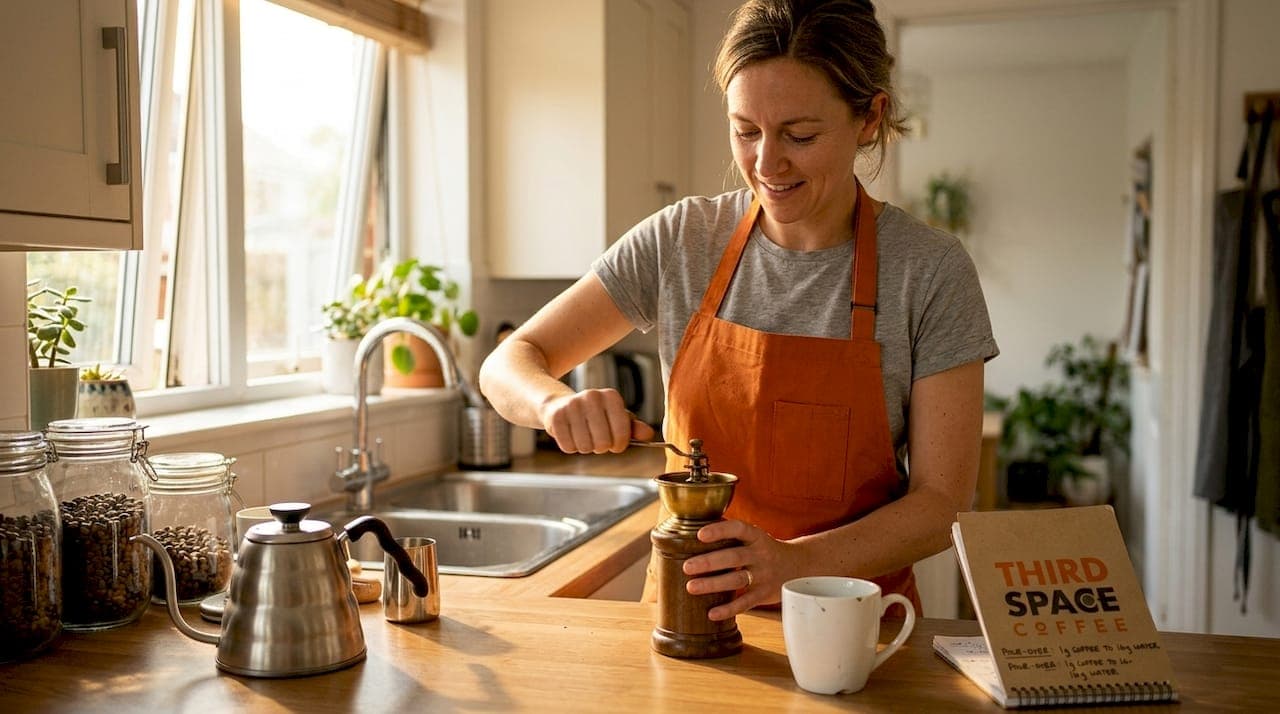
Now that you're motivated to improve your coffee, start by understanding what tools and beans make a real difference. A lot of home brewers think the problem is their beans, when in reality it's their setup that's holding them back. Building a solid foundation before you brew means fewer variables working against you.
Here's what belongs on your counter:
- Burr grinder: Produces even, consistent particle sizes for uniform extraction
- Gooseneck kettle: Gives you precise pour control and can hold temperature
- Kitchen scale: Measures both coffee and water by weight (grams, not scoops)
- Filters: Paper, metal, or cloth depending on your brew method
- Timer: Your phone works fine; what matters is you use one
- Fresh, locally roasted whole beans: Ideally used within two to four weeks of roast date
Grind consistency is one of the biggest factors that separates café-level coffee from what most people brew at home. Blade grinders chop beans unevenly, producing a mix of fine powder and coarse chunks. That uneven mix causes some grounds to over-extract while others under-extract at the same time, which muddies the flavor in the cup. Switching to a burr grinder is often the single biggest mechanical improvement you can make for more repeatable extraction.
| Equipment | Pros | Cons |
|---|---|---|
| Blade grinder | Cheap, easy to find | Inconsistent grind, uneven extraction |
| Burr grinder (hand) | Affordable, consistent | Slower, requires effort |
| Burr grinder (electric) | Fast, precise, repeatable | Higher upfront cost |
| Basic kettle | Works for most methods | Hard to control pour and temperature |
| Gooseneck kettle | Precise pour, great for pour-over | Higher cost than standard kettles |
Bean freshness matters just as much as equipment. CO2 still trapped in freshly roasted beans helps push water through the grounds evenly during brewing. Stale beans have lost this gas, which leads to flat, dull extraction. Our home coffee bar setup guide goes into more detail on how to organize your space for better consistency. If you're still learning the language of coffee, our coffee terms glossary is a great place to get comfortable with the vocabulary before you keep going.
Pro Tip: Organize your counter the night before. Pre-measure your beans, set out your filter, and check your kettle water. A streamlined setup means fewer rushed decisions when you're half-awake, and fewer rushed decisions mean fewer brewing errors.
Brew ratios, temperature, and timing: Setting up for success
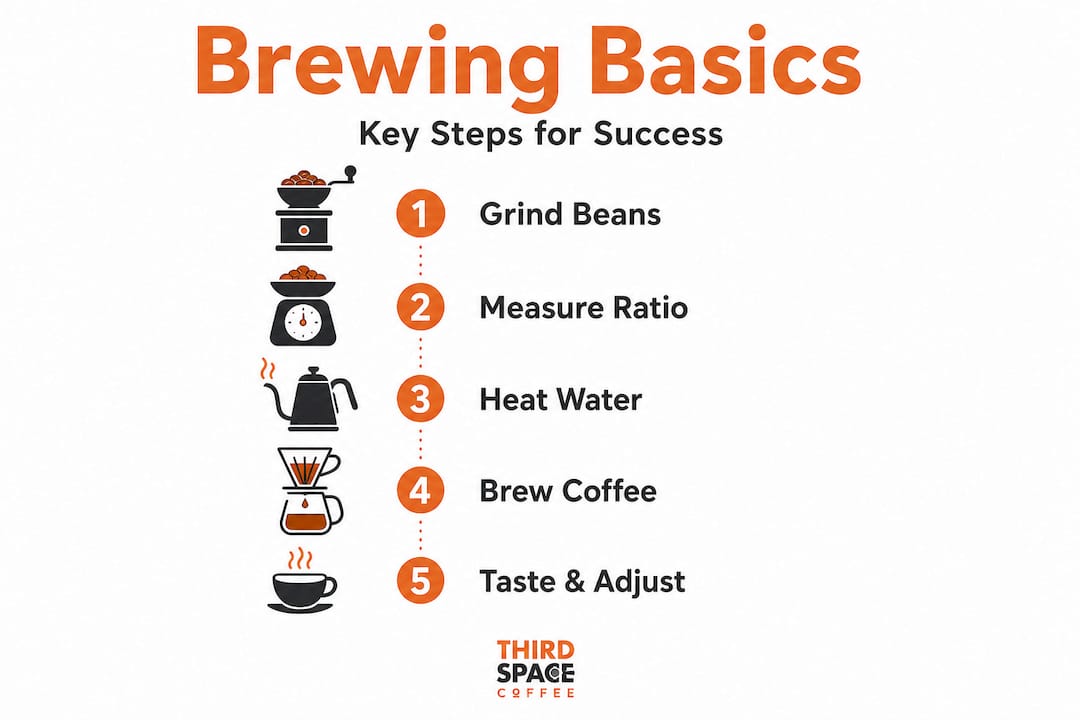
With your equipment ready, shift focus to the most important numbers behind every great cup of coffee. These three variables, ratio, temperature, and time, are the core levers you'll adjust throughout your brewing journey. Nail all three and your cup will be noticeably better, almost immediately.
The SCA Golden Cup standard gives us a well-researched scientific starting point: a brew ratio of roughly 1:15 to 1:18 (coffee to water by weight), water temperature between 92°C and 96°C, extraction yield between 18% and 22%, and total dissolved solids (TDS) between 1.15% and 1.35%. These numbers represent the sweet spot where most people find coffee balanced, complex, and enjoyable.
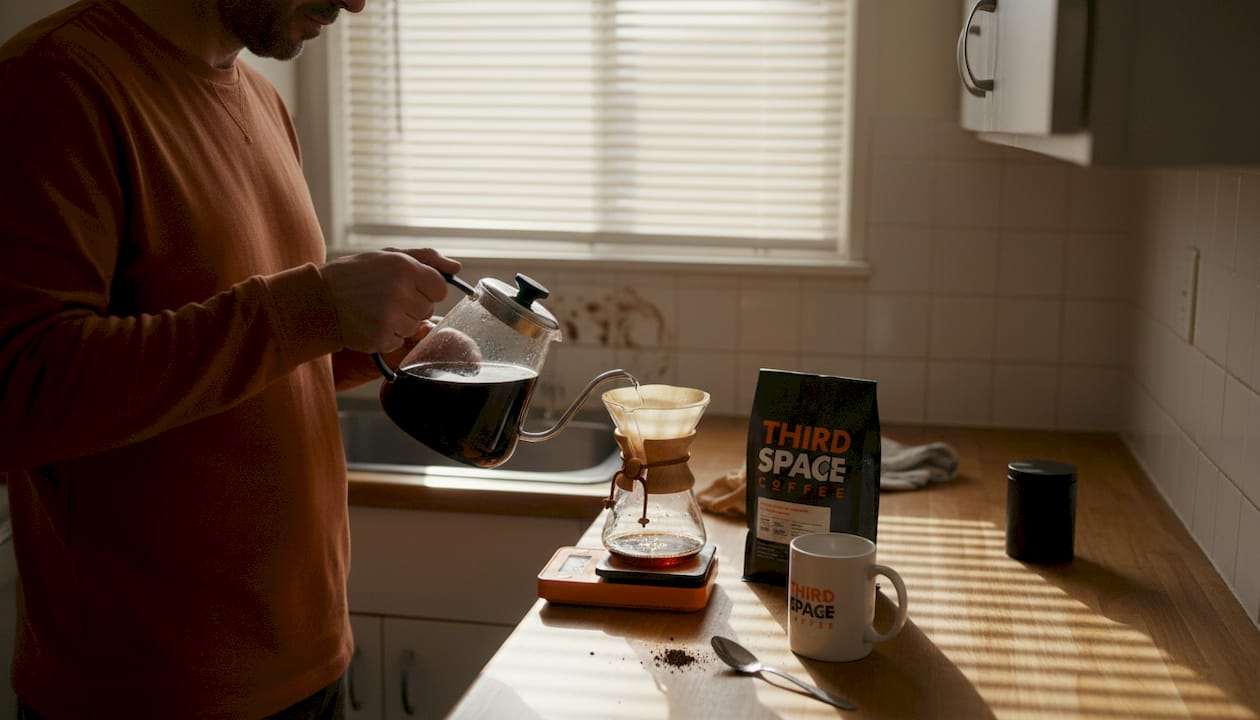
For pour-over brewing specifically, a 1:15 to 1:17 ratio with water in the 92°C to 96°C range (198°F to 205°F) and a total brew time of around 2:30 to 3:30 minutes is a reliable place to begin. These ranges give you room to adjust based on your personal taste and the specific beans you're using.
| Variable | Recommended range | Effect if too low | Effect if too high |
|---|---|---|---|
| Brew ratio (coffee:water) | 1:15 to 1:17 | Weak, watery cup | Intense, potentially harsh |
| Water temperature | 92°C to 96°C (198°F to 205°F) | Sour, under-extracted | Bitter, over-extracted |
| Brew time (pour-over) | 2:30 to 3:30 minutes | Sour or weak | Bitter or astringent |
Watch for these red flags when you taste your cup:
- Sour or sharp: Often means under-extraction; try a finer grind or hotter water
- Bitter or harsh: Usually over-extraction; try coarser grind or cooler water
- Flat or thin: Ratio may be off; try more coffee or less water
- Muddy or heavy: Grind may be too fine; adjust coarser and re-taste
"The 'golden cup' concept from the SCA reminds us that great coffee isn't magic. It's the result of controlling specific, measurable variables inside a defined range. When your cup consistently hits those targets, you have a repeatable process, not just a lucky guess." Our brew extraction guide walks through exactly how extraction affects your flavor outcome. And if you're curious how those flavors connect to specific roast profiles, our coffee flavor profiles guide is worth exploring.
Step-by-step brewing: Pour-over and immersion methods explained
After setting your targets, move into hands-on brewing with clear steps for the two most popular home methods. Both pour-over and AeroPress are forgiving to learn but reward precision. Let's walk through each one.
Pour-over method (V60 or similar)
- Heat your water to between 92°C and 96°C. If you don't have a thermometer, bring water to a boil and wait 30 to 45 seconds.
- Rinse your filter with hot water. This removes any paper taste and preheats your brewer and cup. Discard the rinse water.
- Weigh and grind your coffee. A medium-fine grind (think coarse sea salt, but a step finer) is a good starting point for most pour-over setups.
- Add coffee to the rinsed filter and gently shake to level the bed.
- Bloom the grounds. Pour just enough water to saturate all the grounds (roughly 2x the weight of your coffee) and wait 30 to 45 seconds. Blooming fresh coffee releases trapped CO2 and prepares the bed for more even extraction. You'll see the grounds bubble and swell.
- Pour in slow, steady circles starting from the center and moving outward. Don't pour directly on the filter. Keep the water level consistent without flooding the bed.
- Finish all your water by around 2:30 to 3:00 minutes. Let the drawdown complete. Total time should land around 3:00 to 3:30.
- Taste immediately. Note what you taste before you add anything. That's your feedback.
You can also explore our pour-over product to find tools that match this process perfectly.
AeroPress (immersion) method
- Grind finer than pour-over. AeroPress works under pressure, so it extracts faster.
- Set your AeroPress on a scale with the filter cap locked in. Rinse the paper filter.
- Dose your coffee (usually 15 to 18 grams for an inverted brew) and zero out the scale.
- Start your timer and add water quickly. For a standard brew, you're aiming for about 200 to 250 grams of water at around 88°C to 92°C.
- Stir the slurry four to six times to saturate all grounds.
- Wait. Most AeroPress recipes call for 1:00 to 1:30 minutes of steep time.
- Press slowly over about 25 to 30 seconds. Stop when you hear a hiss.
- Taste and adjust. For immersion methods like AeroPress, adjust one variable at a time (grind, time, or ratio) and use taste to tell you whether you're correcting toward or away from balance.
Pro Tip: Taste each variable change directly by running two brews back to back and changing only one thing between them. This is the fastest way to understand what each variable actually does to your cup. Our home brewing mastery article covers this testing approach in more depth. For automatic drip fans, our drip coffee tips page has useful starting points too.
Diagnosing and correcting brewing mistakes
Even with good technique, issues arise. Here's how to quickly fix and refine your results for café-level coffee at home. The key is treating your taste buds as a diagnostic instrument rather than just an audience.
Sour coffee usually means extraction was too low. The acids from the bean dissolved but the sugars and other compounds that balance them didn't have enough time or contact to join them. This happens when your grind is too coarse, your water temperature is too low, or your brew time was too short. Bitter or harsh coffee is the opposite. Extraction went too far and unpleasant compounds came out that weren't meant to. That usually points to a grind that's too fine or brew time that ran long.
Here's a quick reference for common mistakes and their fixes:
- Grind too coarse: Water flows through fast, under-extracts. Result: sour, hollow, weak. Fix: grind finer.
- Grind too fine: Water flows slowly, over-extracts. Result: bitter, dry, astringent. Fix: grind coarser.
- Water too cool: Extraction is sluggish. Result: flat, dull, slightly sour. Fix: raise temperature.
- Water too hot: Extraction is aggressive. Result: bitter or burned flavor. Fix: lower temperature slightly.
- Ratio off: Too much water with too little coffee produces weak results. Too little water makes a dense, intense cup. Adjust by weight.
- Skipping the bloom: CO2 creates uneven extraction by pushing water away from the grounds. Always bloom fresh beans.
For pour-over brewing, grind size and drawdown time are your two most powerful adjustments. A finer grind slows the flow and increases extraction. A coarser grind speeds it up and decreases extraction. These two variables are connected, which is why changing one immediately changes the other. Understanding that relationship is the foundation of repeatable home brewing.
"If your cup tastes off even after following the same recipe, check your grinder first. Inconsistent grind distribution is the most common hidden cause of extraction problems, and it's often invisible until you look for it." Exploring the world of home roasting basics can also help you understand how roast degree connects to extraction behavior.
The overlooked art of dialing in: Why most home brewers struggle and how to overcome it
Here's the honest perspective we've developed after years of making and sharing specialty coffee in Colorado Springs: most home brewers struggle not because they lack information, but because they try to change too many things at once.
You read a recipe. It doesn't work. So you buy different beans, adjust your grind, change your water temperature, and shorten your brew time all in the same session. Then you taste the new cup. Is it better? Maybe. But you have no idea which change made the difference. And next time something goes wrong, you're back to guessing.
The most productive way to improve at home is to treat brewing as a controlled system: keep your ratio and temperature stable, then dial in grind size and timing based on what the cup tells you. Sour and weak? Go finer. Bitter and harsh? Go coarser. That's it. One change, one cup, one piece of clear feedback.
This is harder than it sounds because the temptation to fix everything is real. But discipline in your testing process is what separates someone who occasionally makes a great cup from someone who makes a great cup consistently. Consistency is the actual goal, and controlling variables one at a time is what gets you there.
We also want to be honest about the role of equipment. A burr grinder will make a bigger difference than almost any other single purchase, but even a basic hand grinder paired with a simple gooseneck kettle and a kitchen scale will outperform an expensive blade grinder setup. Spend on precision before you spend on aesthetics. Our extraction mastery guide builds on this controlled approach with practical exercises worth trying at home.
Explore high-quality coffee and gear from Third Space Coffee
Ready to put your new skills and knowledge into practice? The techniques above work best when you start with beans that are genuinely fresh, roasted with care, and sourced with flavor in mind.

At Third Space Coffee, we roast our beans in-house right here in Colorado Springs, so you know exactly how fresh your coffee is when it reaches your grinder. Browse our selection of whole bean coffees and pick up what you need for your next brew session. We also carry a curated selection of brewing tools in our coffee gear shop, so you can find the right grinder, kettle, or filter without having to guess. Whether you're experimenting with your first pour-over or dialing in your AeroPress, we're here to help you make the most of every cup.
Frequently asked questions
What is the best coffee-to-water ratio for beginners?
A ratio of 1:15 to 1:17 (coffee to water by weight) is an ideal starting point for most home brewers, giving you a balanced cup that's easy to adjust from. This range works especially well for pour-over methods where clarity and precision matter most.
How do I know if my coffee is under-extracted or over-extracted?
Sour or weak coffee is usually under-extracted; bitter or harsh coffee is typically over-extracted. Adjusting one variable at a time (grind, time, or ratio) and tasting after each change is the most reliable way to correct your cup.
Why does my home coffee taste different from coffee shop brews?
Home coffee often suffers from inconsistent grind, imprecise ratios, or stale beans, all of which are easier to control in café settings with professional equipment. Switching to a burr grinder is often the most impactful first step toward closing that gap.
What's the ideal water temperature for brewing specialty coffee?
The recommended range is 92°C to 96°C (198°F to 205°F) for most specialty brew methods. The SCA Golden Cup standard uses this range as the target for optimal extraction balance.