
TL;DR:
- Hybrid cafes combine specialty coffee service with additional concepts like bars, creative studios, or retail spaces, operating across different times of day to build community and maximize value. They utilize spatial zoning, cross-trained staff, and structured programming to offer diverse experiences while maintaining a cohesive brand identity. This model diversifies revenue streams, extends customer engagement, and better addresses underused space issues common in traditional coffee shops.
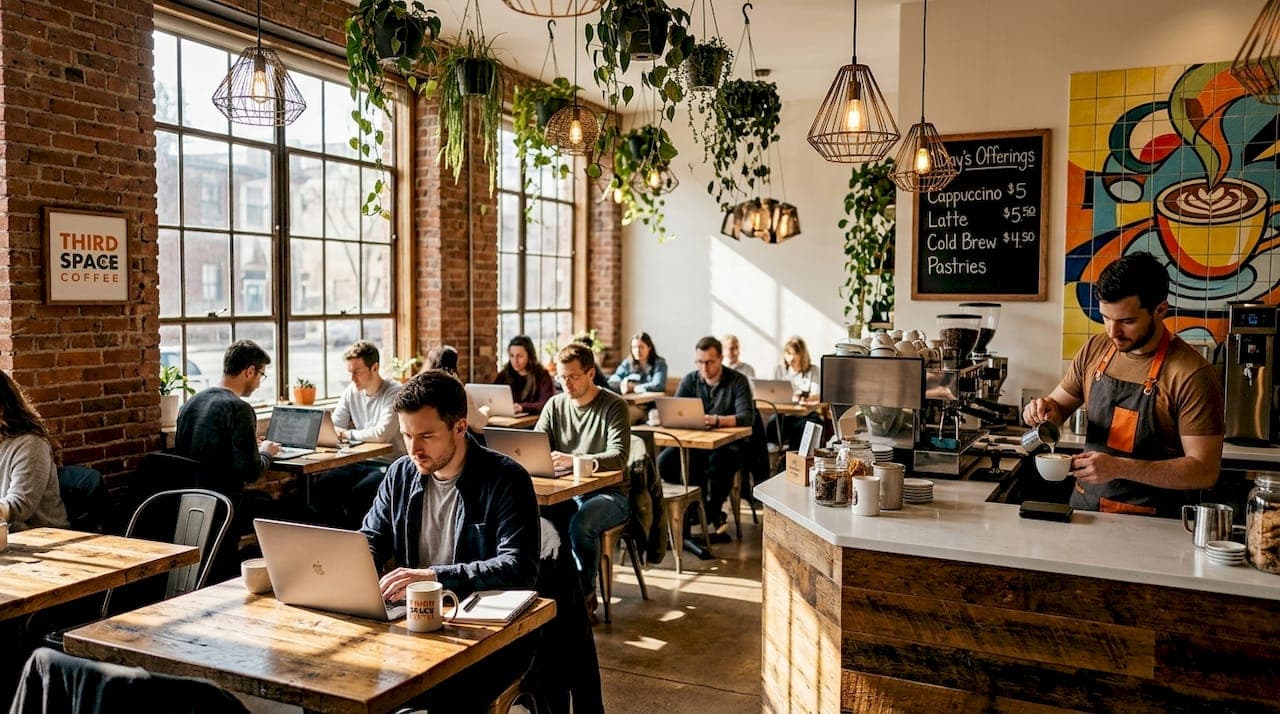
A hybrid cafe is defined as a venue that combines specialty coffee service with one or more additional concepts, such as a cocktail bar, creative studio, retail space, or community event hub, all operating under one roof across different times of day. This format has moved well beyond a novelty. Venues like Café Unido, Katha Crafthouse, and Thirdspacecoffee in Colorado Springs demonstrate that the hybrid coffee shop model is now a serious approach to building community around coffee culture. The concept works because it solves a real problem: a single-purpose coffee shop sits empty after 2 p.m., while a hybrid space keeps generating value, connection, and revenue from morning through midnight.
What is a hybrid cafe and how does it work?
A hybrid cafe combines coffee daytime service with a second identity that activates later in the day, whether that means a cocktail bar, a creative studio, a bookstore, or a coworking lounge. The space physically and atmospherically transforms as the hours change. Think of it as one address with multiple personalities, each one serving a distinct customer need without requiring a separate business to exist.
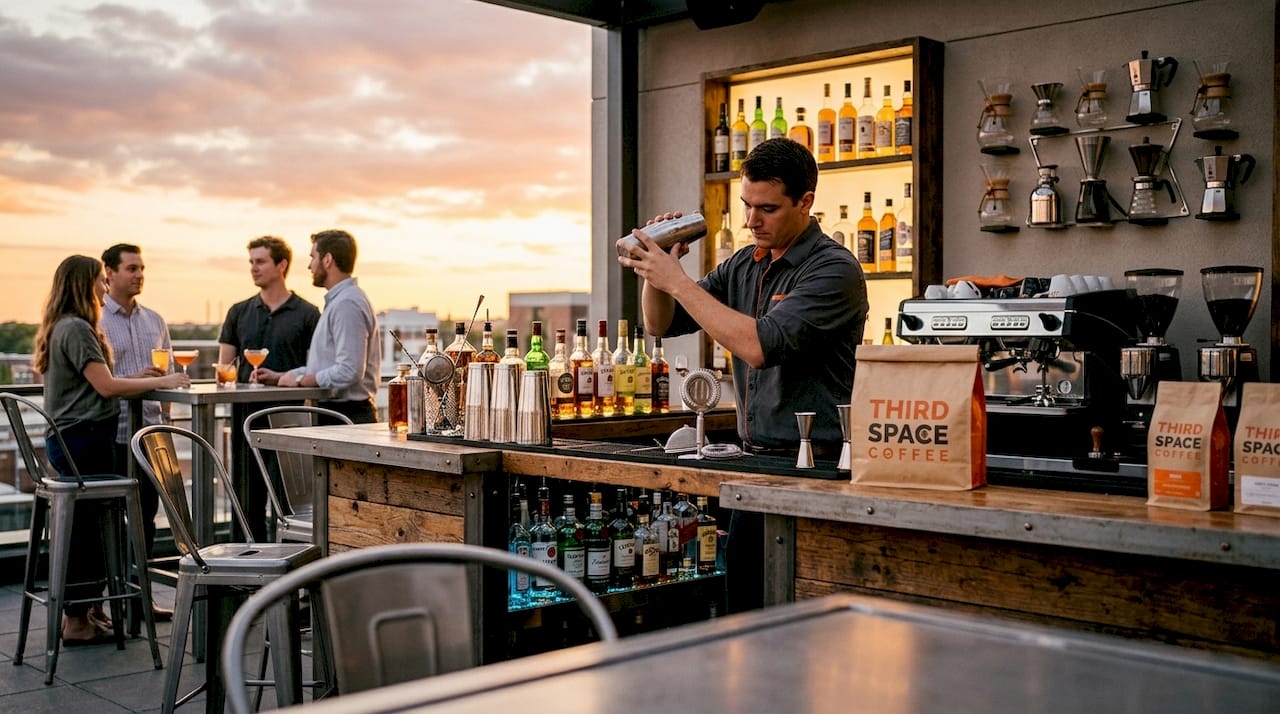
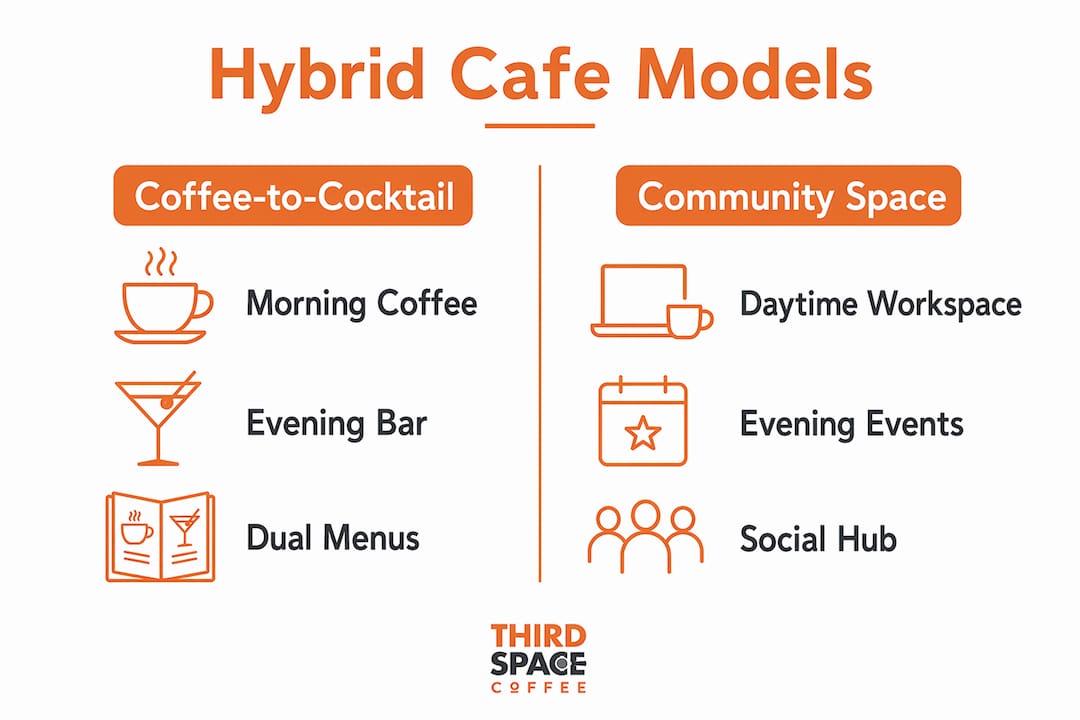
The most common version is the coffee-to-cocktail model. A guest orders a pour-over at 8 a.m. and returns at 8 p.m. for an espresso martini or a cold brew cocktail. The menu, lighting, and music all shift to signal the transition. Café Unido evolved into exactly this format at La Cosecha in Washington D.C., operating as an all-day café, bar, and creative studio that serves food, specialty drinks, and community programming from morning to close.
The second major model is the multifunctional community space. Here, the hybrid cafe concept goes beyond beverages entirely. Richmond Magazine identifies hybrid cafes as a national trend combining coffee with retail and experiential elements, such as markets, art galleries, and pop-up shops. These venues encourage longer visits and repeat customers by giving people more reasons to stay beyond finishing a single cup.
Both models share one operational truth: the space must work harder than a traditional café, and so must the team running it.
The two primary hybrid cafe models at a glance
- Coffee-to-cocktail venues: Daytime espresso service transitions into an evening bar program. Menu items like cold brew cocktails and espresso martinis anchor the crossover.
- Multifunctional community hubs: Coffee anchors the brand, but the space also hosts retail, workshops, art events, and coworking zones throughout the entire day.
- Retail-integrated cafes: Coffee is paired with a curated product shop, bookstore, or specialty food market to extend the customer experience beyond the cup.
- Creative studio hybrids: Venues like Café Unido add recording studios, gallery walls, or maker spaces to attract a creative audience alongside coffee drinkers.
Pro Tip: If you are exploring the hybrid cafe concept for the first time, visit a venue during both its morning and evening hours. The difference in atmosphere, clientele, and menu tells you more about how the model works than any description can.
How hybrid cafes build community and serve diverse customers
Hybrid cafes function as what sociologists call "third places," meaning spaces that are neither home nor work but serve as informal gathering grounds for social life. Café-based hybrid coworking reduces loneliness and builds social connections by blending productive and social environments in a single location. This matters because remote work has made the need for third places more acute than at any point in recent memory.
The features of hybrid cafes that support community go well beyond having tables and Wi-Fi. Structured programming is what separates a genuinely community-driven hybrid from a café that simply stays open late. The most effective hybrid spaces build recurring formats that give regulars a reason to return on a schedule.
Here is how community-focused hybrid cafes typically structure their programming:
- Live music nights: Weekly or biweekly performances that draw both coffee regulars and new audiences, extending the venue's reach into the local arts scene.
- Workshops and classes: Latte art sessions, cocktail-making classes, writing groups, or creative skill workshops that use the space during off-peak hours.
- Art pop-ups and gallery rotations: Rotating local artist work on the walls gives visitors a new reason to return each month and supports the creative community.
- Coworking hours: Designated quiet hours with reliable Wi-Fi and power access attract remote workers who become loyal daily customers.
- Community clubs: Book clubs, language exchanges, and networking meetups that use the café as a home base build the kind of repeat traffic that sustains a business.
"Evaluating a hybrid cafe's community impact requires observing repeated social programming rather than just physical layout or the presence of tables." — Research on hybrid coworking and community engagement
Katha Crafthouse in Hyderabad is a strong example of this approach executed at scale. The venue runs espresso service, cocktail floors, and a speakeasy across distinct zones, with DJ sets activating the space well into the night. The result is a venue that genuinely serves different people at different hours without feeling incoherent. Understanding why coffee shops make great event venues helps explain why the hybrid model amplifies that potential so effectively.
What design and operational strategies make hybrid cafes work?
Spatial zoning is the single most important design decision a hybrid cafe operator makes. Katha Crafthouse uses distinct zones for fast espresso service, main floor cocktails, an outdoor yard, and a speakeasy, each adjusted throughout the day to manage traffic flow and reduce service bottlenecks. Without clear zoning, a hybrid space becomes chaotic rather than versatile.
The table below compares the two primary operational approaches hybrid cafes use to manage their dual or multi-service identity:
| Approach | How it works | Best for |
|---|---|---|
| Hard zone separation | Dedicated physical areas for coffee and bar service, each with its own staff station | High-volume venues with distinct morning and evening crowds |
| Flexible zone transition | One central service area that shifts function through lighting, menu boards, and furniture rearrangement | Smaller venues with cross-trained staff and moderate volume |
Menu development is the second pillar of hybrid cafe operations. Signature drinks that blend coffee with cocktail ingredients, such as cold brew negronis or espresso-based aperitifs, create a natural narrative thread between the daytime and evening menus. A well-designed unique coffee menu does not just list beverages. It tells the customer what kind of experience they are in for at any hour.
Staff cross-training is non-negotiable. Baristas and bartenders share knowledge to handle peak crossover hours, which typically fall between 4 p.m. and 7 p.m. when the morning crowd has left and the evening crowd has not yet arrived. Managing two service cultures simultaneously requires careful scheduling and a shared understanding of the brand's identity across both modes.
Ambiance modulation completes the picture. Lighting shifts from bright and energizing in the morning to warm and dim in the evening. Music transitions from background acoustic to something with more energy. Seating arrangements may change to accommodate groups rather than solo workers. These details are not cosmetic. They signal to the customer that the space has genuinely changed, making the transition feel intentional rather than accidental.
Pro Tip: Thoughtful coffee shop decor that uses modular furniture and dimmable lighting gives a hybrid cafe the flexibility to shift atmosphere without a full redesign between service periods.
What are the real benefits and challenges of the hybrid cafe model?
The benefits of hybrid cafes for operators center on revenue diversification. Combining coffee, cocktails, retail, and events diversifies income streams and extends customer dwell time well beyond what a single-service café can achieve. A customer who comes in for a morning cortado, stays to work through lunch, and returns for a cocktail with friends represents three revenue touchpoints from one relationship.
For customers, the advantages are equally clear:
- Social flexibility: One venue serves a morning work session, a midday meeting, and an evening social gathering without requiring a change of location.
- Community access: Hybrid cafes with structured programming give regulars access to events, workshops, and social groups they would not find at a standard coffee shop.
- Varied experiences: The same physical space offers genuinely different atmospheres depending on when you visit, which keeps the experience from going stale.
- Broader menu options: Evening menus with cocktails, wine, and non-alcoholic specialty drinks serve customers who want something beyond coffee after 5 p.m.
The challenges are real and should not be minimized. Complex logistics, maintaining a consistent brand identity across two or more service modes, and staffing complexity are the three most common pressure points operators report. A venue that does coffee brilliantly but serves mediocre cocktails will confuse its audience and dilute its reputation. Quality must hold across every function, not just the flagship one. Hospitality standards that work for a morning café crowd require real adaptation to serve an evening bar audience well.
Key takeaways
Hybrid cafes succeed when they combine strong coffee identity with structured community programming, intentional spatial design, and cross-trained staff who maintain quality across every service mode.
| Point | Details |
|---|---|
| Core definition | A hybrid cafe blends coffee service with a second concept like a bar, studio, or retail space operating across different times of day. |
| Community programming | Repeated events, workshops, and social formats build genuine connection beyond physical layout alone. |
| Spatial zoning | Separating fast espresso service from bar or lounge areas prevents bottlenecks and maintains service quality. |
| Revenue diversification | Combining coffee, cocktails, retail, and events extends customer dwell time and creates multiple income streams. |
| Staff cross-training | Baristas and bartenders sharing skills is required to manage peak crossover hours without service gaps. |
Why hybrid cafes are the most honest model in coffee right now
I have spent years watching coffee shops struggle with the same problem: they are designed for one moment of the day and then sit underused for the rest of it. The hybrid cafe concept is not a trend. It is a correction.
What strikes me most about the best hybrid spaces is that they do not feel like two businesses sharing a lease. They feel like one coherent idea that happens to serve you differently at different hours. That coherence comes from the programming, not the physical space. A venue can have a beautiful bar setup and still feel disconnected if the events feel random and the staff seem uncertain which mode they are in.
The operators I find most credible are the ones who started with a clear community purpose and built the hybrid model around that, rather than adding a cocktail menu to boost evening revenue. Café Unido did not just add a bar. It built a creative studio identity that made the bar feel like a natural extension of the same creative community it was already serving.
For coffee lovers exploring this space, my honest advice is to look for hybrid cafes where the programming is as considered as the espresso. If the events feel like an afterthought, the coffee probably is too. The venues worth your time are the ones where someone clearly thought hard about who comes in at 7 a.m. and who comes in at 9 p.m. and designed for both with equal care.
— Tanya
Experience the hybrid cafe spirit at Thirdspacecoffee
Thirdspacecoffee in Colorado Springs is built around exactly the values that define the best hybrid cafes: specialty coffee roasted in-house, a space designed for community, and a commitment to serving more than just a beverage.

Whether you are looking for a morning ritual or a venue for your next gathering, Thirdspacecoffee delivers the kind of experience that makes you want to stay longer. Explore their specialty drinks menu for creative beverages that reflect the same craft and community focus you find in the best hybrid coffee shops. You can also order online for quick front-of-store pickup or book the space for your next event. This is what a local hybrid café looks like when it is done right.
FAQ
What is a hybrid cafe in simple terms?
A hybrid cafe is a coffee shop that also functions as something else, such as a cocktail bar, creative studio, retail space, or event venue, shifting its identity and offerings throughout the day to serve different customer needs.
How is a hybrid cafe different from a regular coffee shop?
A regular coffee shop focuses on coffee service during morning and midday hours. A hybrid cafe extends its function into the evening and across multiple service modes, including bar programs, community events, and retail, generating value across a full day rather than a few peak hours.
What are the most common features of hybrid cafes?
The most common features of hybrid cafes include spatial zoning for different service areas, cross-trained staff who handle both coffee and bar service, day-to-night menu transitions, and structured community programming such as workshops, live music, and pop-up events.
Can a small coffee shop operate as a hybrid cafe?
Yes. Smaller venues use flexible zone transitions rather than hard physical separation, relying on lighting, furniture arrangement, and menu board changes to shift the atmosphere. Cross-trained staff and a clear brand identity matter more than square footage.
What should I look for when visiting a hybrid cafe?
Look for intentional programming, a menu that connects the daytime and evening offerings, and a consistent atmosphere that feels designed rather than accidental. The best hybrid cafes make you feel equally welcome at 8 a.m. and 8 p.m.