
TL;DR:
- Light roast coffee is roasted between 350°F and 400°F, preserving the bean’s original flavors and brightness. It offers a floral, citrusy profile with high antioxidant levels and slightly more caffeine by volume, and requires precise brewing methods like pour-over for optimal taste.
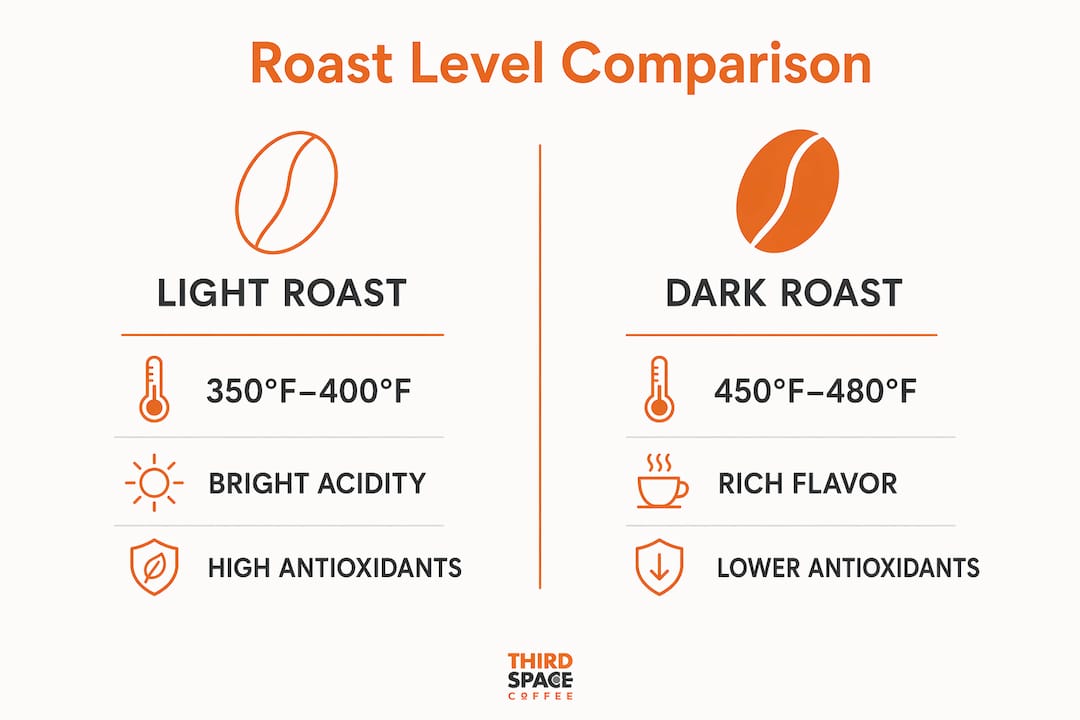
Light roast coffee is coffee roasted to a finish temperature of 350°F to 400°F and removed from heat just after the first crack, producing a light brown, dry, matte bean that carries the coffee's original agricultural flavors intact. If you have ever tasted a cup that reminded you of citrus, jasmine, or fresh berries, you were almost certainly drinking a light roast. This style of roasting is the specialty coffee world's preferred method for showcasing where a bean comes from, not what the roaster did to it. Understanding what is light roast coffee means looking at its roasting process, its distinct flavor profile, how it compares to medium and dark roasts, and how to brew it well at home.
What is light roast coffee and how is it made?
Light roast coffee is defined by a short roasting window and careful temperature control. Roasters typically work between 350°F and 400°F, finishing the bean within a tight time frame that stops just after the first crack. The first crack is an audible pop caused by internal moisture turning to steam and expanding the bean. Removing the bean at this point locks in brightness and prevents oil from migrating to the surface.
The roasting process for light roast follows a clear sequence:
- Drying phase. The green bean loses moisture as temperature climbs. This phase takes the majority of total roast time.
- Maillard reaction phase. Sugars and amino acids react, producing the brown color and early aromatic compounds. Flavor complexity begins here.
- First crack. The bean expands, cracks audibly, and reaches its lightest drinkable state. Light roasts are pulled immediately after this point.
- Cooling. Beans are rapidly cooled to stop the roasting process and lock in the flavor profile.
Because the bean spends less time in the drum, it does not expand as much as a dark roast. Light roast beans stay denser and harder than their darker counterparts. That density matters more than most drinkers realize, especially when it comes to grinding and caffeine content.
Pro Tip: Pull your light roast beans just after the first crack ends. Waiting even 30 seconds longer pushes you into medium roast territory and softens the bright acidity that makes light roast distinctive.
No universal industry standard currently defines "light roast" with precision. Roast level names remain subjective, with researchers proposing a color curve system to standardize classification. Until that standard is adopted, light roast definitions vary by roaster and brand.
What flavor profile does light roast coffee have?
Light roast coffee flavor is defined by brightness, acidity, and origin character. Because the bean spends less time under heat, the original agricultural characteristics of the coffee plant survive the roast. You taste the soil, the altitude, and the processing method, not the roaster's drum.
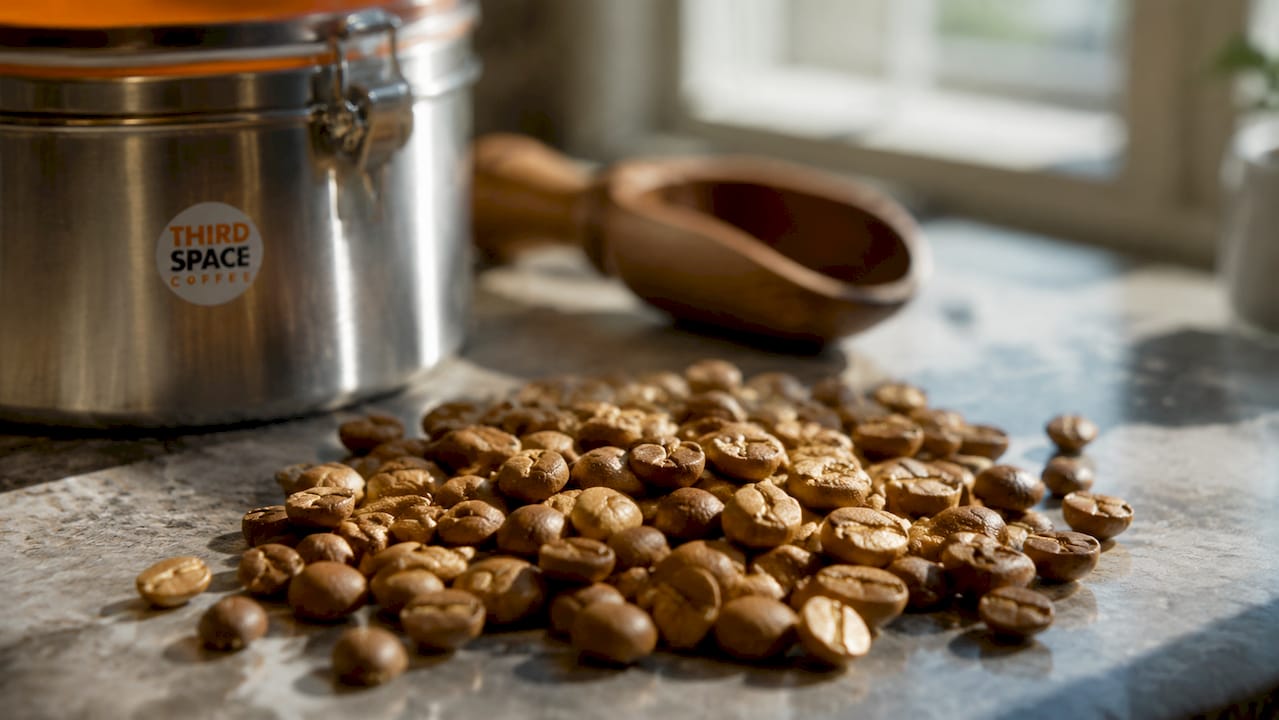
The body of a light roast is noticeably lighter and more tea-like compared to medium or dark roasts. Mouthfeel is thin and clean rather than heavy or syrupy. Acidity is the defining sensory feature, often described as bright, lively, or citrusy.
Common light roast coffee tasting notes by origin include:
- Ethiopian beans. Citrus, jasmine, bergamot, and stone fruit. Ethiopian light roasts are among the most floral and fruit-forward coffees available.
- Colombian beans. Nuttier and sweeter than Ethiopian varieties, with notes of caramel, red apple, and mild citrus.
- Kenyan beans. Black currant, tomato, and bright berry notes with a wine-like acidity.
- Central American beans. Honey, brown sugar, and mild stone fruit with balanced acidity.
The contrast with medium and dark roasts is sharp. Medium roast softens acidity and introduces caramel and chocolate notes. Dark roast suppresses origin flavors almost entirely, replacing them with roast-driven bitterness, smokiness, and a heavy body. Light roast is the only level where you can genuinely taste what country the coffee came from.
Understanding how roasting transforms flavor at each stage helps you predict what you will find in your cup before you even brew it.
How does light roast compare to medium and dark roast?
The difference between light and dark roast goes far beyond color. Roasting temperature, bean density, caffeine content, and antioxidant levels all shift significantly across roast levels.
| Category | Light roast | Medium roast | Dark roast |
|---|---|---|---|
| Roast temperature | 350°F–400°F | 400°F–430°F | 430°F–480°F |
| Bean color | Light brown | Medium brown | Dark brown to near black |
| Bean surface | Dry, matte | Slightly dry | Oily |
| Body | Light, tea-like | Medium | Full, heavy |
| Acidity | High, bright | Moderate | Low |
| Dominant flavor | Origin, fruit, floral | Caramel, chocolate | Smoke, bitterness |
| Antioxidant level | Highest | Moderate | Lowest |
Caffeine content is one of the most misunderstood differences. Caffeine by weight is similar across all roast levels. However, because light roast beans are denser and smaller, a scoop by volume contains slightly more beans and therefore slightly more caffeine. This means your morning scoop of light roast likely delivers a bit more caffeine than the same scoop of dark roast, even though the difference per gram is negligible.
Antioxidant levels tell a clearer story. Light roast retains up to three times more chlorogenic acid than darker roasts from the same batch. Chlorogenic acid is a plant compound linked to anti-inflammatory effects and blood sugar regulation. Longer roasting degrades it progressively, which is why dark roast coffee has the lowest antioxidant content of the three levels.
For a deeper look at how roast level shapes every cup, the coffee bean roasting guide from Thirdspacecoffee covers the full spectrum with Colorado Springs context.
What are the health benefits of light roast coffee?
Light roast coffee is the most antioxidant-rich form of brewed coffee. The shorter roasting time preserves chlorogenic acids, which are degraded by heat during longer roasts. Light roast retains significantly more of these beneficial plant compounds than medium or dark roasts.
Adrienn Szabó from Semmelweis University recommends light roast coffee specifically to maximize intake of healthy plant compounds while minimizing compounds produced at higher roasting temperatures. The Maillard reaction, which intensifies with roast degree, generates some compounds that are less desirable from a dietary standpoint. Light roasting limits their formation.
"A light roast can enhance the beneficial effects of black coffee by preserving antioxidants and reducing potentially harmful compounds formed at higher temperatures." — Adrienn Szabó, Semmelweis University
Light roast also suits drinkers who want a moderate caffeine experience without sacrificing flavor complexity. The caffeine difference between roast levels is small, but the antioxidant difference is substantial. Health-conscious coffee drinkers consistently favor light roast for this reason.
Pro Tip: If you drink coffee for its health benefits, choose a light roast from a single origin. Single-origin beans roasted light give you the highest chlorogenic acid content and the clearest picture of what you are actually drinking.
How to brew light roast coffee for the best flavor
Light roast coffee rewards careful brewing. Its density and acidity require slightly different technique than you would use for a dark roast. The goal is full extraction without tipping into sourness.
The best brewing methods for light roast are:
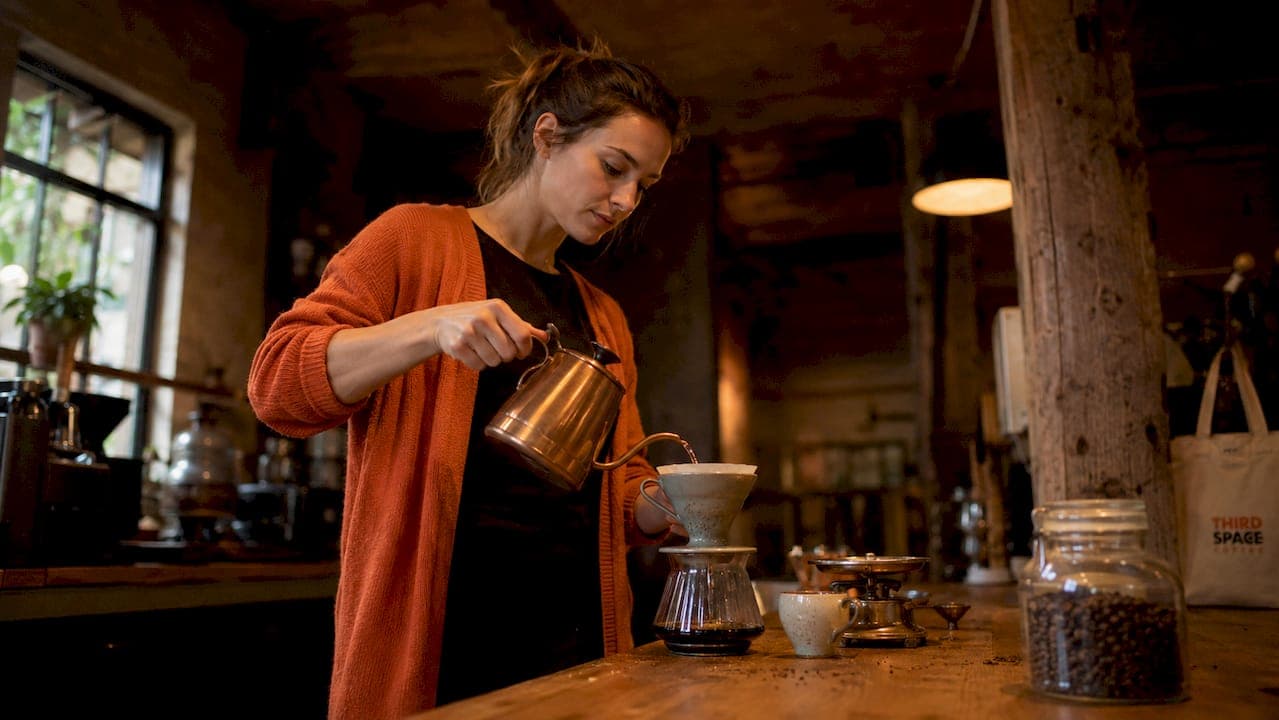
- Pour-over (Hario V60, Chemex). The slow, controlled pour extracts the delicate fruit and floral notes without over-extracting bitterness. This is the method most specialty roasters recommend for light roast.
- Drip coffee maker. Works well with a slightly coarser grind and a water temperature of 200°F to 205°F. Avoid machines that brew below 195°F, as under-extraction produces sour, flat cups.
- AeroPress. Gives you control over steep time and pressure. A longer steep of 2 to 3 minutes at 200°F brings out sweetness and body that light roast can sometimes lack.
Grinding light roast beans requires a quality burr grinder. Light roast beans are denser than dark roast beans, and dull or blade grinders produce uneven particle sizes that lead to inconsistent extraction and sour flavors. A flat or conical burr grinder with sharp burrs is the right tool for the job.
Water temperature matters more with light roast than with any other level. Use water between 200°F and 205°F. Cooler water under-extracts the bean and amplifies sourness. Hotter water can push bitterness into a cup that should taste bright and clean.
Pro Tip: Grind light roast beans slightly finer than you would for a medium roast when using pour-over. The extra surface area compensates for the bean's density and helps you reach full extraction without extending brew time.
Key takeaways
Light roast coffee delivers the highest antioxidant content, the clearest origin flavors, and a bright acidity that no other roast level can match.
| Point | Details |
|---|---|
| Roasting defines the style | Light roast finishes at 350°F–400°F, pulled just after the first crack to preserve brightness. |
| Flavor reflects origin | Ethiopian, Colombian, and Kenyan beans each express distinct notes that only survive light roasting. |
| Antioxidants are highest | Light roast retains up to three times more chlorogenic acid than dark roast from the same batch. |
| Caffeine is slightly higher by volume | Denser beans mean a scoop of light roast contains marginally more caffeine than a scoop of dark roast. |
| Brewing requires precision | Use a quality burr grinder, water at 200°F–205°F, and pour-over or AeroPress for best results. |
Why light roast changed how I think about coffee
I spent years defaulting to dark roast because I thought stronger flavor meant better coffee. Light roast corrected that assumption fast. The first time I brewed an Ethiopian Yirgacheffe as a pour-over, I tasted blueberry and jasmine in a cup of black coffee. That is not a marketing claim. That is what light roasting actually preserves.
The challenge with light roast at home is real. You need a better grinder than you think you do. You need hotter water than most drip machines deliver. And you need to accept that the cup will taste different from what you grew up drinking. It is lighter in body, brighter in acidity, and more complex in a way that takes a few cups to appreciate.
What I find most compelling about light roast is its honesty. A dark roast can hide a mediocre bean behind smoke and bitterness. A light roast cannot. Every flaw and every quality in the bean shows up in the cup. That transparency is exactly why specialty roasters, including the team at Thirdspacecoffee, roast in-house and source carefully. The roast level is only as good as the bean underneath it.
If you have only ever drunk medium or dark roast, try a single-origin light roast from a reputable source. Brew it as a pour-over at the right temperature. Give it two or three cups before you decide. The flavor clarity is worth the learning curve.
— Tanya
Specialty light roast coffee worth trying at Thirdspacecoffee
Thirdspacecoffee roasts its whole bean coffees in-house at their Colorado Springs location, which means you get light roast beans at peak freshness rather than weeks off the roast date.

Their whole bean coffee selection includes freshly roasted options suited to pour-over and drip brewing at home. If you prefer to let someone else do the brewing, their specialty drinks menu features light roast-forward preparations that highlight the bright, fruity notes the roast level is known for. You can order online for front-of-store pickup, which makes it easy to grab fresh beans without waiting. Stop in, try a cup, and taste the difference that in-house roasting makes.
FAQ
What is the first crack in light roast coffee?
The first crack is an audible popping sound that occurs when internal moisture in the bean turns to steam and expands the cell walls. Light roast coffee is removed from heat just after this event to preserve brightness and prevent oil from reaching the surface.
Does light roast coffee have more caffeine than dark roast?
Caffeine content by weight is nearly identical across roast levels. However, because light roast beans are denser, a scoop by volume contains slightly more beans and delivers marginally more caffeine than the same scoop of dark roast.
What does light roast coffee taste like?
Light roast coffee has bright acidity, a tea-like body, and flavor notes that reflect its origin. Ethiopian light roasts often taste of citrus and jasmine, while Colombian light roasts lean toward caramel and mild fruit.
Is light roast coffee healthier than dark roast?
Light roast retains up to three times more chlorogenic acid, a potent antioxidant, than dark roast from the same batch. Researchers at Semmelweis University recommend light roast for drinkers who want to maximize beneficial plant compounds.
What is the best way to brew light roast coffee?
Pour-over methods like the Hario V60 or Chemex produce the best results for light roast. Use water at 200°F to 205°F, a quality burr grinder, and a slightly finer grind than you would use for medium roast to achieve full extraction.